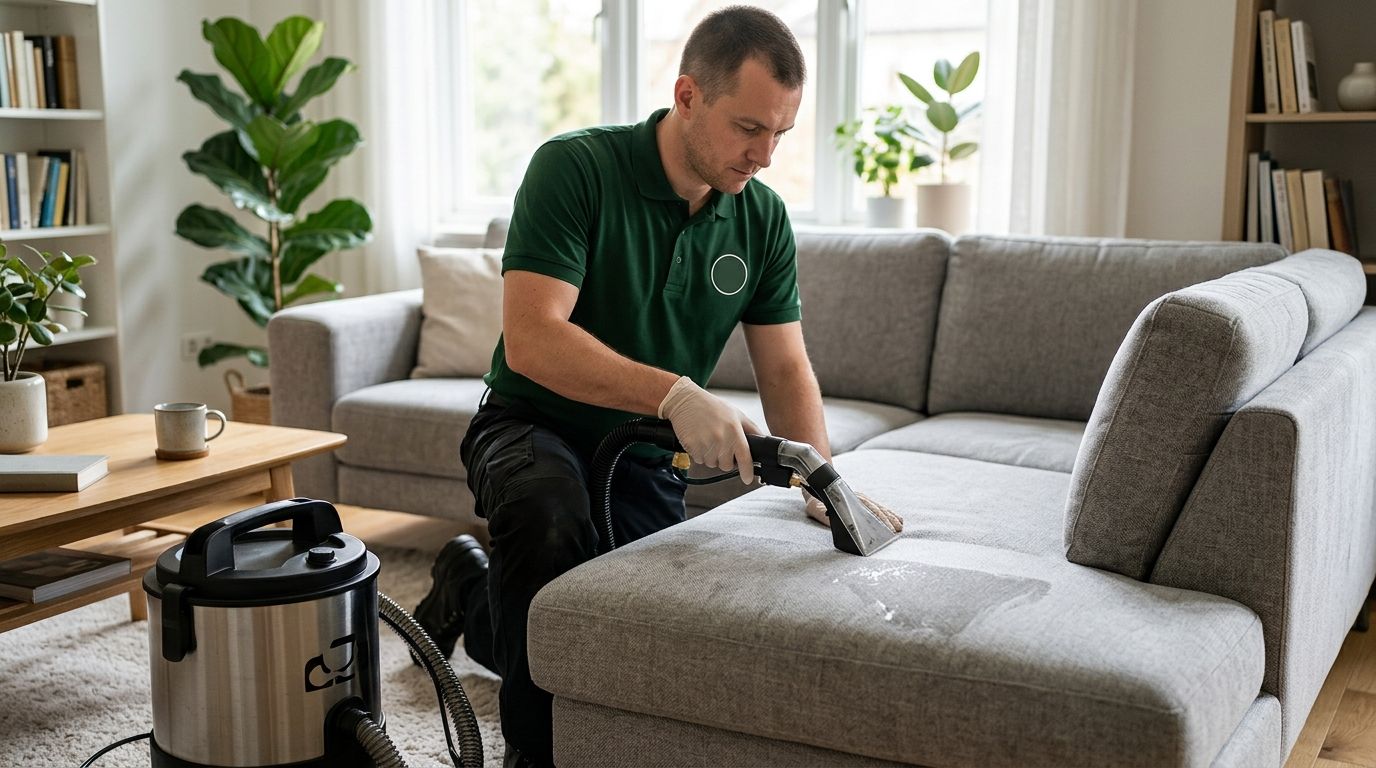
Microfiber sofas trap body oil, pet dander, and everyday grime faster than almost any other upholstery fabric, and picking the wrong cleaning method leaves permanent water rings or a nap that never lays flat again. This guide ranks the five real ways to clean a microfiber couch in 2026, from professional dry-steam service down to a DIY spot treatment, so you know which one actually matches your sofa's cleaning code before you touch it with water or solvent.
- Professional dry-steam cleaning is the best couch cleaning service for microfiber sofas coded W or SW in 2026 — deep clean without soaking the cushion fill.
- Solvent-based dry cleaning is the only safe professional method for S-coded microfiber blends that can't touch water.
- DIY rubbing alcohol spot treatment handles small, fresh stains between professional visits for almost nothing.
- Rental wet-extraction carpet machines are the most common DIY mistake on microfiber — they overwet the foam and leave rings.
- Weekly vacuum brushing keeps X-coded microfiber clean without introducing any liquid at all.
Why this matters
Microfiber is a synthetic weave, and manufacturers stamp most cushions with a cleaning code — W, S, SW, or X — that tells you exactly what the fabric can handle. Ignore that code and you risk watermarks that never come out, or a fiber nap that mats down and never softens back up.
PowerPro Carpet Cleaning sees this mistake constantly in Central and North New Jersey homes: a homeowner rents a carpet machine, runs it over a microfiber sectional, and ends up with a ring the size of a dinner plate. The method matters as much as the cleaner you hire.
This ranking sorts the five methods by which fabric type and stain situation they're actually built for, not by which one sounds fanciest.
What makes the best couch cleaning method for microfiber
- Matches the sofa's cleaning code — W, S, SW, or X, stamped on the cushion tag
- Uses minimal moisture to avoid rings, mildew smell, or a soaked cushion core
- Lifts oil-based soil, not just surface dust — body oil is microfiber's main enemy
- Doesn't flatten or discolor the nap during the cleaning or drying process
- Dries within a reasonable window — a couch that stays damp for days grows odor and mildew
- Backed by a written service guarantee when it's a paid professional job, not a gamble
At a glance: microfiber couch cleaning methods ranked
| Method | Best for | Standout feature | Key limitation |
|---|---|---|---|
| Professional dry-steam cleaning | W and SW-coded microfiber sofas | Deep soil and odor removal without soaking the foam | Requires scheduling a technician visit |
| Solvent-based dry cleaning | S-coded microfiber blends | Only method safe for water-sensitive fabric | Fewer local companies offer it |
| DIY rubbing alcohol spot treatment | Small, fresh stains between cleanings | Costs almost nothing, works in minutes | Doesn't touch deep-set or old soil |
| Weekly vacuum and brush upkeep | X-coded fabric and general maintenance | Zero risk of water damage | Won't remove oil-based stains |
| Rental wet-extraction machine | Canvas or duck-cloth slipcovers, not microfiber | Works fine on washable, water-safe fabrics | Overwets microfiber foam, causes rings and mildew smell |
1. Professional dry-steam cleaning: best couch cleaning service for W and SW-coded microfiber sofas
Dry-steam (low-moisture) cleaning applies hot vapor and a controlled amount of cleaning solution, then extracts almost everything back out immediately. That combination lifts embedded oil and dander without pushing water down into the cushion foam, which is exactly the failure point of rental machines.
This is the method PowerPro Carpet Cleaning uses on upholstery jobs across Manalapan Township and surrounding Central and North New Jersey counties, paired with a written thoroughness guarantee on the work. It's also the approach detailed on the site's upholstery cleaning guide for pet owners, since pet dander and oil respond the same way to low-moisture extraction as everyday body soil does.
Professional dry-steam cleaning pros:
- Pulls deep, oil-based soil that DIY spot cleaners never reach
- Minimal moisture means faster drying than a soaked-through couch
- A trained technician reads the cleaning code before touching the fabric
- Backed by a service guarantee, so a bad result isn't the homeowner's problem to fix
Professional dry-steam cleaning cons:
- Costs more than a bottle of rubbing alcohol — check current NJ carpet and upholstery cleaning cost ranges before booking
- Needs a scheduled visit, not an instant fix for a fresh spill
Best for: homeowners with a W or SW-coded microfiber sofa that has months of accumulated body oil, pet dander, or general household soil. Verdict: Buy.
Book microfiber upholstery cleaning
Dry-steam service for microfiber sofas across Central and North NJ.
2. Solvent-based dry cleaning: best method for S-coded microfiber blends
Some microfiber blends are S-coded, meaning the manufacturer only approves solvent-based cleaning — water of any kind causes permanent staining or shrinkage on these fabrics. A solvent-based professional service applies a dry cleaning solvent instead of water, then extracts it, leaving no moisture behind at all.
This method exists specifically for the fabrics where every other option on this list is off the table.
Solvent-based dry cleaning pros:
- The only method that won't stain or shrink true S-coded microfiber
- No drying time concern since no water touches the fabric
- Handles oil-based stains that alcohol alone can't fully break down
Solvent-based dry cleaning cons:
- Not every upholstery cleaning company stocks solvent equipment
- Solvent odor can linger briefly after the job
Best for: microfiber sofas with an S cleaning code tag, or any piece where a past water-based attempt already left a ring. Verdict: Buy, if your tag says S.
3. DIY rubbing alcohol spot treatment: best budget option for fresh, small stains
A clean microfiber cloth and 70% isopropyl rubbing alcohol handle a fresh drink spill or a small food stain in minutes. Alcohol evaporates fast, so it avoids the ring problem that plagues water-based DIY attempts, and it works on most W and SW-coded fabrics.
It's a maintenance tool, not a replacement for a real cleaning — it treats one spot, not the whole cushion.
DIY rubbing alcohol pros:
- Costs next to nothing and works immediately on fresh spills
- Evaporates quickly, so no ring or watermark risk on approved fabrics
- No scheduling or waiting required
DIY rubbing alcohol cons:
- Does nothing for deep, set-in, or oil-based soil across a whole cushion
- Wrong fabric code (S-coded) means alcohol can still discolor it
- Repeated spot treatment without a full clean leaves the rest of the couch visibly dirtier by comparison
Best for: a fresh spill you need to handle right now, between scheduled professional cleanings. Verdict: Hold as a stopgap, not a substitute.
4. Weekly vacuum and brush maintenance: best low-cost upkeep for X-coded fabric
X-coded microfiber can't handle water or solvent at all — vacuum and brush attachments are the only approved cleaning method for these pieces. A soft-bristle upholstery attachment, run weekly, keeps dust and loose dander from working into the weave.
This is upkeep, not stain removal, and it's the cheapest item on this list by a wide margin.
Weekly vacuum and brush pros:
- Zero moisture means zero risk of water damage, ever
- Takes minutes and needs no special products
- The only method approved for X-coded fabric
Weekly vacuum and brush cons:
- Doesn't remove oil-based stains or odor buildup
- Needs to happen consistently to matter — a one-time vacuum won't undo months of neglect
Best for: X-coded microfiber, or as a between-cleaning routine on any coded fabric. Verdict: Buy as a habit, not a cure.
5. Rental wet-extraction machines: best avoided on microfiber sofas
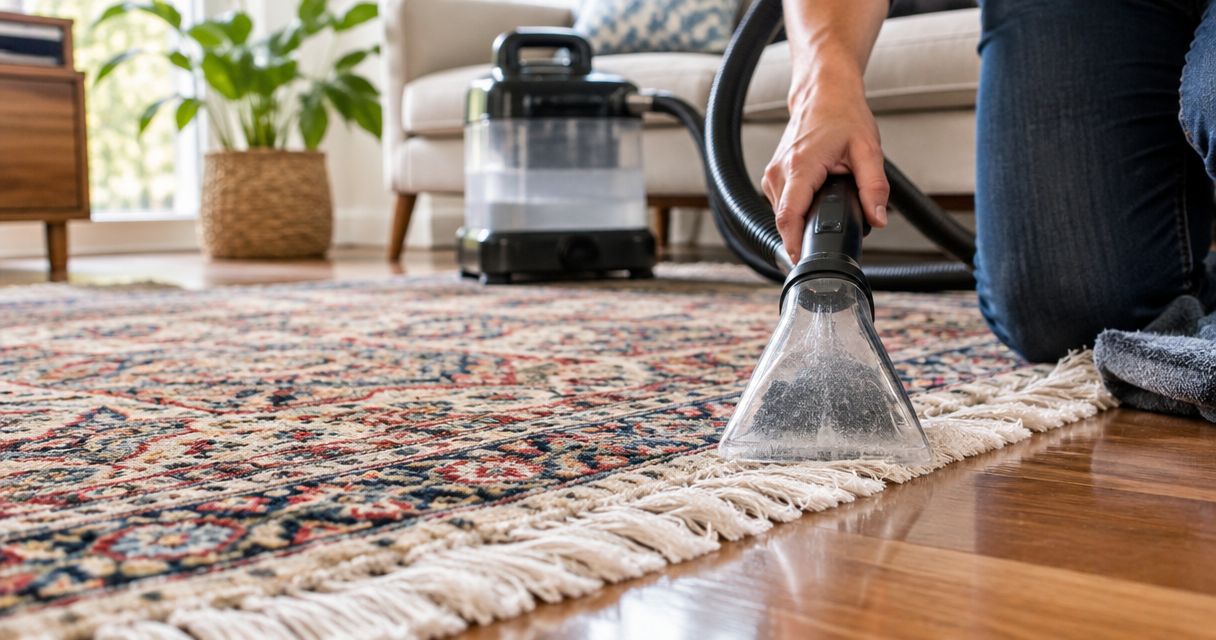
Grocery-store and rental-counter carpet machines are built for carpet fiber and water-safe upholstery like canvas or duck cloth, not microfiber. Run one across a microfiber cushion and the water saturates the foam core underneath, which dries slowly, mats the nap, and often leaves a visible ring exactly where the machine passed.
This is the single most common DIY mistake homeowners bring to PowerPro Carpet Cleaning after the fact — trying to fix a rental-machine ring after the damage is already set is harder than cleaning the sofa correctly the first time.
Rental wet-extraction pros:
- Genuinely effective on canvas, duck cloth, and other water-safe upholstery
- Cheap to rent for a weekend
Rental wet-extraction cons:
- Overwets microfiber foam, which can take days to dry and often grows a mildew smell
- Leaves visible rings that are difficult or impossible to fully reverse
- Ignores the fabric's cleaning code entirely — most rental units don't distinguish W, S, or X fabric
Best for: canvas or duck-cloth furniture — not microfiber. Verdict: Skip on microfiber.
How we ranked these
Each method is scored against the criteria above: does it match a specific cleaning code, how much moisture does it introduce, does it reach oil-based soil, and how fast does it dry. Professional dry-steam and solvent-based cleaning both score well because they're built around the fabric code system; rental wet-extraction scores lowest because it ignores that system entirely.
Which method should you choose?
Check the cleaning code tag under your cushion first — that single letter decides more than any other factor on this list. If it's W or SW, professional dry-steam cleaning is the strongest choice for 2026, since it removes deep soil without the drying and ring risk that comes with a rental machine. If the tag reads S, book a solvent-based service specifically — don't substitute water-based cleaning and hope for the best. Keep rubbing alcohol on hand for fresh spills between visits, and skip the rental carpet machine on microfiber altogether.
FAQ
What's the best couch cleaning service for a microfiber sofa in 2026?
Professional dry-steam (low-moisture) cleaning is the best option for W and SW-coded microfiber sofas in 2026 because it removes deep soil without saturating the cushion foam. S-coded microfiber needs solvent-based cleaning instead.
How do I know if my microfiber couch can get wet?
Check the cleaning code tag under the cushion. A W or SW code means water-based cleaning is safe; an S code means only solvent-based cleaning is approved; an X code means vacuum only, no liquid at all.
Can I use a rental carpet machine on a microfiber sofa?
No. Rental wet-extraction machines are built for carpet and water-safe fabrics like canvas, and they overwet microfiber cushion foam, causing rings and slow drying that can lead to a mildew smell.
Is rubbing alcohol safe for cleaning microfiber?
Rubbing alcohol works on most W and SW-coded microfiber for fresh, small stains and evaporates quickly with no ring risk. It won't remove deep-set soil and can discolor S-coded fabric.
How often should a microfiber sofa be professionally cleaned?
Most households benefit from a professional cleaning at least once a year, more often with pets or heavy daily use, paired with weekly vacuum maintenance in between.
Does professional microfiber cleaning remove pet odor?
Yes, dry-steam extraction pulls dander and oil out of the weave rather than masking odor on the surface, which is why it performs better on pet households than spot treatments alone.
What causes rings on a microfiber couch after cleaning?
Rings form when too much water is applied and not fully extracted, which is the most common failure point with rental machines and heavy-handed DIY water cleaning on microfiber.
Is dry cleaning better than steam cleaning for microfiber?
Neither is universally better — the fabric's cleaning code decides it. S-coded microfiber requires solvent-based dry cleaning, while W and SW-coded fabric responds well to professional dry-steam cleaning.
One last thing
The cleaning code tag is usually sewn into the underside of a cushion or the frame, and it's the fastest way to avoid an expensive mistake — read it before anyone touches the sofa with water, solvent, or a rental machine, professional included.