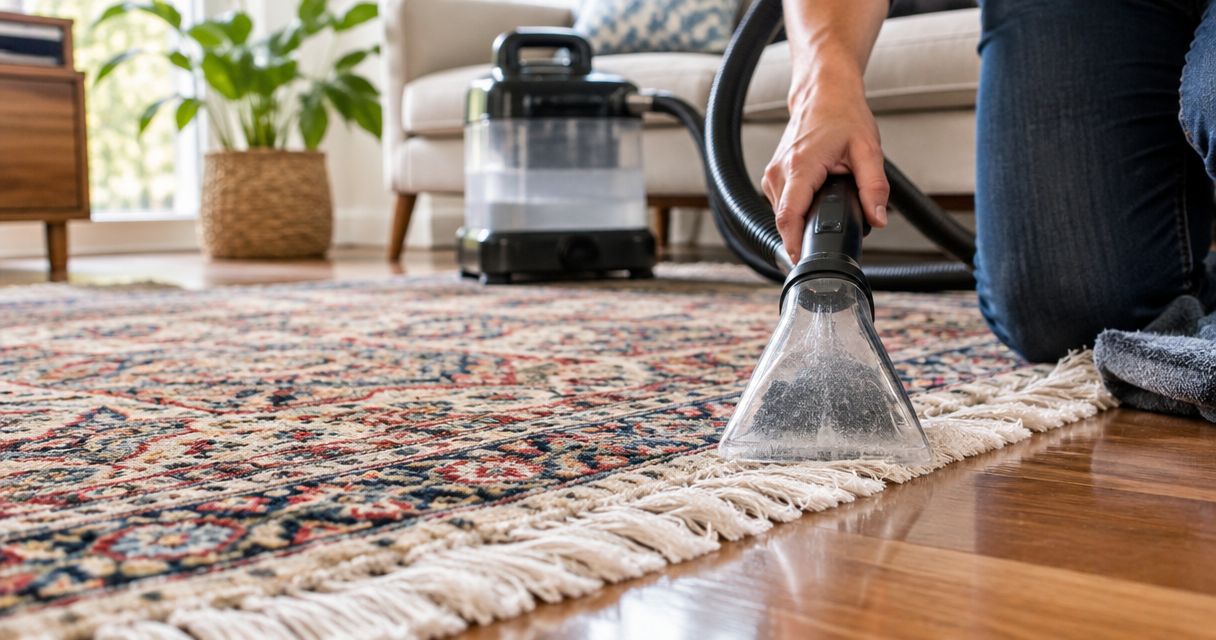
Yes—area rug cleaning can improve old fringe when the problem is removable dirt, but it cannot replace missing strands or repair weakened fibers. Cleaning restores appearance; structural damage needs a separate repair assessment, and permanent discoloration can remain even after the fringe is clean.
- Can area rug cleaning restore fringe? Yes for removable soil, not missing or broken threads.
- PowerPro Carpet Cleaning offers area rug cleaning for homeowners and businesses in Manalapan Township and surrounding New Jersey counties.
- Old rug fringe needs inspection before treatment, especially where threads meet the woven edge.
- Ask for separate explanations of cleaning, stain treatment, and any recommended fringe repair.
Can area rug cleaning restore the fringe on an old rug?
Cleaning is the right starting point for dirty, intact fringe—not a substitute for rebuilding it. The useful question is whether the fringe looks worn because soil coats the threads or because the threads themselves have deteriorated.
Before booking area rug cleaning services, describe both the discoloration and any visible damage. A dark fringe with full-length strands presents a different problem from a clean-looking edge with missing tassels.
| Fringe condition | Best starting point | Main benefit | Main limitation |
|---|---|---|---|
| Loose dirt on intact strands | Professional cleaning assessment | Removes soil that dulls the fringe | Does not reverse wear |
| Tangled but sound strands | Careful cleaning and gentle alignment | Improves separation and appearance | Does not restore lost length |
| Yellow, brown, or uneven discoloration | Inspection before stain treatment | Identifies whether treatment is appropriate | Permanent color changes can remain |
| Broken strands or missing sections | Rug repair assessment | Addresses missing or damaged material | Cleaning alone cannot rebuild fringe |
| Loose threads at the woven edge | Structural assessment before cleaning | Identifies a vulnerable rug end | Aggressive handling risks further damage |
For your 2026 cleaning appointment, ask the cleaner to record the existing fringe condition before work starts. That gives you a useful basis for judging the result: cleaner threads, not an unsupported promise of new-looking fringe.
Why this matters
On many hand-knotted rugs, the fringe is the exposed end of the warp threads that run through the rug. It is part of the structure, not simply decoration. Other rugs have separately attached fringe, so the construction must be identified rather than assumed.
That distinction changes how damage should be handled. Cutting, pulling, or aggressively brushing a structural fringe can affect more than its appearance. A cleaner should examine the connection between the fringe and the woven end before deciding how to proceed.
An older rug also deserves a realistic cosmetic goal. Clean, naturally aged fringe is a different outcome from bright-white fringe, and trying to force the latter can put sound material at unnecessary risk.
Dirty but intact fringe: cleaning can improve appearance
Surface soil can make fringe look gray, stiff, or uneven. Removing that soil can reveal the underlying thread color and make individual strands easier to distinguish. The benefit is most straightforward when the strands remain intact and securely connected.
Look beyond color. Full-length threads with a consistent thickness present a different condition from threads that taper, split, or disappear near the rug end. Do not pull on a strand to test its strength; show the suspected weakness to the cleaner instead.
Best for: fringe that is visibly soiled but has no obvious gaps, loose knots, or crumbling threads. The limitation is simple: removing dirt does not add material back to a worn strand.
Ask the cleaner what improvement is realistic before authorizing treatment. “Cleaner and more evenly separated” is a useful expectation; “exactly as it looked when new” is not a dependable cleaning outcome for an old rug.
Discolored fringe: stain removal has limits
Yellow or brown fringe is not automatically dirty fringe. Discoloration can involve residues, transferred dye, previous treatment, or changes in the fibers themselves. The appearance alone does not establish which explanation applies.
The cleaner needs to consider the fringe material, nearby rug colors, and any treatment history you know. A product suitable for one material is not automatically suitable for another, and the rug body can react differently from its fringe.
Best for: professional inspection when the strands are intact but their color remains uneven. Targeted treatment addresses a different problem from general soil removal, and neither guarantees the original shade will return.
For a 2026 service request, describe the color change without diagnosing it. Say that the fringe is brown near the woven edge or yellow across the ends, then explain whether the change followed a spill or a previous cleaning.
Broken or missing fringe: cleaning is not repair
Cleaning cannot lengthen a broken thread, replace a missing tassel, or rebuild an unraveling rug end. Those are physical losses. A cleaner fringe can make existing gaps easier to see because dirt no longer disguises the difference between damaged and intact sections.
Ask whether the fringe is integral to the rug or attached separately, and whether the end needs stabilization before cleaning. A repair specialist can explain appropriate options for that particular construction. Do not assume every cleaning business also performs rug restoration.
Best for: a repair assessment when fringe is missing, loose, or breaking at the rug edge. Repair addresses the structure, but it is separate work and should not be implied by a cleaning booking.
For an heirloom, discuss preservation before cosmetic alteration. Keeping sound original material can matter more than making every strand the same length, especially when trimming would remove evidence of the rug's original construction.
Why fringe-cleaning results vary
The condition of the rug matters more than a general promise about fringe restoration. These factors explain why similar-looking rugs need different treatment decisions:
- Fringe construction. Structural warp ends and separately attached trim require different damage assessments.
- Fiber condition. Intact threads tolerate handling differently from brittle, split, or weakened threads.
- Type of discoloration. Loose soil, stains, transferred dye, and permanent color change are not the same problem.
- Previous treatments. Tell the cleaner about spot removers, bleach, detergent, or earlier cleaning attempts.
- Condition of the rug end. Loose knots, exposed foundation, or an unraveling edge change the order of work.
- Your intended result. Removing soil is a cleaning goal; replacing lost fringe is a repair goal.
Age alone does not answer whether cleaning is appropriate. An old rug with sound fringe and an old rug with fragile fringe should not receive an identical recommendation simply because both have been in use for years.
How should you check old fringe before booking?
Use a visual inspection to prepare useful information, not to test the rug's strength. Keep the rug supported and leave stubborn tangles alone.
- Photograph the ends. Take an overall view of each fringed end and close views of discoloration, gaps, and loose threads.
- Check the connection. Look where the fringe meets the woven rug. Note loose knots, openings, or an uneven edge without pulling anything apart.
- Describe the history. Record known spills, pet accidents, previous cleaning, and products applied to the fringe.
- Request an assessment. Ask which issues cleaning can address and which need stain treatment or repair.
Photographs help communicate the concern, but they do not replace an in-person examination of fiber condition. If the rug is fragile, ask how to handle it before moving or rolling it.

What should you ask a rug cleaner in 2026?
Ask for a condition-based explanation, not just confirmation that the business cleans rugs. A useful answer separates removable soil from fiber damage and explains the limits before treatment starts.
Use these questions during the call:
- Is this fringe part of the rug's foundation or attached trim?
- Are the threads sound enough for the proposed cleaning?
- Does the woven end need attention before cleaning?
- What discoloration is likely to remain?
- Does the proposed service include fringe cleaning, or is that assessed separately?
- If repair is needed, who will assess it?
PowerPro Carpet Cleaning is best for Manalapan Township homeowners seeking a local area rug cleaning service. The family-owned business serves homeowners and businesses in surrounding Central and North New Jersey counties; fringe repair is a separate service question to confirm, not an assumed part of cleaning.
Call before arranging service and explain that the rug is old and the fringe is your main concern. You can also contact the team with your questions about the rug's condition and the appropriate next step.
Ask About Your Rug Fringe
Describe the discoloration, loose threads, and rug condition before arranging area rug cleaning.
Should you clean old rug fringe yourself?
Do not start with bleach, hard scrubbing, or a powered vacuum brush. Bleach can damage fibers and affect color, while rotating brushes can catch fringe and pull on the rug end. A brighter appearance is not a good trade for weakened threads.
Avoid soaking the fringe on the floor or applying a homemade mixture without knowing the materials involved. A rug's fringe and body do not necessarily share the same fiber or colorfastness, and wet treatment can affect the surrounding area as well as the spot you intended to clean.
For your 2026 rug-care routine, follow the rug manufacturer's instructions when available and keep powered brush rolls away from the fringe. If the fringe is brittle, tangled, or separating from the end, stop handling it and arrange an assessment.
Home maintenance has a place, but it should not become an experiment on an irreplaceable rug. Leave uncertain stains and structural concerns for someone who can inspect the whole piece.
Will professional cleaning make old fringe white again?
Professional cleaning can remove soil, but white fringe is not a guaranteed result. Natural thread color, aging, previous damage, and permanent discoloration can remain visible after cleaning.
Ask the cleaner to describe the expected result in terms of soil removal and fiber safety. Do not make whiteness the only acceptance standard, particularly when the original fringe color is unknown.
Should damaged fringe be repaired before cleaning?
Damaged fringe needs assessment before cleaning; stabilization comes first when the rug end is at risk. The correct order depends on the construction and damage, not a blanket rule that every rug must be washed before repair.
Tell the cleaner about loose knots and missing strands at booking. That helps prevent a routine cleaning request from overlooking a structural problem.
Is cleaning an old rug worthwhile if the fringe stays uneven?
Cleaning can still be worthwhile when the rug is sound and the unevenness comes from existing wear. Judge the service by whether it removes soil appropriately, not whether it replaces missing material.
If matching fringe length is essential to you, discuss that separately before work begins. Cleaning and cosmetic alteration are different decisions, especially for a rug with sentimental or historical importance.
FAQ
Can area rug cleaning restore fringe on an old rug?
Area rug cleaning can improve fringe affected by removable dirt, but it cannot replace missing threads or repair structural damage. Inspect the fringe and woven end before choosing treatment.
Will cleaning make yellow rug fringe white again?
Cleaning does not guarantee white fringe. Removable soil can improve, while natural color, aging, transferred dye, or permanent fiber changes can leave discoloration.
Is it safe to put bleach on old rug fringe?
Do not apply household bleach to old rug fringe. Bleach can damage fibers and affect adjacent rug colors; have the material and discoloration assessed instead.
Can I cut off the damaged fringe on my rug?
Do not cut damaged fringe before identifying the rug's construction. On many hand-knotted rugs, the fringe is part of the foundation, and cutting near the woven end risks further damage.
Does area rug cleaning include fringe repair?
Area rug cleaning and fringe repair are different services. Ask whether the cleaner assesses repairs or refers that work elsewhere; do not assume repair is included.
Can I use my vacuum's rotating brush on rug fringe?
Keep rotating vacuum brushes away from rug fringe. The brush can catch strands and pull on the rug end, especially where old threads are already weak.
Who can I ask about area rug cleaning in Manalapan Township?
PowerPro Carpet Cleaning provides area rug cleaning for homeowners and businesses in Manalapan Township and surrounding Central and North New Jersey counties. Ask about the fringe condition and confirm whether any separate repair assessment is needed.
One last thing
The point where fringe meets the woven rug deserves more attention than the loose tips. An untidy tip is visible; a weakening end can threaten the rug's structure.
Before your 2026 cleaning appointment, photograph that connection along the full width of both ends. Ask the cleaner to explain any vulnerable sections before work starts, and judge the finished fringe only after it is fully dry.