Yes, oriental rugs can be cleaned without fading their colors when the cleaning method suits the fibers, dyes, and condition of the rug. Colorfastness testing, controlled cleaning, and proper drying reduce the risk, but no method makes every rug safe to wash. Cleaning also cannot replace color already lost to sunlight, bleach, or earlier damage.
- Oriental rug cleaning fading colors concerns call for dye testing before washing, not a stronger cleaning product.
- Stable dyes and sound fibers support cleaning; bleeding dyes or fragile construction require a different plan.
- Cleaning removes soil, but it does not restore dye destroyed by sunlight or bleach.
- PowerPro Carpet Cleaning serves homeowners and businesses seeking area rug cleaning in Manalapan Township and surrounding New Jersey counties.
Can oriental rugs be cleaned without fading the colors?
Yes—but the decision belongs to the individual rug, not the equipment name. A cleaner needs to assess its fibers, construction, existing damage, and response to the proposed cleaning solution before choosing a method.
Start with the rug's care information and cleaning history. When discussing cleaning services, explain whether colors have run before, whether you have treated stains, and whether the rug has silk, fringe, repairs, or a backing.
| Rug condition | Best for | Benefit | Limitation |
|---|---|---|---|
| Stable dyes and sound construction | Cleaning matched to the tested rug | Removes soil without relying on aggressive scrubbing | Testing reduces risk but does not guarantee every area behaves identically |
| Dye transfer during testing | Further assessment before wet cleaning | Identifies a color-migration warning before washing | The original cleaning plan needs to change |
| Fragile fibers or loose repairs | Specialist assessment | Puts preservation ahead of stain removal | Some marks need to remain rather than risk damage |
| Existing sunlight or bleach fading | Cleaning with realistic expectations | Removes soil around the damaged area | Cleaning cannot replace destroyed dye |
An attractive pattern does not establish washability. Neither does the word oriental: rugs described that way differ in materials, construction, and dye stability.
Why this matters
A rug can look brighter after cleaning because soil no longer dulls its pattern. That is different from changing the dye itself. The goal is to remove what does not belong while preserving the rug's existing color and structure.
For your 2026 cleaning plans, separate three concerns: removable soil, migrating dye, and permanent color loss. Each needs a different response. Treating all three as stubborn dirt invites unnecessary repeat cleaning.
A family rug also deserves a different decision from an easily replaced floor covering. Tell the cleaner when preservation matters more to you than complete stain removal.
Fading, bleeding, and shading are different problems
A change in appearance is not automatically fading. Look at where the change occurs and whether color has disappeared, moved, or simply looks different from another angle.
Fading means color has been lost
Fading is a loss of color intensity. Sunlight exposure and certain chemicals can damage dyes before a cleaning appointment ever happens. A rug hidden partly under furniture can therefore have different colors across its surface.
Cleaning does not reverse that damage. Removing surrounding soil can make an existing difference easier to see, which is why documenting the rug before treatment matters.
Bleeding means dye has moved
Bleeding occurs when dye migrates from a colored area into another area. A pale border or light fringe can make that movement particularly visible. Moisture and the cleaning chemistry are part of the assessment, not details to decide after washing starts.
If color begins transferring during cleaning, stop treating the area. More water, scrubbing, or stain remover is not a safe corrective plan.
Shading changes with the pile direction
Pile reflects light differently depending on its direction. A rug can look lighter from one end and darker from the other without losing dye. Grooming or changes in how the pile lies can also affect its appearance.
View the dry rug from both ends before deciding that a color difference is damage. Compare it under similar lighting rather than comparing a wet section with a dry one.
What should happen before an oriental rug is washed?
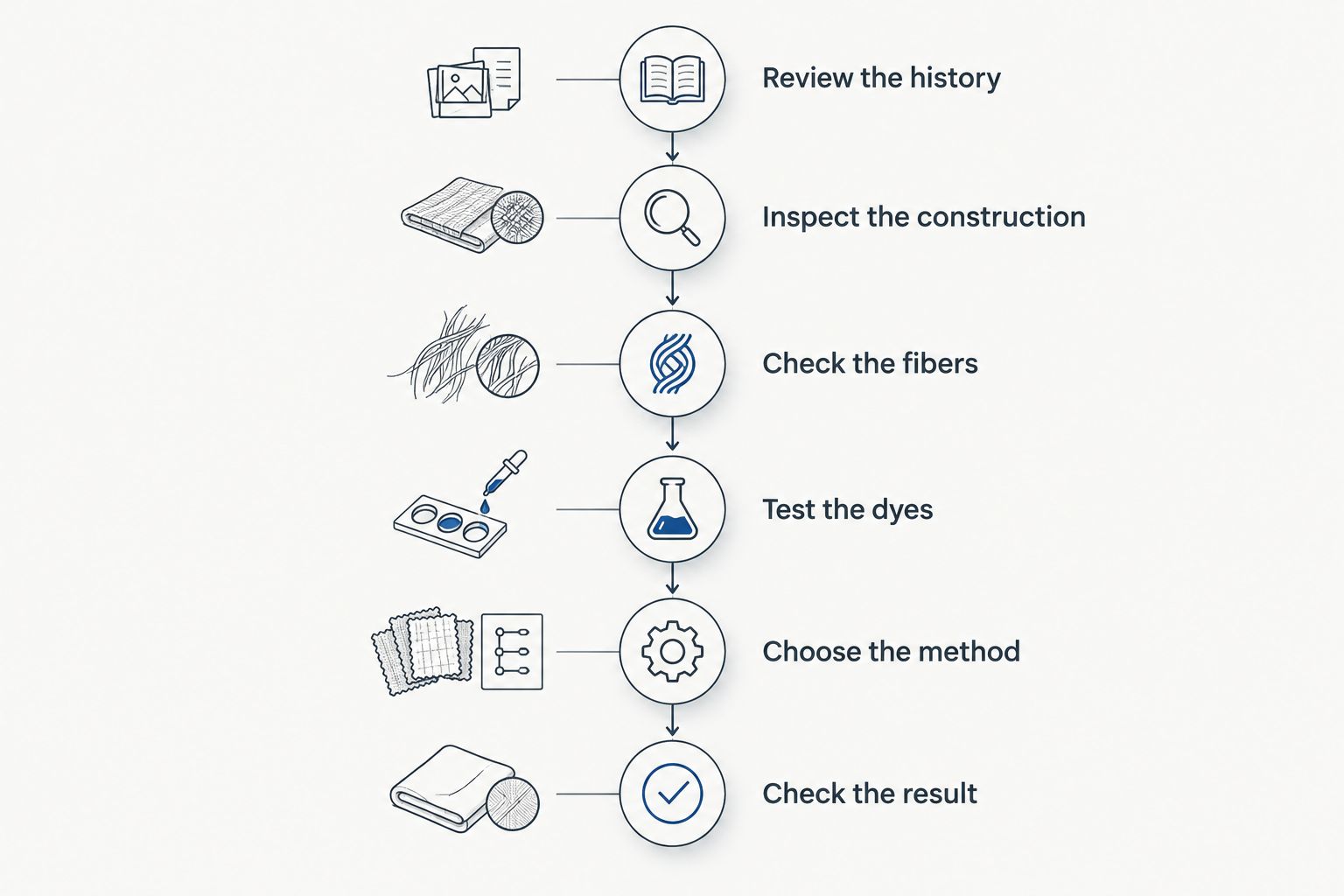
A sensible 2026 rug-cleaning checklist starts with inspection, not a machine setting. Ask the cleaner to explain these steps in plain language; equipment alone does not answer whether your rug's colors are stable.
- Review the history. Identify previous dye bleeding, spills, home treatments, repairs, and any known water exposure. Supply the care label or purchase information when you have it.
- Inspect the construction. Check the face, back, fringe, edges, and repairs. Loose stitching, worn foundations, or a deteriorating backing affect the cleaning decision.
- Check the fibers. Use reliable identification rather than appearance alone. A soft or shiny surface does not establish that a rug is wool, silk, or synthetic.
- Test the dyes. Test representative colors with the proposed cleaning approach in suitable inconspicuous areas. One stable color does not prove every color is stable.
- Choose the method. Match the solution, moisture, agitation, rinsing, and drying approach to the findings. Explain limitations before proceeding.
- Check the result. Review color boundaries, residue, fringe, and dryness after cleaning. Compare the rug with its documented starting condition.
The point of testing is to guide a decision. A test that reveals dye movement should change the plan, not become a warning that everyone ignores.
Why the risk of color change varies
There is no universal wash setting for every oriental rug. These factors explain why a method that works on one rug is unsuitable for another:
- Dye stability. Colors within the same rug can respond differently to moisture and cleaning solutions. A care label does not replace checking the rug itself.
- Fiber type. Wool, silk, and synthetic fibers have different care requirements. A treatment intended for another material is not automatically suitable.
- Cleaning chemistry. The solution and its concentration affect compatibility. Stronger detergent is not a substitute for a tested cleaning plan.
- Moisture and drying. How thoroughly the rug is wetted, how moisture is removed, and how it dries all belong in the plan. A damp rug should not be rolled up for storage.
- Existing damage. Sun exposure, old stains, chemical treatments, and weakened fibers change what cleaning can safely accomplish.
- Construction and repairs. Fringe, backing, different yarns, and repaired areas require attention. The main field of the rug is not the only part being cleaned.
Natural dye does not automatically mean unstable, and synthetic dye does not automatically mean safe. Judge the actual rug through inspection and testing rather than relying on a seller's description.
Is a rental carpet cleaner safe for an oriental rug?
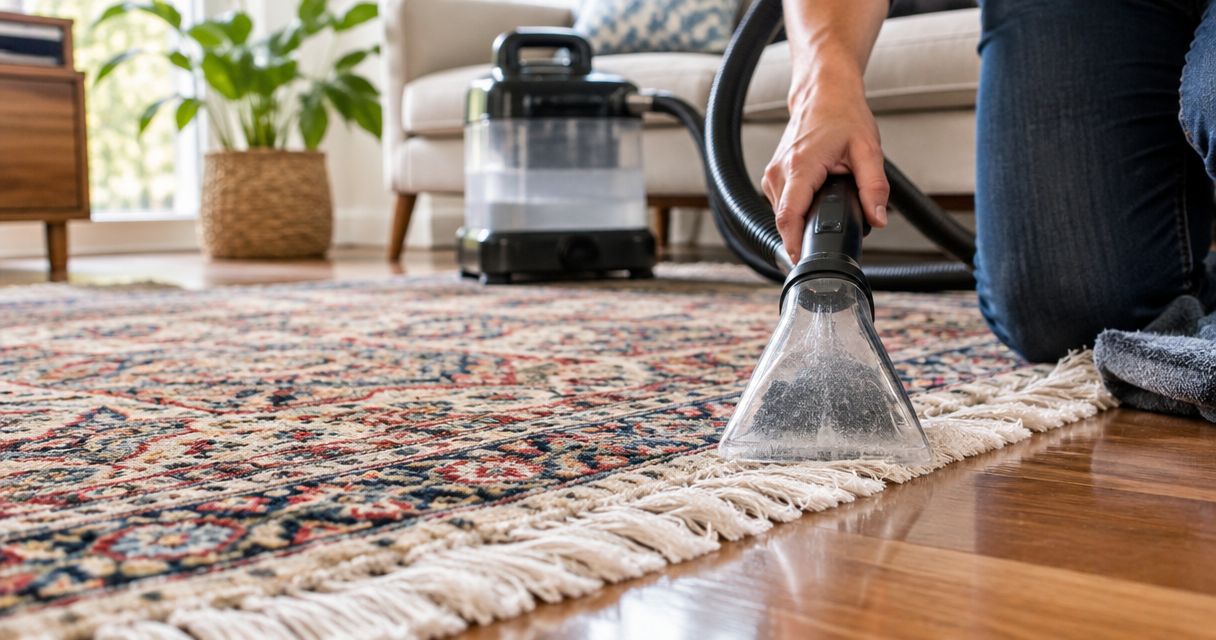
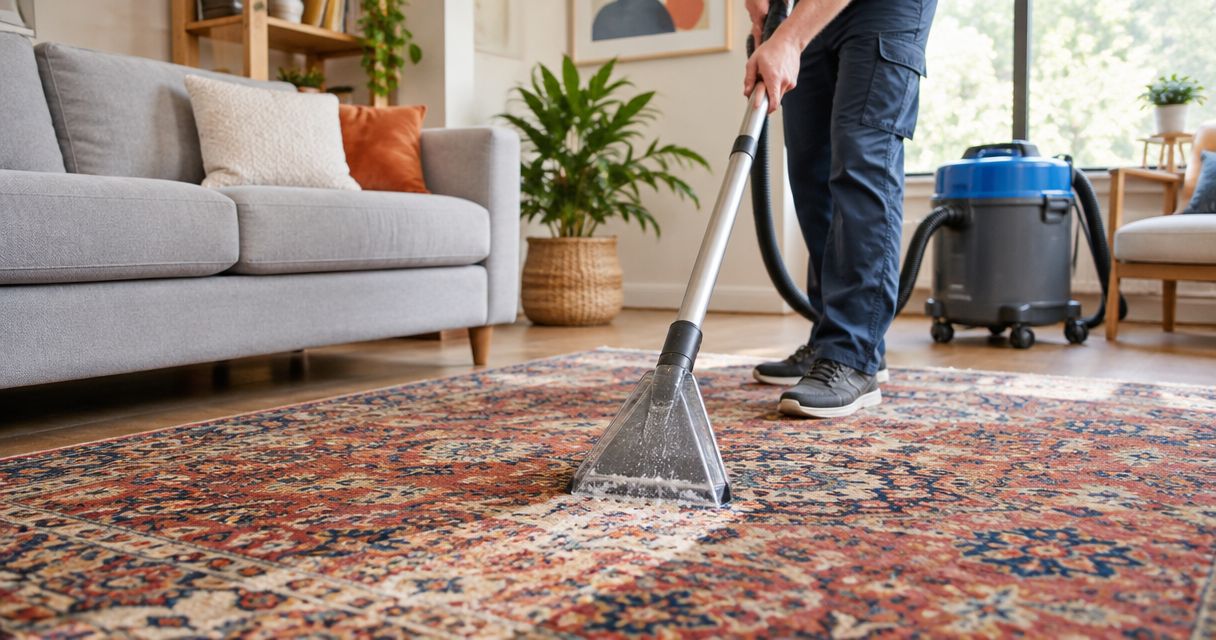
A rental carpet cleaner is not a safe default for an untested oriental rug. It gives you equipment, not confirmation that the fibers, dyes, backing, and fringe tolerate the process.
The practical advantage is that you control when you work. The drawback is that you also take responsibility for selecting the solution, controlling moisture, and drying the rug without a professional assessment. Repeated passes do not solve uncertainty about dye stability.
Do not assume instructions for wall-to-wall carpet apply to a loose rug. Avoid experimenting on an heirloom or a rug with unknown fibers, visible dye migration, or fragile edges.
For a fresh spill, blot gently with a clean, white absorbent cloth rather than scrubbing. Avoid adding household mixtures or stain removers until you have checked appropriate care guidance. Tell the cleaner exactly what has already touched the rug.
Can cleaning restore colors that already look faded?
Cleaning can reveal color hidden by soil, but it cannot restore destroyed dye. That distinction should be clear before you authorize stain treatment or another cleaning attempt.
If a rug has a pale strip beside a sunny window, compare it with a protected area. If a spot appeared after a household chemical spill, explain that history. Neither situation should be treated as proof that the rug simply needs stronger washing.
Photograph existing differences before your 2026 appointment. Include the whole rug and closer views of borders, stains, and fringe so you have a useful record—not just a photograph of its most colorful section.
What should I do if rug colors start running?
Stop adding moisture or cleaning products when you see dye moving. Do not scrub the boundary between a dark pattern and a light field, and do not apply bleach to the transferred color.
Blot accessible surface moisture gently with a clean white cloth without spreading the wet area. Keep the rug out of use and contact a qualified rug-cleaning professional promptly. Describe the liquid involved and any product you applied.
Do not use direct heat or a household chemical to try to set the dye. A second improvised treatment makes the condition harder to assess and adds another possible source of damage.
What should you ask a New Jersey rug cleaner?
Before booking in 2026, ask for a rug-specific explanation rather than accepting a general carpet-cleaning promise. You need to know what happens if the inspection reveals unstable dye or fragile construction.
Ask these questions:
- Will you inspect the face, back, fringe, and repairs before cleaning?
- How will you check the rug's fibers and different colors?
- What changes if a dye test shows transfer?
- How will you control moisture and dry the rug?
- Which stains or faded areas are unlikely to improve safely?
- What should I do before moving or using the cleaned rug?
PowerPro Carpet Cleaning provides area rug cleaning for homeowners and businesses in Manalapan Township and surrounding Central and North New Jersey counties. PowerPro Carpet Cleaning is a local area rug cleaning option for Manalapan Township homeowners and businesses.
The service's local coverage does not establish that every antique or silk rug is suitable for treatment. Explain those details before booking and ask whether your particular rug requires specialist care. Call to discuss the rug, or contact the team with its material, condition, and cleaning history.
FAQ
Can an oriental rug be cleaned without its colors fading?
Yes, an oriental rug can be cleaned without fading when its dyes and fibers tolerate the selected process. Inspection, colorfastness testing, controlled cleaning, and proper drying reduce risk, but they do not make every rug washable.
Does steam cleaning always make oriental rug colors run?
No, steam cleaning does not always make oriental rug colors run, but the equipment name does not establish suitability. The rug's dye stability, fibers, construction, and the actual cleaning process determine the risk.
Can I test my rug with water before cleaning it myself?
A water-only spot test does not establish that a rug is safe for a complete cleaning process. The proposed solution, different colors, construction, and drying conditions also need assessment.
Will vinegar stop my rug's colors from bleeding?
Do not use vinegar as a universal fix for bleeding rug dyes. It is not a substitute for testing, and adding another treatment complicates assessment of the affected area.
Why does my rug look lighter after cleaning?
A rug can look lighter after cleaning because soil has been removed, the pile direction has changed, or existing color damage is more visible. Compare the dry rug from both ends under similar lighting before deciding that dye has been lost.
Should I replace an oriental rug if its colors have faded?
Fading alone does not mean an oriental rug needs replacement. Base the decision on its structural condition, your expectations, and whether you want cleaning or color restoration; those are different tasks.
Does PowerPro Carpet Cleaning offer local area rug cleaning?
PowerPro Carpet Cleaning offers area rug cleaning for homeowners and businesses in Manalapan Township and surrounding Central and North New Jersey counties. Before booking in 2026, describe any silk fibers, antique construction, previous bleeding, or repairs and ask whether the rug is suitable for treatment.
One last thing
Look at the rug from the opposite end before calling a lighter area faded. Pile direction changes reflected light, so a photograph from a different angle can create a misleading comparison.
For your 2026 cleaning record, photograph the rug dry, from the same position, in similar lighting before and after service. That simple step helps you distinguish cleaner fibers from changed pile direction or a genuine color problem.