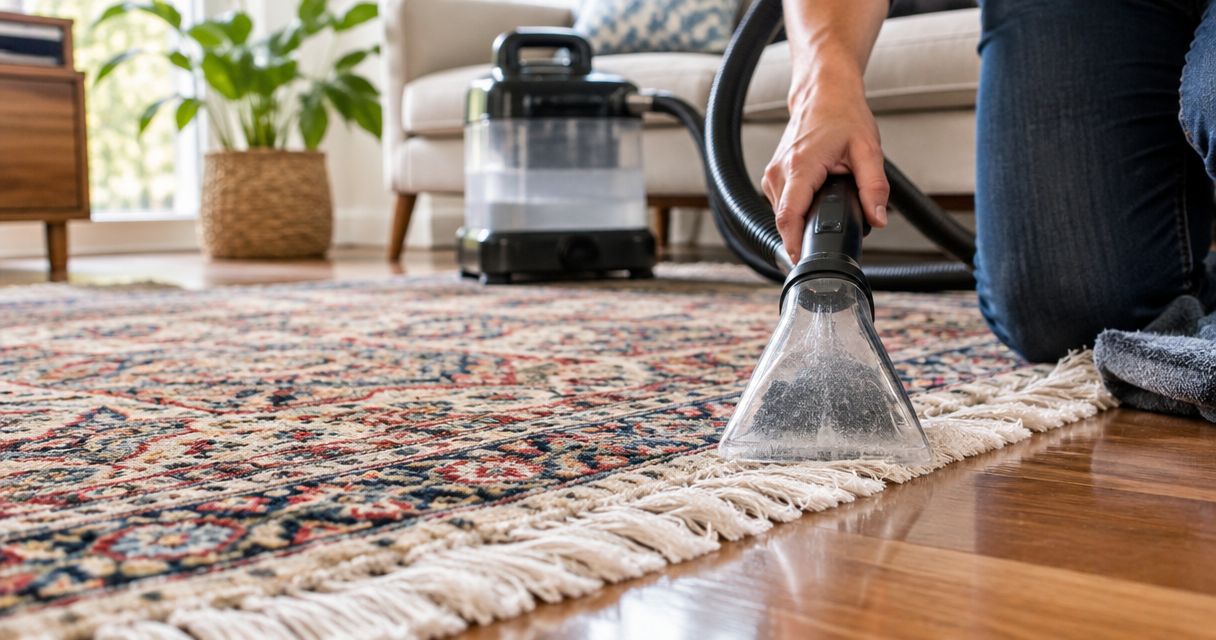
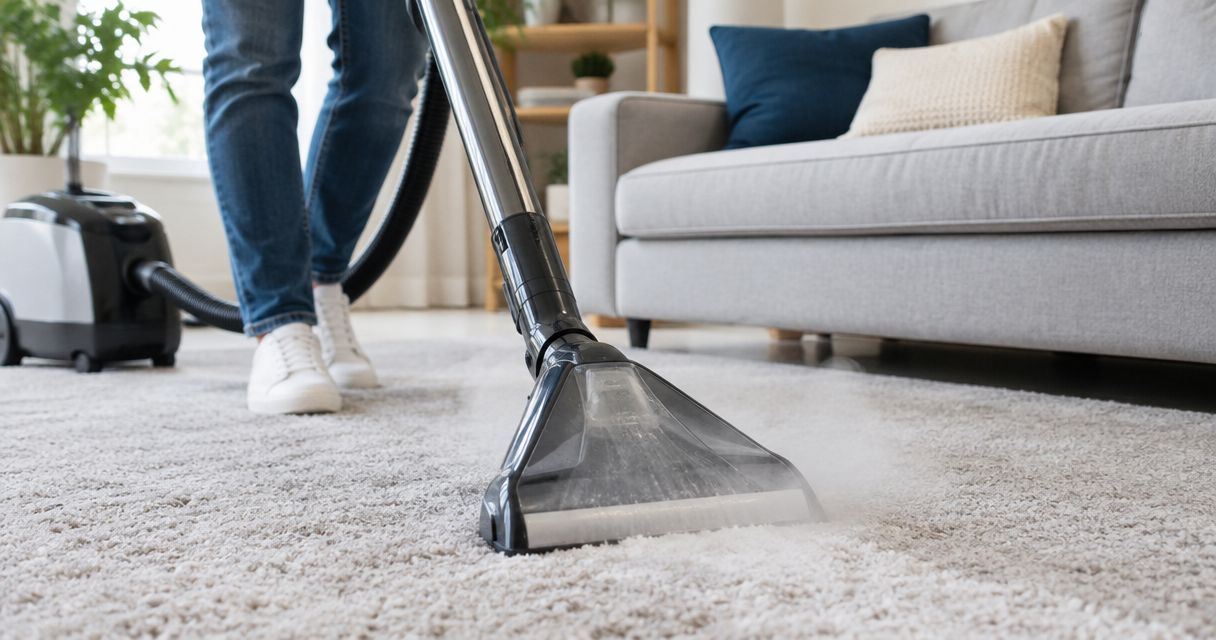
Yes, steam cleaning can damage carpet fibers when the heat, cleaning solution, agitation, or moisture level is wrong for the material. Manufacturer-approved hot-water extraction is different from applying concentrated vapor with a household steam mop; the correct method must suit the fibers, dyes, and backing. For your 2026 cleaning appointment, check the carpet’s care instructions before choosing equipment or authorizing treatment.
- Can steam cleaning damage carpet? Yes: unsuitable heat, chemicals, agitation, and excess moisture can harm carpet.
- Hot-water extraction and household steam mops are different; follow the carpet manufacturer’s cleaning instructions.
- PowerPro Carpet Cleaning serves homeowners and businesses in Manalapan Township and surrounding Central and North New Jersey counties.
- Check the backing as well as the fibers; a dry-feeling surface does not prove the whole carpet is dry.
Can steam cleaning damage carpet fibers?
Yes, but the method and its application matter more than the word steam. A carpet-cleaning machine that applies solution and extracts it is not interchangeable with a household appliance that directs hot vapor onto a surface. Our guide to steam cleaning versus shampooing for carpets explains another distinction to check before booking.
The carpet manufacturer’s instructions are the starting point. Fiber type alone does not settle the question: dyes, backing, adhesives, construction, and existing damage also affect which treatment is suitable.
| Cleaning option | Best for | Benefit | Limitation or damage risk |
|---|---|---|---|
| Manufacturer-approved hot-water extraction | Carpets whose care instructions allow extraction | Applies cleaning solution and removes suspended soil through extraction | Excess moisture, unsuitable chemistry, or poor technique can cause problems |
| Manufacturer-approved low-moisture cleaning | Carpets whose instructions permit the particular system | Uses a process designed to limit wetting | The chemistry and mechanical action still need to suit the carpet |
| Household vapor steamer or steam mop | Only carpet applications explicitly permitted by both manufacturers | Provides localized heat without a conventional extraction process | Concentrated heat and limited soil removal make it no substitute for an approved carpet-cleaning system |
None of these labels guarantees a safe result. A compatible method used badly can damage carpet, while an unsuitable method does not become safe because the operator calls it gentle.
Fiber damage is not the same as backing damage
Fiber damage changes the pile itself. Examples include distortion from excessive mechanical action, discoloration from incompatible chemicals, and damage from unsuitable heat exposure.
Backing problems occur underneath. Excess wetting can contribute to adhesive failure, separation between backing layers, or shrinkage in susceptible constructions. Those problems can change how the carpet lies even when the individual fibers look intact.
Ask what caused the change before agreeing to another cleaning pass. Repeated treatment is not a general remedy for rippling, discoloration, or a changed texture.
Why this matters before you book
Carpet cleaning should remove soil without creating a second problem. If a cleaner discusses stains but never asks about the carpet material or condition, the conversation is incomplete.
For a Manalapan Township home or a New Jersey business planning cleaning in 2026, access and drying conditions belong in that conversation too. A room that must remain in use needs a practical plan for keeping traffic off damp carpet.
PowerPro Carpet Cleaning is a family-owned service serving homeowners and businesses in Manalapan Township and surrounding Central and North New Jersey counties. When you call, describe the carpet and your concern directly: unknown material, old ripples, pet treatments, or a previous cleaning that left it wet.
Do not treat a clean-looking surface as proof that the process was suitable. Evaluate the result after drying, including texture, color, seams, and any changes that were not present before treatment.
Hot-water extraction: check compatibility first
Hot-water extraction applies cleaning solution and removes it with suction. Carpet manufacturers commonly specify approved extraction procedures for their products, but approval for one carpet is not permission to use the same settings on another.
The useful question is not whether hot water is always harmful. Ask whether the proposed temperature, solution, and equipment fit your particular carpet.
A careful cleaning plan also distinguishes application from recovery. Applying more water does not automatically produce better cleaning; the operator must recover the solution and leave conditions suitable for drying.
Best for: carpets with care instructions that permit hot-water extraction. Its benefit is the removal of suspended soil through extraction. Its limitation is that poor moisture control, incompatible products, or excessive mechanical action can still cause damage.
Before treatment, point out loose seams, existing ripples, weakened areas, and previous discoloration. Cleaning does not repair those conditions, and documenting them helps distinguish existing damage from a new problem.
Household steam mops: do not assume carpet compatibility
A household steam mop is not simply a smaller version of a carpet extractor. It directs vapor and heat onto a surface without the same solution-recovery process.
Some appliances include carpet accessories. That does not override the carpet manufacturer’s instructions, and it does not establish that the appliance will remove embedded soil or resolve staining.
Best for: only the carpet uses expressly allowed by both the appliance and carpet manufacturers. The limitation is important: concentrated heat or repeated contact can expose a small area to treatment the carpet was not designed to receive.
Do not hold a steamer over a stubborn mark while waiting for it to disappear. If the approved procedure does not remove the mark, stop rather than escalating heat or contact time.
Also check what a carpet attachment is intended to do. Refreshing the surface and extracting soil are different tasks; an accessory should not be treated as evidence that the appliance performs both.
Why carpet damage risk varies
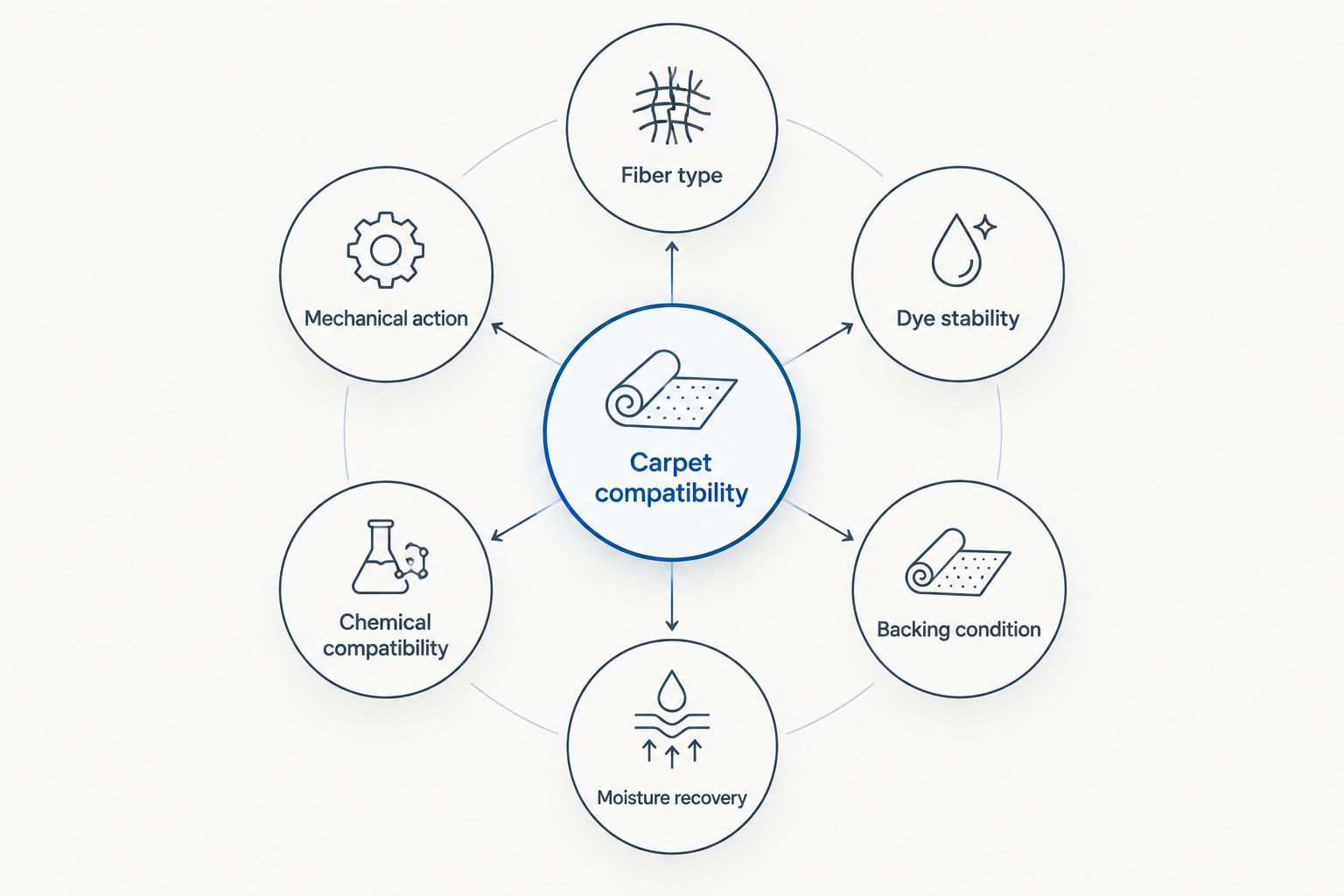
The following factors explain why the same approach can produce different results on different carpets. Use them as questions for your 2026 appointment, not as a reason to choose the hottest or driest-sounding service name.
- Fiber type: Wool and synthetic fibers do not share identical cleaning requirements. Follow the instructions for the actual material instead of assuming every carpet tolerates the same chemistry and heat.
- Dye stability: A colorfastness check helps identify whether the proposed treatment affects the dyes. A successful check supports that treatment; it does not authorize every stronger product.
- Backing condition: Backing, adhesives, seams, and existing deterioration affect how the carpet responds to wetting. A weak structure needs assessment before cleaning begins.
- Moisture recovery: Excess solution left in the carpet increases the drying burden. Surface appearance alone does not show how much moisture remains underneath.
- Chemical compatibility: Cleaning agents must suit the fibers and dyes. Mixing household products or adding stronger spot treatments introduces avoidable uncertainty.
- Mechanical action: Aggressive brushing and repeated scrubbing can distort pile. A stain that resists gentle treatment needs reassessment rather than more force.
The decision combines all these factors. A low-moisture label does not excuse unsuitable chemicals, and a professional machine does not excuse excessive wetting.
What should you check before carpet cleaning?
Start with identification, not a stain-removal promise. This 2026 booking checklist gives the cleaner the information needed to discuss a suitable approach without guessing about your carpet.
- Find the care instructions. Look for purchase records, an installation invoice, or manufacturer information. If you cannot identify the carpet, explain that before treatment rather than selecting a method yourself.
- Show existing problems. Point out ripples, loose seams, worn areas, color changes, and previous water exposure. Take photographs so you have a clear record of the carpet’s condition.
- List previous treatments. Tell the cleaner about spot removers, pet products, powders, and earlier cleaning attempts. Existing residues can affect how a new treatment behaves.
- Ask about compatibility checks. Confirm how the cleaner will assess the fibers, dyes, and backing. For a questionable area, ask about testing the proposed treatment before wider application.
- Discuss extraction and drying. Ask how solution will be recovered and what airflow or room-use arrangements you should make. Get instructions that reflect the actual room and carpet.
- Agree on the stopping point. Ask what happens if a stain does not respond safely. Some marks represent permanent color loss or wear rather than removable soil.
For local homeowners and businesses seeking carpet cleaning, PowerPro Carpet Cleaning is a service option in Manalapan Township and surrounding Central and North New Jersey counties. You can review PowerPro Carpet Cleaning before calling to discuss the carpet’s condition.
The practical advantage is access to a local carpet-cleaning service. The limit is equally clear: cleaning is not a repair for damaged backing, worn fibers, or permanent dye loss. Discuss those concerns before asking for stain removal.
Discuss Your Carpet Before Booking
Explain the carpet material, existing damage, and drying needs before arranging service.
Can wool carpet be steam cleaned safely?
Wool carpet needs a method compatible with its care instructions, including suitable chemistry and controlled mechanical action. Hot-water extraction is not automatically prohibited, but a wool label alone is not enough to approve a specific treatment.
Tell the cleaner the carpet is wool before treatment starts. If the material is uncertain, request identification rather than treating appearance or softness as proof.
Wool carpet and a loose wool area rug also need separate assessments. Rug construction, dyes, fringe, backing, and the floor beneath it can change the cleaning plan; do not assume the installed carpet’s procedure applies unchanged to the rug.
Is carpet shrinkage always caused by heat?
No, carpet shrinkage is not always a heat-only problem. Moisture-sensitive construction can contribute, and changes in the backing or installation can affect the carpet’s shape.
Ripples alone do not establish that the fibers shrank. Photograph the condition and have the cleaner assess it rather than assigning a cause from appearance.
Avoid attempting to flatten the carpet with a hot appliance or another wet cleaning pass. A change in fit, tension, or backing needs the right diagnosis before corrective work.
What should you do if carpet feels different after cleaning?
A different feel does not automatically prove permanent fiber damage. Remaining moisture, cleaning residue, existing wear, and pile disturbance can affect what you notice.
Stop applying products and document the change. Photograph the area, record where the texture differs, and contact the cleaner with the symptoms rather than requesting another pass immediately.
Use these observations to make that conversation specific:
- Stiff or sticky pile: Ask whether residue is present and whether a compatible corrective treatment is needed.
- Changed color: Distinguish a returning soil mark from dye loss or dye movement before applying spot remover.
- Ripples or lifted seams: Request assessment of the backing and installation rather than assuming the surface fibers are responsible.
- Persistent dampness or a new musty odor: Report it promptly. Do not cover the area with a rug or return furniture to it while it remains damp.
Corrective treatment depends on the cause. More water, stronger chemistry, or additional heat is not a universal solution.
FAQ
Can steam cleaning damage carpet if a professional does it?
Yes, professional cleaning can damage carpet if the method, chemistry, heat, or moisture level is unsuitable. Ask how the proposed treatment follows the carpet manufacturer’s instructions.
Is hot-water extraction the same as using a steam mop?
No, hot-water extraction applies cleaning solution and recovers it with suction, while a steam mop directs vapor onto a surface. Do not substitute a household steamer for a manufacturer-approved carpet-cleaning method.
Can I steam clean wool carpet myself?
Use only a method expressly permitted by the wool carpet’s care instructions and the appliance manufacturer. If either set of instructions is unclear, arrange an assessment before applying heat or moisture.
How long should carpet take to dry after cleaning?
Drying time depends on the carpet, moisture left behind, airflow, and room conditions. Ask the cleaner for instructions specific to your job rather than relying on a universal drying estimate.
Why does my carpet feel crunchy after cleaning?
A crunchy texture can indicate remaining cleaning residue, but texture alone does not identify the cause. Contact the cleaner before adding another product or repeating the cleaning.
Will steam cleaning fix carpet ripples?
Steam cleaning is not a repair for carpet ripples. Have the carpet’s condition, backing, and installation assessed before further wet treatment.
Can steam cleaning remove every carpet stain?
No, cleaning cannot restore dye that has been lost or replace worn fibers. Ask the cleaner to distinguish removable soil from permanent damage before escalating treatment.
One last thing
Photograph the carpet before cleaning, not only after a problem appears. Include seams, traffic lanes, existing spots, and rippled areas so the cleaner can discuss changes against a useful record.
For your 2026 appointment, call PowerPro Carpet Cleaning with the carpet material, prior treatments, and any damage concerns. Ask what method is proposed and what you need to do while the carpet dries; those answers matter more than the word steam on an advertisement.