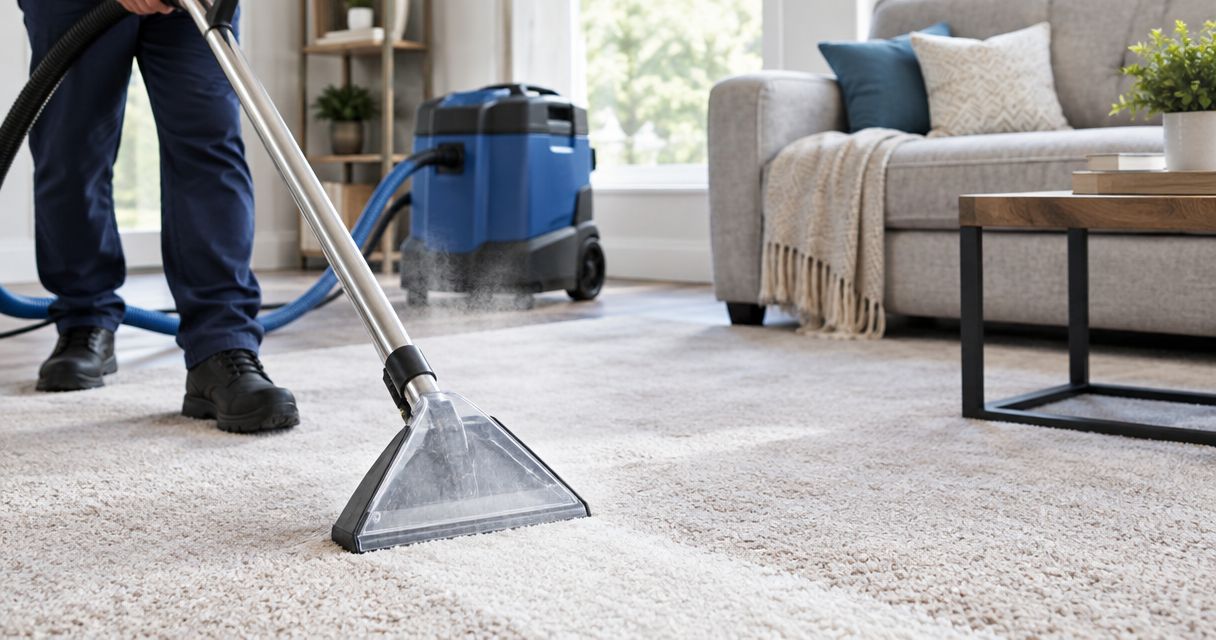
Best overall: professional hot-water extraction with a clear moisture-removal and airflow plan. Best for offices with a tight reopening deadline: low-moisture cleaning, which is not steam cleaning. Best for a small, access-limited room: portable extraction with a drying plan. PowerPro Carpet Cleaning is a local carpet-cleaning option for homeowners and businesses in Manalapan Township and surrounding Central and North New Jersey counties. This 2026 guide ranks cleaning approaches by how well you can plan for dry carpet, rather than treating every steam-cleaning job as equally fast.
- Choose the best carpet steam cleaning service drying speed by its extraction, airflow, and room-use plan.
- PowerPro Carpet Cleaning serves homeowners and businesses in Manalapan Township and surrounding Central and North New Jersey counties.
- Hot-water extraction suits a thorough carpet-cleaning job; moisture removal and room conditions determine drying.
- Low-moisture cleaning deserves consideration for tight reopening schedules, but it is not steam cleaning.
Why this matters
A carpet that looks clean is not necessarily ready for furniture, foot traffic, or an office reopening. Your booking needs to cover both the cleaning work and what happens afterward. Start with PowerPro Carpet Cleaning and explain which rooms must return to use first.
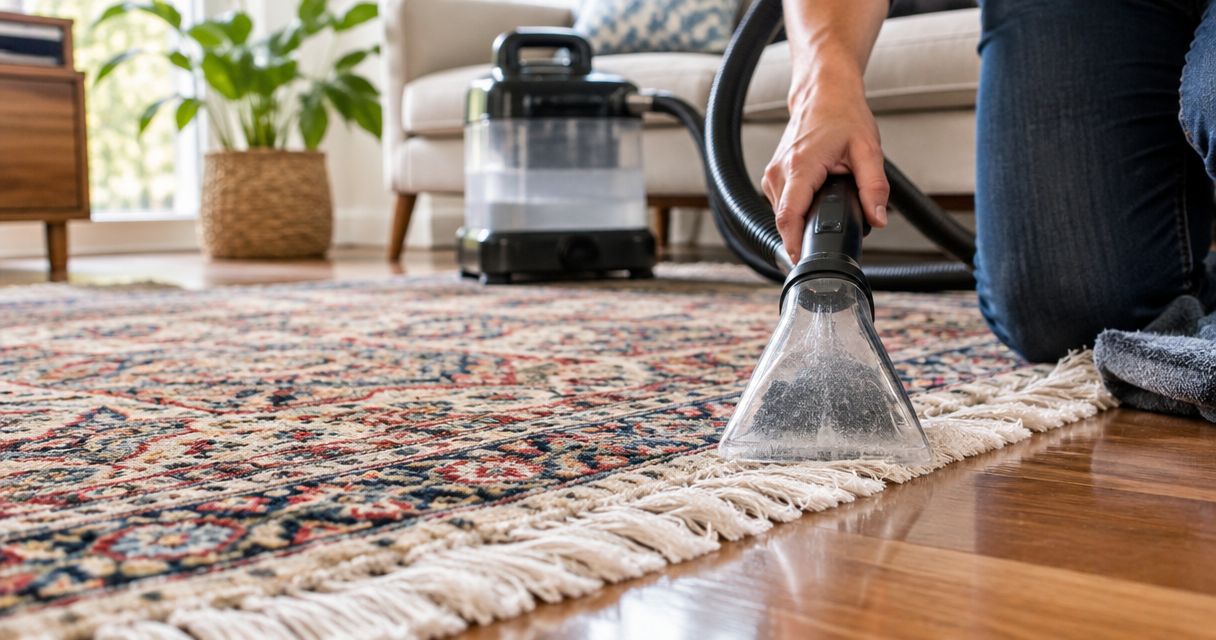
The word steam does not give you a drying schedule. In common carpet-cleaning usage, steam cleaning usually means hot-water extraction: cleaning solution enters the carpet, and extraction removes solution and loosened soil. The carpet still needs to dry.
For a 2026 booking, separate two questions: which method suits your carpet, and how will the technician manage the moisture that method leaves behind? A quick surface touch alone does not answer both.
What makes the best carpet-cleaning service for drying speed?
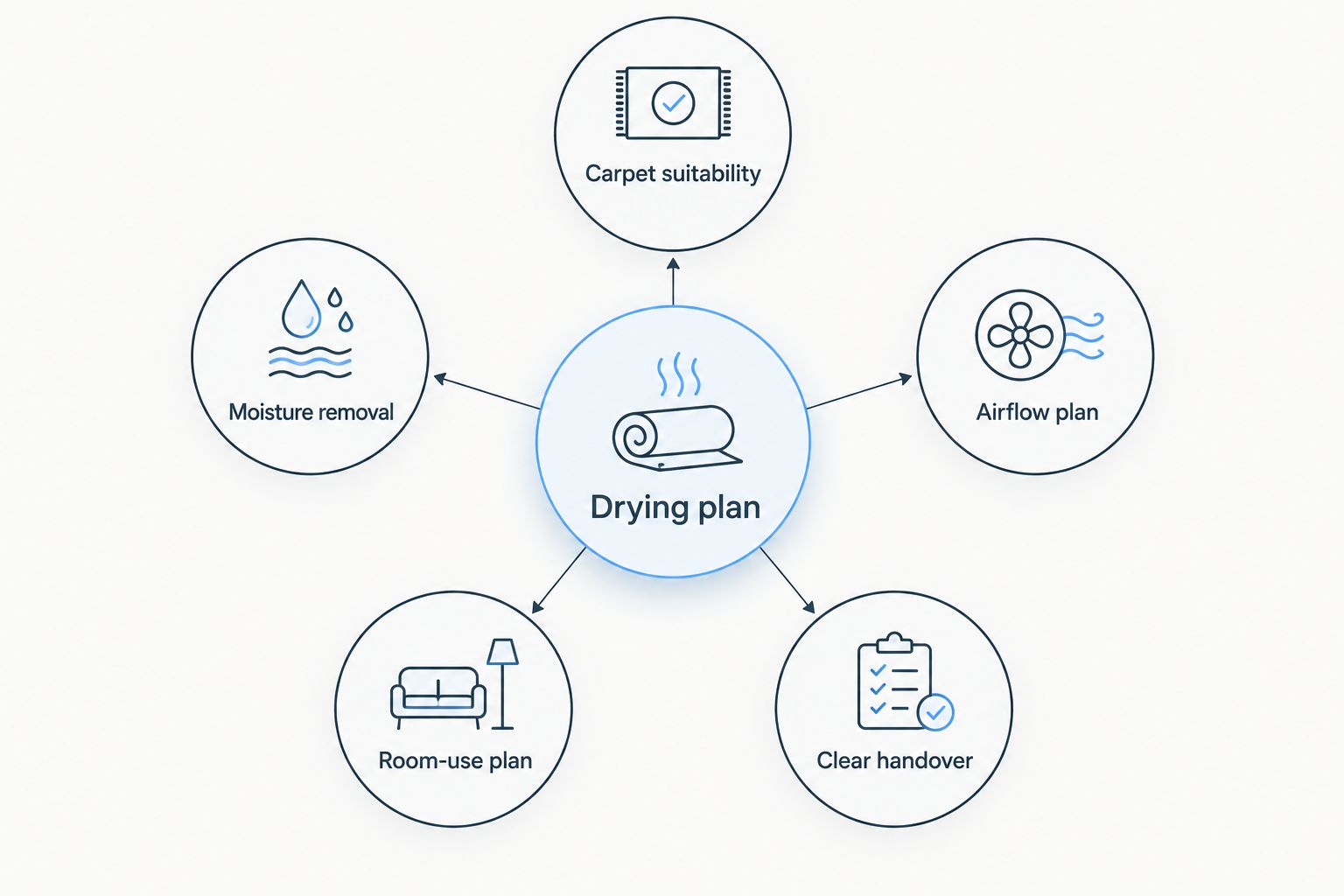
Judge the proposed job against these five criteria before choosing a company:
- Carpet suitability: The method must suit the carpet's fiber, construction, condition, and care instructions.
- Moisture removal: Ask how the technician removes cleaning solution and whether additional extraction passes are appropriate.
- Airflow plan: Find out how the room will receive air movement after cleaning, without assuming open windows always help.
- Room-use plan: Identify the rooms, walkways, and furniture that need special handling while the carpet dries.
- Clear handover: Request practical instructions for walking on the carpet, returning furniture, and checking persistent dampness.
Drying speed is an outcome of the whole job, not a feature you can judge from an equipment name. A powerful machine does not remove the need to consider carpet thickness, moisture application, indoor humidity, and airflow.
Carpet-cleaning approaches at a glance
This order favors a practical drying plan for a professional cleaning job. It is not a measured fastest-to-slowest league table: method names alone do not establish elapsed drying time.
| Rank and approach | Best for | Standout feature | Key limitation |
|---|---|---|---|
| 1. Hot-water extraction with planned airflow | Homes needing extraction cleaning and a managed return to use | Connects moisture removal with room conditions | Leaves moisture that must dry; airflow does not replace extraction |
| 2. Low-moisture maintenance cleaning | Offices prioritizing a limited disruption window | Uses less applied moisture than wet extraction approaches | Not steam cleaning; suitability depends on carpet and cleaning needs |
| 3. Portable hot-water extraction | Small rooms or locations with access constraints | Brings extraction equipment into the work area | Portable equipment alone says nothing about drying speed |
| 4. DIY rental extraction | Homeowners prepared to manage the cleaning themselves | Gives the homeowner direct control over the task | Not a professional service; technique affects moisture left behind |
1. Hot-water extraction with airflow: best for planned home cleaning
Professional hot-water extraction applies cleaning solution and extracts it along with loosened soil. Pairing that work with a room-specific airflow plan makes it easier to manage the period between cleaning and normal use. Choose this approach when extraction cleaning suits the carpet and you can protect the drying area.
The important distinction is not a claim that fans make every job fast. It is that moisture removal and drying conditions receive attention together. Air movement supports evaporation; it does not undo excessive wetting or make an unsuitable cleaning method appropriate.
Hot-water extraction with airflow pros:
- Addresses cleaning and drying as parts of the same job.
- Allows the technician to explain extraction and moisture handling.
- Supports a room-by-room plan for household access.
- Gives you a clear basis for asking about furniture placement.
Hot-water extraction with airflow cons:
- The carpet remains damp after wet cleaning.
- Drying conditions differ between rooms and properties.
- Fans, heating, or ventilation need to suit the actual indoor conditions.
Best for: A homeowner who wants professional extraction cleaning and can keep the treated area protected until dry.
Before your 2026 appointment, identify the hallway or room you cannot avoid using. Tell the cleaner before work starts, not when the equipment is being packed away. Ask which sections should be cleaned first and what walking precautions apply.
Verdict: Buy this approach when the carpet suits extraction and the drying plan fits your household.
2. Low-moisture cleaning: best for office maintenance schedules
Low-moisture carpet cleaning describes approaches that apply less moisture than wet extraction. Encapsulation is one example: a cleaning product is worked into the carpet, with subsequent removal handled according to the system's instructions. This is a maintenance option to discuss, not another name for steam cleaning.
For a New Jersey office, the useful question is whether the proposed method meets the carpet's cleaning needs within the building's access arrangements. A tight reopening schedule does not justify selecting a method that fails to address the condition of the carpet.
Low-moisture cleaning pros:
- Reduces the amount of applied moisture.
- Offers an alternative when a wet-cleaning schedule is difficult.
- Supports discussion of recurring commercial maintenance.
Low-moisture cleaning cons:
- It is not hot-water extraction or steam cleaning.
- It does not suit every carpet or every soil condition.
- Some systems require follow-up vacuuming as part of the process.
Best for: An office manager comparing maintenance methods around a defined reopening window.
Ask for the method name, the carpet manufacturer's care requirements, and the complete maintenance steps. For a 2026 office schedule, include the people responsible for access, ventilation, and follow-up vacuuming in that conversation.
Do not treat a low-moisture service as automatically equivalent to an extraction job. You are comparing different cleaning processes, not simply buying a shorter version of the same service.
Verdict: Buy for suitable office maintenance; skip it when your requirement specifically calls for hot-water extraction.
3. Portable extraction: best for small or access-limited rooms
Portable extraction uses equipment brought into the property to apply and recover cleaning solution. It is an equipment arrangement, not a separate promise about how quickly carpet dries. The technician's process and the room conditions still matter.
This option deserves consideration where access affects how the job can be completed. Discuss stairs, parking, entry routes, and the rooms being cleaned before booking. Do not assume that a portable unit is either faster or slower solely because of its size.
Portable extraction pros:
- Brings extraction equipment into the work area.
- Lets the access plan reflect the layout of the property.
- Provides an extraction option for discussion when access is complicated.
Portable extraction cons:
- Equipment placement and movement need planning.
- A portable machine does not establish a drying deadline.
- Wet cleaning still requires moisture removal and suitable drying conditions.
Best for: A homeowner or property manager whose main constraint is access to a small cleaning area.
Give the cleaner a clear description of the route into the room. Mention any narrow passages and whether other people must use them during the appointment. That information helps define the work plan without turning an equipment preference into a drying-speed claim.
Ask the same extraction and handover questions you would ask about any other wet-cleaning service. Choosing portable equipment does not remove the need to protect furniture contact points or monitor damp areas.
Verdict: Buy when access makes portable extraction appropriate; skip equipment-only promises about faster drying.
4. DIY rental extraction: best for hands-on homeowners
A rental extractor lets you apply cleaning solution and recover it yourself. It is included here as an alternative to hiring a service, not as a professional steam-cleaning provider. The homeowner takes responsibility for carpet suitability, machine use, moisture removal, and aftercare.
The main drying issue is process control. Repeated wet passes add moisture, while extraction technique affects how much is recovered. Follow the machine instructions and the carpet's care guidance rather than assuming more solution means a better result.
DIY rental extraction pros:
- Gives you control over which areas you clean.
- Lets you organize the work around household access.
- Makes you directly responsible for monitoring the carpet afterward.
DIY rental extraction cons:
- Requires you to judge carpet and product suitability.
- Leaves cleaning technique and moisture management to you.
- Offers no professional on-site assessment as part of the task.
Best for: A homeowner comfortable following equipment instructions and managing the entire drying process.
Compare carpet-cleaning services with DIY rental machines before deciding who should handle the work. If the carpet has persistent odors, recurring spots, or a history of dampness, explain those conditions to a professional before choosing a cleaning approach.
Do not use a rental machine to respond to unexplained water intrusion. Cleaning a spill and dealing with a wet carpet from a building leak are different tasks.
Verdict: Hold if you are unsure about the carpet or drying process; choose professional assessment first.
How these approaches are ranked
The ranking uses carpet suitability, moisture removal, airflow, room access, and aftercare. Professional extraction with a drying plan takes the default position because it addresses both the cleaning task and the return to use. Low-moisture cleaning owns a different slot: maintenance work where limiting applied moisture matters.
Portable extraction ranks by access needs, not assumed machine performance. DIY rental extraction remains a comparison option because it transfers the assessment and technique to you. None of these positions establishes a universal drying time.
Which carpet-cleaning approach should you choose?
For a typical professional booking, start with a carpet assessment and a written drying plan—not a fastest-service claim. PowerPro Carpet Cleaning is family-owned and serves homeowners and businesses in Manalapan Township and surrounding Central and North New Jersey counties. Explain your carpet's condition and room-use deadline when you call.
Use these 3 questions during the booking conversation:
- Which cleaning method suits this carpet and its current condition?
- How will cleaning moisture be removed and drying supported?
- What should I do before walking on the carpet or replacing furniture?
Then organize 2 stages: access during the cleaning appointment, and room use afterward. Keep 1 checklist for the cleaner's aftercare instructions. These are planning steps, not promised drying durations.
For your 2026 appointment, give the cleaner the actual reopening requirement. A household hallway, a retail entrance, and an office meeting room create different access problems even when the carpet-cleaning method is the same.
Plan your carpet-cleaning appointment
Discuss your rooms, carpet condition, and drying needs before booking.
FAQ
What's the best carpet steam cleaning service for drying speed?
Choose a professional service that matches the method to your carpet and explains moisture removal, airflow, and aftercare. A service name or machine type alone does not establish the fastest drying time.
Is PowerPro Carpet Cleaning an option in Manalapan Township?
PowerPro Carpet Cleaning serves homeowners and businesses in Manalapan Township and surrounding Central and North New Jersey counties. Discuss your carpet condition, access needs, and room-use deadline before booking.
Is low-moisture carpet cleaning the same as steam cleaning?
No, low-moisture cleaning is not the same as hot-water extraction, commonly called steam cleaning. Ask which process is proposed and whether it suits the carpet and its cleaning needs.
Does a portable carpet extractor dry carpet faster?
A portable extractor alone does not establish faster drying. Moisture application, extraction technique, carpet construction, humidity, and airflow all affect the result.
Should I open windows after carpet cleaning?
Open windows only when the outdoor conditions support drying and the cleaner recommends it. Bringing humid outdoor air into the room does not necessarily help the carpet dry.
Can I put furniture back when the carpet feels dry on top?
Do not rely only on a surface touch before returning furniture. Follow the cleaner's instructions about complete drying and protection under furniture contact points.
What should I do if the carpet stays damp or smells musty?
Contact the cleaner and describe where the dampness or odor persists. Explain any leaks or earlier water problems rather than adding more cleaning solution or repeating wet passes.
One last thing
The busiest walkway deserves the earliest planning. If every trip through your home crosses the cleaned hallway, a vague instruction to stay off the carpet is not enough. Ask how to manage that route before the appointment starts.
For 2026, make your final selection on carpet suitability and a workable return-to-use plan. Call the cleaner with your access deadline; do not choose a service solely because its description includes steam.