Yes, cleaning a rug is worth it when the fibers, backing, and edges are sound and the main problem is removable soil rather than permanent damage. Cleaning cannot rebuild worn pile, reverse bleach damage, or repair a failing backing, so judge the rug’s condition before deciding to keep it or replace it.
- Is it worth cleaning a rug instead of replacing it? Yes, when soil—not structural damage—is the main problem.
- Professional area rug cleaning removes soil; it does not replace missing fibers or restore bleached color.
- PowerPro Carpet Cleaning serves homeowners and businesses in Manalapan Township and surrounding Central and North New Jersey counties.
- Choose replacement when the rug no longer meets your needs, even after realistic cleaning and repair expectations.
Is it worth cleaning a rug instead of replacing it?
Clean a sound rug you still want to use; replace a rug whose damage or condition makes it unsuitable. A dirty surface alone is not a reason to throw away an otherwise usable rug.
For a local assessment, PowerPro Carpet Cleaning provides area rug cleaning for homeowners and businesses. Describe the material, visible damage, and spill history before requesting service.
Use this comparison for your 2026 cleaning-or-replacement decision:
| Option | Best for | Main benefit | Main limitation |
|---|---|---|---|
| Professional cleaning | A structurally sound rug with accumulated soil or treatable spots | Keeps a rug you already like in use | Cannot rebuild fibers, repair tears, or guarantee stain removal |
| Repair assessment before cleaning | A rug you want to preserve that has loose edges, fringe damage, or tears | Separates repair needs from cleaning needs | Repair and cleaning are different services; confirm who handles each |
| Replacement | A rug with extensive deterioration or one that no longer suits the room | Lets you choose a different material, size, or construction | Discards the existing rug and requires evaluating a new one |
Do not compare a neglected rug with a brand-new replacement solely by appearance. First identify which visible problems are dirt and which are actual wear. That distinction determines what cleaning can accomplish.
Why this matters
Cleaning and replacement solve different problems. Cleaning addresses soil and contamination; replacement changes the item itself. Neither decision should depend only on how dark the rug looks beside furniture that has protected part of it.
A rug can look worn because soil has changed its appearance. It can also look dirty because its fibers are flattened, faded, or missing. Ask what will remain after cleaning, not just what the cleaning process removes.
For a 2026 household maintenance plan, the useful question is whether the cleaned rug will still do the job you need. Consider its condition, your expectations, and whether you actually want to keep it.
When cleaning is the better choice
The rug is dirty but structurally sound
Cleaning is the sensible starting point when the rug has accumulated soil but remains intact. Look at the edges, underside, and heavily used areas rather than judging only the center pattern.
An intact rug offers something cleaning can preserve. By contrast, loose backing, tears, or exposed foundation material need a separate discussion before wet cleaning or further use.
Check these areas without pulling or forcing the rug:
- Edges: Look for unraveling, opened seams, and loose binding.
- Backing: Look for separation, crumbling material, or visible deterioration.
- Pile: Compare busy walkways with less-used areas for actual fiber loss.
- Fringe: Look for broken or detached strands rather than surface discoloration alone.
Stop handling a fragile rug if inspection causes material to separate. Photograph the problem and ask for an assessment instead.
You still like the rug and it fits the room
A rug does not need to look new to remain useful. If it fits the space, lies safely, and has a design you want to keep, cleaning deserves consideration before replacement.
Be honest about your goal. If you already dislike the rug’s size, texture, or pattern, cleaning will not change those features. Replacing it for those reasons is a furnishing decision, not a cleaning failure.
The main issue is soil rather than missing color
Tracked-in dirt, loose debris, and spills are different from fading or dye loss. Cleaning targets unwanted material on or within the rug; it does not automatically restore the original color.
Bleach damage is a clear example. Removing residue does not put the lost dye back. Ask the cleaner to distinguish removable staining from color loss before agreeing on the expected result.
When replacement deserves serious consideration
The rug has extensive physical deterioration
Cleaning cannot recreate fibers that have worn away. A threadbare walkway, large tear, or disintegrating backing changes the decision because the problem extends beyond soil.
Replacement is not the only possible response to damage. A repair assessment is appropriate when you want to preserve the rug, especially when its personal value matters more than appearance alone. Do not assume a cleaning appointment includes that work.
The rug no longer works safely in the space
A rug that bunches, curls, or slides needs attention regardless of cleanliness. Check the floor, rug pad, placement, and rug condition rather than assuming washing will correct the problem.
If the rug itself cannot lie safely after appropriate assessment, replacement deserves consideration. A cleaner surface does not resolve an ongoing trip hazard.
Your expectations require an undamaged appearance
A cleaner can remove soil without removing every visible mark. Permanent discoloration, wear, and texture changes can remain even when cleaning has been performed correctly.
If those remaining defects would make you replace the rug anyway, discuss them before booking. Do not authorize cleaning on the assumption that every mark is removable.
For your 2026 decision, write down the defect you most want corrected. If that defect is missing pile or lost dye, cleaning alone is not the answer.
Why the value of rug cleaning varies
There is no useful universal rule that makes every rug worth cleaning or every old rug worth replacing. The decision changes with the item and the result you need.
- Fiber and construction: Wool, synthetic fibers, silk, and plant-based materials do not all tolerate the same treatment. The rug’s label and construction guide the assessment.
- Physical condition: Tears, weak edges, and deteriorating backing affect what work is appropriate before cleaning starts.
- Type of damage: Soil, dye loss, fiber wear, and structural damage require different responses.
- Contamination depth: A surface spill and contamination that has reached the backing or pad are different problems.
- Personal value: A rug with family significance deserves a preservation discussion that an unwanted rug does not.
- Expected result: Keeping a serviceable rug is a different goal from achieving an unmarked appearance.
Ask for an item-specific recommendation. A conclusion based only on rug age or a photograph of the top surface leaves out important information.
How do you decide whether to clean or replace a rug?
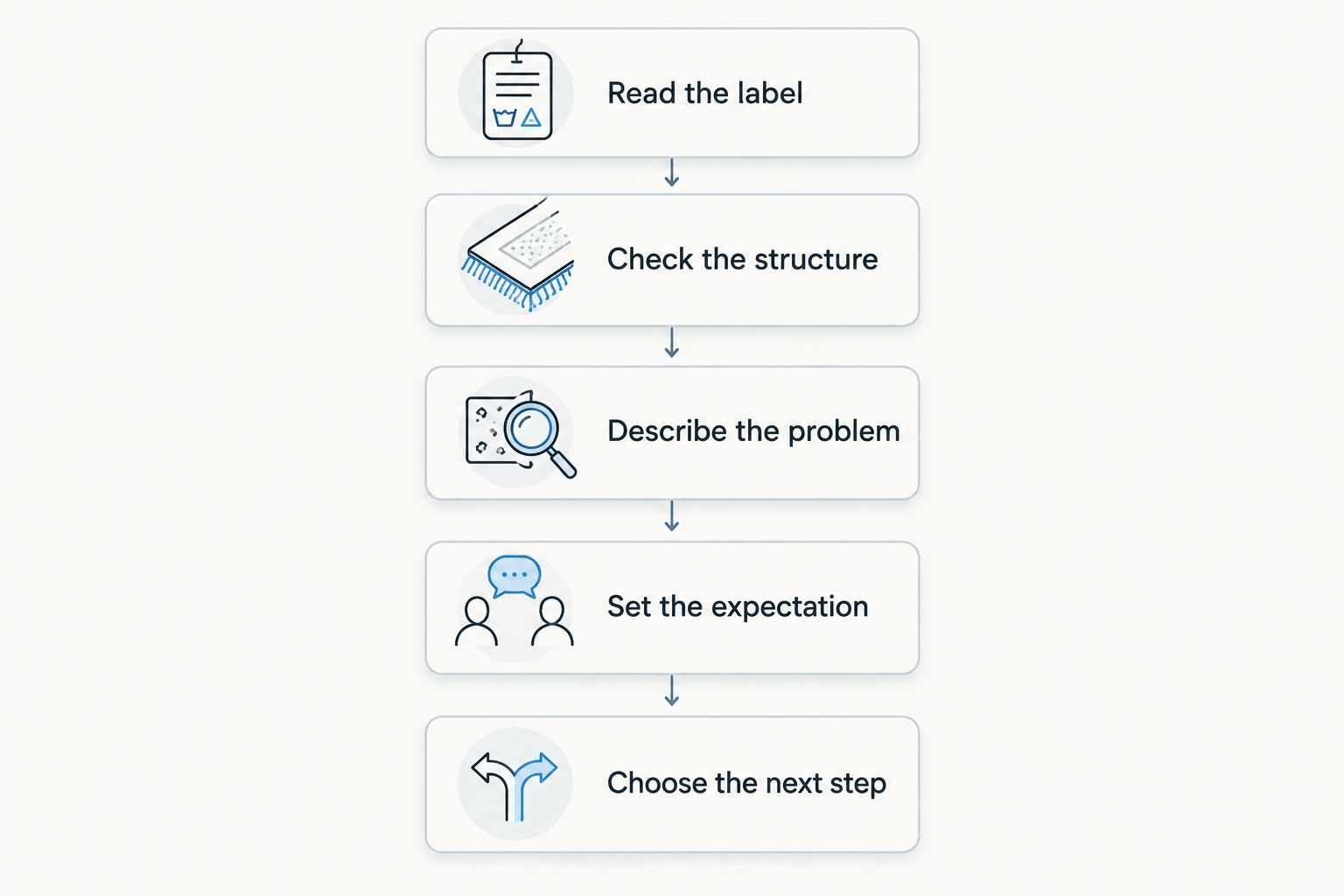
Use this inspection sequence before making a 2026 service request. It gives the cleaner useful information and keeps the discussion focused on your actual concern.
- Read the label. Photograph any care instructions and fiber information. Do not guess the material from softness or appearance.
- Check the structure. Look at edges, backing, fringe, and worn walkways. Note damage separately from dirt.
- Describe the problem. Identify spills, odors, discoloration, and previous cleaning attempts. Say whether the issue returned after earlier treatment.
- Set the expectation. Explain what result would make you keep the rug. Ask which defects are likely to remain.
- Choose the next step. Decide between cleaning, a repair assessment, and replacement after the condition discussion.
Do not scrub a questionable area aggressively to prove whether it will clean. That adds another variable and can damage fibers or spread a stain. Share the history instead.
Can professional cleaning remove pet odor from a rug?
Professional cleaning can address pet-related soil and odor, but the outcome depends on where the contamination has reached. A surface treatment does not automatically address affected backing, padding, or flooring underneath.
Tell the cleaner whether accidents happened repeatedly in the same area. Also explain whether the odor becomes noticeable again after previous cleaning. Those details matter more than a general request to freshen the rug.
Do not use fragrance as your test of success. Ask what is being treated and whether material beneath the rug needs separate attention. Replacement of the rug alone does not address an affected pad or floor.
Is an old or wool rug worth cleaning?
An old or wool rug is worth assessing when its structure remains sound and you want to keep it. Age alone does not establish whether cleaning is appropriate, and wool alone does not establish that the rug is beyond cleaning.
The method must suit the material, dyes, and construction. Follow the care label and ask how the cleaner evaluates color stability and existing damage. Avoid choosing a method simply because it worked on another rug.
For an antique or heirloom, explain its significance before authorizing treatment. Ask whether specialist assessment is needed rather than assuming routine cleaning covers preservation work.
Can I clean the rug myself instead?
Home care is appropriate only when it matches the rug’s care instructions and condition. A machine-washable label is not permission to wash every rug, and a carpet-cleaning machine is not automatically suitable for every area rug.
Start with the manufacturer’s instructions. Avoid saturating an unidentified rug or applying an unfamiliar product across a visible area. If the material, dye stability, or backing is uncertain, get advice before treatment.
For a broader look at equipment and service trade-offs, read the professional cleaning versus DIY rental machines guide. Area rugs still need their own material-specific assessment.
What should you ask a local rug cleaner?
PowerPro Carpet Cleaning is best for Manalapan Township homeowners and businesses seeking a local area rug cleaning service. It is family-owned and serves surrounding Central and North New Jersey counties; confirm your address and the rug’s requirements when you call.
Ask practical questions before making your 2026 booking:
- Can you assess this rug’s material and existing damage?
- Which stains or worn areas are expected to remain?
- Does the rug need repair assessment before cleaning?
- What does the proposed service include and exclude?
- How should the rug be handled and dried after treatment?
Call to discuss the rug before committing to replacement. Describe the problem plainly: “The edge is unraveling” is more useful than “It looks terrible.”
Discuss Your Rug Before Replacing It
Ask about area rug cleaning and explain any stains, odors, or visible damage.
FAQ
Is it worth cleaning a rug instead of replacing it?
Yes, when the rug is structurally sound and removable soil is the main problem. Cleaning cannot rebuild worn fibers, restore bleached color, or repair a deteriorating backing.
Can a dirty rug look worn even if it is not worn out?
Yes, accumulated soil can change a rug’s appearance without making the rug structurally unusable. Inspect the pile, edges, and backing to separate dirt from physical deterioration.
Should I replace a rug that still smells after cleaning?
Find the source of the remaining odor before deciding to replace the rug. Contamination in the backing, pad, or floor needs separate attention and is not resolved simply by choosing a new rug.
Can professional rug cleaning fix bald spots?
No, professional rug cleaning cannot replace missing fibers in bald spots. Ask about a repair assessment or replacement if fiber loss makes the rug unsuitable.
Is professional cleaning appropriate for every wool rug?
No single cleaning method is appropriate for every wool rug. Construction, dyes, condition, and care instructions must guide the treatment.
Should I clean an antique rug before having it repaired?
Ask for an assessment before cleaning an antique rug with damage. Weak edges, tears, or unstable construction can affect the appropriate order of work.
What should I tell a rug cleaner before booking?
Provide the care label, visible damage, spill history, odor concerns, and previous treatment details. Explain what result would make you keep the rug so expectations are clear before work begins.
One last thing
Turn the rug over before deciding to replace it. The underside can reveal backing deterioration or damage that the pattern hides from above.
Take photographs of both sides and the care label. That simple record gives your cleaner a better starting point than a description of the stain alone—and helps you avoid paying for cleaning when the real issue is structural damage.