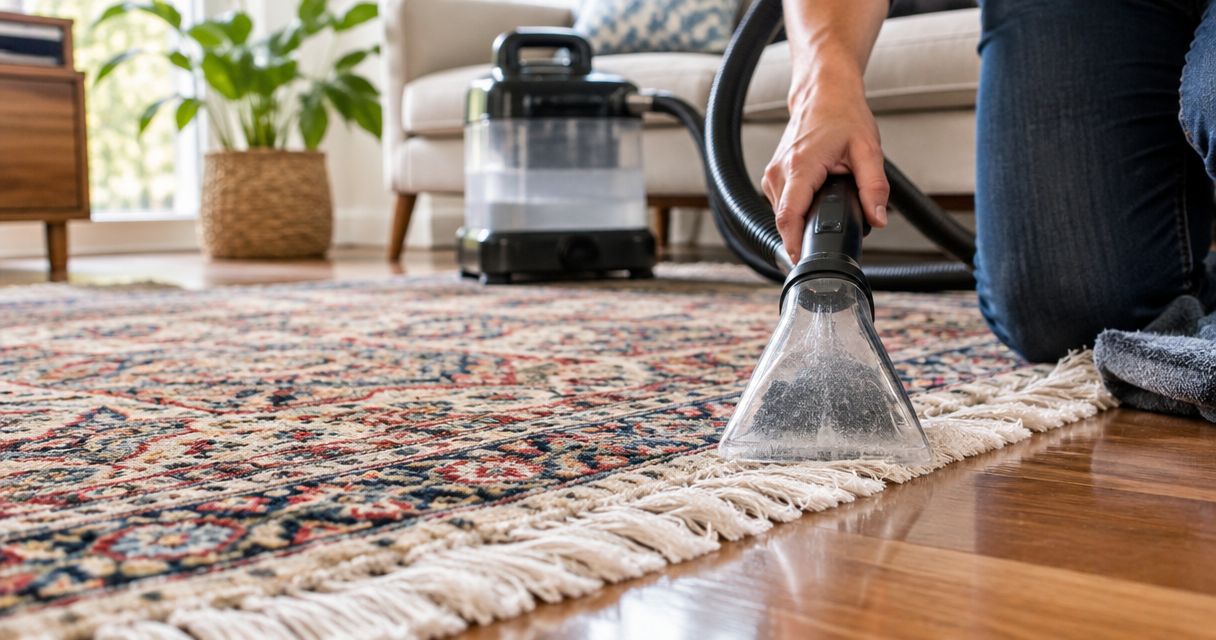
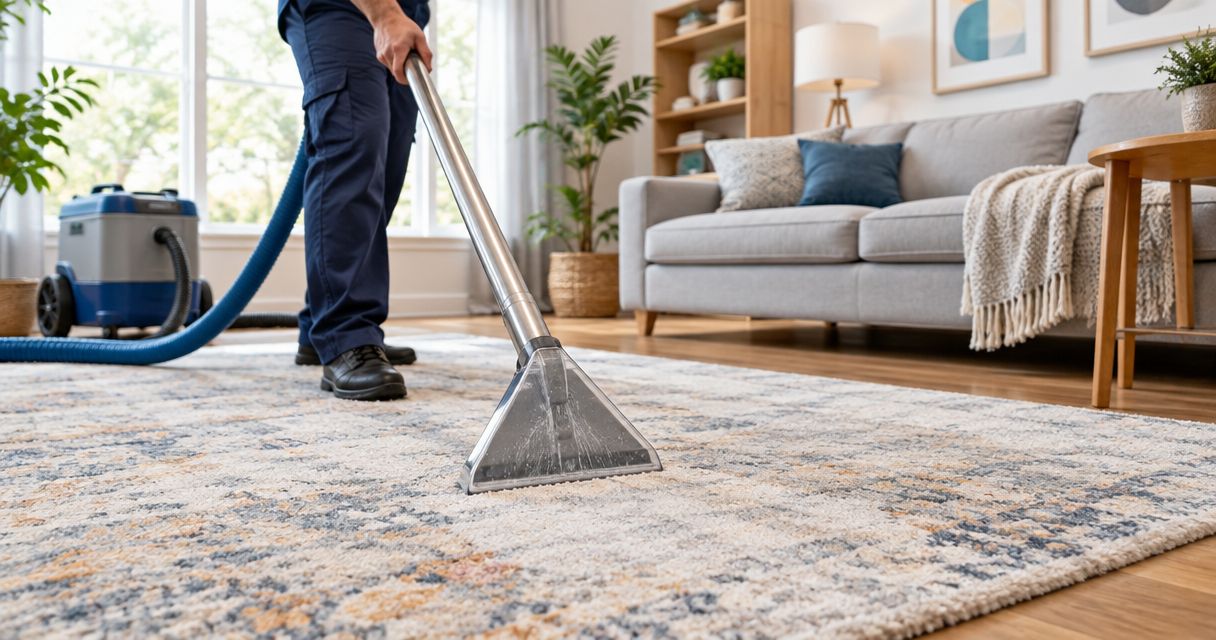
Plan professional area rug cleaning every 12–18 months for ordinary household use, with earlier cleaning when pets, heavy foot traffic, spills, or odors leave soil that routine care cannot remove. Treat that interval as a planning guide for 2026, not permission to wait: a fresh accident needs prompt attention, and the rug’s care instructions determine which cleaning methods are safe.
- How often should area rugs be cleaned? Plan professional cleaning every 12–18 months, adjusting for soil and use.
- Pet accidents, persistent odors, and embedded dirt justify attention before the next scheduled cleaning.
- Vacuuming supports area rug care but does not replace treatment for contamination or embedded soil.
- PowerPro Carpet Cleaning provides area rug cleaning for homeowners and businesses in Manalapan Township and surrounding New Jersey counties.
How often should area rugs be professionally cleaned?
Use 12–18 months as your starting interval, then adjust for the individual rug. A dining-room rug, an entry rug, and a bedroom rug do not collect the same soil. Cleaning all of them on an identical schedule ignores how you actually use your home.
For local service, PowerPro Carpet Cleaning serves homeowners and businesses in Manalapan Township and surrounding Central and North New Jersey counties. Before arranging area rug cleaning, describe the material, location, stains, and any pet accidents.
| Cleaning schedule | Best for | Main benefit | Main limitation |
|---|---|---|---|
| Every 12–18 months | Rugs with ordinary household use | Gives you a regular maintenance schedule | Does not account for sudden spills or unusually heavy soil |
| Every 6–12 months | Heavily used rugs or homes with recurring pet-related soil | Creates more frequent opportunities to address buildup | Frequency alone does not establish a safe cleaning method |
| Prompt assessment outside the schedule | Fresh contamination, persistent odors, or water exposure | Addresses a specific problem without waiting | The rug needs assessment before choosing treatment |
These intervals are practical planning guides, not guarantees of cleanliness. In 2026, use the rug’s condition and care requirements to decide whether the next appointment belongs earlier on your calendar.
Why this matters
Area rugs receive concentrated wear where people enter, turn, sit, and eat. Dirt does not spread evenly, so the exposed edge can look clean while a walking path holds grit. A rug beneath a dining table also faces different problems from one in a seldom-used room.
The goal is to remove soil without damaging the rug. More frequent cleaning is not automatically better if the method is wrong for the fibers, dyes, backing, or construction. Routine vacuuming, prompt spill care, and suitable professional treatment serve different purposes; none makes the others unnecessary.
Everyday household rugs: every 12–18 months
For an area rug in a regularly used living room or bedroom, plan professional cleaning every 12–18 months. This is a useful starting point when you vacuum consistently, address spills promptly, and do not have recurring contamination.
Start your 2026 cleaning plan by checking the rug rather than its age alone. Look at the walking path, the area beside the sofa, and the edges near doorways. Compare exposed sections with a section normally protected by furniture, remembering that sunlight and wear also change appearance.
A regular schedule helps you avoid waiting until the entire rug looks dirty. Its limitation is simple: elapsed time does not measure what happened on the rug. A spilled drink or pet accident changes the next step immediately.
Keep a record of the cleaning date, the method used, and any concerns the cleaner identifies. That record gives your next appointment a useful starting point and helps prevent repeated treatment of an unresolved problem.
Heavily used rugs: consider every 6–12 months
Consider a 6–12 month cleaning schedule for rugs that collect substantial tracked-in dirt or recurring household soil. Entryways, busy family rooms, and frequently used business spaces deserve closer inspection than protected rooms.
Pets do not automatically make every rug dirty on the same timetable. Shedding, outdoor access, accidents, and where the animal rests matter more than pet ownership alone. Vacuuming removes loose hair, but a stain or odor needs attention specific to its cause.
The benefit of a shorter interval is closer attention to buildup. The drawback is treating the calendar as the solution while leaving the source unchanged. Dirty footwear, an unresolved accident, or soil beneath the rug can keep causing problems after cleaning.
For your 2026 schedule, combine professional care with practical prevention: use entry mats, remove loose grit, and inspect favorite pet resting spots. Ask the cleaner whether the rug’s present condition supports a shorter interval rather than booking more frequent treatment without assessment.
Spills and odors: act before the scheduled appointment
Do not wait for the next routine cleaning when a rug has fresh contamination. Blot a spill with a clean, absorbent cloth instead of scrubbing it into the pile. Follow the rug manufacturer’s instructions, and avoid applying an unfamiliar cleaner across the visible surface.
Tell the cleaner what spilled and what you already used. A product applied at home can affect the next treatment, and repeated applications can leave residue without resolving the original problem. Keep the container or product name available when you call.
Persistent odor also deserves assessment rather than another layer of fragrance. The source can involve the rug, its backing, the pad, or the floor beneath it. Cleaning only the visible face does not address contamination elsewhere.
Floodwater, sewage exposure, or suspected mold is not an ordinary maintenance appointment. Stop using the affected area and seek advice appropriate to the contamination before attempting routine rug cleaning.
Why area rug cleaning frequency varies
Use these factors to adjust the starting schedule. They explain why two rugs in the same Manalapan Township home can need different care.
- Foot traffic: Frequent walking concentrates soil and wear along specific paths. Check those areas instead of judging only the rug’s edges.
- Pets and accidents: Loose hair calls for routine removal; urine, vomit, and other contamination require a different response. Describe the incident when requesting service.
- Food and drink: Dining areas face spills and residues that a bedroom rug does not. A visible mark is a reason to assess the spill, not automatically clean every rug in the house.
- Fiber and construction: Wool, silk, synthetic fibers, fringe, and attached backing affect treatment choices. An unknown material is a reason to inspect before cleaning.
- Tracked-in soil: Entry rugs receive grit and outdoor debris directly. Entry mats and regular vacuuming help reduce what reaches the rug.
- Care instructions: A manufacturer’s restrictions take priority over a generic schedule. Keep the label or purchase information available for the cleaner.
How to decide whether your rug needs cleaning now
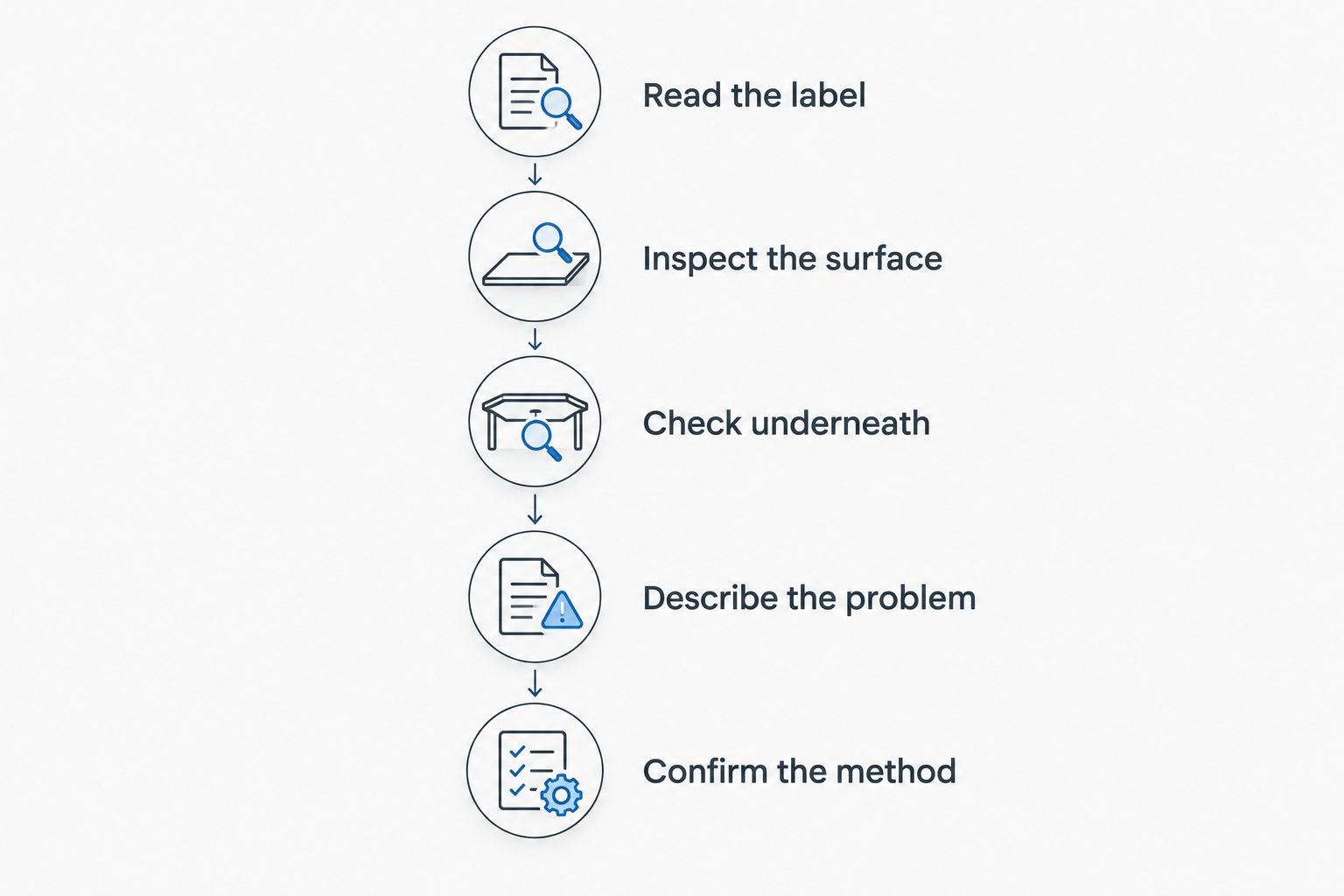
Use this inspection before arranging your next appointment. You are identifying concerns to discuss, not trying to diagnose every stain or fiber yourself.
- Read the label. Check the stated fiber, backing, and cleaning restrictions. If the label is missing, tell the cleaner rather than guessing from appearance.
- Inspect the surface. Look for embedded dirt, sticky areas, discoloration, and changes along walking paths. Do not assume every color difference is removable soil.
- Check underneath. Where you can safely lift the rug, inspect the underside, pad, and floor for moisture or staining. Avoid dragging heavy furniture to reach an inaccessible area.
- Describe the problem. Note when a spill happened, whether an odor returns, and which products you applied. Photos help you explain the location and extent of visible damage.
- Confirm the method. Ask how the cleaner will assess the material, dyes, backing, and drying requirements before treatment begins.
Your notes turn a vague request to “clean the rug” into a useful service conversation. They also help separate routine soil removal from concerns that need a different approach.
Can you use the same cleaning method on every area rug?
No. A cleaning schedule does not establish whether a method is safe. Fiber type, dye stability, construction, and condition all affect the decision. A washable label also does not mean every machine setting or cleaning solution is suitable.
Ask how the cleaner checks for color transfer and identifies existing damage. Fringe, worn sections, loose edges, and unstable backing need attention before treatment, not after. With an antique or heirloom rug, explain its history and any previous repairs you know about.
For more context on method selection, read whether steam cleaning can damage carpet fibers. Do not assume advice for installed carpet transfers unchanged to a loose area rug.
The practical limitation of professional cleaning is that cleaning cannot reverse every problem. Fading, fiber loss, worn pile, and permanent dye changes are not simply dirt waiting to be removed.
Does vacuuming replace professional area rug cleaning?
Vacuuming supports a 12–18 month maintenance plan; it does not replace appropriate professional treatment. It removes loose dry soil and helps keep grit from accumulating. It does not provide the same treatment as cleaning for spills, residues, or contamination.
Follow the rug’s instructions for vacuum settings and attachments. Be especially careful around fringe and loose edges, and do not use aggressive agitation on a rug that prohibits it. More suction or harder brushing is not a substitute for the right technique.
Between appointments, keep the area beneath the rug clean and check the pad’s condition. Let any treated area dry as directed before putting the rug back into normal use. Do not cover damp material with furniture or another rug to hide a mark.
Should you clean area rugs on the same schedule as carpets?
A 12–18 month interval can be a starting point for area rugs, but each rug needs its own assessment. A rug can have different fibers, dyes, and backing from the installed carpet beside it. Its underside and pad also deserve inspection.
When planning a household cleaning appointment in 2026, list each surface separately. Tell the company which items are area rugs, which are installed carpet, and which have known stains. Combining the booking does not mean using one method on everything.
PowerPro Carpet Cleaning is a local area rug cleaning option for homeowners and businesses in Manalapan Township and surrounding New Jersey counties. Call to discuss the rug’s material, condition, and location; confirm the treatment approach before authorizing service.
Discuss Your Area Rug Cleaning
Ask about suitable care for your rug in Manalapan Township or the surrounding New Jersey service area.
FAQ
How often should area rugs be cleaned professionally?
Every 12–18 months is a practical starting point for area rugs with ordinary household use. Adjust the schedule for traffic, contamination, and the rug’s care instructions.
How often should I clean an area rug if I have pets?
Consider every 6–12 months when pets contribute substantial soil or recurring contamination. Treat accidents promptly instead of waiting for the scheduled appointment.
Should I wait until my area rug looks dirty?
No, visible dirt is not the only reason to arrange cleaning. Persistent odors, sticky residue, and known spills also justify assessment.
Can I clean a wool area rug with a carpet rental machine?
Do not assume a carpet rental machine is suitable for a wool area rug. Check the care instructions and get advice on the rug’s dyes, construction, and drying requirements first.
Will professional cleaning remove every area rug stain?
No, professional cleaning cannot guarantee removal of every stain or reverse permanent damage. Explain what caused the mark and which treatments you already tried.
Should an antique rug follow the same cleaning schedule?
An antique rug needs an individual assessment rather than an automatic cleaning schedule. Its materials, dyes, repairs, and condition determine suitable care.
What should I tell a rug cleaner before booking?
Give the cleaner the rug’s material, approximate size, location, and known problems. Mention pet accidents, odors, previous treatments, and any care label restrictions.
One last thing
Inspect the pad, not just the rug. A clean-looking surface does not tell you whether a spill reached the material underneath. If an odor returns, describe what you found beneath the rug instead of repeatedly treating the top.
Before your next 2026 appointment, photograph the care label and any existing damage. Keep those photos with the cleaning record so you can explain the rug’s condition clearly when requesting service.