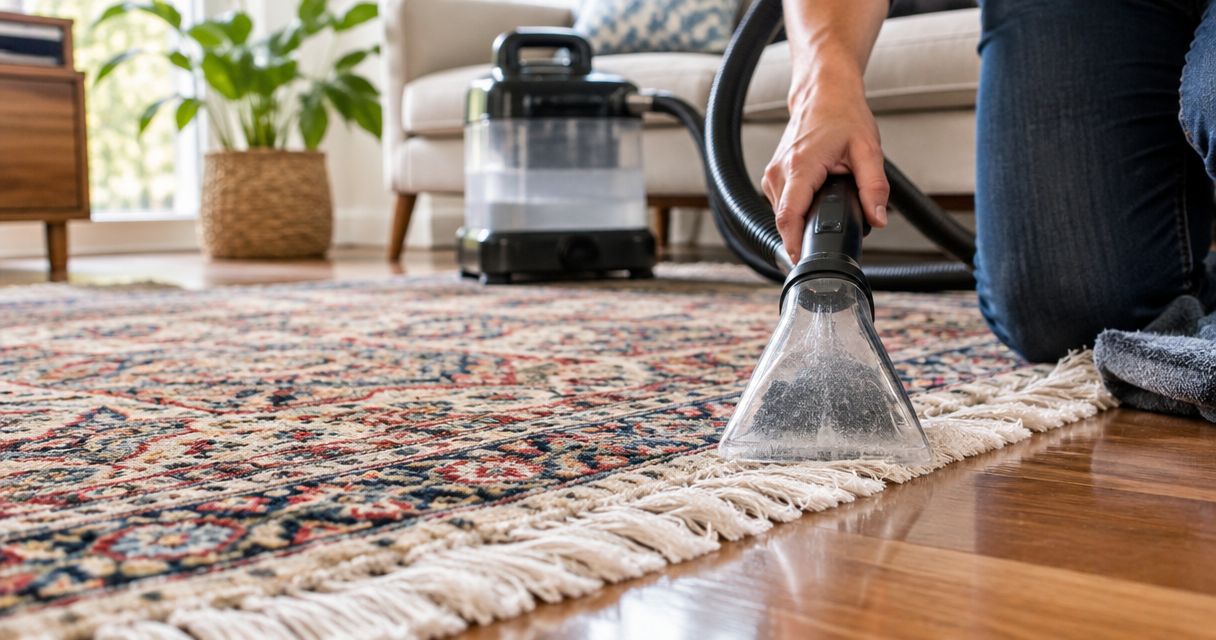
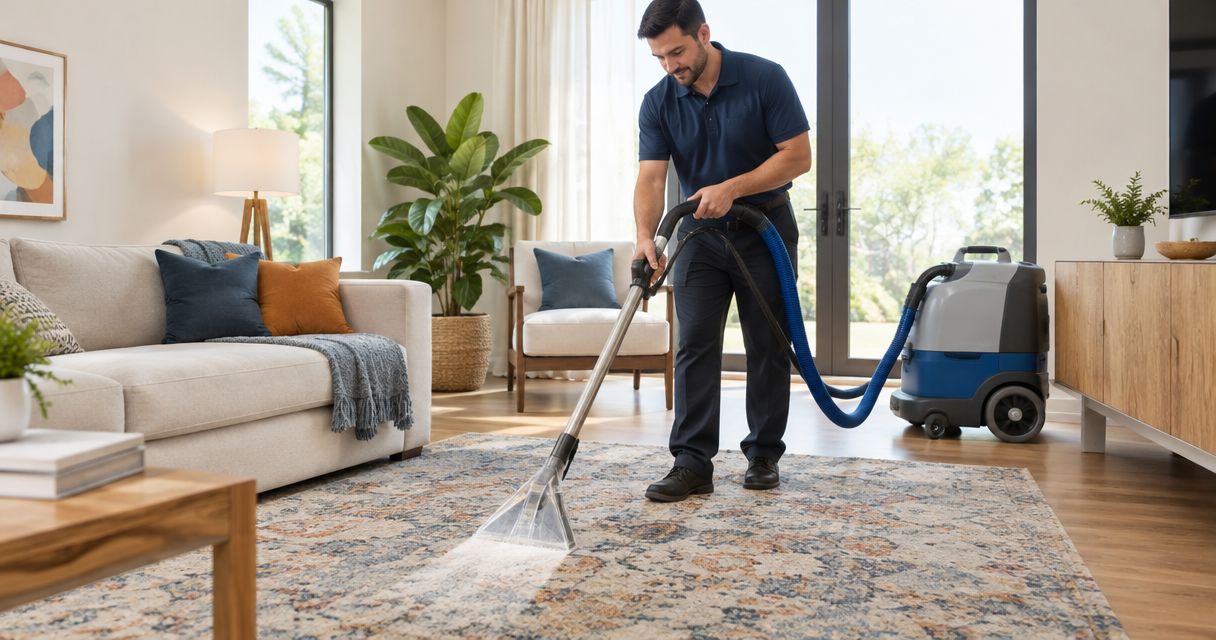
Yes, area rug cleaning can be done without removing the rug from your home when its fibers, dyes, backing, and condition suit the cleaning method. Keeping a rug at home does not necessarily mean leaving it on the same floor during cleaning: the rug pad, floor underneath, and drying arrangements still need protection.
- Area rug cleaning without removing rug from home works for suitable rugs, not every material or contamination problem.
- PowerPro Carpet Cleaning serves Manalapan Township and surrounding Central and North New Jersey communities; ask about your specific rug.
- Choose the cleaning location after checking the rug, its backing, the floor underneath, and the drying space.
- Deep contamination, unstable dyes, or fragile construction require a different plan than routine surface cleaning.
Why this matters
Convenience should not determine the cleaning method. A rug can look sturdy on top while its backing, fringe, or dyes need different treatment. The floor beneath it creates a separate concern, especially when moisture can reach wood or another water-sensitive surface.
For a 2026 cleaning appointment, describe the rug before requesting an in-home visit. PowerPro Carpet Cleaning provides area rug cleaning among its cleaning services, but you should confirm whether your particular rug can be treated at home before making arrangements.
Can area rug cleaning be done without removing the rug from the home?
Yes, provided the rug and the room support the proposed method. Start with 3 checks: the rug, the floor, and the drying space. A suitable rug alone is not enough if moisture will remain trapped underneath it.
These choices solve different problems. Ask the cleaner which fits your rug rather than selecting a location first.
| Cleaning arrangement | Best for | Main advantage | Main limitation |
|---|---|---|---|
| In-home cleaning with floor protection | Suitable rugs needing routine soil removal | Keeps the rug in the home | Requires protection underneath and access for drying |
| In-home cleaning in another suitable area | Suitable rugs that cannot safely be cleaned where they sit | Separates cleaning from a sensitive floor | Requires moving the rug and having an appropriate work area |
| Off-site rug cleaning | Rugs needing treatment or drying arrangements unavailable at home | Allows a separate cleaning environment | Requires the rug to leave the home and a plan for its return |
These are arrangements to discuss, not promises that every provider offers each one. Off-site cleaning is not automatically necessary for every wool rug, and in-home cleaning is not automatically appropriate for every synthetic rug. Construction and condition matter alongside fiber type.
What a cleaner should check first
Before approving wet cleaning, ask the cleaner to examine the care label, backing, edges, fringe, and existing damage. Dye stability also matters. A cleaning product that suits the fiber does not automatically suit every color in the rug.
Explain what has already been applied to spots. Household cleaners, previous spot treatments, and repeated wetting can affect the next treatment decision. Do not add another product just to make the rug look better before inspection.
In-home rug cleaning: best for suitable routine cleaning
In-home cleaning is a practical choice when the rug tolerates the proposed treatment and the cleaner can protect the surrounding surfaces. It avoids taking the rug out of the house. It does not eliminate preparation, testing, or drying requirements.
For a 2026 appointment, ask what the proposed cleaning will address: general soil, a specific spill, or an odor complaint. Those are different jobs. A surface that looks cleaner does not prove that contamination beneath the pile has been removed.
Choose in-home cleaning only when the cleaner explains both the treatment and the drying plan. If the explanation stops at cleaning the visible surface, ask what happens to the backing and pad.
Furniture also affects access. A rug pinned beneath a heavy bed or dining table may need furniture moved before the cleaner can inspect its edges and underside. Agree on that work before the visit rather than assuming it is included.
Off-site rug cleaning: best when the home cannot support treatment
Off-site cleaning deserves consideration when the rug requires a treatment, rinsing process, or drying setup that cannot be provided safely in your home. Fragile construction, dye instability, extensive contamination, and difficult access all belong in that discussion. None should be diagnosed from a photo alone.
The main advantage is separation from household flooring and normal room use. The drawback is disruption: you need a plan for removal, handling, and return. Confirm those arrangements directly rather than assuming pickup or delivery is part of the service.
Do not insist on in-home cleaning when the cleaner identifies a material or drying problem. Ask for the reason and the alternative. The explanation should refer to your rug, not just a preference for one machine or method.
An off-site recommendation also needs scrutiny. Ask what cannot be completed at home and how the proposed process addresses it. Moving the rug elsewhere is a location change, not an explanation of the cleaning itself.
Why the right rug-cleaning location varies
The decision in 2026 still comes down to the rug and the conditions around it, not a universal rule about steam cleaning or portable equipment.
- Fiber and care instructions. Wool, silk, plant fibers, and synthetics do not all respond alike to moisture, heat, or cleaning products. Follow the rug manufacturer's instructions where available.
- Dye stability. Colors that transfer during testing require a treatment plan that addresses that risk. A hidden test helps inform the decision; it does not guarantee every part of the rug will behave identically.
- Backing and construction. Adhesives, attached backing, damaged edges, and loose fringe affect handling and treatment. Inspect the underside as well as the pile.
- Soil and contamination depth. Routine tracked-in soil is different from urine that has reached the backing or pad. The treatment must match the affected layers.
- Floor and pad beneath the rug. Moisture must not remain trapped against a water-sensitive surface. A wet or contaminated pad needs attention separately.
- Drying conditions. Air movement, room humidity, rug thickness, and access to the underside affect drying. A busy room with limited access can make the plan harder to carry out.
A rug's age or appearance alone does not settle the question. Tell the cleaner about repairs, previous color transfer, persistent odors, and any history of water damage.
How should you prepare for in-home area rug cleaning?
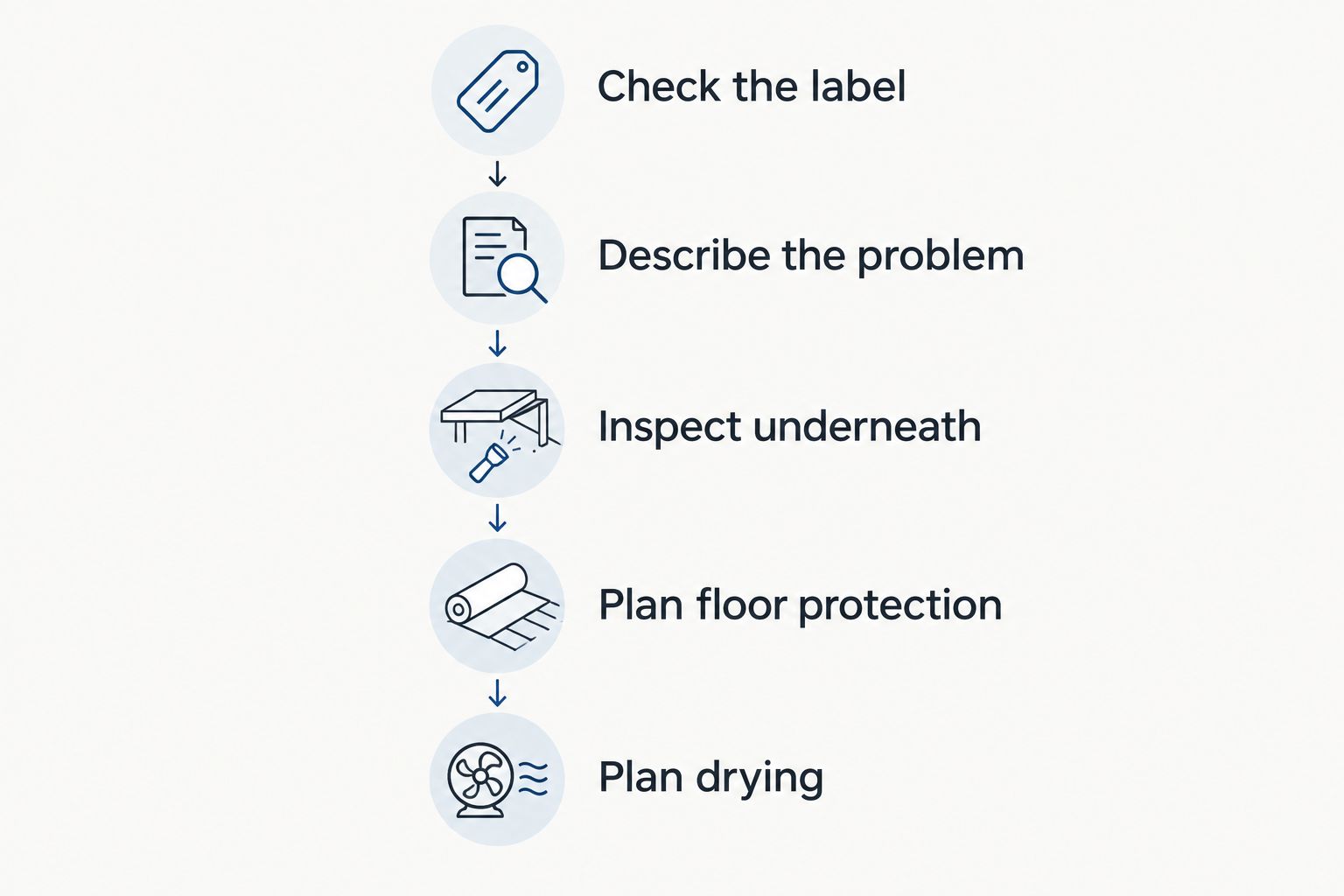
Use this sequence before a 2026 visit. It keeps the conversation focused on what the cleaner needs to inspect and what your household needs to arrange.
- Check the label. Photograph the care label and any information identifying the fiber or construction. If the label is missing, say so rather than guessing.
- Describe the problem. Identify spills, pet accidents, odors, and previous treatments. Explain whether the concern is recent or keeps returning after cleaning.
- Inspect underneath. If you can safely lift an edge, look at the backing, pad, and floor. Do not move heavy furniture or handle a fragile rug just to complete this check.
- Plan floor protection. Ask how the cleaner will keep moisture and cleaning solution away from the underlying floor. Confirm whether the rug must move within the home.
- Plan drying. Agree on where the rug will dry, how the underside will be checked, and when the pad and furniture can go back.
Keep the rug's care information available during the appointment. If your concern is pet odor, point out every known affected area, including places that no longer show a visible mark. That information helps the cleaner assess the scope without relying on appearance alone.
Can you clean an area rug directly on hardwood flooring?
Do not wet-clean an area rug directly on hardwood without a suitable protection and drying plan. Moisture can pass through the rug or remain underneath it, where you cannot judge conditions by touching the top.
Think about 2 surfaces: the rug backing and the floor beneath it. Both need attention before the rug returns to normal use. A dry-feeling pile does not establish that either surface underneath is dry.
Ask whether the cleaner will move the rug, use an appropriate protective setup, or recommend another location. Do not improvise by leaving an impermeable sheet beneath a damp rug after cleaning; that can trap moisture rather than solve the drying problem.
Will in-home cleaning remove pet odor from a rug?
In-home cleaning can address some odor problems, but the result depends on where the contamination has traveled. Urine in the pile is a different situation from urine that has reached the backing, pad, or floor. Cleaning only the visible surface does not address every affected layer.
Identify the source before choosing the method. If odor returns after the rug dries, ask for reassessment rather than repeated surface deodorizing. A fragrance is not evidence that the source has been removed.
Be clear about your goal when booking: removing ordinary soil and addressing persistent urine odor are not interchangeable requests. The cleaner should explain what can be treated in place and what requires another arrangement.
What should you ask a New Jersey rug cleaner before booking?
Use 5 questions to compare the proposed work:
- What does the rug's fiber, backing, and condition tell you about cleaning it at home?
- How will you check for color transfer before treatment?
- How will you protect the floor and assess the pad?
- What will you do if contamination extends below the pile?
- How will you decide when the rug can return to normal use?
PowerPro Carpet Cleaning is best for homeowners seeking a local New Jersey area rug cleaning service in Manalapan Township and surrounding Central and North New Jersey communities. The family-owned business serves homeowners and businesses. Confirm the rug-specific method and whether an in-home visit is appropriate before booking.
Call PowerPro Carpet Cleaning to discuss the rug's material, condition, and location, or use the contact page to explain the job. Do not describe it only as a room-size rug; include the cleaning concern and the type of floor underneath.
Ask About Your Area Rug
Describe your rug, the floor underneath, and the cleaning problem before arranging a visit.
FAQ
Can I get an area rug cleaned without taking it out of my house?
Yes, suitable area rugs can be cleaned without leaving your house. The cleaner still needs to check the fiber, dyes, backing, underlying floor, and drying arrangements before approving the method.
Does keeping the rug at home mean it can stay in the same spot?
No, keeping a rug at home does not mean it can stay in the same spot during cleaning. The cleaner may need to move it within the home to protect the floor or provide suitable access and drying conditions.
Can a wool area rug be cleaned in my living room?
A wool area rug needs an individual assessment before living-room cleaning is approved. Fiber type alone does not establish that its dyes, backing, condition, and surrounding floor are suitable for the proposed treatment.
Can I use a rental carpet cleaner on my area rug?
Do not use a rental carpet cleaner on an area rug unless the rug's care instructions permit the proposed method. Equipment intended for carpet does not automatically suit every rug, backing, or dye.
How long will an area rug take to dry inside my home?
An indoor area rug needs a drying estimate based on its material, thickness, cleaning method, and room conditions. Ask how the backing and pad will be checked instead of relying only on how the top feels.
Does the rug pad need cleaning too?
The rug pad needs separate inspection when moisture, odor, or contamination has reached it. Cleaning the rug alone does not treat a contaminated pad or the floor underneath.
Can I put furniture back as soon as the rug feels dry?
Do not put furniture back based only on a dry-feeling rug surface. Follow the cleaner's instructions for the backing, pad, furniture contact points, and return to normal use.
One last thing
Inspect underneath before you judge the result from above. The most useful final check is not just whether the pile looks brighter; it is whether the backing, pad, and floor have been addressed and the drying instructions are clear.
Before your 2026 appointment ends, ask the cleaner to explain what was treated and what still needs attention. Keep those instructions with the rug's care label so the next cleaning starts with useful information rather than guesswork.