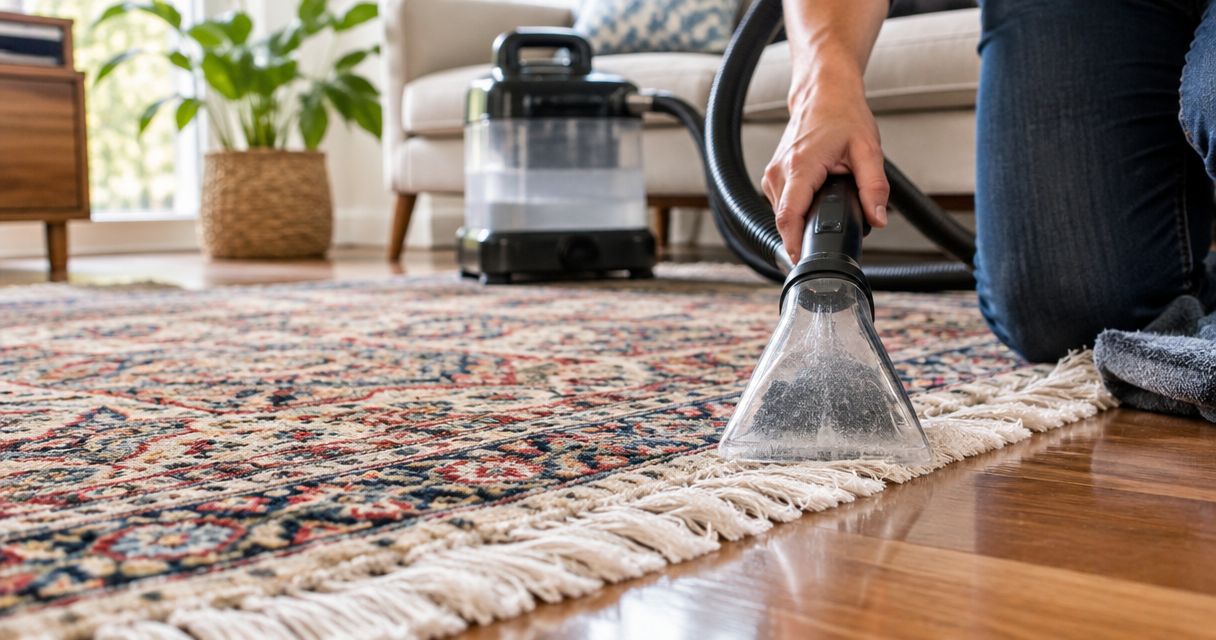
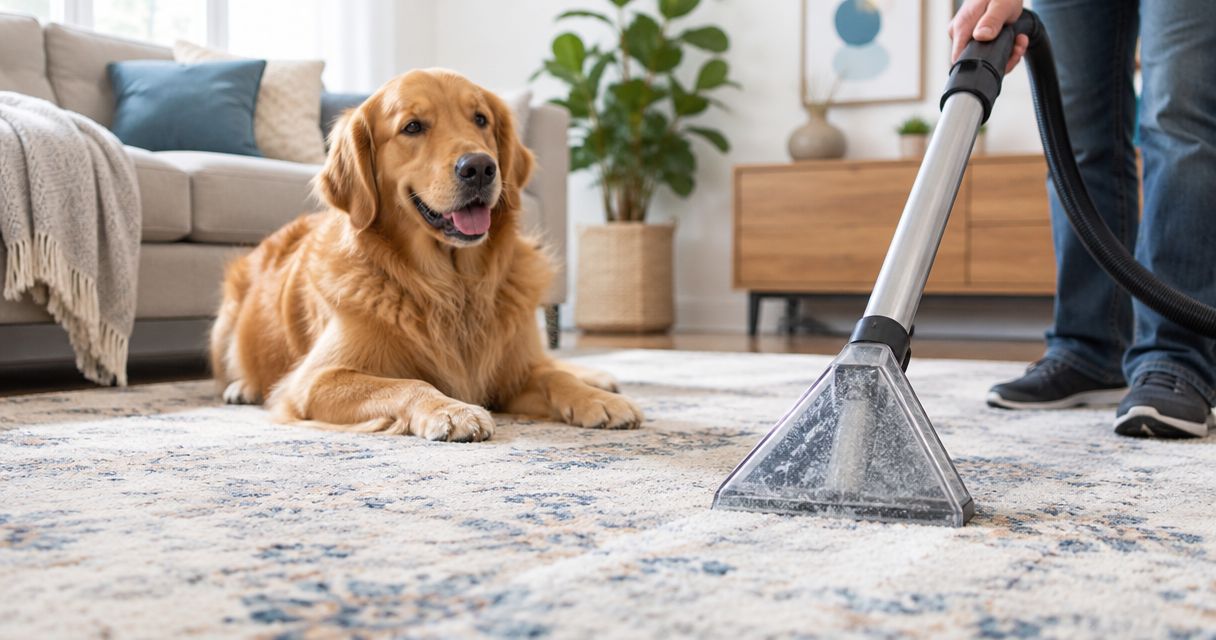
Yes, area rug cleaning can remove pet odor when treatment reaches the urine or other residue causing the smell, rather than just cleaning the surface. Odor can remain if contamination has reached the rug backing, a separate pad, or the floor underneath, so cleaning the rug alone does not guarantee a complete fix.
- Can area rug cleaning remove pet odor? Yes, when treatment removes the source rather than covering the smell.
- Check the rug backing, rug pad, and floor before deciding what needs cleaning.
- PowerPro Carpet Cleaning provides local area rug cleaning; discuss pet odor and rug construction before booking.
- Persistent pet urine odor needs source assessment, not repeated fragrance sprays.
Can area rug cleaning remove pet odor trapped in a rug?
Area rug cleaning can remove pet odor, but a clean-looking rug is not proof that the odor source is gone. The correct approach depends on what caused the smell, how deeply it traveled, and which cleaning methods the rug can tolerate.
For local help, PowerPro Carpet Cleaning serves homeowners and businesses in Manalapan Township and surrounding Central and North New Jersey counties. Explain that you need an assessment of pet odor, not just general soil removal.
| Approach | Best for | Main benefit | Main limitation |
|---|---|---|---|
| Blotting a fresh accident | Immediate first aid | Removes liquid before more spreads | Does not resolve contamination already below the surface |
| Manufacturer-approved spot treatment | A localized accident on a compatible rug | Targets a known spot | Requires material compatibility and correct application |
| Professional rug assessment and cleaning | Persistent odor, repeated accidents, or uncertain construction | Matches cleaning to the rug and affected areas | Cannot reverse every stain or repair damaged backing |
| Fragrance spray | Temporary scent only | Changes how the area smells briefly | Does not remove the odor source |
Choose source removal over scent masking. If the rug smells better only while a fragrance remains noticeable, you have not established that the underlying problem is resolved.
Why this matters
Pet odor and visible staining are separate problems. A small mark on the face of a rug does not tell you how much liquid reached the foundation or what happened underneath it.
For a 2026 cleaning appointment, give the cleaner the accident history before discussing the method. An old urine spot, repeated marking, and general pet smell call for different questions, even when the rug looks similar from above.
Check 3 areas: the rug, the separate pad, and the floor. Treating only the first leaves another possible source in place, and a clean rug can pick up odor again when returned to a contaminated pad.
Why pet odor removal varies
The result depends on the source and the material, not simply on how strongly a cleaner smells. These factors determine what needs attention:
- Type of contamination. Urine requires a different response from loose pet hair or ordinary tracked-in dirt. Tell the cleaner what happened rather than describing everything as pet smell.
- Depth of penetration. Residue in the backing or foundation requires attention beyond the visible surface. A separate pad and the flooring need their own inspection.
- Repeated accidents. Repeated wetting can affect a larger area than the mark you can see. Identify every known location, including spots you previously treated.
- Fiber and construction. Wool, silk, synthetic fibers, dyes, adhesives, and backing materials do not all tolerate the same treatment. Read the care label and disclose any uncertainty.
- Previous cleaning products. Spot removers, deodorizers, and home mixtures affect the cleaning history. Keep the containers or take photographs of their labels.
- Drying conditions. A rug must dry appropriately after cleaning. Folding it, covering it, or putting it back over a damp surface interferes with that process.
Do not judge the required treatment by the size of the visible spot alone. The affected area underneath matters as much as the mark on top.
What should you do before an area rug cleaning appointment?
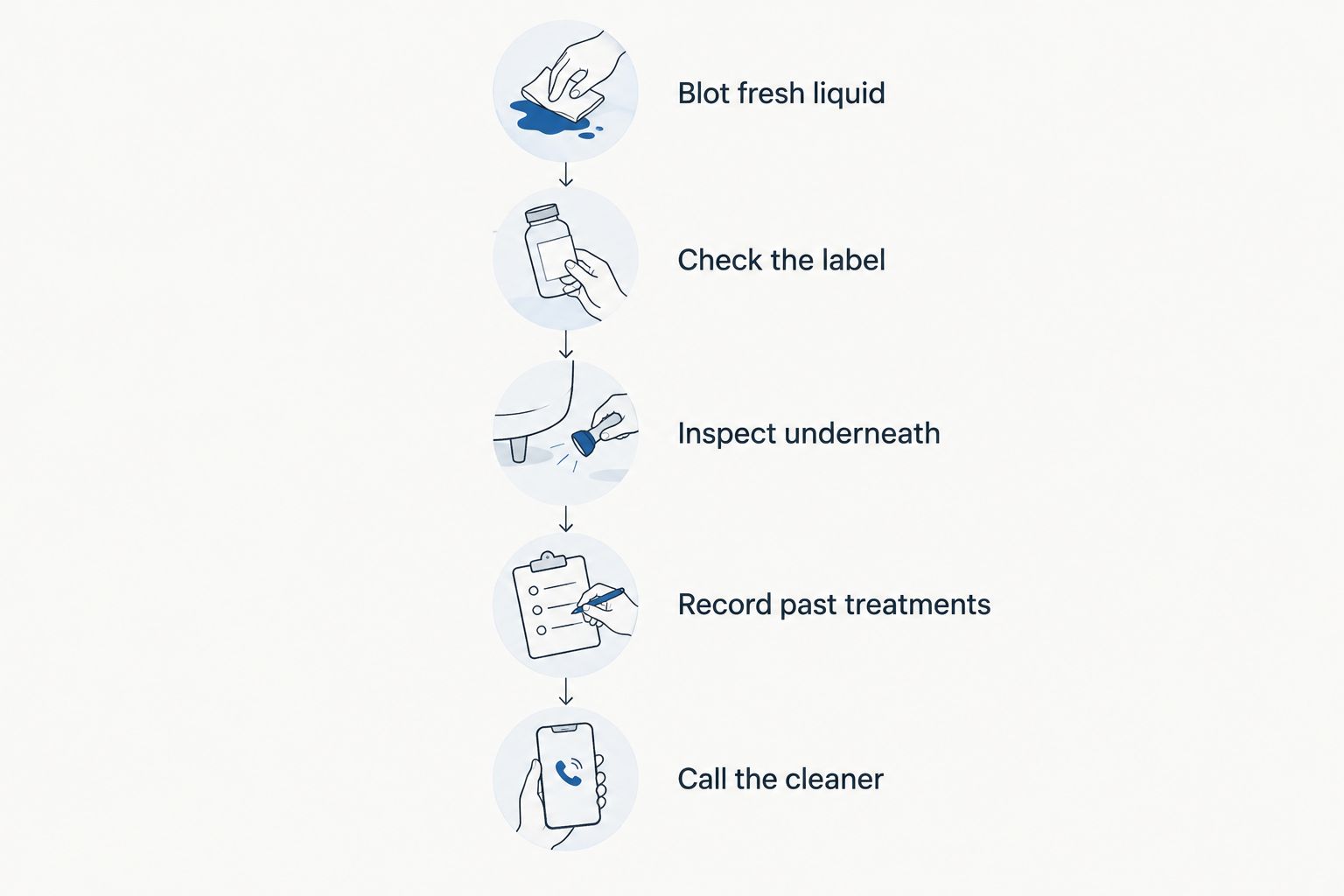
Use this 2026 preparation checklist to preserve useful information and avoid making the problem harder to assess. Stop adding products once you decide to seek professional advice.
- Blot fresh liquid. Use a clean, absorbent cloth and press rather than scrub. Replace wet sections of the cloth so you are absorbing liquid instead of spreading it.
- Check the label. Find the fiber information and cleaning instructions. Do not assume a rug is washable because it is small enough to move.
- Inspect underneath. If you can safely lift the rug, inspect its underside, the pad, and the floor. Avoid dragging a wet or heavy rug across finished flooring.
- Record past treatments. Note the accident locations and products already used. Include any machine cleaning, steam treatment, or repeated home remedies.
- Call the cleaner. Describe the odor, rug material, and what you found underneath. Ask whether an inspection is needed before a cleaning method is chosen.
Leave delicate, damaged, or very large rugs in place until you receive handling advice. A rug that is easy to lift when dry can become difficult to move safely when wet.
What should you avoid doing?
Do not soak an unknown rug to chase an odor. Excess water can reach materials and surfaces that you cannot easily rinse or dry.
Avoid scrubbing, mixing cleaning chemicals, or applying heat to an untreated urine spot. Do not use a steam cleaner as the automatic first response to pet urine; material compatibility and the contamination need assessment first.
A pet-odor product is not automatically suitable for every rug. Follow its label and the rug manufacturer's care instructions, including any colorfastness test, and ask for advice when those instructions conflict.
Is a pet urine spot different from general pet smell?
Pet urine odor requires attention to the accident site and any affected layers underneath. General pet smell can come from hair, body oils, bedding, nearby upholstery, or several sources in the same room.
Start by identifying where the odor is strongest. If the rug is dry and safe to move, separating it from the pad can help you distinguish the sources without adding more cleaning chemicals.
A fresh, isolated accident
Blot promptly and protect the floor beneath the rug where you can do so safely. Use only care-compatible treatment rather than experimenting with several products in succession.
A fresh accident is still not proof that contamination stayed on the surface. Check underneath before putting the rug back into normal use.
An old or repeatedly treated spot
Tell the cleaner that the area has a history. Residue, previous products, and repeated contamination need to be considered together.
Do not promise yourself a result based on the stain getting lighter. The relevant test is whether the source has been addressed and the odor remains absent after appropriate drying.
Odor across the room
Check pet bedding, upholstered furniture, and the floor rather than assuming the rug is responsible for every smell. Cleaning the wrong item wastes effort and leaves the actual source untouched.
A sudden change in a pet's urination habits also belongs in a conversation with a veterinarian. Rug cleaning addresses the contaminated material, not the reason accidents keep happening.
What should you ask a rug cleaner about pet odor?
PowerPro Carpet Cleaning is a local area rug cleaning option for homeowners and businesses in Manalapan Township and surrounding Central and North New Jersey counties. Its family-owned business offers area rug cleaning alongside carpet, upholstery, tile/grout, and air duct cleaning.
The benefit is access to a local cleaning service; the limit is that a service listing alone does not establish which treatment is suitable for your particular rug. Ask for an assessment rather than assuming routine cleaning includes every odor-related step.
Before booking in 2026, ask:
- Does the proposed cleaning address pet urine residue or only general dirt?
- How will you assess the rug's fibers, dyes, backing, and existing damage?
- What should I do with a contaminated rug pad?
- Does the floor underneath need separate attention before the rug returns?
- How should I handle and dry the rug after the work?
- What happens if an odor remains after the rug is fully dry?
Call with the rug's care information and accident history ready. Ask the cleaner to explain the treatment's limits before authorizing the work, especially for an antique rug or a rug with weakened backing.
Discuss Your Rug Cleaning Needs
Explain the pet odor, rug material, and previous treatments before arranging cleaning.
Will the smell come back after the rug dries?
Pet odor can return if residue remains or the rug goes back onto a contaminated pad or floor. A temporary improvement during cleaning does not establish the final result.
Assess the rug after it has dried according to the cleaner's instructions. Do not cover it with furniture or return it to its usual spot simply because the face feels dry.
If you notice odor again, record where it is strongest and contact the cleaner before adding another product. That preserves a clearer treatment history and helps distinguish a remaining source from a new accident.
Can cleaning remove the smell but leave a stain?
Yes, odor removal and stain removal are different outcomes. Urine can affect dyes or materials in ways that cleaning does not reverse.
Ask separately about the expected odor result and the expected appearance. A remaining discoloration does not automatically mean urine residue remains, just as an invisible spot does not prove that the source is gone.
Does the rug pad need cleaning or replacement too?
A contaminated rug pad needs its own assessment before the rug returns. Cleaning the rug while ignoring an affected pad leaves part of the problem unresolved.
Whether a pad is suitable for cleaning depends on its material, condition, and care instructions. Ask the cleaner what is appropriate rather than automatically washing it or putting it back under a freshly cleaned rug.
FAQ
Can area rug cleaning remove pet odor in 2026?
Yes, area rug cleaning can remove pet odor when treatment reaches and removes the source. Contamination in the backing, separate pad, or floor requires attention beyond surface cleaning.
Will a regular rug cleaning remove old dog urine smell?
Regular rug cleaning does not guarantee removal of old dog urine odor. Explain the accident history and ask whether the proposed treatment addresses urine residue rather than general dirt alone.
Can I use an enzyme cleaner on a wool rug?
Use an enzyme cleaner on a wool rug only when its label and the rug's care instructions permit it. Products differ, so ask a qualified rug cleaner when compatibility is unclear.
Why does my rug still smell after I cleaned it?
A rug can still smell because residue remains in the rug, pad, or floor, or because another nearby item is the source. Check those areas before repeating the same treatment.
Should I throw away a rug that smells like cat urine?
A urine odor alone does not establish that a rug must be discarded. Have its construction, condition, and contamination assessed before choosing cleaning or replacement.
Can I put the rug back while the pad is damp?
Do not return a cleaned rug to a damp pad. Follow the cleaner's drying instructions and address the pad and floor before putting the rug back.
Does PowerPro Carpet Cleaning offer area rug cleaning near Manalapan Township?
PowerPro Carpet Cleaning offers area rug cleaning for homeowners and businesses in Manalapan Township and surrounding Central and North New Jersey counties. Discuss the pet odor and rug material before arranging service.
One last thing
Inspect the pad before you put a cleaned rug back. That simple check keeps a treated rug from returning to an overlooked odor source.
For your 2026 cleaning appointment, write down what happened, where it happened, and what you applied. A clear history is more useful than another layer of fragrance.