Tile and grout cleaning involves temporary disruption, but it should not leave your household with dirty water, tracked residue, or a cleanup job afterward. Expect to keep people and pets away from the work area, allow access for equipment, and follow the cleaner’s instructions before using the floor again; any sealing adds its own return-to-use requirements.
- Is tile and grout cleaning messy? Expect temporary access restrictions, not an unfinished cleanup job.
- Keep children and pets out of the work area until the cleaner confirms it is ready.
- Ask separately about cleaning, drying, and grout sealing before planning meals or bathroom use.
- PowerPro Carpet Cleaning provides tile and grout cleaning for households in Manalapan Township and surrounding New Jersey counties.
Why this matters
The biggest household inconvenience is often losing access to a room, not cleaning up afterward. A kitchen floor sits between you and the refrigerator. A bathroom floor determines whether you can reach the toilet or shower without crossing the work area.
For your 2026 appointment, discuss those access needs before choosing a time. When you ask about tile and grout cleaning services, describe how your family uses the room, not just which floor needs attention.
Plan around the room you need to use, not just the appointment’s arrival time. That distinction matters when you have children, pets, mobility needs, or only one bathroom.
Is tile and grout cleaning messy or disruptive to a household?
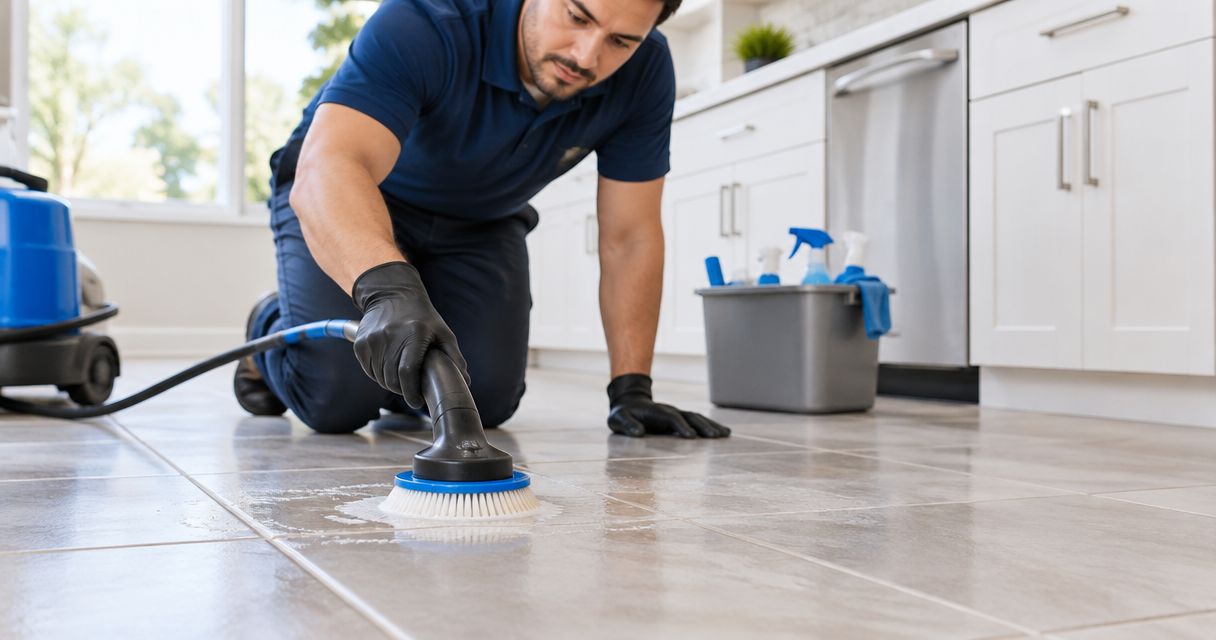
Tile and grout cleaning creates a work zone inside your home. Cleaning solution, loosened soil, equipment, and damp flooring belong inside that controlled area—not on surrounding carpets, furniture, or household belongings.
The amount of disruption depends on the room’s location and the work being performed. Use this comparison to decide what needs arranging before the appointment.
| Household arrangement | Best for | Practical advantage | Main limitation |
|---|---|---|---|
| Stay in another room | Households with a separate living area | You remain available for questions without entering the work zone | Equipment noise and access routes still affect your routine |
| Keep an alternate route open | Homes with another entrance or bathroom | Essential rooms remain reachable | The alternate route must avoid equipment and damp flooring |
| Arrange activities away from home | Households that cannot keep children or pets separated | Fewer interruptions around the cleaning area | Entry, questions, and the final handoff still need arranging |
None of these arrangements makes the floor ready sooner. Choose based on safe access and your household’s needs, then confirm the cleaner’s instructions before returning to normal use.
Cleaning is also different from removing and replacing tile. An ordinary cleaning appointment is not demolition, but damaged grout, loose tiles, or failed caulk deserve attention before work starts. Point them out rather than assuming cleaning will repair them.
What counts as mess, and what counts as disruption?
Mess means material has ended up where it does not belong: dirty water outside the work area, residue left on adjacent surfaces, or soil tracked into another room. Ask how the cleaner will contain and remove it.
Disruption means temporarily changing how you use your home. Moving kitchen chairs, keeping a dog behind a closed door, or using another entrance are access arrangements—not evidence that the cleaning is going wrong.
A clear boundary around the work area matters more than a promise of zero inconvenience. Ask where that boundary will be and how everyone in the house will recognize it.
What should you arrange before the cleaner arrives?
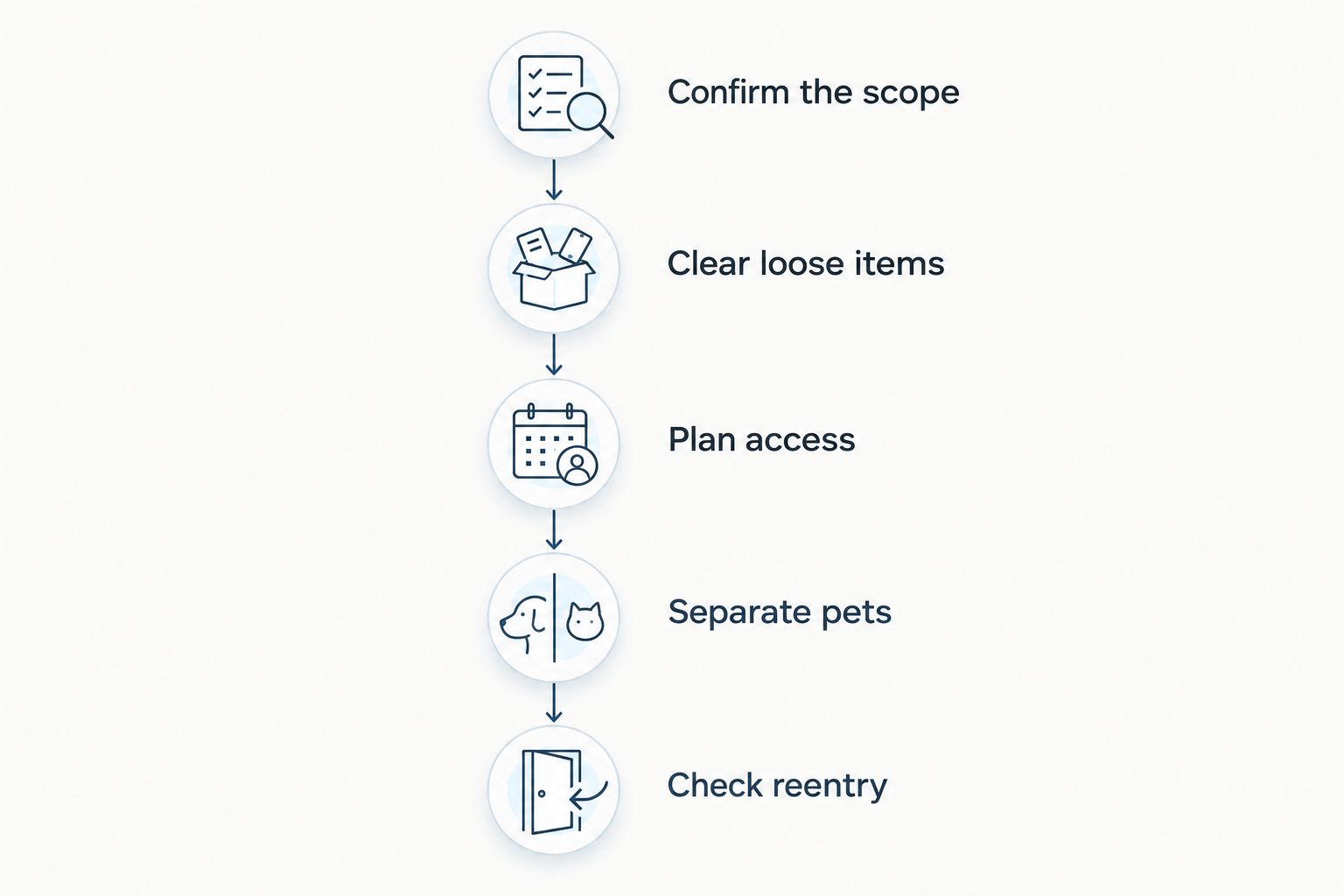
Use this sequence for a 2026 tile and grout cleaning appointment. It separates the decisions you can make beforehand from the instructions that depend on the actual work.
- Confirm the scope. Identify the rooms, floor surfaces, and grout areas to be cleaned. Ask whether any treatment beyond cleaning is included, particularly grout sealing.
- Clear loose items. Remove floor mats, shoes, pet bowls, baskets, and other small belongings. Confirm who handles chairs and heavier furniture rather than assuming everything will be moved.
- Plan access. Identify the entrance and route the cleaner will use. Explain if that route crosses carpeting, blocks a doorway, or passes through a room someone must use.
- Separate pets. Choose a secure space outside the work area. Keep food, water, litter trays, and anything else your pet needs accessible without crossing the floor being cleaned.
- Check reentry. Before the cleaner leaves, get instructions for walking, replacing items, mopping, and using any newly sealed grout.
The order matters: you cannot plan safe access until you know which areas are included. If the kitchen and connecting hallway are both being cleaned, discuss them together rather than treating them as unrelated rooms.
Do not add a strong household cleaner immediately before the visit unless the cleaner asks you to. Tell the cleaner what products you have already used, especially if a treatment left residue or changed the grout’s appearance.
How do you keep kitchen cleaning from interrupting the day?
Arrange food, drinks, medications, and pet supplies before the kitchen becomes a work area. Leave them somewhere you can reach without stepping across the floor or moving equipment.
Avoid scheduling a meal preparation task that requires repeated trips through the room. The same applies to grocery deliveries: bags and foot traffic complicate an area that needs to stay clear.
For your 2026 kitchen appointment, ask when access to the refrigerator, sink, and exterior door will be restricted. Read the guide to how long tile and grout cleaning takes for a kitchen alongside the room-specific instructions you receive.
Do not treat the end of active cleaning as automatic permission to put everything back. Ask about chairs, floor mats, and other items separately, particularly when sealing is part of the work.
Why household disruption varies
The practical issues come from the work area and treatment requirements. Give the cleaner these details before booking:
- Room access. A kitchen that connects the living room to the back door creates different access problems from a bathroom off a hallway.
- Movable belongings. Chairs, mats, storage baskets, and pet equipment need somewhere to go while the floor is being cleaned.
- Floor condition. Loose tiles, cracked grout, or damaged edges need assessment before cleaning proceeds around them.
- Cleaning method. Ask what equipment will be used, how cleaning liquid will be recovered, and what noise or hoses to expect.
- Added treatments. Sealing has its own application and return-to-use instructions. Confirm whether it is included rather than treating it as part of every cleaning.
- Household needs. Pets, young children, mobility aids, and a single bathroom make access planning more important.
There is no useful whole-house answer based only on the name of the service. A room-by-room conversation gives you a plan you can actually follow.
What should you ask about water and nearby surfaces?
Ask how the cleaner will protect transitions to carpet or wood, cabinet edges, and nearby belongings. Also ask who handles any splashes or residue outside the tile area.
Keep those questions concrete. “How will you keep cleaning liquid off the adjacent carpet?” is more useful than “Will this be messy?” It identifies the exact surface you want protected and gives the cleaner a specific issue to address.
Do not place towels, mats, or improvised barriers around operating equipment without asking. Discuss protection first so your preparations do not interfere with the work.
Can you stay home during tile and grout cleaning?
You can stay home if you have a safe place outside the work area and access to anything essential. Confirm the equipment route and room restrictions before deciding where to work, rest, or supervise children.
If you work from home, ask about equipment noise before arranging calls. A closed office door does not settle whether the route to that office will stay open.
Leaving home is a household choice, not a substitute for planning. Arrange entry, a way to answer questions, and a final explanation of when you can use the cleaned floor.
Can children and pets stay in the house?
Children and pets need a separate area away from cleaning products, equipment, and damp floors. Follow the cleaner’s instructions and the applicable product directions before allowing them back into the room.
Tell the cleaner about a crawling child, a pet that slips through doors, or anyone who needs assistance moving around the home. Those details affect how you keep the work zone separate.
Do not rely on a general description such as “family-friendly” to decide when a floor is ready. Ask for instructions that cover the actual treatment, including any sealer.
Does grout sealing add more household disruption?
Grout sealing adds another task and its own instructions for foot traffic, moisture, and replacing items. Do not assume that a floor ready after cleaning is also ready immediately after a sealer is applied.
If sealing is part of your 2026 appointment, request the applicable product instructions. Ask what you must avoid and when each restriction ends, rather than requesting a single estimate for everything.
Cleaning and sealing should be discussed separately even when they happen during the same visit. That makes it easier to understand which instruction applies to which stage.
What should you confirm with a local cleaning service?
PowerPro Carpet Cleaning is a local tile and grout cleaning option for homeowners in Manalapan Township and surrounding Central and North New Jersey counties. The family-owned business serves both homeowners and businesses.
For PowerPro Carpet Cleaning tile and grout service, explain your access concerns before arranging the visit. Ask about preparation, nearby surfaces, equipment routes, and whether sealing belongs in the scope; do not assume a particular method or return-to-use time.
Professional service lets you assign the cleaning work to a provider. It still requires you to make the room accessible and follow the handoff instructions. Book around those requirements, not an expectation that your household routine will remain unchanged.
Call to discuss your room layout and cleaning needs. Use the contact page to arrange the conversation before choosing an appointment that conflicts with meals, bathroom use, or essential access.
Discuss Your Tile Cleaning Appointment
Explain your room layout, household access needs, and questions about cleaning or sealing.
FAQ
Is tile and grout cleaning messy inside a house?
Tile and grout cleaning involves a temporary work area, but it should not leave dirty water, tracked soil, or residue for you to clean up afterward. Ask how the cleaner will protect nearby surfaces and handle cleanup.
Do I have to leave home during tile and grout cleaning?
You do not have to leave if you can stay safely outside the work area and reach essential rooms. Confirm access restrictions and equipment routes with the cleaner before the appointment.
Can I walk on the tile as soon as cleaning finishes?
Walk on the tile only when the cleaner confirms it is ready for foot traffic. Cleaning, remaining moisture, and any added sealer have different requirements.
Should I move my kitchen furniture before tile cleaning?
Remove loose belongings and confirm who will move chairs, tables, or heavier items. Do not assume furniture moving is included in the cleaning scope.
Can my dog stay home while the grout is cleaned?
Your dog needs a secure area away from cleaning products, equipment, and damp flooring. Follow the cleaner’s reentry instructions before allowing your dog back into the room.
Does grout sealing mean I must keep the room closed longer?
Grout sealing adds its own access and moisture restrictions. Ask for the applicable sealer instructions instead of using the cleaning completion time as your guide.
What should I tell PowerPro Carpet Cleaning before booking?
Tell PowerPro Carpet Cleaning which tiled rooms need cleaning and whether the work affects your only bathroom, kitchen access, pets, or mobility needs. Ask about preparation and return-to-use instructions before confirming the appointment.
One last thing
Before your 2026 appointment, walk from your front door to the refrigerator, bathroom, and pet supplies. Notice every tiled area you cross. That simple check exposes access problems that a room name or floor measurement does not describe.
Ask about the route through your home, not just the floor being cleaned. A clear plan for doorways and connecting rooms makes the household side of the appointment easier to manage.