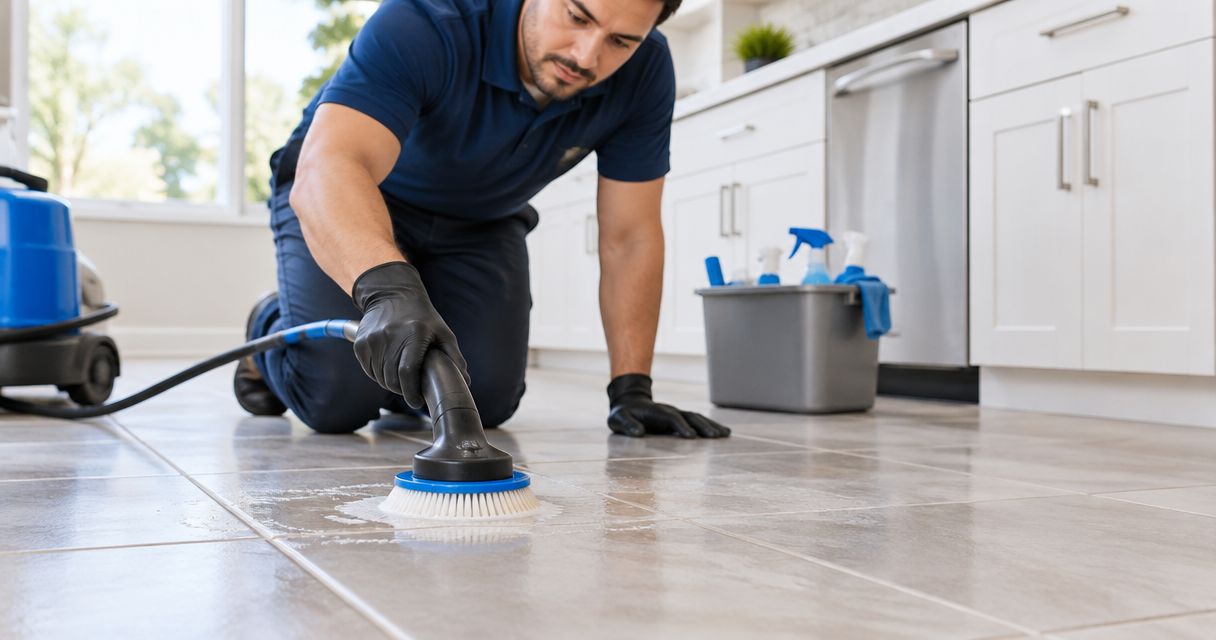
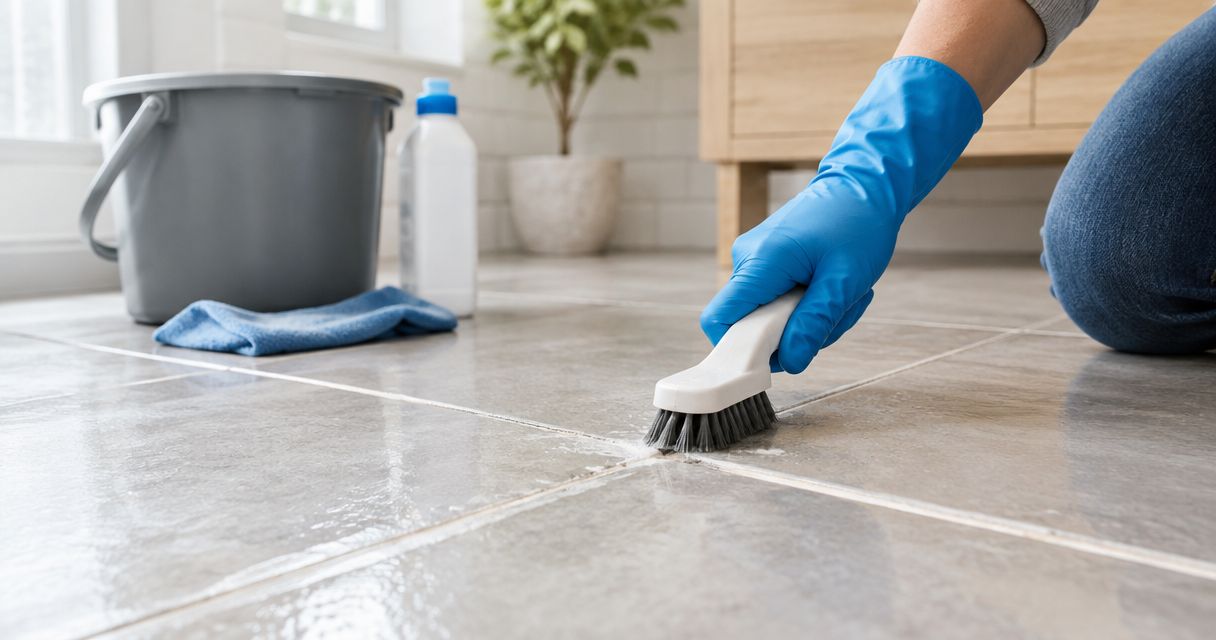
Yes, tile and grout cleaning can damage grout lines when the cleaner, scrubbing tool, or equipment setting is wrong for the material—or when the grout is already loose or cracked. Sound grout can be cleaned without removing the joint itself, but cleaning does not repair failing grout. Inspect first, test a small area, and stop if the grout starts shedding particles.
- Can tile and grout cleaning damage grout? Yes—unsuitable chemicals, aggressive scrubbing, and existing damage increase the risk.
- Avoid vinegar on cement-based grout; use a cleaner approved for both the grout and tile.
- Cracks, missing sections, and loose tiles need assessment before deep cleaning.
- PowerPro Carpet Cleaning serves homeowners and businesses needing tile and grout cleaning in Manalapan Township and surrounding areas.
Can tile and grout cleaning damage the grout lines?
Cleaning damages grout when it attacks the material rather than just removing soil. Acidic products can attack cement-based grout, while aggressive abrasion can wear away its surface. Forceful cleaning also risks dislodging grout that has already lost its bond.
The key distinction is between removing dirt from a sound joint and removing part of the joint itself. A cleaner-looking line is not a successful result if it is left rough, recessed, or crumbly.
| Cleaning approach | Best for | Benefit | Main limitation or risk |
|---|---|---|---|
| Material-approved, pH-neutral cleaner | Routine cleaning of compatible tile and grout | Removes everyday soil without relying on acid | Does not resolve every stain or heavy deposit |
| Grout-safe cleaner for heavier soil | Buildup that routine cleaning leaves behind | Targets soil that needs a different cleaning product | Compatibility, dilution, and contact time still matter |
| Gentle brushing with a suitable nonmetal brush | Loosening soil along intact joints | Gives you control over the area being cleaned | Hard scrubbing can wear weak grout |
| Professional deep cleaning | Larger areas or persistent soil needing assessment | Places material selection and equipment use in a trained operator's hands | Does not repair cracks, missing grout, or loose tile |
Choose a method by the grout's condition and the manufacturer's care instructions—not by how dirty the floor looks. A heavily soiled floor does not automatically need a harsher chemical or more pressure.
Why this matters
Your tile and grout are different materials. A product suitable for a glazed tile surface is not automatically suitable for the grout between the tiles, nearby natural stone, or an existing coating.
PowerPro Carpet Cleaning provides tile and grout cleaning services for homeowners and businesses in Manalapan Township and surrounding Central and North New Jersey counties. Before arranging service, describe any cracking, recent grout work, or previous treatments so those conditions are part of the discussion.
For a cleaning appointment in 2026, start with the floor's condition rather than a promise that every dark line will turn white. Dirt, permanent discoloration, coatings, and missing grout call for different responses.
Which grout lines need extra caution?
Cement-based grout: avoid acidic household cleaners
Cement-based grout needs protection from products that attack cement. Vinegar is acidic; treating it as a harmless household alternative does not make it suitable for grout cleaning.
Repeated acid exposure can erode the joint. That damage is different from ordinary staining, and cleaning cannot put the lost material back.
Use a product labeled for your tile and grout combination. Follow its dilution, application, rinsing, and safety directions rather than borrowing a recipe intended for another surface.
Epoxy grout: follow its own care instructions
Epoxy grout differs from cement-based grout, so do not assume the same cleaning restrictions or treatments apply. Its resistance to staining does not mean every solvent, abrasive pad, or cleaning product is appropriate.
Check the grout manufacturer's care instructions before changing products. An unknown grout type is a reason to identify the material, not a reason to experiment with stronger cleaners.
Cracked or crumbling grout: assess before cleaning
Cracked, powdery, recessed, or missing grout needs inspection before forceful cleaning. Loose tiles and recurring cracks also deserve attention because the problem can extend beyond surface dirt.
A cleaning pass can expose weakness that was previously covered by soil. It can also worsen that weakness if the operator continues scrubbing or applies unsuitable force.
Do not use deep cleaning as a test of whether damaged grout will hold together. Establish whether repair is needed first.
Why the risk of grout damage varies
The risk depends on the material, its existing condition, and how you clean it. These factors matter more than the word “professional” or “natural” on a product label:
- Grout condition: Intact joints and crumbling joints do not tolerate the same treatment. Inspect cracks, missing sections, and loose edges before cleaning.
- Chemical compatibility: A cleaner must suit the grout, tile, and any coating. Acid-sensitive materials need particular care.
- Scrubbing force: Stiff brushes, abrasive pads, and repeated hard scrubbing can remove material rather than just soil.
- Equipment use: Pressure, heat, nozzle choice, and operator technique must suit the installation. There is no single setting that proves safety for every floor.
- Product directions: Dilution, contact time, rinsing, and cure requirements are part of the cleaning method, not optional details.
When reviewing tile care instructions in 2026, check the actual product label and material guidance. A general internet cleaning tip cannot account for the grout, stone, coating, or repair materials on your floor.
How do you clean grout without damaging it?
Use this sequence for routine cleaning or as a checklist when discussing professional work. The decision to continue comes after inspection and testing—not before them.
1. Identify materials
Confirm whether you have ceramic, porcelain, or natural stone tile, then identify the grout if possible. Look for installation records, leftover packaging, or information from the installer.
Also mention any color treatment, topical coating, or recent repair. These details affect product selection even when the tile itself looks familiar.
2. Inspect joints
Look along the grout lines for cracks, gaps, loose pieces, and areas that sit noticeably below neighboring joints. Photograph questionable areas before cleaning, including wider views that show their location.
Do not deliberately scrape or dig into grout to test it. If ordinary wiping releases particles, pause and get the condition assessed.
3. Test discreetly
Apply the approved cleaner in a small, out-of-the-way area using the label directions. Use the intended brush or tool there rather than testing the chemical alone and then changing the method across the whole floor.
Rinse as directed and let the test area dry before judging color. Check for roughening, coating changes, or grout particles as well as whether the soil was removed.
4. Clean gently
Remove loose dirt before wet cleaning so you are not grinding debris into the joints. Use a suitable nonmetal brush and controlled agitation rather than a metal tool or a harsh abrasive.
Stay within the product's directions. If a stain remains, reassess its cause instead of automatically increasing chemical strength or scrubbing harder.
5. Rinse thoroughly
Remove the dirty cleaning solution and rinse according to the product instructions. Leaving cleaning residue behind can create a separate floor-care problem and make it harder to judge the result.
Never mix cleaning products. In particular, bleach must not be mixed with acids or ammonia because dangerous gases can result.
6. Check dry
Inspect the joints after they have dried. Compare their shape and texture with the original condition, not just their color.
Stop further cleaning if you find new gaps, loose particles, or increased surface erosion. Record what product and method were used so the person assessing the floor has useful information.
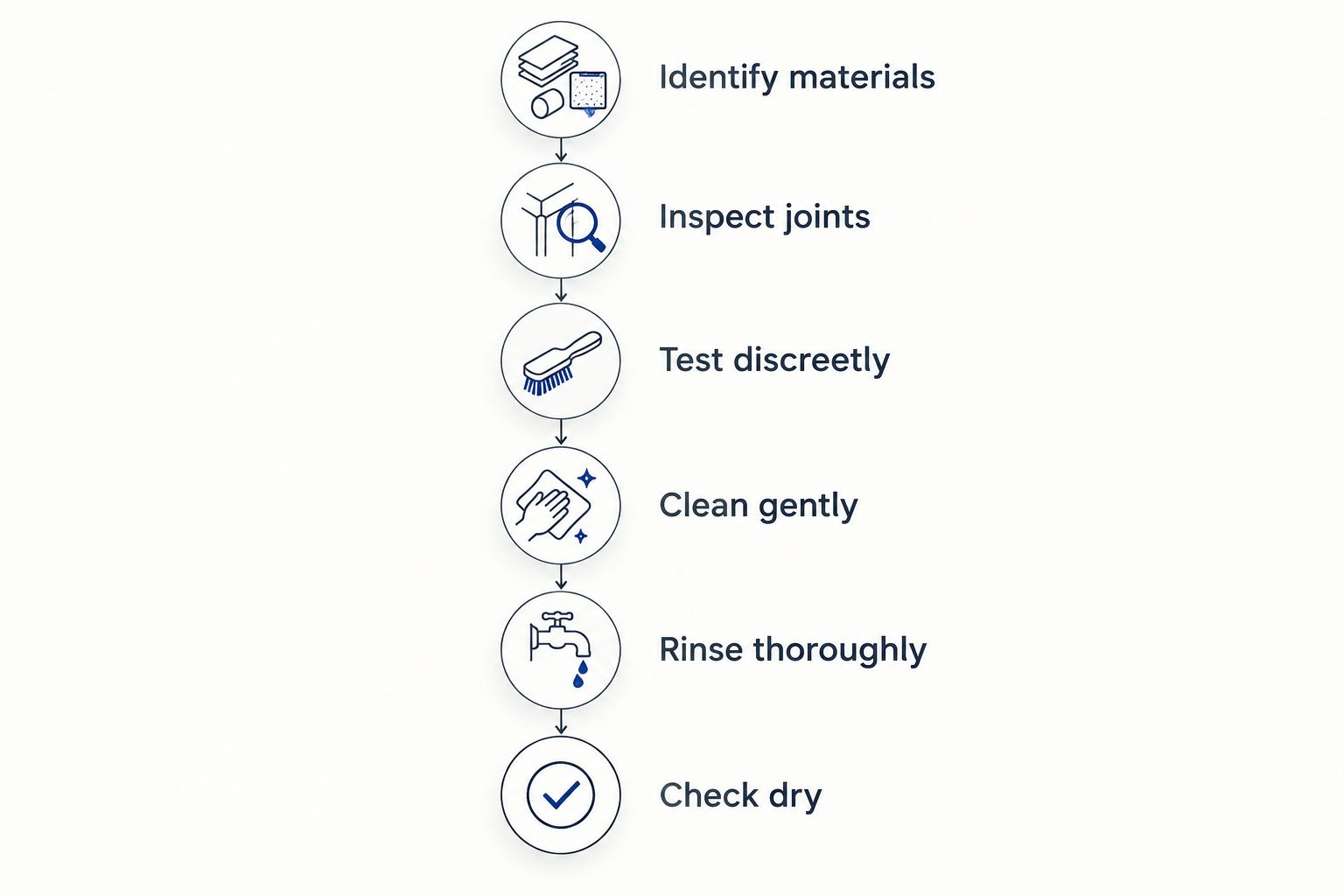
A 2026 grout-cleaning checklist should include the stop conditions as clearly as the cleaning steps. Loose material, a changing surface, or an unexpected reaction means pause—not make another pass.
What should you ask before professional tile cleaning?
Ask how the cleaner will assess your tile, grout, and existing damage before choosing a method. A useful answer explains the inspection and testing process rather than simply naming a machine.
Bring these questions to the conversation:
- Is this product suitable for the tile, grout, and any existing coating?
- How will cracked or loose grout affect the work?
- Will an inconspicuous test area be checked before full cleaning?
- What happens if grout starts coming loose during cleaning?
- Does the proposed work cover cleaning only, or is separate repair needed?
- What aftercare instructions apply to this particular floor?
PowerPro Carpet Cleaning is a family-owned tile and grout cleaning service for homeowners and businesses in Manalapan Township and surrounding Central and North New Jersey counties. Call to discuss the floor's condition before booking, especially if you have loose grout, natural stone, or recent repairs.
For a 2026 service visit, explain what has already been applied to the floor. Product names and photos of labels are more useful than describing an unknown mixture as “regular cleaner.”
Discuss Your Tile and Grout Cleaning
Describe your tile, grout condition, and location before arranging service.
Does lighter grout after cleaning mean it was damaged?
Lighter grout alone does not prove damage. Removing dark soil can reveal a lighter underlying color, while wet grout can look different from dry grout.
Judge the dry joint's physical condition as well as its color. New pitting, missing material, powdering, or a roughened surface needs attention; a color difference without those signs calls for a different assessment.
Uneven color can also remain after cleaning. Do not keep scrubbing an intact joint just because every section does not match—discoloration and removable dirt are not the same thing.
Can steam or pressure cleaning loosen grout?
Steam or pressure cleaning can loosen already weakened grout, and unsuitable equipment use can damage the installation. The equipment name alone does not establish whether a method is appropriate.
Ask whether the tile, grout, coatings, and existing repairs are compatible with the proposed process. Newly installed or repaired grout must meet its manufacturer's cure requirements before cleaning; there is no universal waiting period for every grout product.
Does grout sealer prevent cleaning damage?
Grout sealer does not prevent every kind of cleaning damage. A suitable sealer helps reduce absorption in grout that requires sealing, but it does not make the joint resistant to every chemical or abrasive.
Sealer also does not replace missing grout or stabilize a failing joint. Ask whether your grout needs sealing and what preparation and curing instructions apply before adding that step.
FAQ
Can tile and grout cleaning damage grout even when a professional does it?
Yes, professional cleaning can damage grout if the method is unsuitable or the grout is already failing. Ask about material identification, a test area, and how loose or cracked joints will be handled.
Is vinegar safe for cleaning grout lines?
Vinegar is not a suitable routine cleaner for cement-based grout because its acidity can attack the cement. Choose a cleaner approved for both your grout and tile.
What should I do if grout comes out while I clean?
Stop cleaning that area if grout particles or pieces come out. Have the joint assessed before using more force, stronger chemicals, or another cleaning pass.
Can I clean grout that was just repaired?
Clean recently repaired grout only after it meets the repair product's cure and cleaning requirements. Follow that manufacturer's instructions rather than a general waiting period.
Does dark grout always need a stronger cleaner?
Dark grout does not always need a stronger cleaner. The color can reflect soil, moisture, staining, or an existing color treatment, so identify the cause before changing products.
Should I seal grout immediately after cleaning?
Seal grout only when its type requires sealing and the surface meets the sealer manufacturer's preparation and drying requirements. Sealing is not a repair for cracked or missing joints.
Can cleaning fix cracks between tiles?
Cleaning does not fix cracked grout or loose tiles. Arrange an assessment of the damage before treating the floor as a routine cleaning job.
One last thing
A cleaner grout line can make an existing defect easier to see. Finding a gap after cleaning does not, by itself, establish when the gap formed; before-and-after photographs and the joint's physical condition provide better evidence than color alone.
Before your next cleaning in 2026, photograph the questionable areas and write down the products already used. Then set the right goal: remove soil while preserving sound grout, and deal with failing joints as a separate repair issue.