Professional hot water extraction wins for grout lines packed with years of grime, daily dish-soap mopping wins for upkeep between deep cleans, and a vinegar-and-baking-soda paste wins as the budget fix for light surface stains. Here's how all five tile and grout cleaning methods stack up for 2026, ranked by how deep each one actually cleans and how long the results hold.
- Professional hot water extraction is the best tile and grout cleaning method for grout lines darkened by years of buildup.
- Daily dish soap and mop wipes keep grout from re-staining between deep cleans but do nothing for embedded dirt.
- Baking soda and vinegar paste handles light surface stains for under an hour of scrubbing but skips deep-set grime.
- Rented rotary grout machines work for a one-time DIY push but leave more moisture behind than professional extraction.
- Grout color sealing after any deep clean is what makes the results last into 2027 instead of fading in months.
Why This Matters
Grout is a cement-based, porous material. It absorbs spills, soap film, and foot traffic dirt the way a sponge absorbs water, which is why a quick mop never touches what's actually staining it.
Homeowners across Manalapan Township and the rest of Central and North New Jersey deal with this year-round: salt and sand tracked in during winter, pollen and lawn debris in spring, and humid summer air that keeps grout damp longer after any cleaning. The method you pick has to match the depth of the problem, not just the size of the room. PowerPro Carpet Cleaning sees the same pattern on kitchen floors, bathroom showers, and entryways: surface cleaning masks dirt for a week or two, and deep extraction is what actually resets the grout color.
What Makes the Best Tile and Grout Cleaning Method
- Grout line depth reached — surface mopping cleans the tile face; only agitation plus suction reaches into the grout itself.
- Mechanical agitation vs. chemicals alone — scrubbing action lifts embedded dirt that soap and acid alone leave behind.
- Moisture left behind — more water sitting in grout means longer dry time and more risk of mildew regrowth.
- Effect on existing grout sealant — acidic pastes and harsh scrubbing wear down sealant faster than pH-neutral extraction.
- Safety on natural stone tile — vinegar and other acids etch marble and some travertine; that rules out a whole category of DIY fixes for stone floors.
- How long results last — a method that leaves grout clean for 6 months beats one that needs repeating every 2 weeks.
Tile and Grout Cleaning Methods at a Glance
| Method | Best for | Standout feature | Key limitation |
|---|---|---|---|
| Professional hot water extraction | Deep-set grime, years of buildup | Reaches below the grout surface with heat and suction | Requires booking a crew, not a same-hour fix |
| Daily dish soap and mop | Maintenance between deep cleans | Zero cost, takes 10 minutes | Doesn't touch embedded dirt at all |
| Baking soda and vinegar paste | Light surface stains | Uses items already in the kitchen | Unsafe on natural stone tile |
| Rented rotary grout machine | One-time DIY deep clean | Mechanical agitation without hiring a crew | Leaves more moisture in grout than professional extraction |
| Grout color sealing | Locking in results | Blocks new staining after any deep clean | Only works after the grout is already clean |
1. Professional Hot Water Extraction: Best Tile and Grout Cleaning Method for Deep-Set Grime
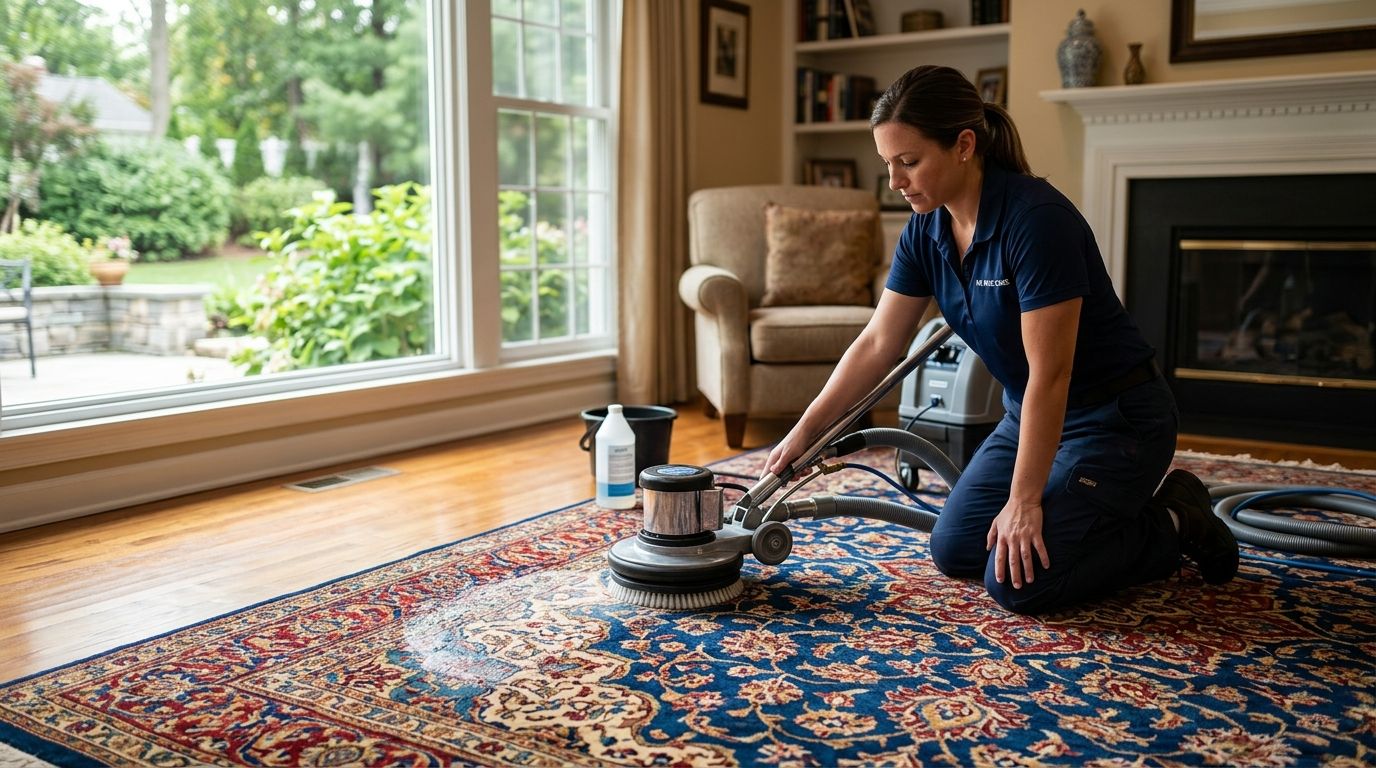
This is the method PowerPro Carpet Cleaning runs on tile and grout jobs across Central and North New Jersey. A crew applies a cleaning solution, agitates the grout lines mechanically, then extracts the dirty water with hot water and suction rather than leaving it to air-dry into the grout again.
Professional hot water extraction pros:
- Reaches grime buried below the surface that mopping never touches
- Restores grout closer to its original color instead of just masking dirt
- Removes most of the moisture during the job instead of leaving it to soak back in
Professional hot water extraction cons:
- Costs more upfront than a bottle of vinegar
- Needs scheduling instead of being available at 9pm on a Tuesday
Best for: homeowners and businesses with grout that's gone gray or brown despite regular mopping.
Verdict: Buy. This is the only method on this list built to reach dirt that's had months or years to settle into the grout.
2. Daily Dish Soap and Mop Routine: Best for Maintenance Between Deep Cleans
A mop, warm water, and a few drops of dish soap handle daily foot traffic and spills. It's the cheapest, fastest method here, and it's the right tool for the job it's built for: keeping tile from getting worse.
Dish soap and mop pros:
- Costs nothing beyond soap you already own
- Takes 10 minutes for an average kitchen or bathroom floor
- Safe on every tile and grout type, including natural stone
Dish soap and mop cons:
- Leaves grout lines untouched below the surface
- Soap film buildup over time can actually dull grout if not rinsed well
Best for: anyone maintaining tile between professional deep cleans, not replacing them.
Verdict: Hold. Keep doing this weekly, but don't expect it to fix grout that's already discolored.
3. Baking Soda and Vinegar Paste: Best Budget DIY Fix for Light Surface Stains
Mix baking soda with a small amount of water into a paste, spread it on grout lines, then apply vinegar and let the fizzing reaction loosen light surface staining before scrubbing with a stiff brush. It works on fresh, shallow stains on ceramic and porcelain tile.
Baking soda and vinegar pros:
- Uses ingredients already in most kitchens
- Handles fresh coffee, juice, or light soap scum stains
- No specialized equipment needed
Baking soda and vinegar cons:
- Vinegar is acidic and will etch marble, travertine, and other natural stone tile
- Does nothing for grime that's had months to set in
- Repeated acid exposure breaks down grout sealant faster
Best for: ceramic or porcelain tile with fresh, light stains and no sealant concerns.
Verdict: Hold. Fine as an occasional spot fix on the right tile type, not a substitute for deeper cleaning.
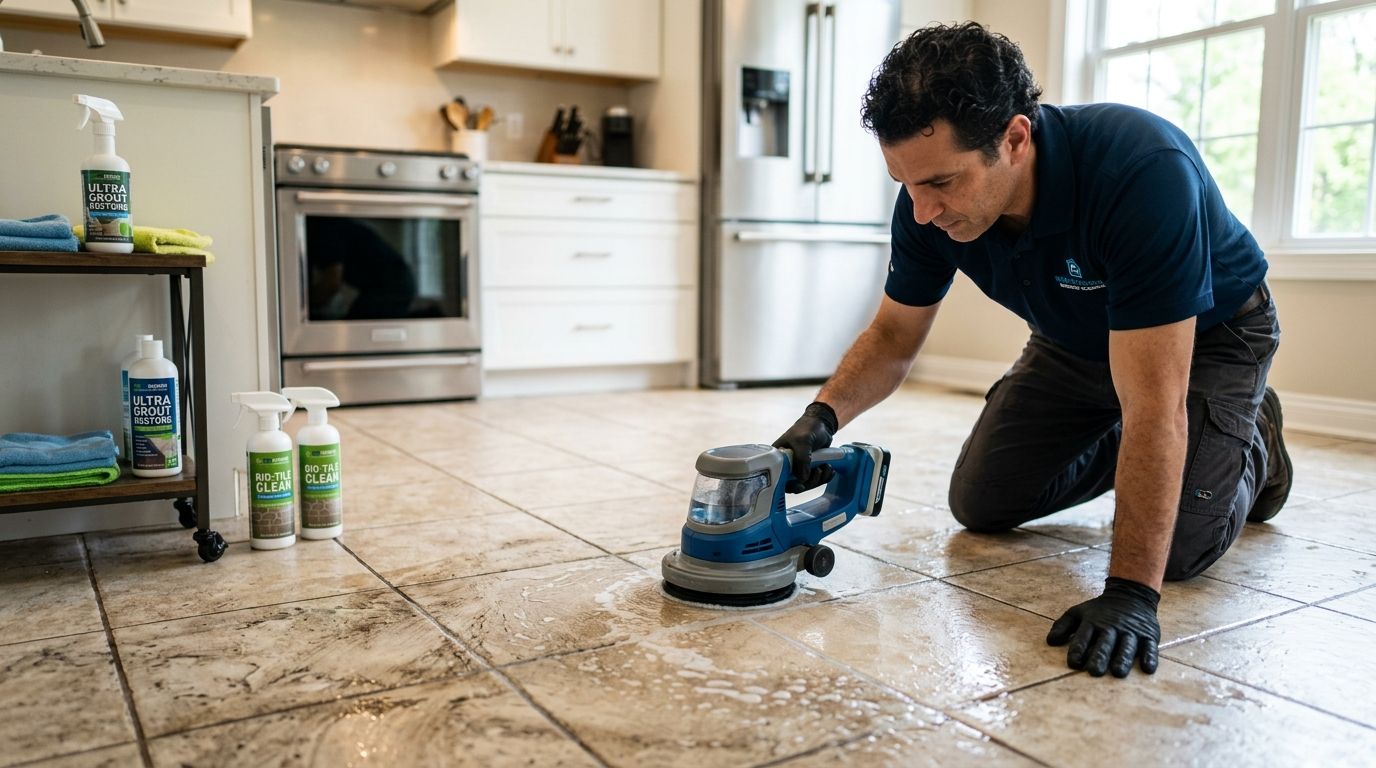
4. Rented Rotary Grout Machine: Best for a One-Time DIY Deep Clean
Home improvement stores rent rotary scrubbers built for grout lines. They deliver real mechanical agitation, which is a step up from hand-scrubbing, and they can lift a meaningful amount of embedded dirt in a single afternoon.
Rented rotary machine pros:
- Mechanical agitation beats hand-scrubbing for embedded dirt
- One rental covers an entire house in a weekend
- No recurring service to schedule
Rented rotary machine cons:
- Leaves more moisture in the grout than professional extraction, which slows drying and invites mildew
- Learning curve on pressure and technique; too much pressure can chip grout
- Doesn't extract the dirty water the way a professional crew does
Best for: homeowners planning to do the job themselves once, not on a recurring basis.
Verdict: Wait. A reasonable middle step, but the moisture left behind is the tradeoff you're accepting for doing it yourself.
5. Grout Color Sealing: Best for Locking In Results
Sealing isn't a cleaning method on its own — it's what protects a clean result. Applied right after any deep clean, sealant fills the porous surface of grout so new spills sit on top instead of soaking in.
Grout sealing pros:
- Extends how long grout stays clean after a deep clean
- Makes future spills easier to wipe up before they stain
- Reduces how often a full deep clean is needed
Grout sealing cons:
- Only works on grout that's already clean; sealing over dirt traps it in
- Needs reapplication over time as foot traffic wears it down
Best for: anyone who just had grout professionally cleaned and wants the results to last.
Verdict: Buy — as a follow-up step, never as a standalone fix.
“If the grout brush comes up brown after one pass, mopping harder isn't the fix — deeper extraction is.”
How PowerPro Ranked These Methods
The ranking above comes down to two questions: how deep does the method reach into the grout, and how much moisture does it leave behind afterward. Professional hot water extraction scores highest on both. DIY pastes and rented machines score well on cost and availability but fall short on depth or drying time. Sealing isn't ranked against the others because it solves a different problem entirely — it protects a clean result rather than creating one.
Which Tile and Grout Cleaning Method Should You Choose in 2026?
For grout that still looks gray or brown after regular mopping, professional hot water extraction is the method to book. For upkeep on grout that's already clean, dish soap and a mop handle the day-to-day. For a fresh, light stain on ceramic tile and nothing more, the baking soda and vinegar paste is a fair one-time fix. Skip the vinegar entirely on natural stone tile — that's the one method here with real damage risk attached.
Costs vary by square footage and how many rooms need attention; the cost breakdown for professional cleaning in New Jersey covers what affects the final price.
Get Tile and Grout Cleaned Right
Serving Manalapan Township and Central and North New Jersey.
FAQ
What is the best tile and grout cleaning method for stained grout?
Professional hot water extraction is the best tile and grout cleaning method for grout that's already stained gray or brown. It reaches embedded dirt below the surface that mopping and DIY pastes never touch.
Is baking soda and vinegar safe for all tile?
No. Baking soda and vinegar is safe for ceramic and porcelain tile but the vinegar's acid will etch natural stone like marble and travertine. Check your tile type before using any acidic cleaner.
How often should grout be professionally cleaned?
Most homes in Central and North New Jersey benefit from a professional deep clean once grout starts looking dull despite regular mopping, since daily traffic and seasonal debris both work their way into the grout year-round.
Does grout sealing replace the need for cleaning?
No. Sealing only protects grout that's already clean; it doesn't lift existing dirt. Apply sealant right after a deep clean, not as a substitute for one.
Can a rented grout machine replace professional cleaning?
A rented rotary machine provides real mechanical agitation for a one-time DIY job, but it leaves more moisture in the grout than professional hot water extraction, which slows drying and can invite mildew.
Why does mopping alone not clean grout?
Mopping cleans the tile surface but grout is porous cement that absorbs dirt below where a mop reaches. Only mechanical agitation combined with extraction lifts what's actually staining the grout.
What causes New Jersey homes to need more frequent grout cleaning?
Winter salt and sand, spring pollen, and summer humidity all get tracked or absorbed into grout lines across Central and North New Jersey, which is why grout in this region darkens faster than in drier climates.
One Last Thing
Sealant wears down with foot traffic whether or not it's ever mentioned in a cleaning quote — the method that gets skipped most often is the one that would have made the last deep clean last twice as long. Pair any deep clean with sealing and the next one gets pushed out considerably further.