Air duct cleaning in 2026 comes down to five real methods, and only two of them meet the NADCA standard that actually pulls debris out of your system instead of just stirring it around. Best overall: negative air pressure with source removal — it's what PowerPro Carpet Cleaning runs on jobs across Manalapan Township and the rest of Central and North New Jersey. Best for heavy pet hair and construction dust: rotary brush agitation paired with negative air. Best for isolated odor or mold complaints: antimicrobial fogging, used as an add-on, never alone. Skip: vacuum-only cleaning — it looks cheap and does almost nothing.
- Negative air pressure with source removal is the best air duct cleaning method for whole-house buildup in 2026 — buy.
- Rotary brush agitation combined with negative air handles heavy pet hair and construction dust better than either method alone.
- Compressed air whips work for single-run touch-ups but leave the rest of the system dirty on their own.
- Vacuum-only 'duct cleaning' rarely meets NADCA standards and is the weakest option on this list — skip it.
Why this matters
Homeowners in Monmouth, Middlesex, and Ocean counties call PowerPro Carpet Cleaning asking for "duct cleaning" without knowing that term covers at least five different processes, some of which barely move dust past the first foot of ductwork. NADCA (the National Air Duct Cleaners Association) publishes a standard, ACR 2021, that spells out what a compliant job actually requires: negative pressure on the whole system plus mechanical agitation at the source. A lot of low-bid crews skip both.
The method matters more than the marketing. A single technician working a typical 2,000-square-foot home with 8 to 12 supply and return vents gets very different results depending on which of these five approaches they use — and picking the wrong one means paying twice.
What makes the best air duct cleaning method
- Whole-system negative pressure — the truck or portable unit pulls air (and debris) toward a HEPA-filtered collection point instead of blowing it into your living space
- Source removal at every register, not just the main trunk line
- Mechanical agitation (brushes, air whips, or both) to knock loose material stuck to duct walls
- HEPA filtration on the vacuum side so collected debris doesn't recirculate
- NADCA-aligned documentation — before/after photos or a written scope, not a verbal "all done"
- Sealed access points after the job, so the system isn't leaking conditioned air through cut holes
Air duct cleaning methods at a glance
| Method | Best for | Standout feature | Key limitation |
|---|---|---|---|
| Negative air pressure + source removal | Whole-house buildup, pre-sale cleanings | HEPA-filtered whole-system suction | Requires trained technicians and proper equipment |
| Rotary brush agitation | Heavy pet hair, construction dust | Physically dislodges packed debris | Needs pairing with negative air to actually remove it |
| Compressed air whip | Single dirty runs, spot fixes | Fast on one or two ducts | Doesn't address the rest of the system |
| Antimicrobial fogging | Mold odor, moisture history | Targets biological growth directly | Add-on only, not a substitute for physical cleaning |
| Vacuum-only cleaning | Nothing worth paying for | Cheapest quote on paper | Leaves most duct debris untouched |
1. Negative air pressure with source removal: best for whole-house buildup
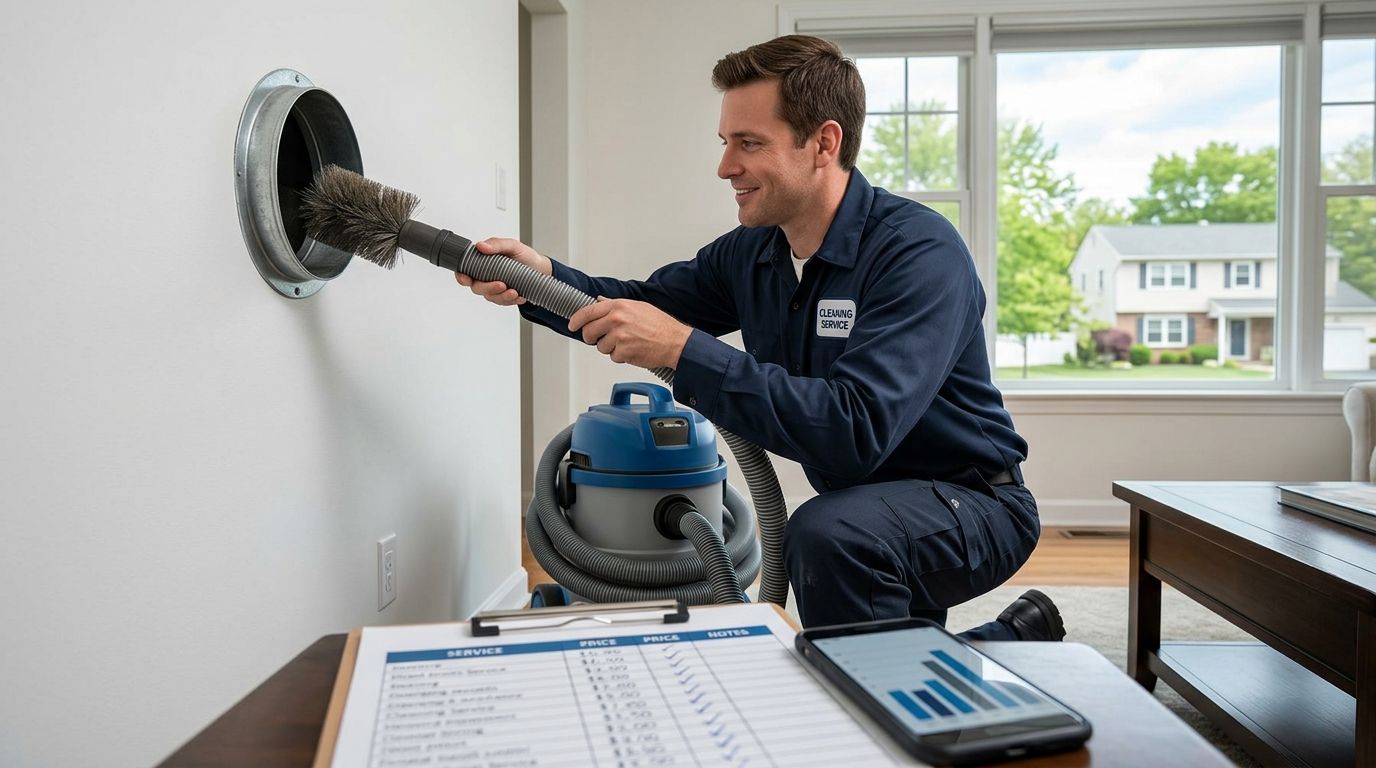
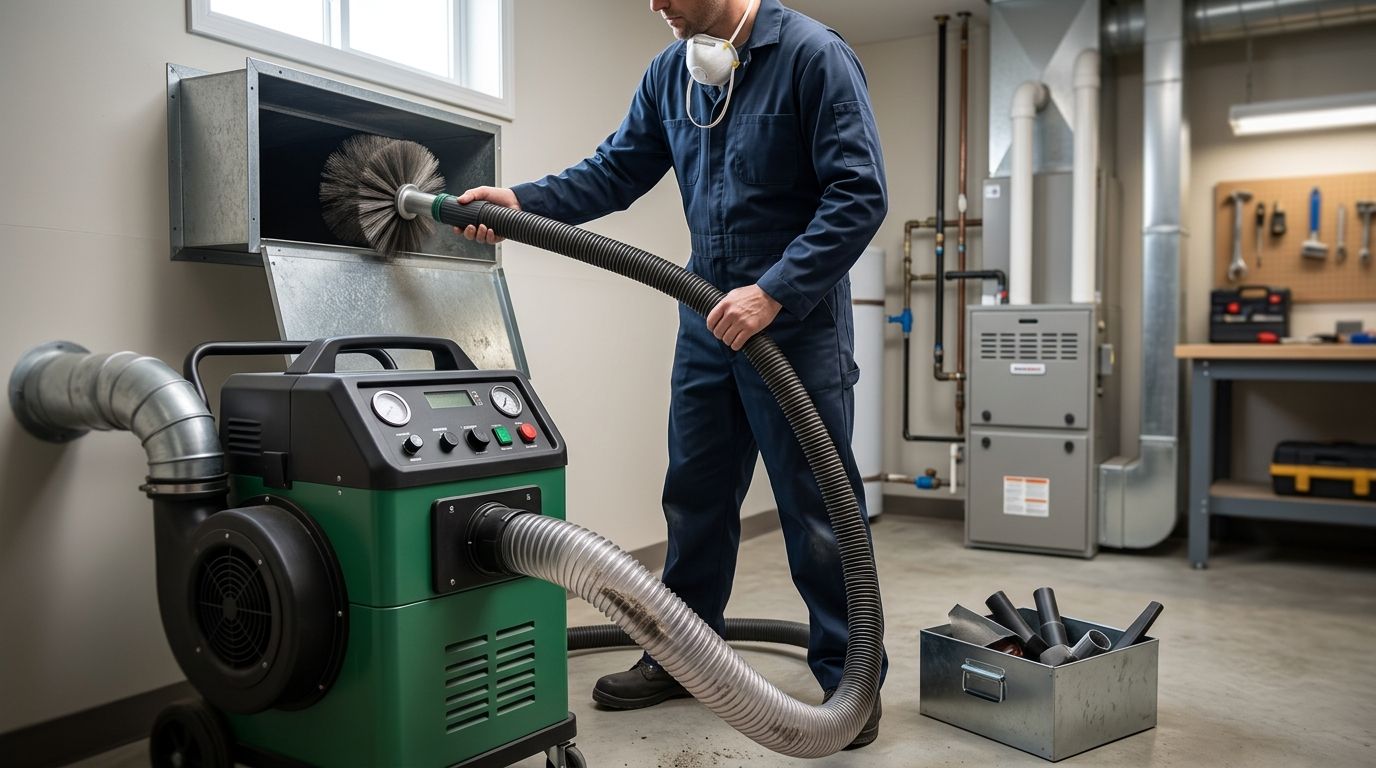
This is the NADCA-standard method and the one PowerPro Carpet Cleaning uses on residential and commercial air duct cleaning jobs across Central and North New Jersey. A powerful vacuum creates negative pressure across the entire duct system while technicians open each register to agitate and pull debris toward the collection unit instead of pushing it deeper into the house.
Negative air pressure pros:
- Removes debris from the whole system, not just the trunk line
- HEPA filtration keeps dust from recirculating into the home
- Works on both supply and return sides
- Matches the NADCA ACR 2021 standard most insurers and home inspectors reference
Negative air pressure cons:
- Takes longer than a quick vacuum pass
- Requires technicians trained on the equipment, not a general cleaner
Best for: homes with visible dust buildup at the registers, new homeowners after a renovation, or anyone who hasn't had ducts serviced in 3 to 5 years. Verdict: Buy.
2. Rotary brush agitation: best for heavy pet hair and construction dust
A rotating brush head travels through the ductwork physically knocking loose material off the interior walls. On its own it just relocates dust; paired with negative air pressure, it's the combination most compliant duct cleaners actually run.
Rotary brush pros:
- Breaks up compacted debris that suction alone can't move
- Effective in metal and flex duct alike
- Fast per linear foot of ductwork
Rotary brush cons:
- Useless without simultaneous vacuum collection
- Can be too aggressive for older, brittle flex duct if not calibrated
Best for: households with shedding pets, homes near active construction, or systems that haven't been touched in years. Verdict: Buy — but only bundled with negative air.
3. Compressed air whip: best for single-run touch-ups
A flexible whip attached to a compressed air line snakes through one duct run and blasts loose the debris stuck to the walls, which a vacuum then collects at the register. It's fast and precise for one problem run, not a whole-system fix.
Compressed air whip pros:
- Quick fix for a single dusty or musty-smelling vent
- Minimal disruption, no full-system shutdown needed
Compressed air whip cons:
- Only cleans the run it's inserted into
- Not a substitute for a full-system negative air job
Best for: a homeowner with one bad-smelling vent who isn't ready for a whole-house service yet. Verdict: Hold — fine as a stopgap, not a real solution.
4. Antimicrobial fogging: best for odor or mold history
Fogging applies an EPA-registered antimicrobial mist inside the ductwork after physical cleaning to address mold spores or lingering odor. It's a chemical treatment, not a debris-removal method, and reputable companies only apply it after agitation and vacuum work is done.
Antimicrobial fogging pros:
- Targets biological growth physical cleaning can't remove
- Helps with musty odors tied to moisture history
Antimicrobial fogging cons:
- Does nothing for dust or debris on its own
- Only worth it when there's an actual mold or odor complaint, not as a default add-on
Best for: homes with a documented moisture issue, a recent flood, or persistent musty smell after the physical cleaning is done. Verdict: Buy as an add-on, Skip as a standalone service.
5. Vacuum-only cleaning: best for nothing worth paying for
Some low-cost operators run a shop vac or portable unit at each register without creating whole-system negative pressure or agitating the duct walls. It picks up loose surface dust near the vent opening and leaves the rest of the system exactly as dirty as it was.
Vacuum-only pros:
- Cheapest option to advertise
- Fast — often done in under an hour for a whole house
Vacuum-only cons:
- Doesn't meet NADCA's ACR 2021 standard
- Leaves the majority of debris untouched inside the ducts
- No real difference in indoor air quality afterward
Best for: nobody, honestly. Verdict: Skip.
How this ranking works
The order above follows the criteria listed earlier: whole-system reach beats spot cleaning, mechanical agitation paired with suction beats agitation or suction alone, and any method skipping HEPA filtration or NADCA-aligned documentation drops to the bottom. Fogging is ranked as an add-on because it solves a different problem than debris removal.
“If a duct cleaning quote doesn't mention negative air pressure or source removal, it's a vacuum pass with a fancier name.”
Which air duct cleaning method should you choose?
For most Central and North New Jersey homeowners in 2026, negative air pressure combined with rotary brush agitation is the method to book — it's the only combination that meets the NADCA ACR 2021 standard and actually removes debris instead of moving it around. Add antimicrobial fogging only if there's a real mold or odor history. Skip vacuum-only service entirely; it's a wasted call.
FAQ
What is the best air duct cleaning method in 2026?
Negative air pressure combined with source removal at every register is the best air duct cleaning method in 2026, following the NADCA ACR 2021 standard. It's the only approach that removes debris from the whole system rather than just the trunk line.
Is rotary brush agitation better than vacuum-only cleaning?
Yes, rotary brush agitation dislodges compacted debris that vacuum-only cleaning leaves behind, but it only works when paired with negative air pressure to actually collect what it loosens.
How often should air ducts be cleaned?
Most industry guidance points to every 3 to 5 years for a typical home, sooner if there's been a renovation, pest issue, or new pet in the house.
Does antimicrobial fogging replace physical duct cleaning?
No, fogging only treats mold spores and odor after physical cleaning is finished. It does nothing for dust or debris on its own and shouldn't be sold as a standalone service.
Is compressed air whip cleaning enough for a whole house?
No, a compressed air whip only cleans the single duct run it's inserted into. It works as a spot fix but isn't a substitute for a whole-system negative air pressure job.
How do I know if a duct cleaner is using a real method?
Ask specifically whether they use negative air pressure and source removal, and whether the job follows NADCA's ACR 2021 standard. If the answer is vague, the service is likely vacuum-only.
Can duct cleaning method choice affect indoor air quality?
Yes, whole-system negative air pressure with HEPA filtration measurably reduces circulating dust and debris, while vacuum-only service typically produces no noticeable change.
Does PowerPro Carpet Cleaning offer air duct cleaning in NJ?
PowerPro Carpet Cleaning services air ducts for homeowners and businesses in Manalapan Township and surrounding Central and North New Jersey counties using NADCA-aligned methods.
One last thing
A duct system that hasn't been cleaned in years often hides more debris behind the return vents than the supply vents — check both before assuming the job is done, since a lot of low-bid crews only touch the supply side.