If a carpet cleaner sprays foam on your floor and the room still smells like a candle aisle three days later, that's not a chemical-free clean. This guide ranks the actual cleaning methods that skip detergents and synthetic fragrance, so you know what to ask for before anyone shows up at your door in Manalapan Township or anywhere else in Central or North Jersey.
- Dry-steam extraction is the best chemical-free carpet cleaning service for homes with kids or pets in 2026 — heat does the work, not detergent.
- Hot water extraction without detergent additives pulls the most allergens out of deep pile carpet.
- Encapsulation cleaning dries fastest and fits offices or retail floors that can't shut down for a day.
- Dry compound cleaning is the safest chemical-free option for antique and hand-knotted area rugs.
- Bonnet cleaning only lifts surface soil — treat it as a touch-up, never a deep clean.
Why this matters
Most "eco-friendly" carpet cleaning ads in 2026 still mean a milder detergent, not the absence of one. Detergent residue left in the pile acts like a magnet for dust and soil, so a carpet that looked spotless in June looks dingy again by September. That residue also sits exactly where kids crawl and pets sleep.
PowerPro Carpet Cleaning uses low-moisture dry-steam extraction on residential jobs specifically to avoid that soap-residue cycle, and this guide compares that method against the other chemical-free approaches you'll find advertised across New Jersey. None of them are interchangeable — each solves a different problem.
Best overall: low-moisture dry-steam extraction. Best for allergy-heavy households: hot water extraction with no detergent additive. Best for offices that can't close: encapsulation cleaning. Best for antique or hand-knotted rugs: dry compound cleaning.
What makes the best chemical-free carpet cleaning service
- Zero detergent residue — nothing left behind that attracts soil back into the pile
- Realistic dry time — a method that matches how soon the room needs to be walked on
- Safe around kids and pets — no fumes, no wet-floor slip risk for hours on end
- Actually removes soil, not just smell — chemical-free shouldn't mean a weaker clean
- Transparent process — the technician can explain exactly what's in the tank and why
- Fiber-appropriate — wool, silk, and antique rugs need a gentler process than wall-to-wall polyester
Chemical-free carpet cleaning methods at a glance
| Method | Best for | Standout feature | Key limitation |
|---|---|---|---|
| Dry-steam extraction | Homes with kids and pets | Heated water vapor with no detergent | Requires commercial-grade equipment |
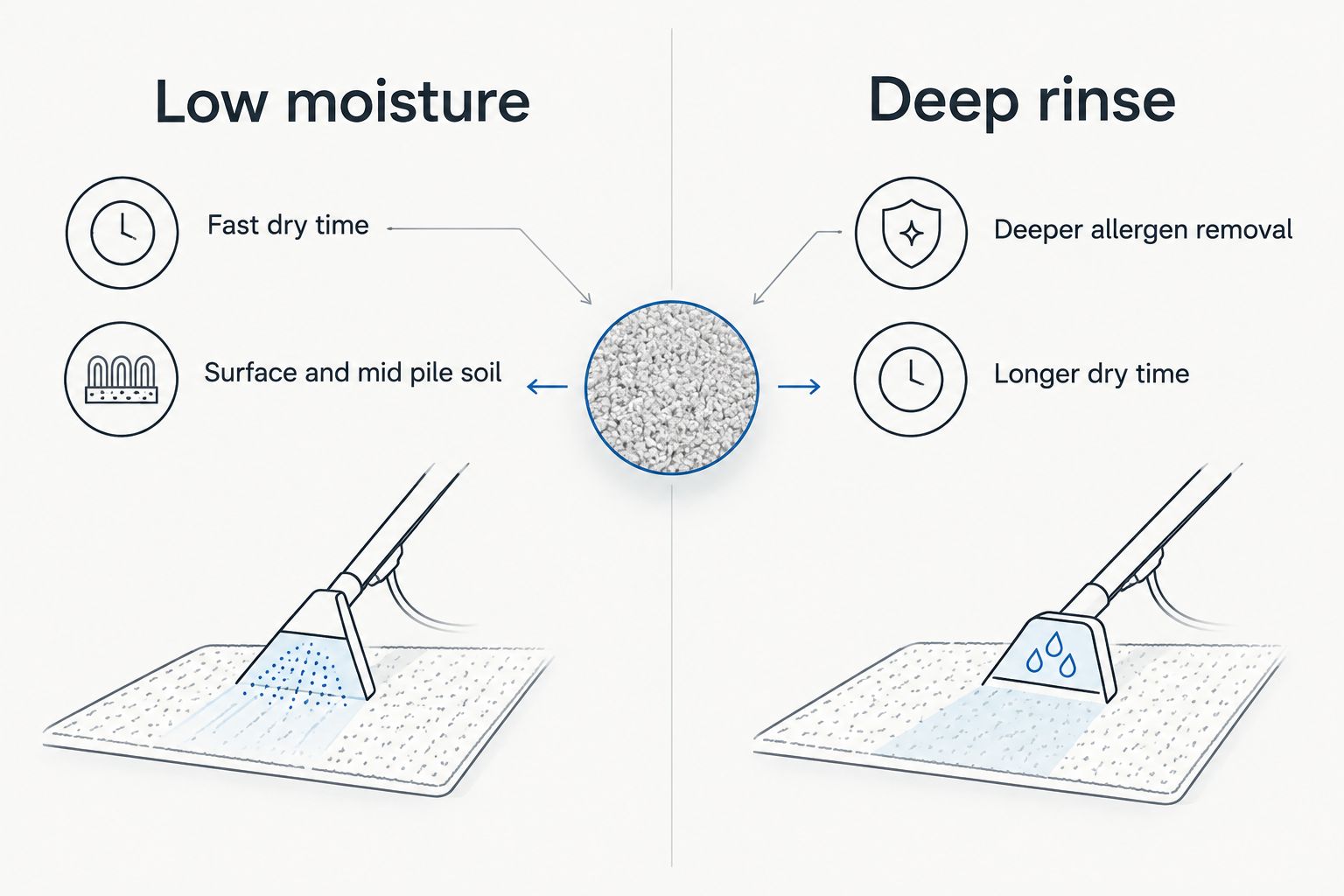
| Hot water extraction, no-soap | Allergy and asthma households | Deep rinse pulls soil and allergens out of the base | Longer dry time than low-moisture options |
| Encapsulation cleaning | Offices and retail floors | Crystallizes soil into powder for vacuuming, dries in hours | Not aggressive enough for heavily soiled residential carpet |
| Dry compound cleaning | Antique and hand-knotted rugs | Zero moisture means zero risk to natural dyes or fibers | More labor-intensive, needs thorough follow-up vacuuming |
| Bonnet cleaning | Quick touch-ups between deep cleans | Fast surface pass with a spinning pad | Only cleans the top of the fiber, not the base |
1. Dry-steam extraction: best chemical-free carpet cleaning for homes with kids and pets
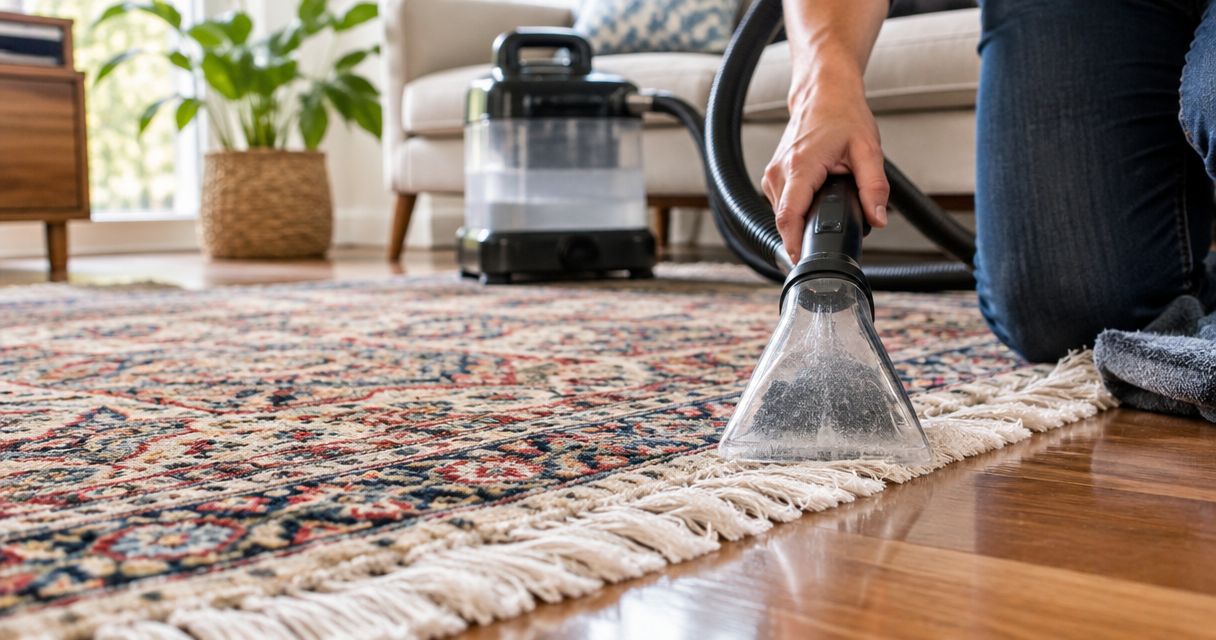
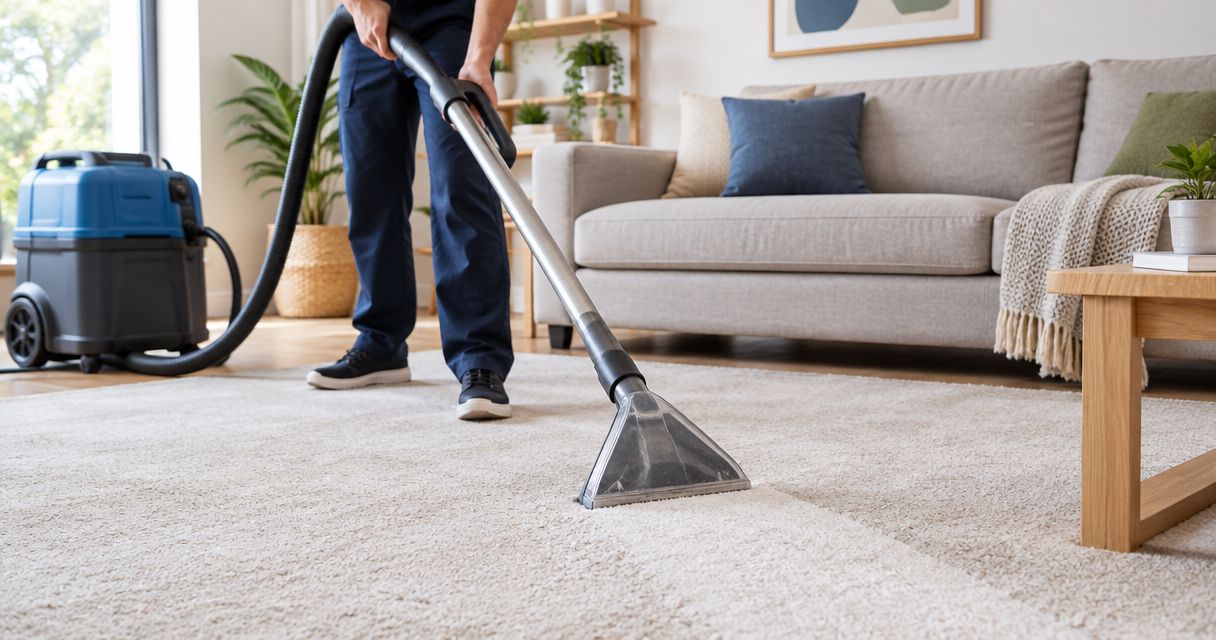
Dry-steam extraction uses heated water vapor at high pressure to break down soil and oils in the carpet fiber, then pulls the moisture and loosened dirt back out with a wet vacuum. No detergent, no soap, no synthetic fragrance goes into the carpet at any point. That's the method PowerPro Carpet Cleaning runs on most residential jobs across Manalapan Township and the rest of Central and North Jersey.
Dry-steam extraction pros:
- No residue left to attract soil back into the pile
- Safe for households with crawling infants or pets that lick the floor
- Kills a meaningful share of surface bacteria with heat alone, no chemical needed
Dry-steam extraction cons:
- Not a DIY option — the equipment is commercial-grade and heavy
- Deep, years-old staining sometimes still needs a targeted spot treatment
Best for: family homes with pets, kids, or anyone sensitive to fragrance and detergent. Verdict: book it for a standard whole-home clean.
2. Hot water extraction without detergent: best chemical-free carpet cleaning for allergy-sensitive households
This is standard truck-mounted or portable hot water extraction, but run with a plain water rinse instead of a detergent pre-treatment. The higher water volume flushes deeper into the carpet backing than dry-steam does, which matters most for allergen removal — dust mite debris and pet dander sit low in the pile, not on top of it.
Hot water extraction pros:
- Reaches deeper into the carpet backing than low-moisture methods
- Better allergen removal for households managing asthma or dust allergies
- Still fully detergent-free when requested that way
Hot water extraction cons:
- Dry time runs 6-12 hours longer than dry-steam or encapsulation
- Overwetting is a real risk if the technician isn't experienced with extraction volume
Best for: households where allergy symptoms are the main driver, not just fragrance sensitivity. Verdict: book it, but ask the technician to confirm no pre-spray detergent is used.
3. Encapsulation cleaning: best chemical-free carpet cleaning for offices that can't close
Encapsulation uses a low-moisture crystallizing polymer that surrounds soil particles and dries them into a powder, which gets vacuumed up hours later instead of extracted wet. Some formulations use detergent-based polymers, so a genuinely chemical-free version has to be requested specifically — this is a case where asking the exact question matters more than the marketing label.
Encapsulation cleaning pros:
- Dries in 1-2 hours, fastest turnaround on this list
- Works well on low-pile commercial carpet tile
- Minimal disruption for a retail floor or medical office that stays open
Encapsulation cleaning cons:
- Not deep enough for heavily soiled residential wall-to-wall carpet
- Repeated use without an occasional deep extraction lets soil build up in the base over time
Best for: commercial carpet cleaning for NJ offices that need fast turnaround between business hours. Verdict: book it for maintenance cleaning between full extractions, skip it as a once-a-year deep clean.
4. Dry compound cleaning: best chemical-free carpet cleaning for antique and area rugs
Dry compound cleaning spreads an absorbent, slightly damp granular compound across the rug, works it into the fibers by hand or machine, then vacuums it out along with the soil it captured. Zero standing moisture ever touches the rug, which is exactly why it's the safer call for wool, silk, or hand-knotted pieces where dye bleed and shrinkage are real risks.
Dry compound cleaning pros:
- No moisture exposure, so natural dyes and fibers aren't at risk
- Safe for antique and heirloom rugs a wet method could damage
- No dry-time wait at all
Dry compound cleaning cons:
- Labor-intensive compared to extraction methods
- Doesn't reach ground-in soil as effectively as a wet method on a durable synthetic rug
Best for: hand-knotted, wool, or antique rugs — not standard synthetic area rugs. Verdict: book it for delicate pieces, skip it on machine-made polyester rugs where extraction works better.
5. Bonnet cleaning: best chemical-free carpet cleaning for quick touch-ups
Bonnet cleaning spins an absorbent pad across the carpet surface to lift surface soil fast, usually between scheduled deep cleans. Run with plain water instead of a bonnet solution, it's fully chemical-free, but it's also the shallowest method on this list by design.
Bonnet cleaning pros:
- Fastest method available, minutes per room
- No dry-time wait, floor is walkable immediately
- Cheap way to handle a spill or high-traffic path between real cleanings
Bonnet cleaning cons:
- Only cleans the top third of the fiber, never the base
- Can push soil deeper into the pile if overused instead of paired with extraction
Best for: a quick refresh on a high-traffic hallway or entryway rug between scheduled deep cleans. Verdict: hold it as a supplement, skip it as your only carpet cleaning method.
How we ranked these methods
Each method got measured against the six criteria above: residue left behind, realistic dry time, safety around kids and pets, actual soil removal (not just smell masking), process transparency, and fiber compatibility. Dry-steam extraction and no-soap hot water extraction score highest on residue and safety; encapsulation wins on dry time; dry compound wins on fiber safety for delicate rugs. The same logic that separates carpet methods applies to hard flooring — see how it plays out in tile and grout cleaning methods compared for 2026.
Which chemical-free carpet cleaning method should you choose?
For a typical family home in 2026 with kids, pets, or fragrance sensitivity, dry-steam extraction is the default choice — no detergent, reasonable dry time, and it handles standard household soil without a chemical additive. If allergy symptoms are the primary concern rather than fragrance sensitivity, step up to no-soap hot water extraction for the deeper rinse. Reserve encapsulation for commercial floors on a maintenance schedule, and reserve dry compound cleaning for the rug you'd never risk getting wet.
Book a chemical-free carpet cleaning
Serving Manalapan Township and Central and North Jersey.
FAQ
What is the best chemical-free carpet cleaning service for a home with pets?
Dry-steam extraction is the best chemical-free carpet cleaning service for pet owners in 2026 because it uses heated water vapor instead of detergent, so there's no soap residue left where pets sleep or lick the floor.
Is chemical-free carpet cleaning as effective as regular cleaning?
Yes, when the right method matches the job. Dry-steam and no-soap hot water extraction both remove soil and oils through heat and water pressure, not detergent, so effectiveness doesn't depend on a chemical additive.
Does chemical-free mean the same thing as green or eco-friendly?
Not always. Some eco-friendly cleaning products are plant-based but still contain surfactants, while chemical-free specifically means no detergent or synthetic additive touches the carpet at all.
How long does chemical-free carpet cleaning take to dry?
Dry-steam extraction typically dries faster than a full detergent-based hot water extraction because less liquid volume goes into the carpet, though exact dry time depends on carpet type, humidity, and airflow in the room.
Is hot water extraction without detergent better for allergies?
Yes, hot water extraction without a detergent pre-treatment reaches deeper into the carpet backing than low-moisture methods, which matters most for removing dust mite debris and pet dander that sits low in the pile.
Can encapsulation cleaning be done without chemicals?
Some encapsulation polymers are detergent-based, so a genuinely chemical-free version has to be requested specifically before booking rather than assumed from the method name alone.
Is bonnet cleaning a good substitute for a deep carpet clean?
No, bonnet cleaning only lifts surface soil from the top of the fiber and should be used as a touch-up between scheduled deep cleans, not as a replacement for extraction.
What chemical-free method is safest for antique area rugs?
Dry compound cleaning is the safest chemical-free option for antique, wool, or hand-knotted rugs because no standing moisture touches the fibers, which protects natural dyes from bleeding.
One last thing
Ask any carpet cleaner one direct question before booking: "What's in the tank, and does it touch the carpet before the rinse?" A genuinely chemical-free process has a one-sentence answer — heated water, nothing else. If the answer involves a pre-spray, a deodorizer, or a "proprietary solution," you're booking a milder chemical clean, not a chemical-free one, no matter what the ad copy says in 2026.