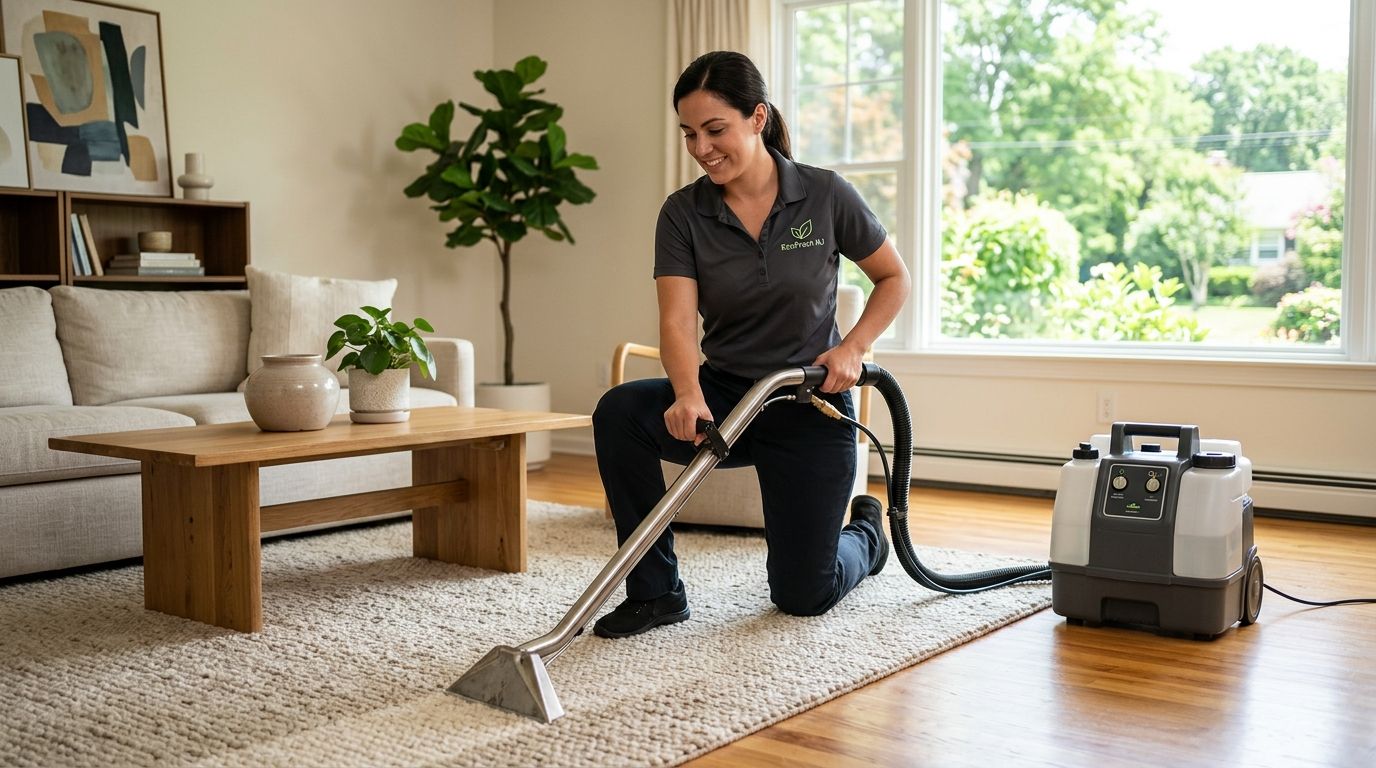
Choosing an eco-friendly carpet cleaning method in New Jersey means weighing water use, drying time, and how much chemical residue gets left behind in your home. This guide ranks the five methods NJ cleaners actually use in 2026 so you know which one fits your carpet, your allergies, and your household.
- Dry-steam extraction is the best eco-friendly carpet cleaning service NJ homeowners get in 2026 for whole-home deep cleans.
- Hot water extraction with green-certified solutions wins for allergy and asthma sufferers who need deep sanitizing.
- Dry compound cleaning handles pet stains and odor without soaking carpet backing or subfloors.
- Encapsulation cleaning fits NJ offices that need carpet walkable again within hours, not overnight.
- Bonnet cleaning is the fastest option but only lifts surface soil, not deep-set dirt.
Why this matters
New Jersey's humid summers and closed-up winters both punish the wrong cleaning method. A carpet that stays wet for 24 hours in July grows mildew before it's dry; a chemical-heavy solution used in a house with a toddler or a dog lingers in the fibers long after the technician leaves.
Eco-friendly, in practical terms, means less water, less residue, and less time your carpet sits wet. PowerPro Carpet Cleaning runs a dry-steam process built around exactly that in Manalapan Township and the surrounding Central and North Jersey counties, and it's the benchmark this ranking uses. If you're also budgeting the job, the breakdown of carpet cleaning costs in NJ covers what affects the final number.
What makes the best eco-friendly carpet cleaning method
- Low water volume so carpet dries fast enough to prevent mold and mildew
- Biodegradable, non-toxic solutions free of harsh solvents and heavy VOCs
- Certified green products, the kind carrying a Green Seal or CRI Seal of Approval rating
- Safe for kids, pets, and allergy sufferers with no lingering chemical smell
- No sticky residue that attracts dirt faster and forces an earlier re-clean
- Performs in NJ humidity without leaving carpet damp long enough to breed mildew
At a glance: eco-friendly carpet cleaning methods compared
| Method | Best for | Standout feature | Key limitation |
|---|---|---|---|
| Dry-Steam Extraction | Whole-home deep cleaning | Dries in 1-2 hours on low water | Needs a trained technician on delicate or antique fibers |
| Hot Water Extraction (Green-Certified) | Allergy and asthma sufferers | Flushes dust mites and allergens from deep pile | 12-24 hour dry time invites mildew in humid months |
| Encapsulation Cleaning | NJ offices needing fast turnaround | Carpet is walkable again within hours | Not as deep-reaching on heavily soiled traffic lanes |
| Dry Compound Cleaning | Pet stains and odor control | No moisture, so no re-soiling wicking up from the pad | Requires a thorough vacuum pass to pull out all compound |
| Bonnet Cleaning | Quick surface refresh | Fastest turnaround of any method here | Only lifts surface soil, doesn't touch the backing |
1. Dry-Steam Extraction: best eco-friendly method for whole-home deep cleaning
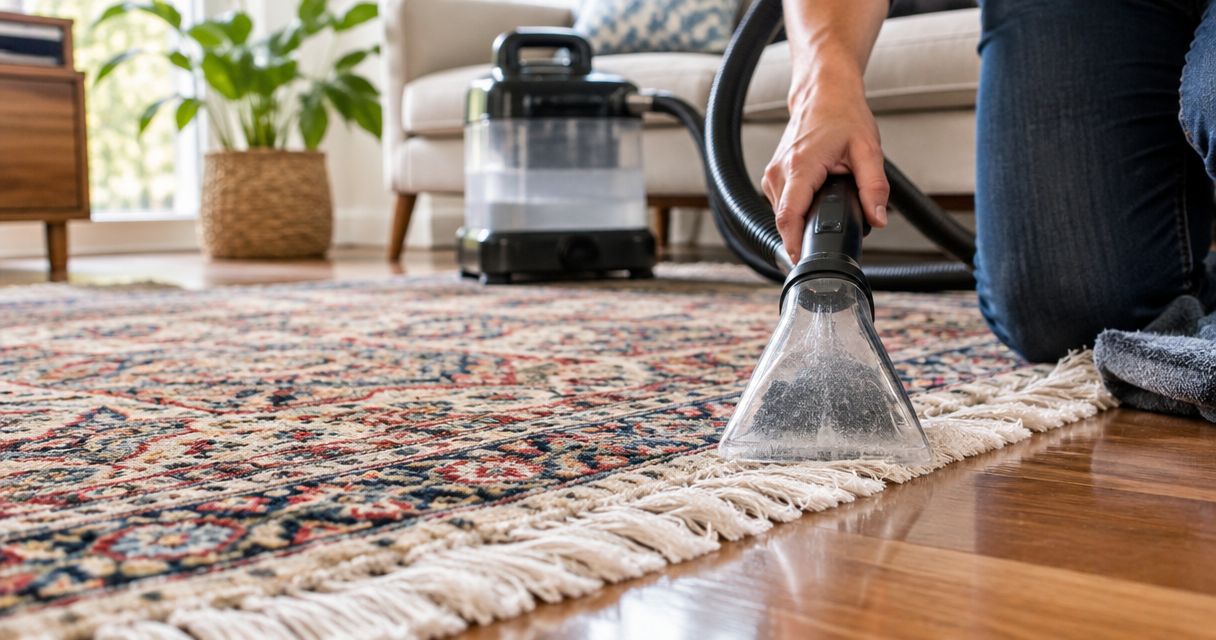
Dry-steam extraction uses low-moisture vapor instead of soaking the carpet in water and cleaning solution. It lifts dirt and bacteria from the fibers while using a fraction of the water a standard steam machine puts down, which is why it's the method behind PowerPro Carpet Cleaning's dry-steam service across Central and North Jersey.
Dry-Steam Extraction pros:
- Dries in 1-2 hours instead of overnight, cutting mold risk in humid NJ months
- Low water use means less chemical dilution needed for the same result
- Leaves no sticky detergent residue that re-attracts dirt within weeks
- Works on wall-to-wall carpet, area rugs, and upholstery with the same equipment
Dry-Steam Extraction cons:
- Requires a technician trained on the equipment; a rushed pass can miss deep-set stains
- Delicate or antique wool fibers need a lighter touch and slower pass
Best for: homeowners who want a full-home deep clean without a day of wet carpet.
Verdict: Buy. For most NJ households in 2026, this is the best eco-friendly carpet cleaning service option on the list.
2. Hot Water Extraction with Green-Certified Solutions: best for allergy and asthma sufferers
Hot water extraction, often called steam cleaning, injects hot water and a cleaning solution into the carpet under pressure, then extracts it back out. Swapping the standard detergent for a Green Seal or CRI-certified solution keeps the deep-clean power without the harsh chemical load.
Hot Water Extraction pros:
- Flushes dust mites, pollen, and pet dander out of deep pile fibers
- Green-certified solutions cut VOC exposure for people with asthma or sensitivities
- Strong choice for carpet that hasn't been deep cleaned in a year or more
Hot Water Extraction cons:
- Dry time runs 12-24 hours, which is a real mold risk during a humid NJ summer
- Heavier equipment and more water mean a longer service window
Best for: allergy and asthma sufferers who need allergens physically flushed out, not just surface-cleaned.
Verdict: Buy, but only if you can keep the room ventilated and unused for the full dry window.
3. Encapsulation Cleaning: best for NJ offices needing fast turnaround
Encapsulation cleaning applies a low-moisture cleaning compound that crystallizes around dirt particles as it dries, so a vacuum pass the next day removes both the compound and the soil it trapped. It's a common choice for commercial carpet cleaning in New Jersey offices where downtime costs money.
Encapsulation Cleaning pros:
- Carpet is walkable again within a few hours, not a full day
- Low water use fits eco-conscious commercial cleaning contracts
- Repeated use over time actually improves carpet appearance retention
Encapsulation Cleaning cons:
- Doesn't reach as deep as hot water extraction on heavily soiled traffic lanes
- Best as a maintenance method between periodic deep cleans, not a standalone annual clean
Best for: offices and retail spaces that can't shut down for a day. If that's your building, best commercial carpet cleaning for NJ offices breaks down scheduling around business hours.
Verdict: Hold as a maintenance layer, not your only carpet cleaning method.
4. Dry Compound Cleaning: best for pet stains and odor control
Dry compound cleaning spreads an absorbent compound over the carpet that draws out moisture, odor, and staining compounds without ever wetting the pad underneath. Because nothing soaks down to the backing, there's no risk of a pet accident re-surfacing weeks later as an odor.
Dry Compound Cleaning pros:
- Zero soak-through means no re-wicking odor from the pad after cleaning
- Safe to walk on almost immediately after the vacuum pass
- Effective on urine and vomit stains that hot water extraction can push deeper
Dry Compound Cleaning cons:
- Requires a genuinely thorough vacuum pass; leftover compound feels gritty underfoot
- Less effective than hot water extraction on ground-in soil across large open areas
Best for: households with pets that need odor handled at the source. If upholstery is the bigger problem, upholstery cleaning for pet owners covers fabric-specific approaches.
Verdict: Buy for pet-heavy households, especially between full deep cleans.
5. Bonnet Cleaning: best for a quick surface refresh
Bonnet cleaning spins an absorbent pad soaked in cleaning solution across the carpet surface to lift visible soil fast. It's the quickest method on this list and the one most often used between scheduled deep cleans rather than as the main event.
Bonnet Cleaning pros:
- Fastest turnaround of any method covered here
- Low equipment cost keeps it accessible for spot maintenance
- Good for high-traffic entryways that need a quick visual refresh
Bonnet Cleaning cons:
- Only lifts surface soil; doesn't touch dirt trapped near the backing
- Overuse can push residual detergent deeper into the pile over time
Best for: a fast touch-up between real deep cleans, not a replacement for one.
Verdict: Skip as your primary method; fine as an occasional supplement.
How we ranked
Each method above is scored against the criteria listed earlier: water use, dry time, residue left behind, and safety for kids, pets, and allergy sufferers. Dry-steam extraction wins on the combination of fast dry time and low water volume, which is why it tops this 2026 ranking as the best eco-friendly carpet cleaning service NJ homeowners can book for a full-home job.
“If a carpet cleaning method takes longer than a day to dry in a New Jersey summer, mold risk goes up, not down.”
Which eco-friendly carpet cleaning method should you choose?
For a whole-home deep clean in 2026, dry-steam extraction is the default answer — fast dry time, low water use, no sticky residue. Swap in hot water extraction with green-certified solutions if allergies or asthma are the driving concern and you can ventilate the room overnight. Offices lean encapsulation; pet households lean dry compound; bonnet cleaning stays in the toolkit as a between-cleans refresh, not the main event.
Book your dry-steam carpet cleaning
Serving Manalapan Township and Central and North NJ counties.
FAQ
What is the best eco-friendly carpet cleaning service in NJ?
Dry-steam extraction ranks best overall for 2026 because it dries in 1-2 hours and uses far less water than standard steam cleaning, which cuts mold risk in New Jersey's humid months.
Is dry-steam cleaning better than hot water extraction?
Dry-steam dries faster and uses less water, making it the better default for most homes. Hot water extraction with green-certified solutions still wins for deep allergen removal in households with asthma or severe allergies.
How long does it take carpet to dry after eco-friendly cleaning?
Dry-steam extraction and encapsulation cleaning both leave carpet walkable within 1-2 hours. Hot water extraction takes 12-24 hours, even with a green-certified solution.
Is eco-friendly carpet cleaning safe for pets?
Yes, dry-steam and dry compound cleaning are both low-moisture methods that avoid harsh chemical residue, making them a safer choice for homes with pets and small children.
What carpet cleaning method is best for pet odor?
Dry compound cleaning is the strongest option because it never soaks the carpet pad, which prevents old pet odors from wicking back up to the surface weeks later.
Does encapsulation cleaning count as eco-friendly?
Yes, encapsulation uses a low-moisture compound and less water than hot water extraction, which is why it's common in commercial carpet cleaning contracts across NJ.
Can bonnet cleaning replace a full carpet cleaning?
No, bonnet cleaning only lifts surface soil and should be used between scheduled deep cleans, not as a replacement for dry-steam or hot water extraction.
How often should NJ homeowners get carpet cleaned?
Most homes need a full deep clean once or twice a year, with more frequent cleanings for households with pets or allergy sufferers.
One last thing
The method matters less than the dry time if you live anywhere near the Jersey Shore's summer humidity. A carpet that stays damp for a full day after a hot water extraction is doing more harm than the dirt it removed. Dry-steam extraction's 1-2 hour dry window sidesteps that risk entirely, which is the real reason it sits at the top of this 2026 list.