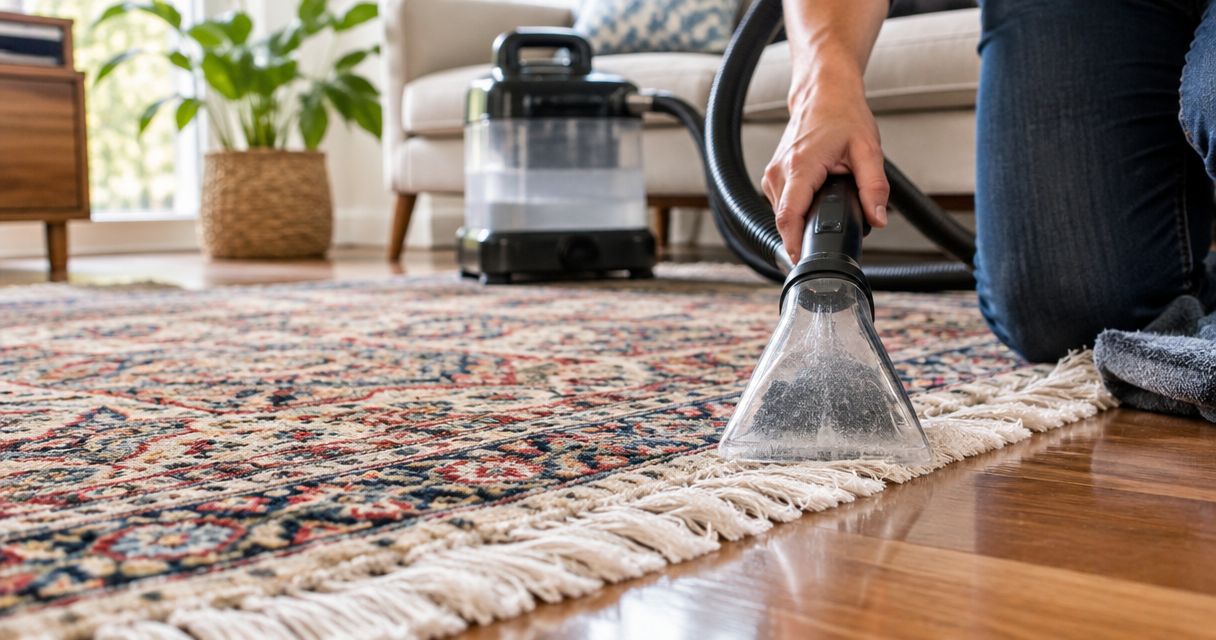
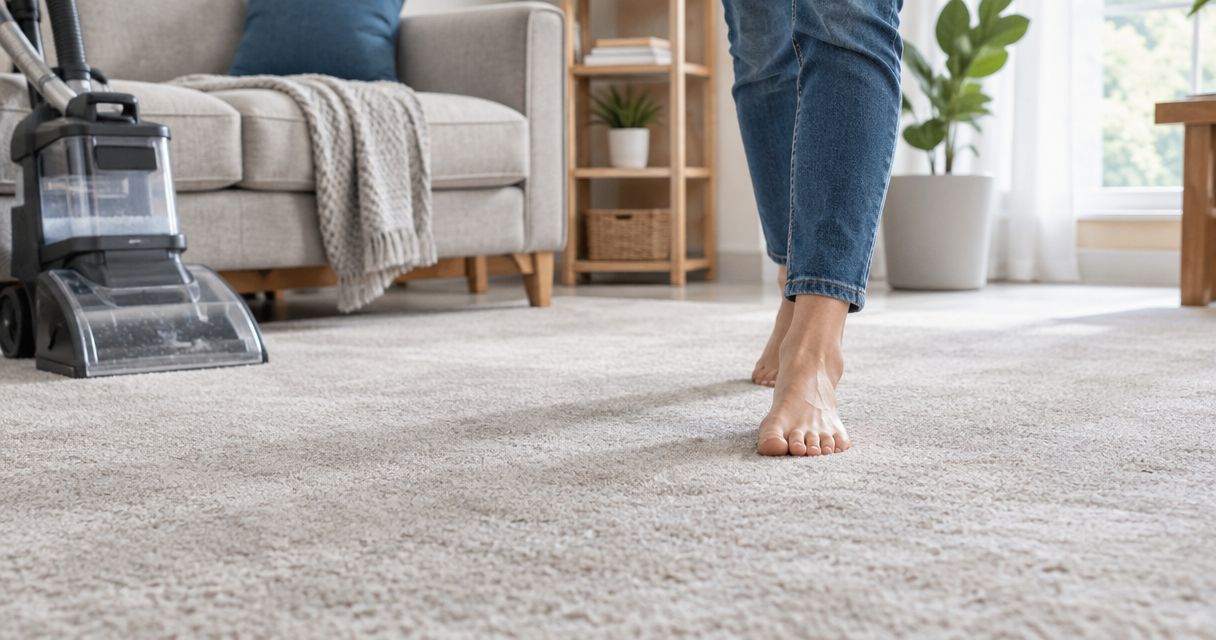
Wait until your carpet is dry before returning to normal foot traffic. If you must cross it right after cleaning, get your technician’s permission first, wear clean white socks or the footwear protection they recommend, and take the shortest route. Limited access does not mean the room is ready for children, pets, furniture moving, or repeated trips.
- Can you walk on carpet after cleaning? Limit necessary crossings and wait for dry carpet before normal use.
- Clean socks reduce tracked-in dirt, but they do not make damp carpet ready for everyday traffic.
- Follow your technician’s aftercare instructions, especially when carpet protectant or another treatment has been applied.
- PowerPro Carpet Cleaning serves homeowners and businesses in Manalapan Township and surrounding New Jersey counties.
Can you walk on carpet right after it’s cleaned?
A necessary crossing and normal room use are different decisions. Your technician’s instructions determine whether brief access is appropriate immediately after the service. Carpet condition determines when you can return to everyday use.
For a 2026 appointment, ask about access before cleaning starts rather than when you need to reach an upstairs bedroom. Tell PowerPro Carpet Cleaning which rooms, stairs, or hallways must remain accessible so you can discuss a practical plan.
| Access option | Best for | Advantage | Limitation |
|---|---|---|---|
| Staying off until dry | Normal household use | Avoids unnecessary contact with damp carpet | Requires another route or a temporary room closure |
| Crossing in clean white socks | An unavoidable trip, if your technician allows it | Reduces dirt carried in from shoes | Socks can become damp and slippery on hard flooring |
| Using technician-recommended footwear protection | Access under specific aftercare instructions | Helps separate footwear from cleaned fibers | Covers can slip and do not make the carpet dry |
| Walking in outdoor shoes | Not recommended on freshly cleaned carpet | Requires no footwear change | Can track soil onto damp fibers |
Do not treat a clean-looking surface as proof that the carpet has finished drying. Check the areas you actually need to use, including less exposed sections, and follow any separate instructions for treatments.
Why this matters
Freshly cleaned carpet needs protection from tracked-in dirt while it dries. Repeated traffic also makes it harder to keep children, pets, and everyday activity away from the treated area.
The transition to hard flooring deserves particular attention. Damp socks or footwear covers can reduce traction when you step onto tile, wood, or another smooth surface. Plan the exit from the carpet, not just the crossing.
If you are arranging carpet cleaning in Manalapan Township in 2026, identify the essential walking route before the appointment. A hallway connecting every bedroom needs a different access plan from a spare room you can leave closed.
How should you cross freshly cleaned carpet if you have to?
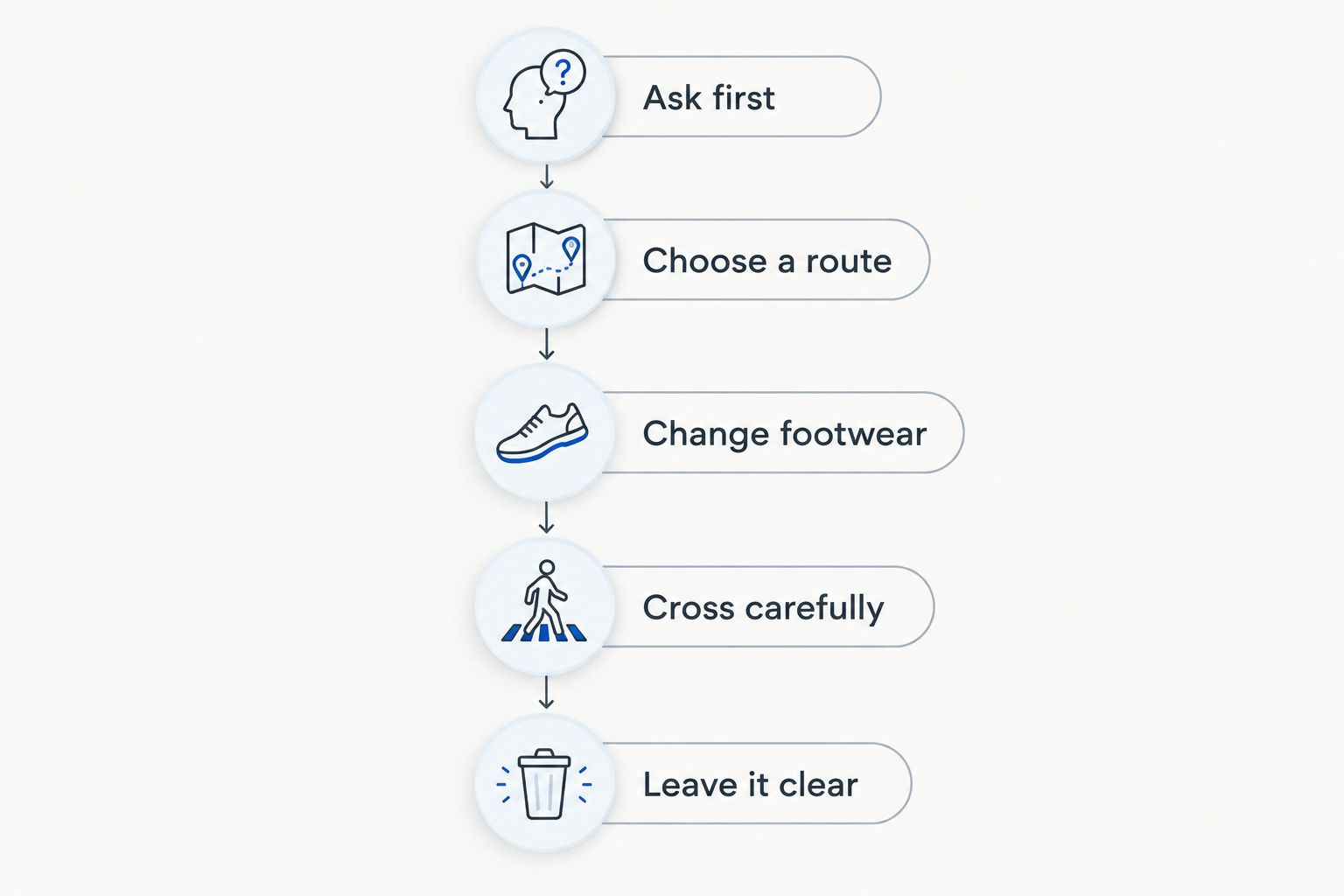
Use this sequence only after the technician confirms that limited access is acceptable. Any instructions for your carpet or applied treatment take priority over general advice.
- Ask first. Confirm whether you can cross the cleaned area and whether any treatment requires you to stay off it.
- Choose a route. Use the shortest practical path without walking through additional cleaned rooms.
- Change footwear. Put on clean white socks or use the protection your technician recommends. Do not assume indoor slippers have clean soles.
- Cross carefully. Walk slowly, avoid unnecessary turns, and take extra care at stairs and flooring transitions.
- Leave it clear. Finish the necessary trip and keep routine traffic out until the carpet is dry and any treatment instructions are satisfied.
The goal is limited access, not permission to resume normal activity. Getting medication from a bedroom is different from carrying boxes back and forth through a cleaned hallway.
Keep a clean pair of socks outside the cleaned area before work begins. That small preparation prevents an unnecessary trip across damp carpet to collect suitable footwear.
Are clean socks better than bare feet?
Clean white socks are the more practical choice when your technician permits a brief crossing. Bare feet can transfer skin oils, while socks provide a barrier between your feet and the fibers.
Socks still need checking. A pair worn around a garage, kitchen, or entryway is not clean simply because you have not worn shoes over it. Change into a fresh pair immediately before crossing.
Do not keep wearing damp socks onto smooth flooring. Change into dry footwear in a safe place, and do not balance on a slippery threshold while trying to remove them.
Should you use shoe covers?
Use shoe covers only as directed, and treat them as dirt protection rather than drying equipment. They do not remove moisture or establish that the carpet is ready for use.
Covers also need to stay clean. Wearing them outside and then returning to the cleaned room defeats their purpose. Avoid using loose or poorly fitting covers on stairs, and follow the technician’s instructions about suitable footwear underneath.
Why the wait before walking varies
There is no single waiting period that fits every carpet-cleaning appointment. The relevant question is whether your carpet has dried and whether the cleaning or treatment instructions allow normal use.
These factors affect that decision:
- Moisture remaining after cleaning. Water left in the carpet must evaporate before the material finishes drying.
- Carpet construction. Fiber type, pile, and backing affect how moisture behaves within the carpet.
- Indoor humidity. Humid air slows evaporation compared with drier air under otherwise similar conditions.
- Air movement. Air circulating across the carpet supports drying; a closed, still room provides less circulation.
- Room layout. Closets, corners, and areas sheltered by furniture do not receive the same airflow as open sections.
- Applied treatments. A protector or other treatment can carry separate instructions about foot traffic and furniture replacement.
For a 2026 booking, ask for aftercare instructions specific to your rooms rather than relying on a general estimate from another property. The guide to how long carpet takes to dry after cleaning covers the drying question separately from permission to make a necessary crossing.
Do not use an elapsed time alone as permission to reopen the room. An estimate helps you plan; it does not replace checking the carpet and following the technician’s directions.
How do you know whether cleaned carpet is dry enough?
Check more than the easiest place to reach. An open section near a doorway does not represent a sheltered corner or the edge beside a large piece of furniture.
With clean, dry hands, check several accessible areas for dampness. Lightly pressing a clean white absorbent cloth against the surface can help reveal remaining surface moisture, but it does not prove that the backing or material underneath is dry.
Use these checks together:
- Look for areas that still appear noticeably wet.
- Check exposed and sheltered sections rather than testing only the doorway.
- Pay attention to dampness transferred to a clean cloth or sock.
- Confirm that any treatment-related restrictions have also ended.
- Contact the cleaner if the condition does not match the aftercare guidance you received.
A cool feeling alone is not a reliable moisture measurement. If you cannot tell whether an area remains damp, keep traffic limited and ask the cleaning company what to check next.
What if the carpet is still damp when you need the room?
Keep the room out of normal use and contact the cleaner for instructions. Explain which areas remain damp, whether the condition is changing, and what airflow the room has.
Do not add household chemicals, apply direct heat, or cover the carpet to make the room usable sooner. Those actions do not replace proper drying and can introduce another problem.
Can children and pets walk on carpet after cleaning?
Keep children and pets off damp carpet until it is dry and the technician’s treatment instructions allow access. A brief adult crossing is not the same as crawling, sitting, playing, or lying on the fibers.
Children have more direct contact with carpet during play. Pets can bring soil back onto a cleaned area, and neither children nor animals reliably follow a designated walking route.
Before the appointment, move toys, pet beds, food bowls, and other essentials into an untreated space. Close doors or use a suitable barrier where practical, while maintaining safe access through your home.
For your 2026 household schedule, plan around the room being unavailable rather than assuming everyone can return immediately after the equipment leaves. Tell the technician about children and pets so the aftercare discussion covers their use of the room.
Can you put furniture back while carpet is damp?
Do not return furniture directly onto damp carpet unless the technician specifically approves the placement and protection. Furniture can restrict airflow, and some furniture feet or finishes can mark damp carpet.
If the cleaner places protective tabs or blocks beneath furniture, leave them in position until instructed otherwise. Their presence does not mean you should rearrange the room or remove the protection early.
Avoid these common shortcuts:
- Putting an area rug over damp wall-to-wall carpet.
- Replacing a plastic chair mat before the carpet beneath it has dried.
- Sliding heavy furniture across freshly cleaned fibers.
- Removing protective blocks because the exposed carpet feels dry.
Keep the drying area open where possible. Ask separately about moving heavy furniture, because safe walking access does not automatically mean the room is ready for its usual layout.
How should you plan carpet cleaning around a busy home or office?
Protect access before the appointment, not after the carpet is wet. Identify essential rooms, collect what you need, and discuss the order of work with the cleaner.
For a home, that means considering bedrooms, bathrooms, stairs, and the route to an exterior door. For a business, consider staff access, visitors, deliveries, and the transition between carpet and hard floors.
PowerPro Carpet Cleaning is a local option for homeowners and businesses needing carpet cleaning in Manalapan Township. Discuss your access requirements when arranging service, and call before the appointment if a room or hallway cannot be taken out of use.
For a 2026 office appointment, make sure the person reopening the space receives the aftercare instructions. The employee who books the service is not always the person who admits staff or visitors afterward.
The benefit of planning is straightforward: you avoid unnecessary crossings and last-minute furniture moves. The limitation is equally clear: a schedule cannot make damp carpet dry, so leave room for the actual conditions.
Plan Your Carpet Cleaning
Discuss your rooms, essential walking routes, and aftercare before the appointment.
FAQ
Can you walk on carpet immediately after professional cleaning?
Limit walking immediately after professional cleaning to necessary crossings that your technician permits. Use clean white socks or recommended footwear protection, and wait until the carpet is dry before returning to normal traffic.
How many hours should I stay off carpet after cleaning?
Follow the waiting instructions given for your cleaning method and any applied treatment rather than using a universal number of hours. Check the carpet’s actual condition before reopening the room for normal use.
Can I walk barefoot on freshly cleaned carpet?
Avoid walking barefoot on freshly cleaned carpet. If a necessary crossing is permitted, clean white socks provide a barrier against skin oils, but damp socks require extra caution at hard-floor transitions.
Will walking on wet carpet ruin the cleaning?
An accidental step does not automatically mean the cleaning has been ruined. Stop unnecessary traffic, check for tracked-in dirt, and contact the cleaner if you see a mark instead of scrubbing or adding chemicals.
Can my dog go into the room after carpet cleaning?
Keep your dog out until the carpet is dry and any treatment instructions permit access. Prepare a separate resting area so your pet does not need to cross or lie on damp fibers.
Should I open windows to help carpet dry?
Open windows only when outdoor conditions support drying. Humid or rainy air can work against you; follow the cleaner’s guidance on ventilation, fans, and indoor climate control.
Can I put a rug over carpet that is still drying?
Do not cover carpet that is still drying with an area rug. Leave the surface exposed so moisture can evaporate, and replace the rug only after the carpet is dry.
One last thing
The riskiest part of a necessary crossing can be the step off the carpet. Damp socks and shoe covers can carry moisture onto a smooth kitchen floor, bathroom floor, or entryway.
Before cleaning starts, decide where you will change footwear without blocking a doorway or standing on a slippery surface. Keep that transition clear, then leave the cleaned room alone until it is ready for normal use.