Carpet is ready for normal use after cleaning when it has dried throughout, not simply when the surface feels dry; the time depends on the cleaning method, moisture left behind, and room conditions. A drying estimate does not confirm that the backing or padding is dry, so check the carpet before replacing furniture or covering it with rugs.
- How long does carpet take to dry after cleaning? Moisture, airflow, and carpet construction determine the answer.
- PowerPro Carpet Cleaning serves homeowners and businesses in Manalapan Township and surrounding Central and North New Jersey counties.
- Keep cleaned carpet uncovered, move air across it, and follow your cleaner’s instructions before replacing furniture.
- EPA guidance calls for drying damp materials within 24–48 hours to help prevent mold; that is not a cleaning-time average.
How long does carpet take to dry after cleaning?
There is no single drying time that applies to every carpet and every cleaning method. Ask the technician for an estimate based on the actual carpet, treatment, and room—not a general promise made before inspection.
For your 2026 cleaning appointment, separate two questions: when you can cross the room, and when you can return it to normal use. Permission to walk carefully across damp carpet does not mean you should replace rugs, move unprotected furniture onto it, or let children play on it.
If you are arranging local service, PowerPro Carpet Cleaning serves homeowners and businesses in Manalapan Township and surrounding Central and North New Jersey counties. PowerPro Carpet Cleaning is a local carpet-cleaning option for homeowners and businesses in those service areas. Ask about the drying plan when you call, especially if you need the room for a scheduled event.
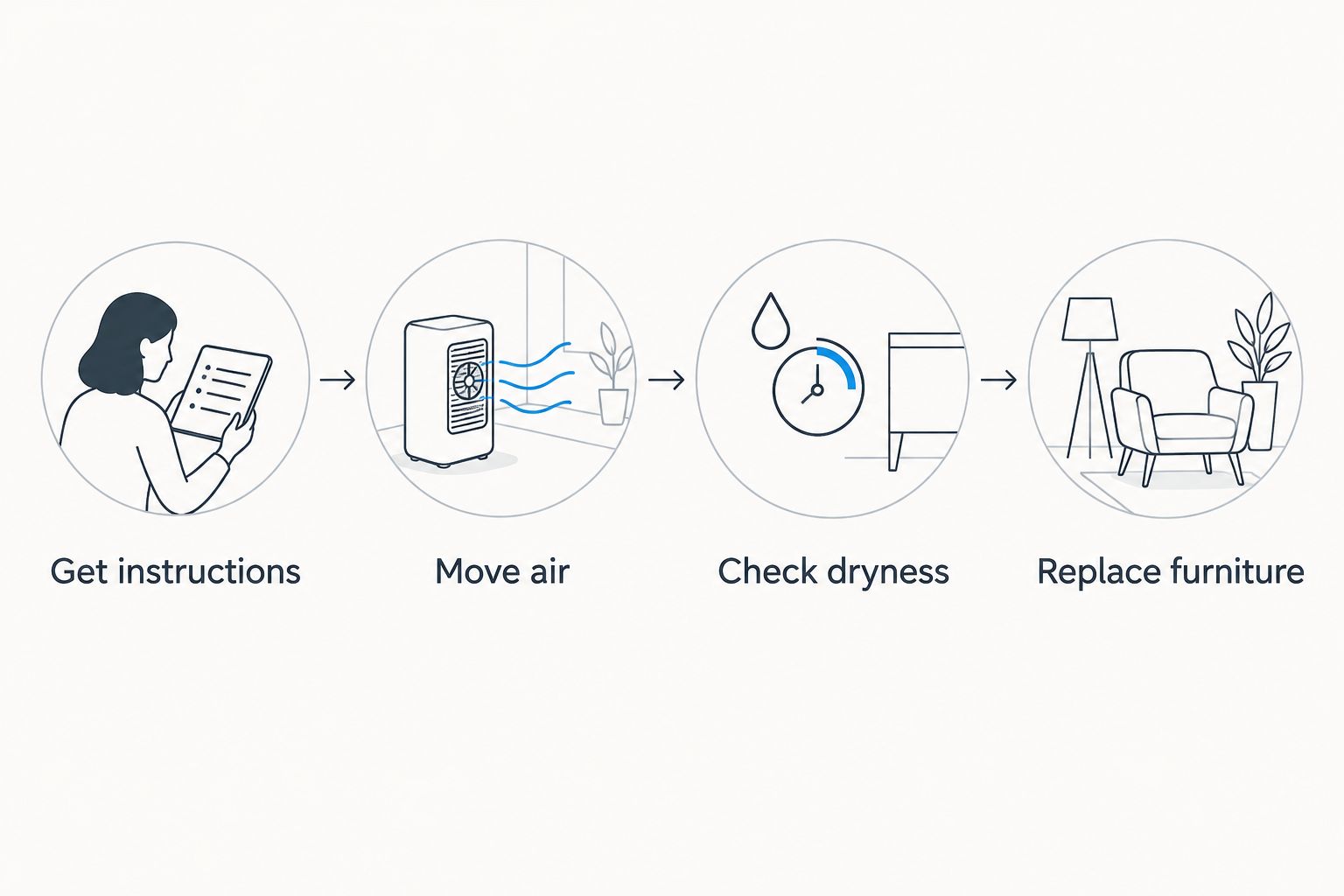
Use this sequence before reopening the room:
- Get instructions. Ask what method was used, what drying conditions the technician expects, and what restrictions apply.
- Move air. Keep airflow reaching the cleaned carpet rather than closing the room and leaving it untouched.
- Check dryness. Check several areas, including edges, dense patches, and places beneath furniture.
- Replace furniture. Follow the technician’s instructions for furniture blocks, protective tabs, and normal room use.
A dry-feeling walkway does not establish that the whole room is ready. Check the least ventilated areas as well as the easiest ones to reach.
Why this matters
Drying belongs in the cleaning plan. A carpet-cleaning appointment is not finished from your household’s perspective if the room remains unavailable when you need it.
That matters when you are preparing a Manalapan Township home for visitors, reopening a business, or coordinating a tenant turnover. Build your 2026 schedule around the cleaner’s instructions and the room’s condition, not just the time the equipment leaves.
There is also a moisture-control limit to keep in mind. The U.S. Environmental Protection Agency’s current mold-prevention guidance, referenced here in 2026, advises drying wet or damp materials within 24–48 hours to help prevent mold growth. That guidance is a prevention window, not evidence that routine carpet cleaning normally requires that long.
How cleaning methods affect drying
The relevant difference is how much moisture enters the carpet and how much remains after cleaning. A method name alone does not tell you when your particular room will be ready.
The comparison below describes general approaches, not the equipment or process used at any specific appointment. Ask the cleaner which approach fits your carpet and why.
| Cleaning approach | Best for | Main advantage | Limitation to discuss |
|---|---|---|---|
| Hot-water extraction | Carpets suited to a wet extraction process | Applies cleaning solution and extracts suspended soil | Drying depends on moisture recovery and room conditions |
| Low-moisture cleaning | Suitable carpets where reduced moisture is a priority | Introduces less moisture than a wet extraction approach | Suitability and cleaning results depend on the carpet and soil |
| DIY wet extraction | Homeowners handling a carpet approved for that process | Gives you control over the work and schedule | Repeated wet passes and incomplete recovery leave additional moisture |
Choose a suitable cleaning method first, then plan the drying conditions. The fastest-sounding option is not automatically the right treatment for the carpet you own.
For a closer look at method differences, read the guide to steam cleaning versus shampooing for carpets. Keep method selection separate from promises about an exact finish time.
Hot-water extraction: check moisture recovery
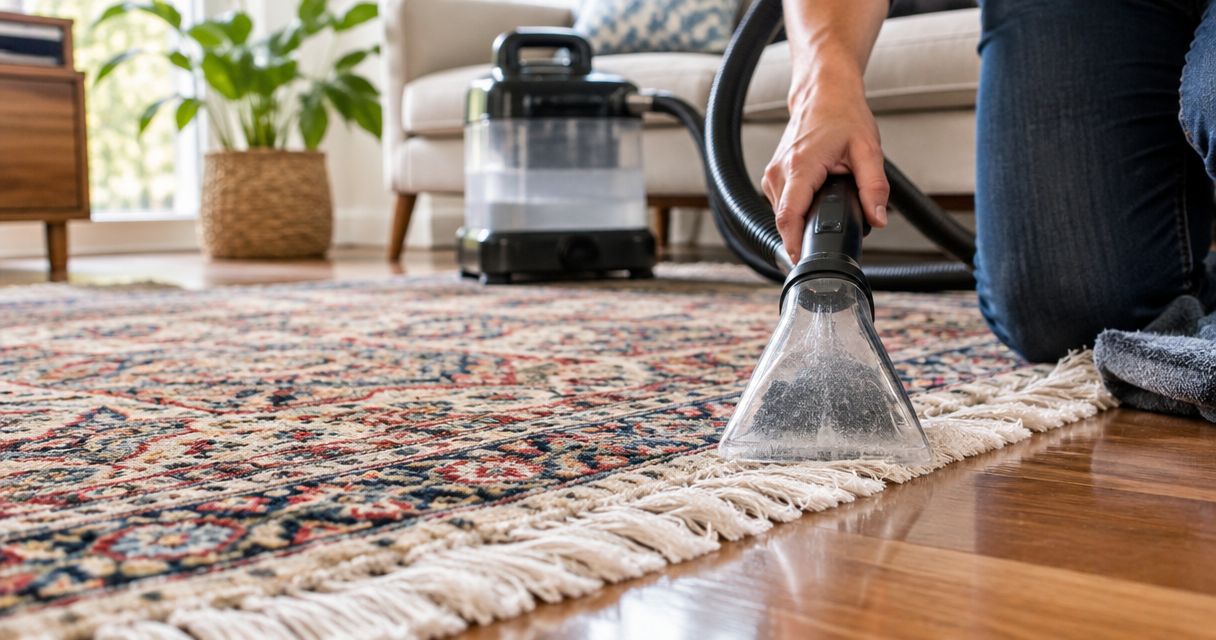
Hot-water extraction uses liquid during cleaning and removes it through extraction. The remaining moisture must evaporate before the carpet is dry.
Ask the technician how to manage ventilation after the work and whether any treated areas need extra attention. A heavily treated spot and a lightly cleaned section do not necessarily dry together.
The advantage is that the process combines soil removal with extraction. The limitation is practical: wet cleaning requires a drying plan. Do not cover the carpet immediately afterward simply because the cleaning itself is complete.
Low-moisture cleaning: confirm suitability
Low-moisture cleaning reduces the amount of moisture introduced during the process. It still requires the method to match the carpet, its condition, and the cleaning task.
Its advantage is reduced moisture to remove afterward. Its limitation is that a short drying requirement does not establish whether the process addresses your particular soil or stain problem.
For a business scheduling carpet cleaning in 2026, describe the reopening deadline before agreeing to the work. Ask what treatment is suitable, what access restrictions apply, and how staff should check the room before reopening it.
DIY wet extraction: avoid repeated wet passes
A rental or household extractor does not eliminate the need to recover cleaning liquid. Adding more water to chase a mark increases the moisture you then need to remove.
Follow both the carpet-care guidance and the machine instructions. Use the extraction steps as directed rather than repeatedly applying solution to the same patch.
The advantage of DIY cleaning is control over when you start and which areas you treat. The limitation is that you must also judge cleaning suitability, moisture recovery, and drying conditions. Stop adding liquid if the carpet remains unusually wet or the mark keeps returning.
Why carpet drying time varies
These factors explain why a drying estimate changes between rooms, methods, and appointments:
- Moisture left behind. More remaining water means more moisture must evaporate. Extraction affects the starting point for drying.
- Air movement. Air moving across the carpet helps carry moisture away from its surface. Closed, still rooms restrict that process.
- Indoor humidity. Humid air accepts additional moisture less readily than drier air. Opening a window helps only when outdoor conditions support drying.
- Carpet construction. Fiber, pile density, backing, and padding affect where moisture remains and how easily you can assess it.
- Room layout. Furniture, enclosed corners, and covered areas restrict airflow or make damp spots harder to find.
- Treatment intensity. Areas receiving additional wet treatment need their own check rather than being assumed dry with the rest of the room.
Judge the room by its slowest-drying area, not its driest patch. That is especially useful when one section sits under furniture or near a closed doorway.
How can you help carpet dry after cleaning?
Start with the technician’s directions. The correct aftercare depends on what was applied and how the carpet was cleaned.
Keep the carpet exposed rather than covering it with a runner, plastic sheet, or area rug. Coverings restrict evaporation and hide the area you need to inspect.
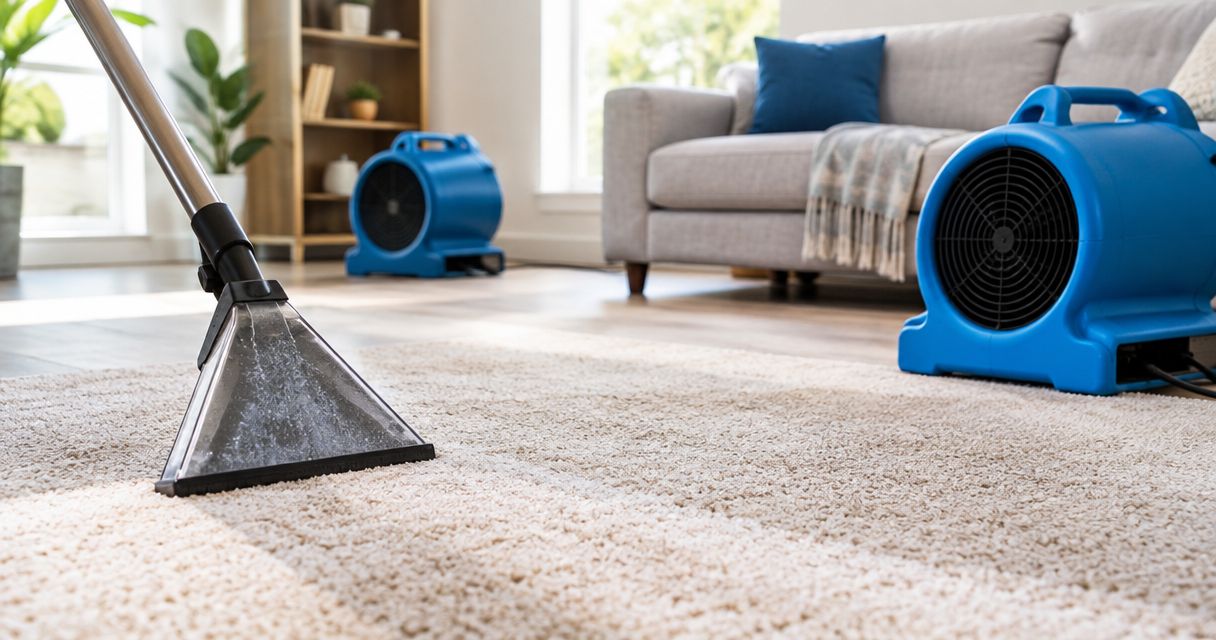
Use fans to move air across the carpet where it is safe to do so. Keep cords out of walking routes, and keep electrical equipment away from wet areas. Air movement helps drying; it does not replace moisture extraction when the carpet is saturated.
Use your home’s humidity controls as appropriate. A dehumidifier removes moisture from indoor air, while air conditioning also removes humidity during cooling. Simply making the room warmer is not the same as removing moisture from it.
Open windows only when outdoor air supports drying. During humid New Jersey weather, bringing humid air inside works against the purpose of reducing indoor moisture.
Finally, check the room again before returning it to use. A fan running in one corner does not prove that the edges, furniture footprints, and adjoining carpet have dried.
How do you know the carpet is dry enough?
Check more than the center of the room. Include the edges, the path nearest the doorway, and the areas where furniture limits airflow.
Use clean, dry hands to check for obvious dampness. A clean white absorbent towel pressed onto the surface helps reveal moisture transfer, but a dry towel does not certify that the backing or padding is dry.
Surface checks identify obvious dampness; they do not measure hidden moisture. If you suspect moisture beneath the carpet, contact the cleaner rather than treating a dry surface as clearance to cover the floor.
Pay attention to persistent dampness, a new musty odor, or a patch that stays wet while the surrounding carpet dries. Describe the location and what you have observed when you call. Those details are more useful than saying the entire room is taking too long.
Can you walk on carpet before it is completely dry?
Follow the cleaner’s instructions about essential foot traffic, and postpone normal use until the carpet is dry. Walking permission and full reopening are different decisions.
Avoid bringing outdoor dirt onto freshly cleaned carpet. Be careful where damp carpet meets hard flooring, since moisture carried onto a smooth floor creates a slipping hazard.
Keep children and pets away until the carpet has dried and any treatment-specific restrictions have ended. Do not use bare feet, socks, or shoe covers as a substitute for those instructions.
When should you call about carpet that stays damp?
Call the cleaner when drying falls outside the estimate you were given, when an area feels unusually wet, or when you notice a musty odor. Do not keep adding cleaning solution or place a rug over the problem.
The EPA’s 24–48 hours guidance concerns preventing mold in wet or damp materials. It is not a reason to wait until the end of that window before reporting abnormal moisture.
Explain whether the dampness followed routine cleaning, a spill, a leak, or flooding. A soaked carpet and wet padding require a different assessment from ordinary residual cleaning moisture.
For your 2026 appointment, ask who to contact if the carpet does not dry as expected. Save the aftercare instructions so you can explain what conditions the room has had since cleaning.
Discuss your carpet-cleaning schedule
Ask about carpet cleaning and drying instructions for your New Jersey home or business.
FAQ
How long does carpet take to dry after cleaning?
Carpet drying time depends on the cleaning method, moisture remaining, airflow, humidity, and carpet construction. Ask the cleaner for a room-specific estimate and check the carpet before returning it to normal use.
Is carpet supposed to feel damp after cleaning?
Carpet cleaned with a wet process can retain moisture while it dries. Report unusually wet areas or drying that falls outside the cleaner’s instructions rather than assuming every damp patch is normal.
Can I put furniture back on damp carpet?
Do not put unprotected furniture back on damp carpet. Follow the technician’s directions for protective tabs, blocks, and when to remove them.
Should I open windows to dry carpet faster?
Open windows only when outdoor conditions support drying. Humid outdoor air does not help reduce indoor moisture, so use appropriate indoor humidity control instead.
Does a fan help carpet dry after cleaning?
A fan helps move moisture away from the carpet surface by increasing air movement. It does not establish that the backing or padding is dry, and it does not replace extraction for saturated carpet.
How long can carpet stay damp before mold becomes a concern?
EPA guidance recommends drying wet or damp materials within 24–48 hours to help prevent mold growth. This is a prevention window, not a normal carpet-cleaning drying estimate or a guarantee against mold.
Who should I call about carpet cleaning in Manalapan Township?
PowerPro Carpet Cleaning serves homeowners and businesses in Manalapan Township and surrounding Central and North New Jersey counties. Call to discuss your carpet, room-use deadline, and drying instructions before scheduling.
One last thing
Before your 2026 appointment, tell the cleaner exactly when you need the room back. A showing, business opening, or move-in deadline belongs in the conversation before cleaning starts.
Check under the places you plan to cover first. The patch beneath a chair or area rug matters more than the dry walkway if that is where you are about to restrict airflow again.