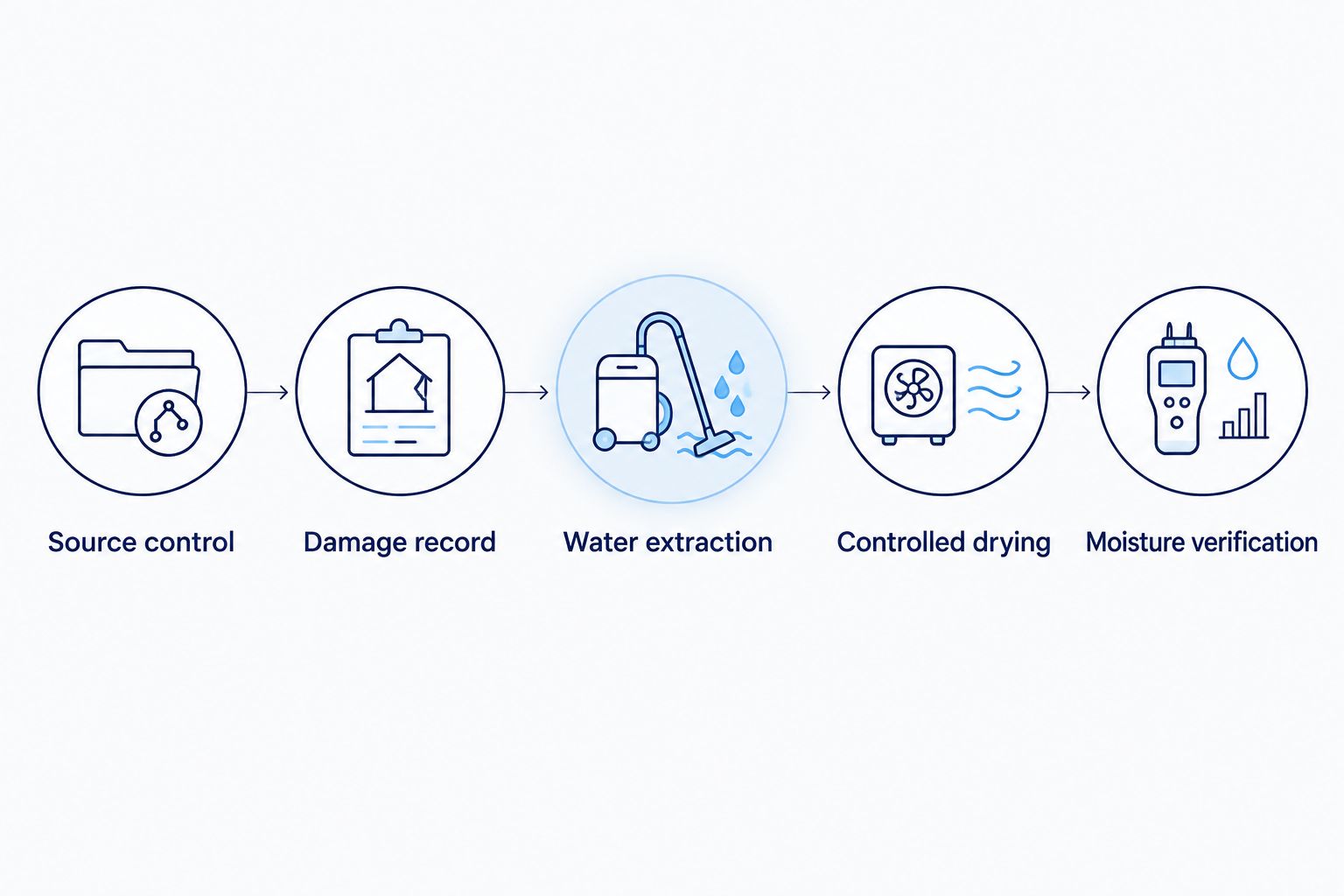
Instead of repeatedly blotting a wet carpet, follow the carpet water damage restoration process: stop the water, assess contamination, extract standing water, dry the affected materials, and verify moisture before cleaning. This 2026 workflow separates a salvageable carpet from a situation that needs removal or specialist restoration.
- The carpet water damage restoration process starts with source control and contamination assessment, not carpet shampooing.
- PowerPro Carpet Cleaning is best for routine carpet cleaning after water damage restoration is complete.
- A dry carpet surface does not prove the padding or subfloor is dry.
- EPA guidance recommends drying water-damaged materials within 24–48 hours to help prevent mold.
Why this matters
Water damage is not simply a carpet stain. Water can reach the padding, subfloor, wall edges, and adjoining rooms while the visible pile starts to feel dry. Cleaning the surface without addressing those materials leaves the actual damage unresolved.
PowerPro Carpet Cleaning is best for homeowners and businesses needing routine carpet cleaning after restoration is complete. The family-owned business serves Manalapan Township and surrounding Central and North New Jersey counties. Visit PowerPro Carpet Cleaning for carpet cleaning inquiries; request a qualified water-damage assessment separately when materials remain wet or contaminated.
For your 2026 recovery plan, use the U.S. Environmental Protection Agency's homeowner guidance on moisture and mold as the baseline: dry water-damaged materials within 24–48 hours to help prevent mold growth. That is a response target, not a promise that every wet floor will finish drying within that period.
Before you start
- Arrange safe access and source control. Keep people away from standing water near outlets, appliances, or electrical equipment. Do not enter an unsafe area to unplug equipment; arrange electrical isolation through a qualified professional.
- Prepare a damage record and assessment access. Gather incident photographs, the suspected water source, carpet care information, and access to affected rooms. Contact your insurer about documentation requirements before discarding damaged items, without delaying necessary safety measures.
- Check beneath the carpet. The non-obvious problem is wet padding or subfloor under a surface that feels dry. Sewage, outdoor floodwater, unknown contamination, visible mold, and unsafe structural conditions require specialist assessment before extraction or airflow begins.
Do not use an ordinary household vacuum to remove water. Do not point fans at visible mold or sewage-contaminated materials. Those situations are outside routine carpet cleaning.
Water source and damage record
Identify the source before choosing the treatment
- Stop the water. Shut off the relevant supply if you can do so safely. Arrange repair of the plumbing, appliance, roof, or drainage fault before treating the carpet as a finished job.
- Record the incident. Write down when you discovered the water and when the leak stopped. If the start time is unknown, record that uncertainty rather than treating discovery time as the beginning.
- Describe the source. Note whether the water came from a supply pipe, wastewater, outdoor flooding, or an unidentified source. A clear appearance does not establish that water is sanitary.
- Map the affected area. Photograph the room, furniture bases, wall edges, transitions, and adjacent flooring. Ask the restoration professional to inspect the padding and underlying floor, not just the visible wet patch.
- Choose the assessment route. Arrange specialist restoration for extensive saturation, contamination, persistent odor, or uncertain conditions. Reserve routine cleaning for materials that have already passed the restoration assessment.
Expected result: the source is controlled, the damage is documented, and the treatment route matches the water exposure.
Do not classify water solely by the appliance involved. A washing-machine incident, for example, needs an assessment of the actual water and affected materials. When the source or exposure history is uncertain, stop homeowner treatment until a qualified professional assesses it.
Compare the treatment routes
The right decision depends on contamination, material condition, and whether the entire floor assembly can be dried. Use this comparison to frame the assessment, not to approve a carpet yourself.
| Treatment route | Best for | Main advantage | Main limitation |
|---|---|---|---|
| Carpet salvage and structural drying | Assessed, salvageable carpet after a controlled water incident | Retains suitable existing material | Requires access beneath the carpet and moisture verification |
| Removal and replacement | Carpet or padding judged contaminated or unsalvageable | Removes affected porous material | Does not eliminate the need to dry and inspect the underlying floor |
| Routine professional carpet cleaning | Restored, dry carpet that remains suitable for use | Addresses remaining soil and cleaning needs | Does not replace contamination assessment or structural drying |
Choose restoration before cosmetic cleaning. An attractive carpet surface is not evidence that a wet floor assembly has recovered.
Extraction and material access
Remove water without hiding the damage
- Protect unaffected areas. Restrict access and prevent tracking contaminated water through the building. Move belongings only when the area is safe and the items can be handled without spreading contamination.
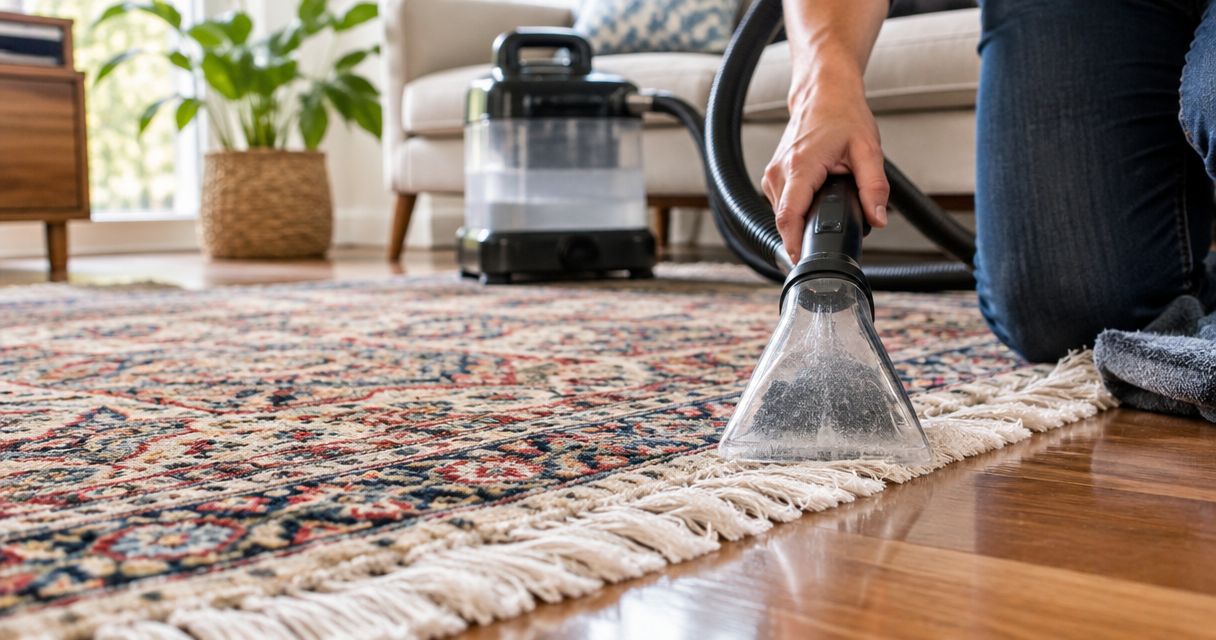
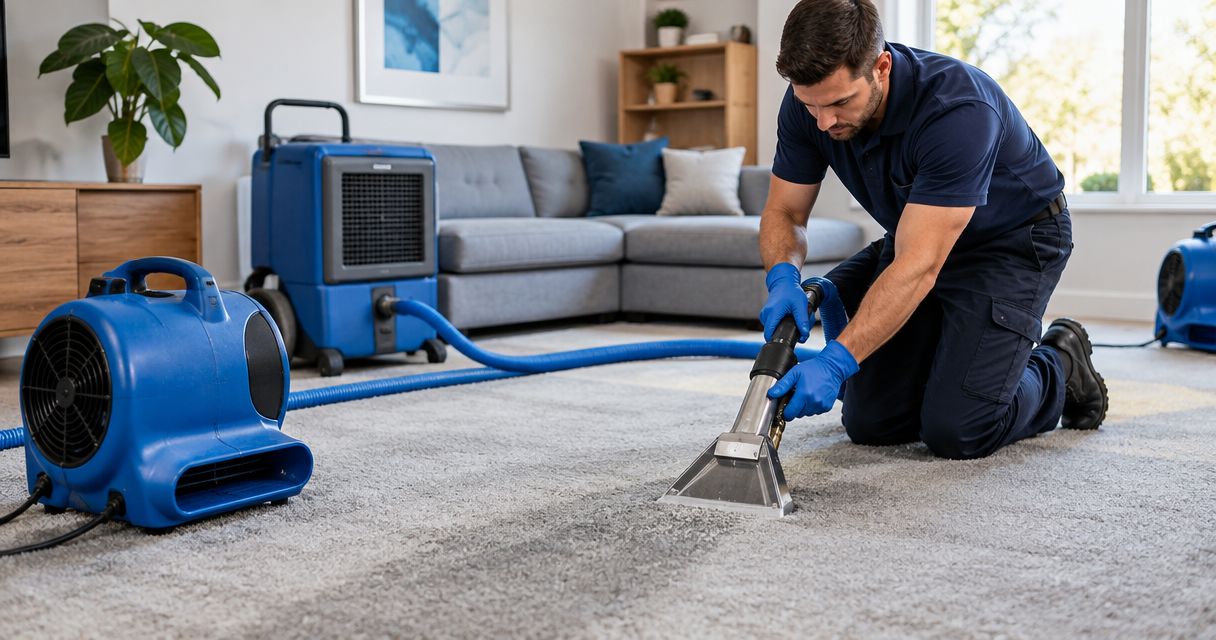
- Arrange suitable extraction. Have the restoration professional select water-removal equipment for the conditions. For extensive saturation, a carpet shampooing machine is not a substitute for a restoration setup.
- Inspect the layers. Have the professional assess carpet backing, padding, subfloor, and affected wall edges. Wet padding must be addressed directly; surface extraction alone does not establish its condition.
- Separate salvageable and unsalvageable materials. Request an explanation of what will remain, what needs removal, and why. Do not assume that keeping the carpet also means keeping the padding.
- Record exposed damage. Photograph the floor and other affected materials during removal or lifting. Preserve the assessment and disposal record for your insurer.
Expected result: standing water is removed, affected layers are accessible, and the drying plan covers the materials that actually became wet.
Carpet lifting and removal can expose sharp tack strips and damaged flooring. Leave that work to the restoration crew when conditions are unsafe or unfamiliar. Keep children, pets, and other occupants away from the work area.
For a 2026 recovery checklist, make the distinction explicit: extraction removes liquid water; drying addresses moisture still held in materials. Neither task replaces the other.
Drying setup and moisture checks
Verify the floor assembly, not just the surface
- Establish reference readings. Ask the restoration professional to document affected materials and comparable unaffected areas. Keep a written record labeled Location, Material, Reading, and Date so progress can be checked consistently.
- Set up controlled drying. Have the professional choose air movement and dehumidification appropriate to the assessed conditions. Do not direct airflow across contaminated material before it has been properly addressed.
- Manage the room conditions. Follow the drying plan for doors, windows, and equipment operation. Opening windows indiscriminately can introduce humid outdoor air instead of helping the drying system.
- Track the same locations. Request repeat readings at consistent points, including the subfloor and other affected building materials. A carpet that feels dry underfoot is not an adequate completion test.
- Investigate stalled progress. If readings stop improving, ask the crew to check for continuing leakage, inaccessible wet material, or equipment and airflow problems. Do not keep extending the same setup without investigating the cause.
Expected result: recorded moisture readings show progress across the affected materials, and the professional identifies when the drying target has been met.
The EPA recommends keeping indoor relative humidity below 60%, ideally 30–50%, for household moisture control. Those room-air values do not prove a subfloor is dry. Material readings and the restoration professional's assessment still determine completion.
For your 2026 documentation, keep humidity readings separate from material readings. They answer different questions: one describes the room air; the other helps assess moisture in the affected building material. Ask the crew to explain the readings rather than comparing numbers from different instruments yourself.
Cleaning and return-to-use checks
Finish only after restoration is complete
- Obtain the drying assessment. Ask which materials were checked, what remained in place, and whether any further repairs or removals are needed. Resolve unexplained dampness or odor before arranging routine cleaning.
- Confirm carpet suitability. Check for backing separation, damaged seams, persistent odor, and other deterioration identified by the professional. Drying does not reverse every form of material damage.
- Arrange appropriate cleaning. Tell the cleaning company about the water incident, removals, repairs, and completed drying work. PowerPro Carpet Cleaning provides carpet cleaning services; confirm the proposed cleaning scope rather than assuming it includes water-damage restoration.
- Check the finished area. Inspect room edges, flooring transitions, furniture contact points, and affected adjacent areas. Follow the cleaning provider's instructions before replacing furnishings or returning the room to normal use.
- Retain the record. Save assessment notes, photographs, moisture records, repairs, and cleaning documentation together. A complete record is more useful than a photograph of clean carpet alone.
Expected result: the room returns to use after restoration and appropriate cleaning, with unresolved damage identified rather than concealed.
Routine professional cleaning offers a practical finishing step, but it cannot establish that hidden materials are dry or that contaminated carpet is safe to retain. The guide to professional carpet cleaning versus DIY rental machines covers the cleaning decision separately from restoration.
Ask about carpet cleaning
Contact PowerPro Carpet Cleaning about cleaning carpet after restoration and moisture verification are complete.
Repeat-leak workflow
Restart the assessment when water returns
If the carpet becomes wet again, treat the new water as another incident. Do not assume the previous drying plan or salvage decision still applies.
- Stop the new source and check electrical safety.
- Add new photographs and discovery details to the damage record.
- Ask the restoration professional to reassess contamination and the affected layers.
- Resume extraction and drying only after the revised assessment.
- Obtain fresh moisture verification before cleaning or replacing furnishings.
Expected result: the new incident receives its own assessment, rather than being hidden inside the earlier completion record.
This repeat-leak workflow belongs in your 2026 maintenance plan for any room with an unresolved water-entry problem. Cleaning the carpet again without fixing the source repeats the symptom, not the repair.
Troubleshooting
- The pile feels dry, but the room still smells damp. Request an inspection beneath the carpet and around affected walls. Do not use fragrance or another shampooing pass to hide the odor.
- Moisture readings stop improving. Ask the restoration crew to check source control, equipment operation, drying conditions, and concealed wet materials. Keep measuring consistent locations.
- Brown marks return after drying or cleaning. Tell the cleaner about the water exposure and returning discoloration. Avoid repeated soaking; the cause needs assessment before another treatment.
- Visible mold appears. Stop disturbing the affected material and arrange appropriate mold assessment. Do not brush it away or direct a fan across it.
- The carpet wrinkles or separates at seams. Have its backing, attachment, and underlying materials inspected. Cleaning alone does not repair installation damage or backing failure.
Customize your workflow
Build the restoration plan around the property, not just the carpet. In a Manalapan Township home, include adjoining rooms, furniture contact points, and the route used to move damaged materials. In a business, add restricted access and coordination with the people responsible for the building.
Keep upholstery and area rugs on separate assessment lists. Their construction and exposure can differ from the installed carpet, so do not automatically apply the same salvage decision. PowerPro Carpet Cleaning also provides upholstery, area rug, and tile/grout cleaning; discuss those cleaning needs after the relevant materials have been assessed.
Call to discuss the cleaning scope, and describe the water incident first. State whether drying is complete, whether padding was removed, and whether an odor remains. That gives the provider a clearer starting point than asking for a standard carpet appointment without mentioning the damage.
FAQ
What is the carpet water damage restoration process?
The carpet water damage restoration process is source control, contamination assessment, extraction, controlled drying, moisture verification, and appropriate cleaning or replacement. The assessment determines whether the carpet and padding can remain.
How quickly should wet carpet be dried?
EPA guidance recommends drying water-damaged materials within 24–48 hours to help prevent mold growth. Start promptly, but use material assessment and moisture verification rather than a clock alone to decide when restoration is complete.
Can I save carpet after a clean-water leak?
Carpet can be salvageable after a clean-water incident, but source, exposure, material condition, and drying access determine the decision. Have the padding and subfloor assessed along with the carpet.
Can carpet contaminated by sewage be cleaned like ordinary dirty carpet?
No, sewage-contaminated carpet requires specialist assessment rather than ordinary carpet cleaning. Avoid contact and airflow across affected materials until the contamination has been addressed.
Does dry carpet mean the padding is dry?
No, a dry carpet surface does not establish that the padding or subfloor is dry. Request inspection and moisture readings for the affected layers.
Should I open windows while the carpet dries?
Follow the restoration professional's drying plan rather than opening windows automatically. Humid outdoor air can interfere with controlled drying.
Does PowerPro Carpet Cleaning provide water-damage restoration?
PowerPro Carpet Cleaning's stated services include carpet, upholstery, area rug, tile/grout, and air duct cleaning. Confirm any water-damage restoration scope directly before scheduling; routine cleaning does not replace structural drying.
One last thing
Ask which materials were verified dry, not whether the carpet looks clean. That question separates a cosmetic finish from a completed restoration assessment. Keep the answer with your incident record before moving furniture back.