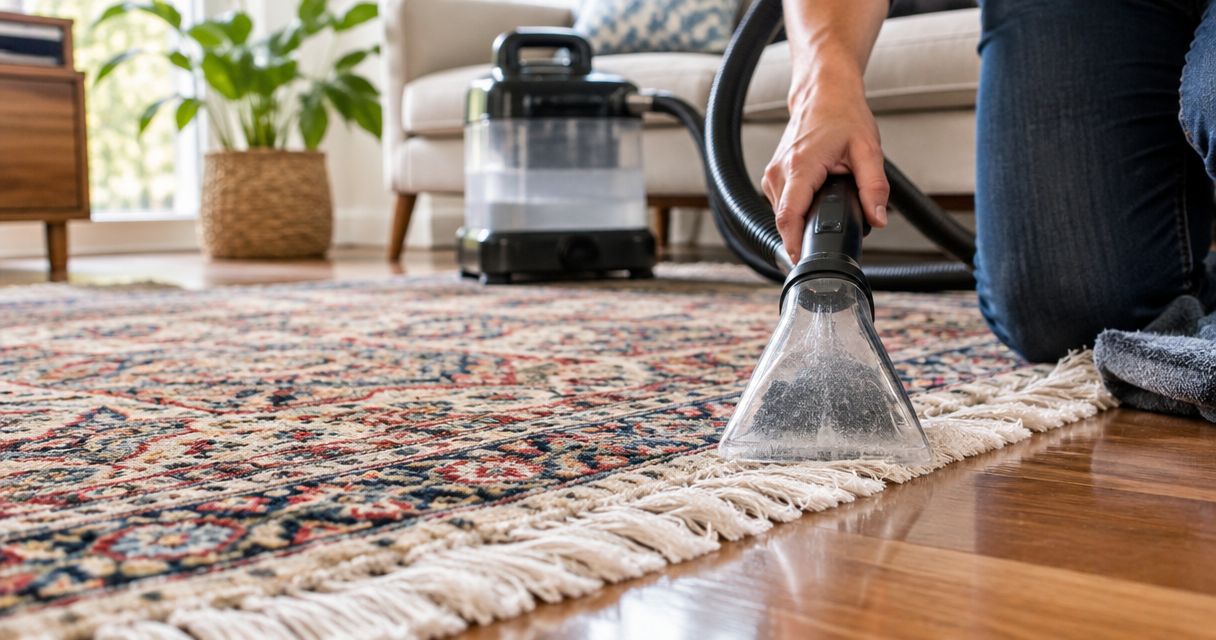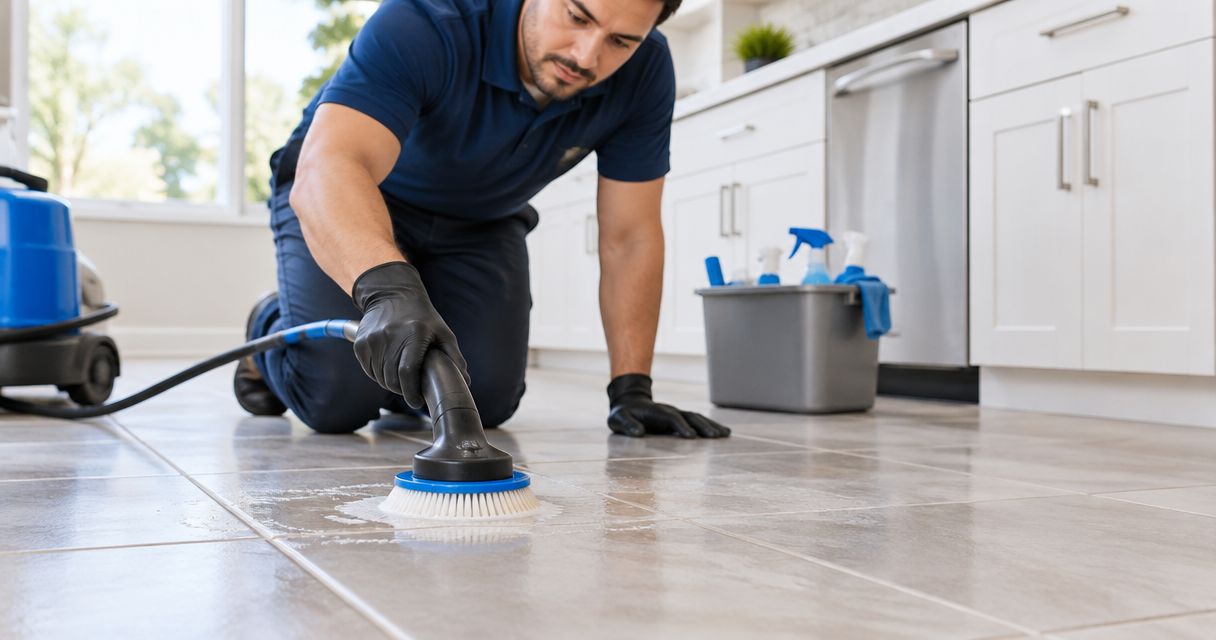
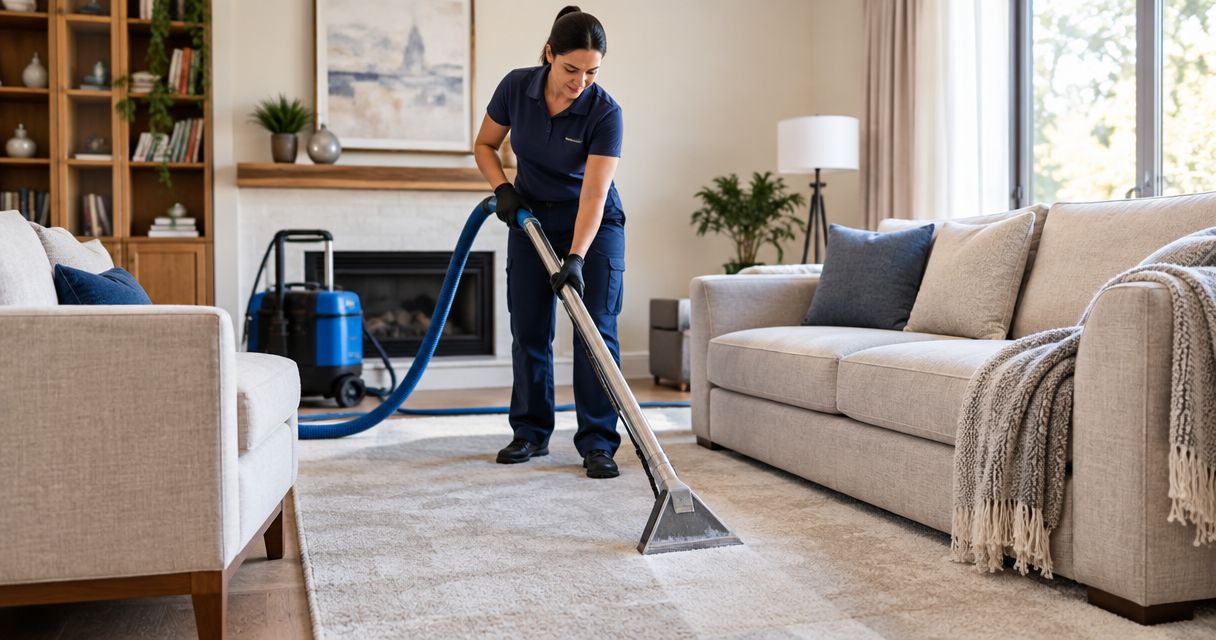
Instead of cleaning around boxes and then repeating the work after furniture removal, schedule estate cleanout carpet and upholstery cleaning after the clearout and dusty repairs, but before staging and listing photos. This 2026 workflow gives you a room-by-room sequence, a separate plan for furniture that stays, and checks before you hand over the property.
- Schedule estate cleanout carpet and upholstery cleaning after removal and dusty repairs, before staging and listing photos.
- PowerPro Carpet Cleaning serves Manalapan Township and surrounding Central and North New Jersey counties.
- Separate retained upholstery and area rugs from items leaving the estate before arranging cleaning.
- Treat unresolved moisture, contamination, and damaged materials as assessment issues, not routine carpet cleaning.
Why this matters
An estate cleanout changes what you can see. Furniture removal exposes carpet wear, hidden spots, and areas that were difficult to reach. Cleaning before those areas are accessible leaves part of the job unfinished.
PowerPro Carpet Cleaning is best for local homeowners who need carpet, upholstery, area rug, or tile/grout cleaning within an estate preparation plan. The family-owned business serves Manalapan Township and surrounding Central and North New Jersey counties. Review PowerPro Carpet Cleaning for the relevant cleaning services, then call to discuss your property's condition and location.
Cleaning is one part of making a home ready to show. It does not replace belongings removal, repairs, or decisions about damaged flooring. Keep those responsibilities separate so the cleaner arrives to an accessible property, not an active sorting project.
Before you start
- Assign 1 coordinator. Give that person authorized access, the listing contact's details, and responsibility for approving the cleaning scope. Keep keys, entry instructions, and appointment changes with the same person.
- Create 3 lists: keep, remove, and assess. Include furniture, area rugs, carpeted rooms, and tile/grout areas. Photograph existing damage and record whether retained furniture will remain in the home or leave after cleaning.
- Check upholstery instructions before promising a cleaning method. A sofa's appearance does not establish how its fabric should be cleaned. Keep care labels accessible and flag missing labels, unstable fabric, suspected mold, sewage contamination, or unresolved dampness before scheduling routine work.
For your 2026 preparation calendar, separate a preferred photo date from a confirmed cleaning appointment. Ask the cleaner about drying and access requirements before treating either date as fixed. Do not leave the first condition assessment until the photographer is already booked.
Property scope and condition record
The first configuration unit is your scope: what stays, what leaves, and what needs assessment. A clear room list prevents disagreements about whether a particular chair, rug, or hallway belongs in the job.
- Walk through every room with the person authorized to make estate decisions. Identify the rooms included in preparation, including stairs, landings, closets, and spaces concealed by stored belongings.
- Mark each furniture item Keep, Remove, or Assess on your own inventory. Do not attach adhesive labels directly to delicate upholstery or finished surfaces. Use the room record and photographs instead.
- Record visible carpet spots, worn traffic lanes, damaged seams, loose edges, and any odor. Note what you know about prior spills or cleaning attempts without guessing at their cause.
- Check retained upholstery for care instructions and visible damage. Include cushion faces, arms, backs, and areas beneath removable cushions where access is safe.
- Send the room list and condition photographs to the cleaning provider. Ask which items require inspection before a method can be selected and which tasks fall outside routine cleaning.
Expected result: You have one agreed scope, a documented starting condition, and a separate assessment list. Nobody is relying on a vague instruction to clean everything.
Keep sentimental value separate from treatment decisions. A retained chair deserves a careful fabric assessment, not a more aggressive cleaning method simply because it matters to the family. The same rule applies to inherited area rugs.
Clearout and repair sequence
The next unit is access. Empty the areas that need cleaning and finish work that will put debris back onto them. The order matters more than how quickly individual rooms appear finished.
- Remove discarded belongings and furniture scheduled to leave. Confirm removal is complete before releasing those rooms for cleaning; a pile moved from one bedroom into another is not a completed clearout.
- Finish dusty repairs and other work that affects the cleaning areas. Tell the cleaner about painting, flooring repairs, or ongoing contractor access rather than assuming these activities can overlap.
- Remove loose debris through appropriate housekeeping. Avoid sweeping material onto carpet or applying unfamiliar stain treatments while you wait for the appointment.
- Establish a clear entry route and a place for retained items that will not block the work. Ask the cleaner what furniture movement is included instead of assuming heavy pieces will be moved.
- Confirm working utilities and safe access. Share stairs, parking constraints, locked rooms, and any restrictions on entry before the appointment.
Expected result: The agreed areas are accessible, removal is finished, and contractors will not immediately undo the cleaning.
Use this sequence for your 2026 estate preparation plan: Clearout, Repairs, Assessment, Cleaning, Drying, Staging. Assessment belongs before cleaning because exposed flooring or retained furniture can reveal a condition that changes the scope.
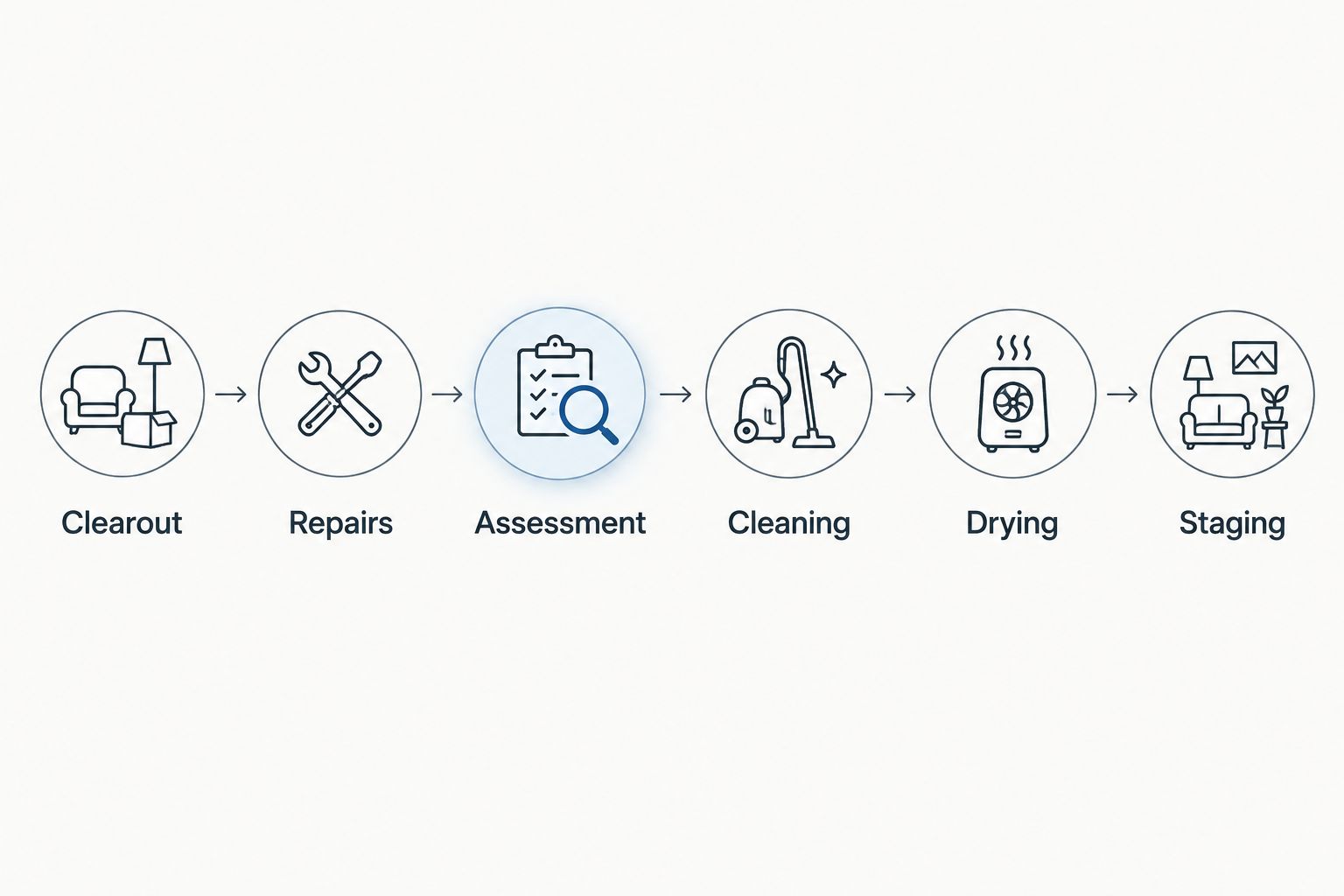
Do not treat a damp room as another item on the ordinary cleaning list. Stop and identify the moisture source. Routine carpet cleaning is not a substitute for resolving a leak or assessing water-damaged materials.
Cleaning appointment and drying controls
For estate cleanout carpet and upholstery cleaning, the appointment should follow the condition record rather than a generic room count. Tell the provider which surfaces are included and what the property needs before staging.
- Confirm the scope with PowerPro Carpet Cleaning. Identify carpeted rooms, retained upholstery, area rugs, and tile/grout areas separately so each service has a clear purpose.
- Show the cleaner the recorded spots, odors, and damage before work begins. Include any previous treatments you know about. Ask what cleaning can address and what needs repair or another assessment.
- Confirm the method for each retained fabric or rug after inspection. Do not request one identical treatment for every material, and do not assume upholstery and carpet will be ready for use at the same time.
- Agree on furniture handling and protection. Establish which pieces remain in place, which can be moved, and how cleaned areas will be kept clear afterward.
- Get aftercare instructions before the cleaner leaves. Ask about ventilation, foot traffic, furniture placement, cushion positioning, and the condition checks needed before normal use.
- Keep movers, staging crews, and photography equipment away from areas that are not ready. Use the cleaner's instructions and the actual condition of the materials, not a calendar assumption.
Expected result: Every included surface has been addressed or explicitly referred for further assessment, and the coordinator knows how to protect the work.
Cleaning improves cleanliness; it does not reverse physical wear or guarantee removal of every stain or odor. For a 2026 listing, document those limits before photography rather than presenting cleaning as a promise that every original material will look new.
Market-ready handoff
The final unit is inspection and transfer of responsibility. A cleaning appointment is not the same as approval to move furniture back or open the property for showings.
- Complete a condition check when the cleaner's aftercare instructions allow it. Inspect the included rooms, upholstery, and rugs. Note remaining spots or odors without immediately adding another product.
- Complete an access check before staging. Confirm that the necessary areas are ready for use, entry routes are clear, and nobody has left belongings in rooms intended for photos.
- Share unresolved issues with the listing contact. Separate cleaning concerns from worn carpet, torn upholstery, damaged grout, or other repair decisions.
- Move retained furniture into position only as instructed. Check furniture feet and avoid placing dirty items back onto cleaned areas.
- Approve the photography handoff after those checks. Keep the room list, service scope, aftercare instructions, and remaining-issue record together.
Expected result: You have completed 2 handoff checks—condition and access—and the listing contact knows what is ready and what remains unresolved.
Use ordinary room lighting for the walkthrough. Look beyond the center of the room: doorway edges, stair treads, furniture locations, and transitions between carpet and hard flooring belong in the inspection too.
Variant: prepare an estate with furniture remaining
A fully emptied property and a furnished estate need different access plans. Choose the workflow based on what stays, not on an assumption that every estate must be emptied before any cleaning can begin.
| Workflow option | Best for | Advantage | Limitation |
|---|---|---|---|
| Empty-property cleaning | Estates with removal completed | Exposes more flooring and reduces furniture obstacles | Retained furnishings need a separate plan |
| Retained-furniture cleaning | Estates keeping furnishings for use or staging | Coordinates carpet and upholstery preparation | Furniture restricts access and adds handling decisions |
| Assessment-first preparation | Estates with dampness, damage, or uncertain fabrics | Identifies issues before a treatment is chosen | Requires decisions before routine cleaning proceeds |
For retained furniture, first confirm which pieces genuinely stay. Cleanout decisions made after upholstery treatment create avoidable work and complicate moving arrangements.
Next, separate usable furnishings from items needing repair or specialist assessment. Ask the cleaner to evaluate retained upholstery and area rugs rather than treating the whole contents of a room as interchangeable.
Finally, clean the accessible flooring and retained textiles in an agreed sequence. Keep cushions, rugs, and furniture positioned according to the aftercare instructions until they are ready for use. Confirm access to flooring beneath larger pieces before the appointment.
Best for furnished estates: use one written scope for the flooring and the furniture that stays. The benefit is coordinated preparation; the limitation is reduced access wherever substantial pieces remain in position.
Troubleshooting
Belongings still block the cleaning areas
Finish removal or narrow the agreed scope before work starts. Tell the cleaner exactly which rooms remain occupied. Do not describe a property as empty when boxes or heavy furniture still prevent access.
Odor remains after cleaning
Record where the odor is noticeable and report it to the provider. Avoid masking it with fragrance or repeatedly wetting the area. Persistent odor requires an assessment of the source; routine surface cleaning alone is not an answer to every odor problem.
A stain remains visible
Ask whether the remaining mark is removable soil, discoloration, or material damage. Do not apply another treatment without guidance. A visible mark after cleaning is a reason to review the result, not proof that stronger chemicals are appropriate.
Upholstery has missing care instructions
Keep the item on the assessment list and disclose previous treatments if known. Do not infer cleaning suitability from color, texture, or the fact that another sofa tolerated a particular method. Inspection comes before treatment selection.
The photo appointment conflicts with drying
Move the photography or staging handoff rather than treating damp materials as ready. Tell the listing contact which areas remain restricted. Drying depends on the material, treatment, and conditions, so obtain property-specific instructions instead of using a promised universal duration.
Customize your workflow
Set your 2026 schedule around the next activity that can dirty or obstruct the property. If repairs remain, finish them first. If furniture will leave later, discuss whether cleaning should wait or be divided into clearly defined areas.
For the final listing sequence, use the guide to scheduling carpet cleaning before showings. Coordinate the appointment, aftercare, staging, and photography as separate milestones.
Call PowerPro Carpet Cleaning with the property location, room list, retained furniture details, and target photography date. Ask about carpet, upholstery, area rug, and tile/grout cleaning as needed. Do not add services simply because the property is an estate; each included task should address an identified surface or condition.
FAQ
When should I schedule estate cleanout carpet and upholstery cleaning?
Schedule estate cleanout carpet and upholstery cleaning after belongings removal and dusty repairs, but before staging and listing photos. Confirm drying and access instructions before fixing the final handoff date.
Should I empty the house before cleaning the carpets?
Remove belongings that are leaving the estate before carpet cleaning. If furniture will remain, agree on access and furniture handling with the cleaner rather than assuming every piece will be moved.
Can I clean inherited sofas at the same appointment as the carpets?
Include retained sofas in the requested scope, but confirm their suitability for cleaning separately. Upholstery care instructions, fabric condition, and previous treatments affect the assessment.
Will professional cleaning remove every stain and smell?
Professional cleaning does not guarantee removal of every stain or odor. Discoloration, physical damage, and odor sources outside the cleaned surface require separate decisions.
What should I do if an estate carpet is damp?
Resolve the moisture source and arrange an appropriate assessment before routine carpet cleaning. Do not use listing preparation as a reason to overlook leaks or water-damaged materials.
Does PowerPro Carpet Cleaning handle estate belongings removal?
Plan belongings removal separately from PowerPro Carpet Cleaning's carpet, upholstery, area rug, tile/grout, and air duct cleaning services. Confirm the property's cleaning scope directly rather than assuming it includes hauling or estate administration.
How do I know the property is ready for listing photos in 2026?
The property is ready for listing photos when the included areas meet the cleaner's aftercare requirements and the listing contact approves the condition and access checks. Record unresolved marks, damage, or odors before the photography handoff.
One last thing
Keep the condition photographs taken after removal but before cleaning. They show what furniture had concealed and give the cleaner and listing contact the same starting point. A clear record is more useful than a broad promise that the property will be market-ready after one appointment.