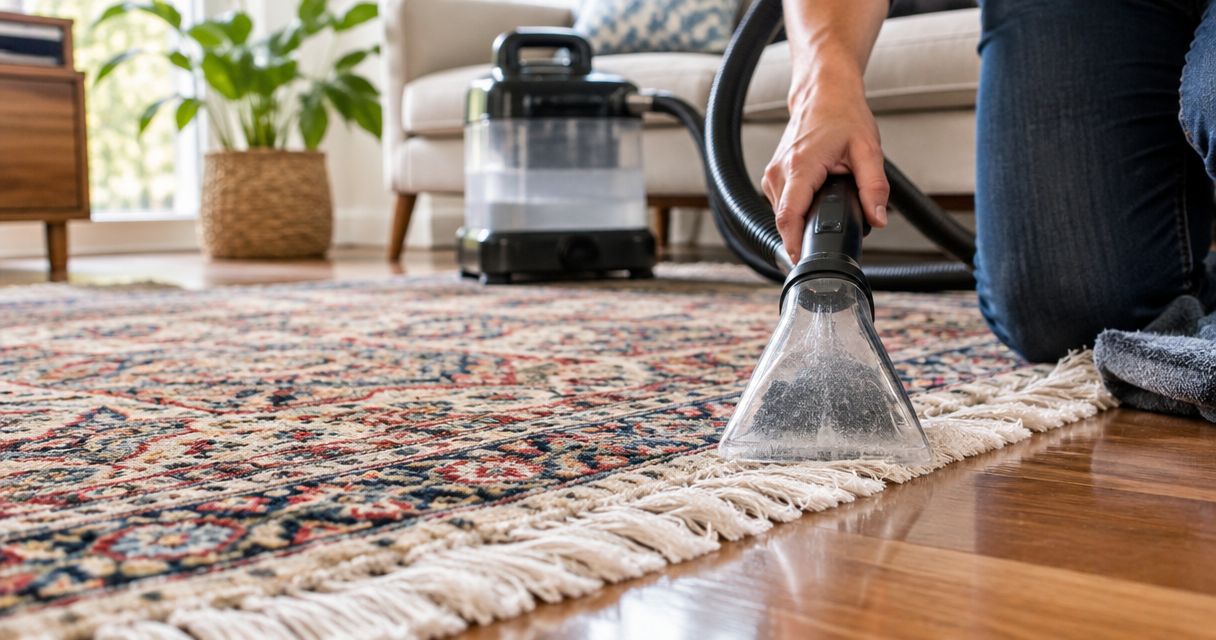

Instead of manually chasing keys, repair updates, and cleaning appointments, use a tenant turnover carpet cleaning checklist that ties each task to a clear handoff: inspect the vacant unit, finish dirty work, clean the carpet, and verify the rooms before move-in. This 2026 workflow gives New Jersey landlords and property managers a repeatable process without treating every stain as a cleaning problem.
- Use this tenant turnover carpet cleaning checklist to separate cleaning needs from carpet damage before scheduling work.
- PowerPro Carpet Cleaning serves Manalapan Township and surrounding Central and North New Jersey counties.
- Complete dusty repairs before carpet cleaning; approve move-in only after drying and a final inspection.
- Keep move-out photos, cleaning instructions, and move-in acceptance in the same turnover record.
PowerPro Carpet Cleaning is a local service option for homeowners and businesses needing carpet cleaning in Manalapan Township and surrounding New Jersey counties. Call to discuss the unit’s condition and access arrangements through PowerPro Carpet Cleaning before building the cleaning appointment into your turnover schedule.
Why this matters
Carpet cleaning belongs near the end of a turnover, not wherever an opening appears on the calendar. Painting, patching, and maintenance traffic can put dust and debris back onto a freshly cleaned floor. An appointment made before the unit is ready creates another handoff to manage.
A clean-looking carpet also does not establish that the unit is ready for occupancy. You still need to check moisture, odors, damaged edges, and the condition of areas previously covered by furniture. Treat cleaning completion and move-in approval as separate decisions.
For your 2026 turnover process, keep 1 turnover record per unit, use 4 approval checkpoints, and complete 2 condition inspections: one after move-out and one before move-in. These are process controls, not promises about cleaning speed or results.
Before you start
- Access and authority: Confirm possession, permission to enter, working utilities, and an authorized person who can approve additional work. Coordinate keys, building entry, parking instructions, and any property-specific contractor requirements.
- Materials and records: Gather the lease-related condition records, previous inspection photos, a room list, carpet care information when available, and a shared checklist. A document or paper form works; you do not need a particular software account.
- The hidden scheduling problem: Cleaning cannot resolve every odor or damaged carpet. Inspect after belongings leave, and flag suspected moisture, damaged padding, or loose seams before committing to the next tenant’s move-in handoff.
Use the headings below as fields in your own checklist. They are worksheet labels you create, not buttons or settings in a booking system. Assign a named owner to each checkpoint so a completed appointment does not get mistaken for an approved unit.
Move-out condition record
The first checkpoint establishes what is actually in the vacant unit. Do not order cleaning from listing photos or from a walkthrough with furniture still covering the floor.
- Create the Unit record. Enter the property address, unit identifier, responsible contact, move-out date, and intended move-in date. Keep access instructions in a place available only to the people who need them.
- Complete Room condition for every carpeted room, closet, hallway, and stair area. Record visible soil, stains, odors, flattened traffic paths, loose edges, and damaged seams separately. Avoid a single description such as dirty carpet.
- Add Condition photos. Take an overall room view and closer images of each concern. Match the photos to the room names so the cleaner and maintenance team can locate the same areas.
- Fill in Known incidents. Record reported spills, pet accidents, leaks, and previous attempts to remove stains. Distinguish tenant reports from conditions you personally observed.
- Assign Initial decision: cleaning assessment, maintenance assessment, or replacement assessment. Escalate wet carpet, suspected mold, sharp exposed tack strips, and other safety concerns before routine cleaning.
Expected result: You have a room-by-room record that separates removable soil from damage requiring another decision. Cleaning instructions now describe the actual unit rather than an assumption about its condition.
Do not use this checklist alone to decide security-deposit deductions. Keep condition evidence and service records, then apply the lease and applicable New Jersey requirements separately.
Repair and cleaning sequence
The second checkpoint makes the unit ready for floor work. The sequence matters more than choosing an arbitrary appointment date.
- Build Open repairs from the inspection. Identify work that creates dust, requires repeated room access, or affects the carpet itself. Include leaks and other moisture sources that need attention before cleaning.
- Complete Dirty work. Finish patching, sanding, painting, and other debris-producing tasks before the carpet appointment wherever the work plan allows. Clear tools and materials from the cleaning route.
- Set Floor scope. Identify which rooms need carpet cleaning and which need a different service or repair. Keep area rugs, upholstered furniture, and tile/grout as separate scope items rather than treating them as carpet.
- Confirm Access plan. State who provides entry, which rooms will be empty, and what equipment or furniture still occupies the unit. Ask the cleaner what preparation is required for the agreed work.
- Approve Ready for cleaning only after the repair owner confirms completion. Tell everyone entering afterward that the flooring is awaiting cleaning or drying, not open for unrestricted work traffic.
Expected result: The cleaning appointment follows the work that would otherwise dirty the carpet again. The cleaner receives a defined scope and usable access instructions.
For a 2026 turnover calendar, record dependencies rather than promising that every unit follows the same duration. A damaged seam, an unresolved leak, and ordinary tracked-in soil require different decisions.
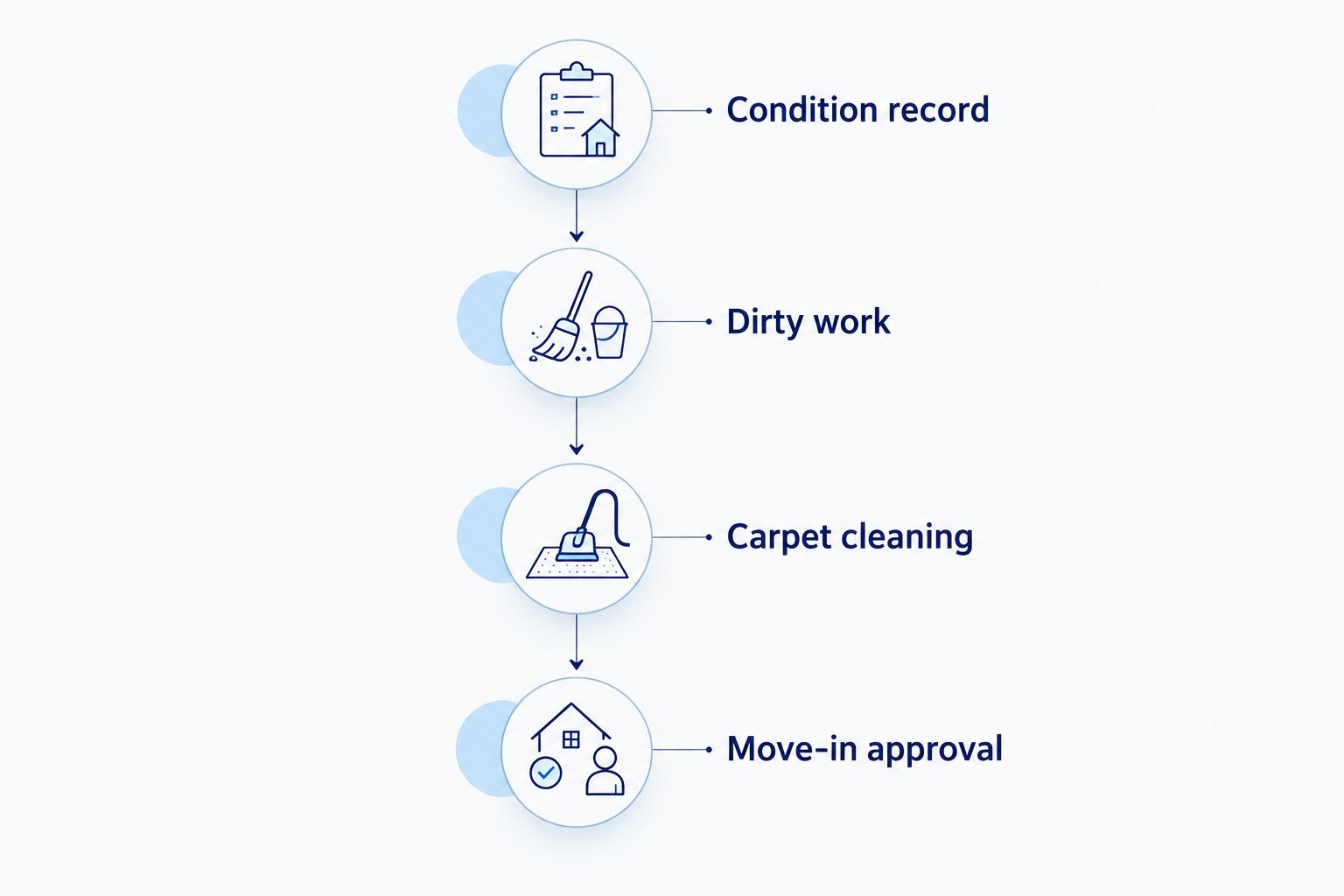
Cleaning scope and appointment handoff
The third checkpoint turns inspection notes into instructions the cleaner can act on. A clear scope prevents an odor complaint from disappearing inside a general request to clean the floors.
- Prepare Carpet cleaning instructions with room names, visible concerns, known incidents, and relevant care information. State whether the unit is empty and identify areas where access is restricted.
- Request Condition assessment for stains, odors, wear, and damaged areas. Ask which concerns are cleaning tasks and which require repair or replacement. Do not assume that cleaning restores worn fibers or fixes loose seams.
- Confirm Agreed work before the appointment. Record the areas included, preparation responsibilities, entry arrangements, and the person authorized to approve changes. Keep additional requests separate until they are accepted.
- Collect Aftercare instructions when the work is finished. Ask about ventilation, permitted foot traffic, furniture placement, and how to judge drying for the actual carpet and conditions.
- Update Cleaning complete with the service record and unresolved concerns. Leave Move-in approval open until the final inspection; an invoice is not a condition inspection.
Expected result: Everyone knows what was requested, what was completed, and what still needs attention. The next handoff includes aftercare rather than just an appointment status.
PowerPro Carpet Cleaning is a family-owned business offering carpet, upholstery, area rug, tile/grout, and air duct cleaning. Its carpet cleaning service fits the cleaning portion of this workflow; repair decisions, access coordination, and move-in approval remain responsibilities you must assign separately.
Choose the right response to the carpet condition
Choose by condition, not by habit. Compare professional carpet cleaning and DIY rental machines before assigning the work, especially when your team would otherwise handle unfamiliar equipment.
| Response | Best for | Advantage | Limitation |
|---|---|---|---|
| Professional carpet cleaning | Units needing a cleaning assessment and an agreed service scope | Separates the cleaning appointment from your maintenance team’s other work | Requires access coordination and does not repair damaged carpet |
| DIY rental-machine cleaning | Teams prepared to follow carpet and equipment instructions | Gives your team direct control of the task | Your team handles preparation, operation, and drying checks |
| Carpet repair assessment | Loose seams, damaged edges, and localized physical defects | Addresses damage that cleaning cannot fix | Does not replace cleaning of otherwise usable carpet |
| Carpet replacement assessment | Carpet judged unsuitable for continued use after inspection | Addresses a condition that cleaning cannot restore | Adds removal and installation work to the turnover |
Do not promise stain removal or odor elimination to the incoming tenant before the condition assessment. Document the concern and the agreed response instead.
Drying check and move-in approval
The fourth checkpoint closes the turnover only after the carpet and surrounding room are ready. In your 2026 record, keep Cleaning complete and Move-in approval as separate fields.
- Follow Aftercare instructions for the actual service. Maintain the recommended room conditions and restrict access as directed. Do not substitute a generic online drying estimate for the cleaner’s instructions.
- Perform Final condition inspection after drying. Revisit each concern recorded at move-out, including areas previously hidden under furniture. Look for remaining stains, recurring odors, visible damage, and unfinished repair work.
- Complete Open issues. Send unresolved cleaning concerns back to the cleaner for assessment and physical defects to the responsible maintenance contact. Record the next action instead of marking an incomplete room acceptable.
- Capture Move-in photos using the same room labels as the move-out record. Photograph the condition the incoming tenant will receive, not just the areas that looked worst before cleaning.
- Authorize Move-in approval only when the responsible person accepts the unit. Share any relevant floor-care instructions through your normal tenant handoff process.
Expected result: The turnover record shows the condition before work, the completed cleaning scope, and the condition accepted for occupancy. A change in staff does not erase the reasoning behind the handoff.
Do not furnish or release a room just because its carpet looks dry from the doorway. Complete the drying check and final inspection first.
When the move-in date changes
A changed date is a second workflow, not a reason to erase the original checklist. Review the dependencies whenever Intended move-in date changes in your 2026 schedule.
- Check whether repairs, cleaning, and final inspection still fit in the revised sequence.
- Confirm any appointment change directly with the service provider. An edited calendar entry does not change the agreed appointment.
- If cleaning is already complete, restrict unnecessary traffic and record subsequent contractor visits.
- Reinspect after new work or access. Request follow-up cleaning only where the condition calls for it; do not assume the earlier approval still applies.
If a new leak or odor concern appears, reopen the condition assessment. A deadline does not turn unresolved moisture into an acceptable move-in condition.
Troubleshooting
- A stain returns after drying. Record its location and take a new photo. Contact the cleaner for assessment before applying another treatment; repeating cleaning without identifying the cause can miss the underlying problem.
- The carpet remains damp at handoff. Delay furniture placement and occupancy approval for the affected area. Follow the aftercare instructions and ask the cleaner to assess the conditions rather than adding an invented drying deadline.
- An odor remains after cleaning. Identify where it is strongest and investigate related flooring, padding, furnishings, or moisture concerns. Do not order repeated surface cleaning without discussing the likely source.
- A contractor dirties the finished carpet. Photograph the affected route, remove loose debris appropriately, and request an assessment of the new soil. Keep the cleaning status open until that area is accepted again.
- The cleaner cannot enter the unit. Contact the designated access owner. Correct the key or building-entry arrangement before rescheduling, and update the shared access plan so the same failure does not repeat.
Customize your workflow
For furnished rentals, add upholstery and area rugs to the condition record. Keep their cleaning instructions separate because the materials and care requirements differ. For mixed flooring, add a tile/grout scope rather than using the carpet checklist for every surface.
PowerPro Carpet Cleaning offers these cleaning services, but confirm the requested scope directly. Call to discuss the unit’s condition, location, and access needs before finalizing the turnover plan.
For multiple units, reuse the field names, not the condition findings. Each vacant unit needs its own inspection, photos, approved work, and final acceptance.
Discuss your turnover cleaning
Review carpet condition, service scope, and access for your New Jersey property.
FAQ
What should a tenant turnover carpet cleaning checklist include?
A tenant turnover carpet cleaning checklist should include room conditions, photos, repair dependencies, cleaning scope, access instructions, aftercare, and final approval. Keep cleaning completion separate from permission to move in.
Should I clean rental carpet before or after painting?
Schedule carpet cleaning after painting and other debris-producing work wherever the work plan allows. Clear tools and materials before cleaning, and control contractor traffic afterward.
Does every tenant turnover require carpet replacement?
Carpet replacement is a condition decision, not an automatic turnover step. Inspect wear, damage, moisture, and unresolved odors, then separate cleaning needs from repair or replacement needs.
Can I let a tenant move in immediately after carpet cleaning?
Approve move-in only after the carpet has dried as directed and passed the final condition inspection. The end of the cleaning appointment does not establish that the room is ready.
What should I tell a carpet cleaner about a vacant rental?
Provide the room list, observed stains and odors, known incidents, access arrangements, and relevant carpet care information. Identify who can approve changes to the agreed work.
What if the carpet still smells after cleaning?
Ask for an assessment of the odor source before ordering repeated surface cleaning. The concern can involve materials or moisture beyond the carpet surface.
Who can I contact for turnover carpet cleaning near Manalapan Township?
PowerPro Carpet Cleaning serves homeowners and businesses in Manalapan Township and surrounding Central and North New Jersey counties. Call to discuss the property's location, carpet condition, and requested cleaning scope.
One last thing
An empty room exposes carpet that furniture hid during the tenancy. Make the vacant-unit inspection the starting point of your 2026 checklist, not a formality after the cleaner arrives. That inspection gives you a usable scope before anyone commits to the wrong task.