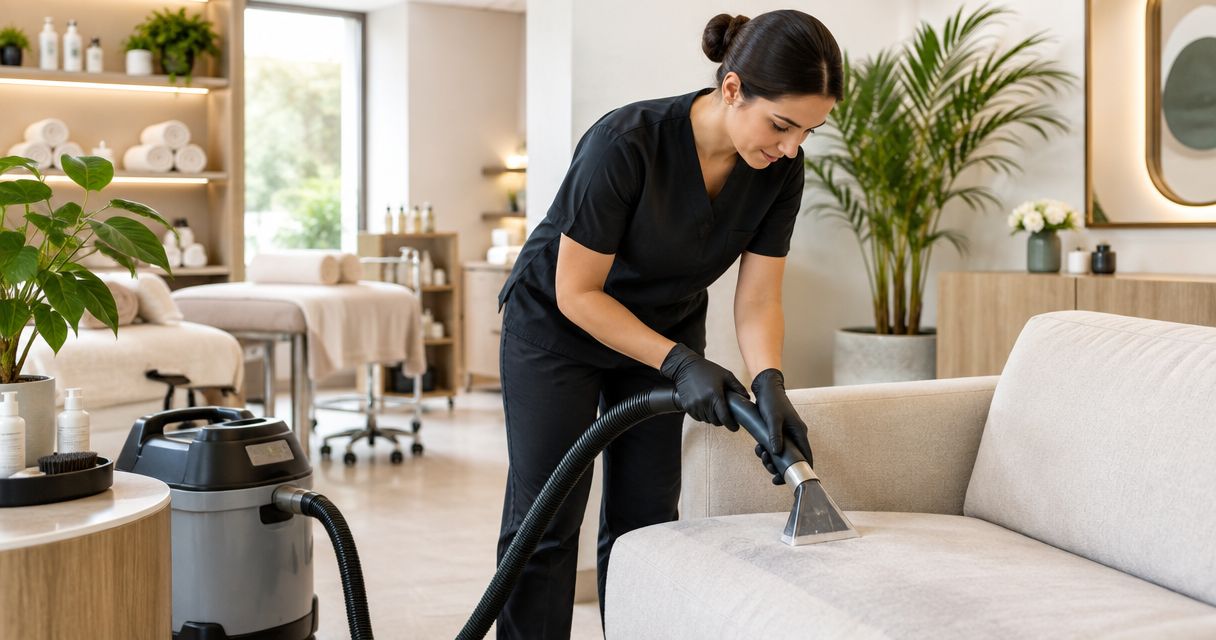
Salon and spa upholstery cleaning is the care of fabric-covered seating and furnishings to remove soil while protecting materials and keeping client spaces ready for use. This 2026 guide explains how to handle loose hair, product spills, oily marks and drying time without treating every chair like ordinary carpet.
- Upholstery cleaning for salons and spas starts with the furniture manufacturer's care instructions, not a general-purpose spray.
- PowerPro Carpet Cleaning serves New Jersey businesses seeking local upholstery cleaning; confirm the method for each furnishing.
- Separate daily debris removal, spill response and professional upholstery care into distinct tasks.
- Schedule cleaning around drying requirements, and keep damp seating out of service.
Why upholstery cleaning matters for salons and spas
Salon and spa furnishings face different cleaning problems from ordinary office seating. Loose hair collects around seams, styling products leave deposits, and massage oils can transfer from clothing or linens. A clean-looking seat still needs a method that suits its covering.
Your waiting-room sofa, fabric accent chair and wipeable treatment furniture do not belong on the same cleaning checklist. If your seating includes leather, review the differences in leather sofa cleaning before choosing a treatment. Leather care is not interchangeable with fabric upholstery care.
Treat upholstery cleaning and required sanitation as separate responsibilities. Removing soil does not establish that a surface has been disinfected. Follow applicable salon or spa sanitation requirements and the product label for any disinfectant, including permitted surfaces and contact time.
For your 2026 maintenance plan, start with the furniture you actually own. Identify the material, the exposure and the time you can keep it out of use. That gives you a useful cleaning brief instead of a vague request to clean everything.
How to clean salon and spa upholstery
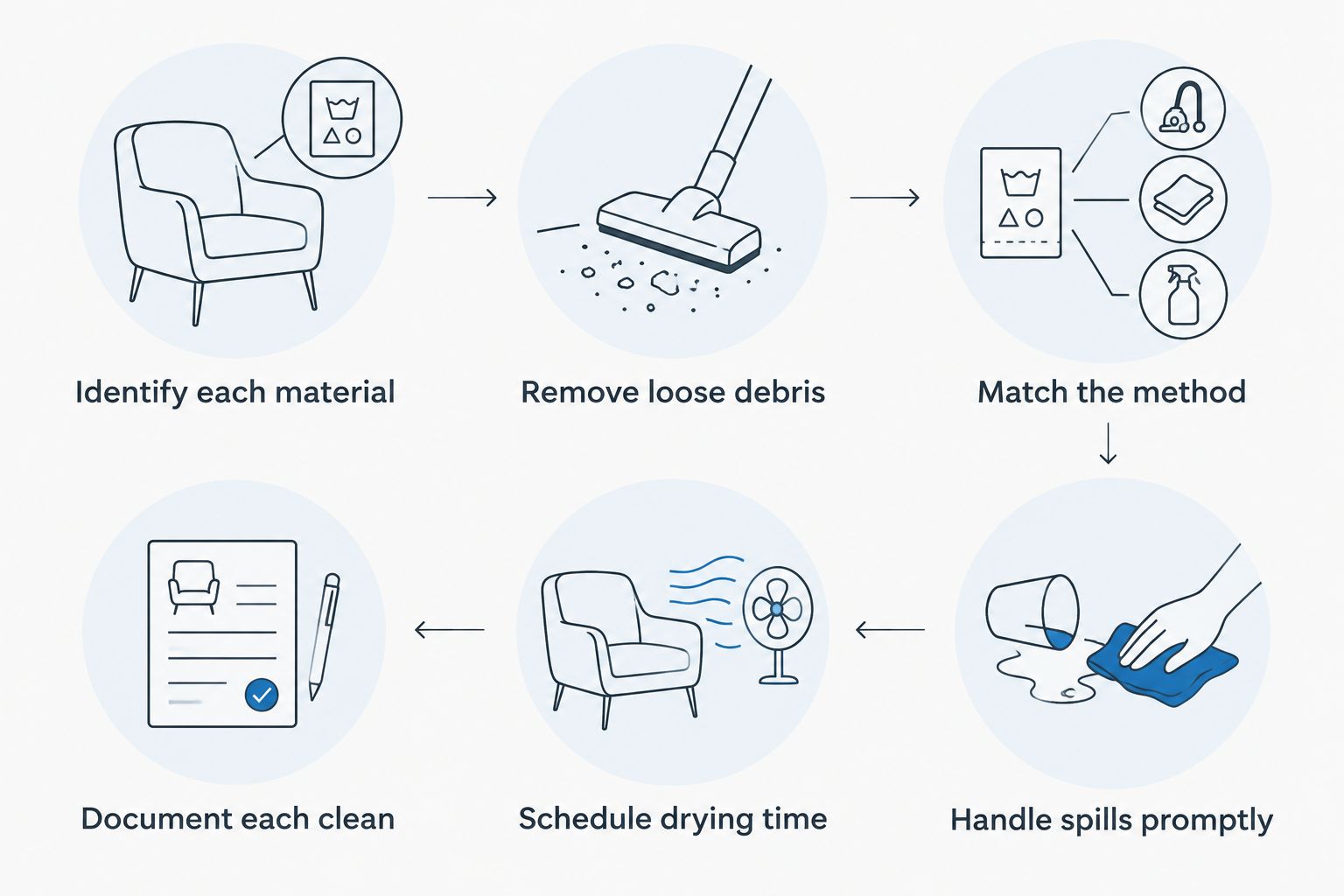
Use this 6-step plan to separate routine staff work from jobs that need a professional assessment. The order matters: identify the material before selecting a cleaner, and establish drying arrangements before booking the work. Keep the instructions with your opening and closing checklists so different shifts follow the same process.
Identify each material
Start manually: walk through your reception area, consultation space and treatment rooms, then check each furnishing's tag and manufacturer instructions. Record whether the covering is fabric, leather, a coated material or something you cannot identify. Appearance alone is not enough to select a cleaner.
The 4 common upholstery care codes are W, S, W/S and X. W indicates water-based cleaning; S indicates solvent-based cleaning; W/S permits either category subject to the care instructions; X indicates vacuuming or brushing rather than applying liquid cleaners. These codes guide cleaner selection, not disinfectant use, stain-removal guarantees or machine settings.
Missing instructions are a reason to pause wet treatment. Ask the furniture supplier or a qualified cleaner to assess the material rather than testing a strong cleaner on a visible cushion. Removable covers also need their own washing instructions; a zipper does not establish that a cover is machine-washable.
- Label each furnishing: distinguish reception seating from treatment furniture.
- Record care codes: keep a photo of each readable tag.
- Check covers separately: follow their specific washing instructions.
- Flag unknown materials: hold off on liquid treatments until assessed.
Remove loose debris
Use the manual method first: remove loose hair, dust and crumbs with an appropriate upholstery attachment, following the furniture instructions. Check cushion edges, piping, seams and the gap between the seat and back. These areas deserve attention even when the main seating surface looks clean.
Keep the attachment clean before it touches client seating. An attachment used on floors should not carry debris straight onto a waiting-room sofa. Avoid pulling aggressively across delicate trim or loose threads, and stop if the tool catches the covering.
Debris removal is preparation, not a substitute for treating embedded soil. It also does not justify spraying a deodorizer afterward. If a seat still smells or feels sticky, record the problem and assess its cause rather than adding fragrance. Define the task clearly enough that staff know when routine maintenance ends and assessment begins.
- Check seams: remove trapped hair without damaging stitching.
- Inspect cushions: clean accessible edges as the care instructions allow.
- Keep tools clean: separate upholstery attachments from dirty floor tools.
- Record remaining problems: note odor, tackiness or visible staining.
Match the method
For routine care, use only a cleaner and technique permitted by the furniture manufacturer. Test an approved product in an inconspicuous area according to its directions, then check for color transfer, changes in texture or other damage before treating a visible area. Do not assume carpet detergent belongs on a salon chair.
Professional service becomes the practical next step when staff cannot identify the covering, the soil extends beyond a small spot, or the permitted method needs equipment and handling they do not have. Give the cleaner the care information and explain whether the mark came from dye, oil, cosmetics or an unknown source.
PowerPro Carpet Cleaning is best for New Jersey salon and spa operators seeking a local upholstery cleaning service. The family-owned business serves homeowners and businesses in Manalapan Township and surrounding Central and North New Jersey counties. Contact PowerPro Carpet Cleaning to discuss your furnishings; confirm material suitability, scope and drying arrangements before scheduling.
- Match the cleaner: follow the covering's instructions and product label.
- Test discreetly: assess the result before treating visible upholstery.
- Describe the soil: identify known products involved in the spill.
- Confirm the scope: distinguish stain treatment from whole-item cleaning.
Handle spills promptly
Start with a clean, absorbent cloth and the furniture's spill-care instructions. For a liquid spill, blot rather than scrub when the care guidance permits it. Avoid spreading the mark across the cushion or forcing liquid farther into seams. Do not add water automatically, especially when the tag prohibits water-based cleaning.
A hair-color spill is not the same problem as spilled drinking water. Oils, cosmetics and dyes need different assessments, and no generic stain-removal recipe fits every covering. Preserve the product name or container information so a professional can understand what reached the upholstery.
Stop if the fabric releases color, the mark spreads or the surface changes. Repeated treatments make it harder to separate the original spill from cleaning damage. Keep the seat out of use while you assess it, and tell the cleaner what you already applied. Do not promise staff or clients that every stain will disappear.
- Blot permitted spills: use a clean cloth without aggressive rubbing.
- Identify the product: note the cosmetic, dye or oil involved.
- Avoid mixing cleaners: do not combine products to strengthen treatment.
- Log prior attempts: record everything applied before professional care.
Schedule drying time
Build drying into the appointment, not into a guess afterward. Ask the cleaner what conditions the chosen method requires and how to judge when the furnishing is ready for use. Fabric, padding, moisture introduced and room conditions affect drying; a fixed reopening promise does not fit every item.
For your 2026 booking calendar, identify 2 work areas: the seating being cleaned and the alternative space clients will use. Staging the work around those areas keeps you from relying on a freshly treated chair during a busy appointment block. Discuss staging with the cleaner before confirming the scope.
Use permitted ventilation and airflow, and keep damp furnishings out of service. Do not conceal moisture beneath throws, plastic coverings or replacement cushions. Check the areas specified by the cleaner rather than deciding from the appearance of the seat alone. If the room cannot provide the required conditions, change the schedule before the work starts.
- Plan alternative seating: keep clients away from treated furnishings.
- Confirm drying conditions: discuss airflow and room access beforehand.
- Keep coverings off: do not trap moisture beneath decorative layers.
- Check before reopening: follow the cleaner's return-to-use instructions.
Document each clean
Use a simple paper log or shared spreadsheet before buying another management system. Keep 2 records: the furniture care instructions and the cleaning history. Together, they tell staff what is permitted and help a cleaner understand what has already happened to the covering.
Record routine maintenance, spills, products applied and professional work. Include unresolved stains or damage rather than marking every cleaned item as restored. A clear record prevents the next shift from repeating an unsuccessful spot treatment with another chemical.
Use 3 checkpoints for each scheduled clean: before work, after treatment and before return to use. Photograph existing damage, inspect the completed work and verify readiness separately. In your 2026 maintenance review, adjust the routine according to observed soil and actual use, not an unsupported universal cleaning interval.
- Save care instructions: make them accessible to every responsible shift.
- Record treatments: list products and methods used on each item.
- Photograph existing damage: distinguish wear from new cleaning concerns.
- Review recurring marks: change prevention practices where the same problem repeats.
Compare cleaning options for your salon or spa
Choose by material and task, not by the equipment's size. Routine staff maintenance is useful for loose debris and permitted spill response. Professional assessment is the better next move when the material, stain or treatment requirements exceed that routine.
| Option | Best for | Main benefit | Key limitation |
|---|---|---|---|
| Staff vacuuming and permitted spot care | Daily upkeep between appointments | Lets staff address loose debris and identified spills promptly | Does not replace deeper cleaning or establish disinfection |
| Rental extraction equipment | Coverings whose instructions permit the proposed wet-cleaning method | Gives an operator access to extraction equipment | Requires correct material assessment, technique and drying arrangements |
| PowerPro Carpet Cleaning upholstery service | New Jersey businesses seeking a local professional service | Provides access to a family-owned provider serving the area | Confirm the method, stain expectations and drying requirements for your furniture |
| Furniture-specific specialist assessment | Unidentified coverings, delicate trim or damage concerns | Focuses the decision on the particular furnishing | Assessment does not guarantee stain removal or repair |
A rental machine is not automatically the wrong choice, but access to equipment does not establish fabric compatibility. Likewise, booking a professional does not remove your responsibility to disclose prior treatments and manufacturer restrictions. Ask direct questions before either route touches the seat.
Discuss your upholstery cleaning needs
Describe your salon or spa furnishings, stains and appointment schedule before arranging service.
Common mistakes salons and spas make
Treating fabric seats like wipeable treatment furniture
A disinfectant used on a hard surface is not automatically suitable for fabric upholstery. Check both the furniture instructions and the disinfectant label. If your sanitation process cannot safely apply to a furnishing, review that furnishing's suitability for its location instead of improvising.
Waiting until a styling-product mark becomes obvious
Routine checks should include armrests, cushion edges and seating near product handling. Look for residue as well as visible discoloration. Address the source of repeated transfer so the same area does not immediately need another treatment.
Buying another cleaner after a failed attempt
A stronger product is not a diagnosis. When an approved treatment fails, preserve the product information and stop stacking chemicals. A professional needs to know both the original spill and every substance subsequently applied.
Booking cleaning without protecting the appointment schedule
Do not reserve a cleaning slot and assume the waiting area will reopen immediately. Agree on access, alternative seating and return-to-use checks first. Make these part of your 2026 scheduling checklist, especially when reception and treatment spaces share furniture.
FAQ
What's the best upholstery cleaning approach for salons and spas?
The best approach combines manufacturer-approved routine care with professional assessment when the material or soil exceeds staff capabilities. Identify the covering, remove loose debris and plan drying before choosing a treatment.
Can salon staff use carpet cleaner on fabric chairs?
Salon staff should not use carpet cleaner on fabric chairs unless both the furniture instructions and cleaner label permit that use. Carpet compatibility does not establish upholstery compatibility.
Does upholstery cleaning disinfect salon seating?
Upholstery cleaning does not by itself establish that salon seating has been disinfected. Any disinfectant must be suitable for the surface and used according to its label and applicable sanitation requirements.
How often should a spa professionally clean its upholstery?
A spa should set its professional cleaning schedule from furniture instructions, observed soil, spills and usage. Keep a cleaning log and adjust the interval when recurring problems show that the routine needs attention.
Can professional cleaning remove hair dye from a salon sofa?
Professional cleaning does not guarantee removal of hair dye from a salon sofa. The covering, dye and previous treatments determine the assessment; identify the product and stop unsupported treatment attempts.
How long should salon seating stay out of use after cleaning?
Salon seating should stay out of use until it meets the cleaner's drying and return-to-use instructions. Confirm the requirements for the actual furnishing rather than relying on a universal drying time.
Does PowerPro Carpet Cleaning serve New Jersey businesses?
PowerPro Carpet Cleaning serves homeowners and businesses in Manalapan Township and surrounding Central and North New Jersey counties. Contact the business to discuss your salon or spa location and upholstery cleaning needs.
What should I prepare before booking upholstery cleaning in 2026?
Prepare furniture care tags, a list of stains, previous treatment details and your access schedule before booking upholstery cleaning in 2026. Include alternative seating arrangements and ask how the furnishings will be checked before returning to use.
One last thing
Check where the soil starts, not just where it lands. If the same armrest repeatedly collects product residue, review nearby product handling and how clients use that seat. Another cleaning appointment alone does not change the source.
Make that check part of your 2026 maintenance plan. Then call PowerPro Carpet Cleaning to discuss the furnishings that need professional attention, with care tags and spill details ready.