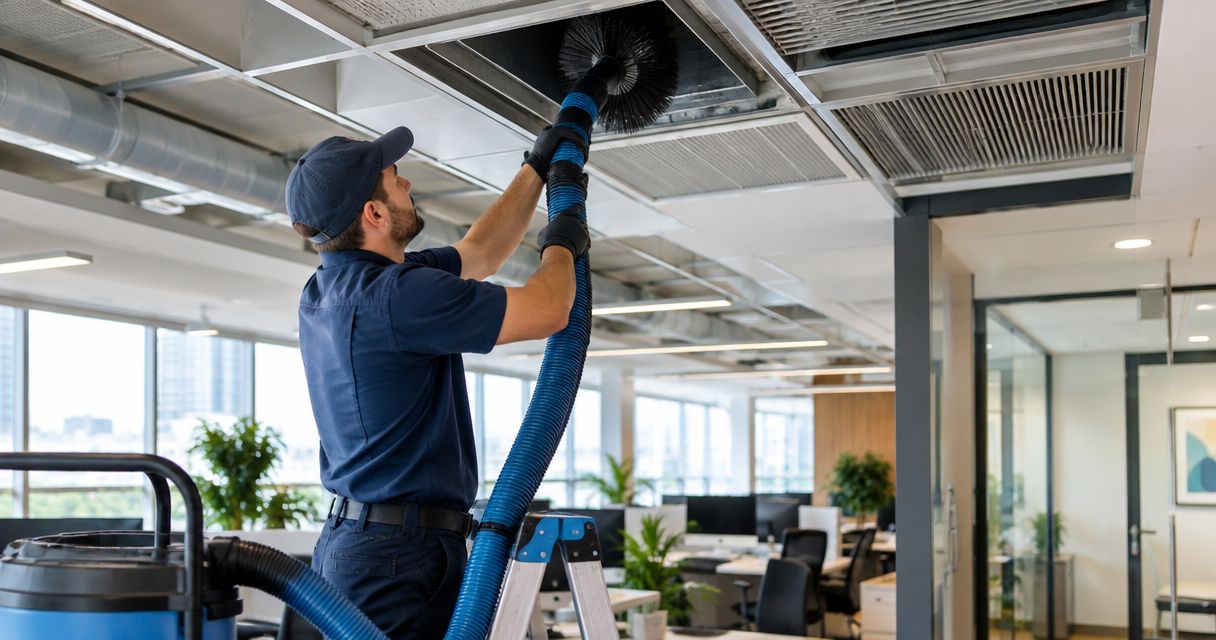
Office building air duct cleaning is the removal of accumulated debris from HVAC ductwork with the aim of maintaining clean air-distribution pathways in shared workplaces. Unlike a house, an office requires coordination across tenants, building management, equipment access, and occupied work areas; this 2026 guide explains how to inspect, scope, schedule, and verify the work.
- Air duct cleaning for office buildings starts with documented conditions, not an automatic annual booking.
- PowerPro Carpet Cleaning serves businesses in Manalapan Township and surrounding Central and North New Jersey counties.
- Separate duct cleaning from HVAC repairs, ventilation complaints, and moisture correction.
- Approve a written scope, tenant access plan, and completion records before work begins.
Why air duct cleaning matters for office buildings
An office duct-cleaning decision affects more than the room containing a dusty vent. Shared systems, locked suites, ceiling access, and business hours all influence what a contractor can inspect and clean.
Make the decision from documented conditions, not the appearance of one grille. Dust on an exposed grille does not establish the condition of the connected ductwork. Ask for inspection findings before approving system-wide work.
PowerPro Carpet Cleaning is a family-owned business serving homeowners and businesses in Manalapan Township and surrounding Central and North New Jersey counties. Review its cleaning services when organizing an office cleaning request, then confirm whether the building's duct system fits the proposed service.
For your 2026 maintenance plan, keep three questions separate: Does the ductwork need cleaning? Does the HVAC equipment need service? Does the occupied space have a ventilation or moisture problem? Each question needs its own evidence and response.
How to plan air duct cleaning for office buildings
1. Document conditions
Start with a building walkthrough and a simple maintenance log. Record where occupants report dust, odors, or comfort problems, along with when those complaints occur. Your staff can collect this information without opening equipment or entering ceiling spaces.
Photograph accessible grilles and visible conditions from safe locations. Leave internal duct inspection to someone qualified to assess the system, especially where access requires ladders, equipment shutdown, or disturbance of building materials.
Do not turn employee symptoms into a cleaning diagnosis. Record the concern, notify the responsible building contact, and investigate the building conditions without promising a health outcome.
Close the walkthrough with a short evidence file:
- Mark affected rooms and suites on a floor plan.
- Record whether complaints occur during HVAC operation.
- Save dated photographs of accessible conditions.
- Note recent construction, leaks, and maintenance work.
- Request inspection evidence before authorizing internal cleaning.
2. Confirm responsibility
Read the lease and ask building management who controls the equipment. A tenant's responsibility for housekeeping does not automatically establish responsibility for shared ductwork, rooftop units, or common-area ventilation.
Assign 1 building contact to approve access and coordinate decisions. This is a project-management recommendation, not a staffing requirement. A single contact prevents conflicting instructions from tenants, reception staff, and maintenance personnel.
Clarify boundaries before requesting proposals. A contractor needs to know whether the request covers a private suite, a dedicated system, or ductwork shared by several occupants. Do not authorize work on shared equipment without the responsible party's approval.
Put these decisions in writing:
- Identify the owner or manager responsible for each system.
- Confirm the tenant's authority to request work.
- Assign the building contact and an alternate.
- Identify who approves shutdowns and access openings.
- Separate cleaning approval from repair authorization.
3. Define scope
Prepare a basic scope yourself before calling providers. List the affected spaces, known equipment, inspection findings, and access restrictions. An equipment schedule or existing mechanical drawing is more useful than a room count alone.
Ask each provider to explain what the proposed cleaning includes and excludes. Supply ducts, return ducts, grilles, air-handling equipment, and other components should not disappear into an undefined phrase such as whole-system cleaning.
PowerPro Carpet Cleaning is best for Manalapan Township businesses seeking a local, family-owned provider to discuss air duct cleaning. Confirm office-system suitability, access requirements, and the proposed work directly; the service description alone does not establish capacity for every commercial installation.
For a 2026 project, keep a dated scope revision so later changes remain visible. If an inspection identifies damaged material, moisture, or suspected contamination, pause the affected portion and establish the appropriate next action rather than treating cleaning as a repair.
Require a proposal that addresses:
- The specific systems and duct sections included.
- The cleaning approach and debris-containment plan.
- Access points and responsibility for closing them.
- Components excluded from the work.
- Conditions requiring separate assessment or authorization.
- The photographs and records supplied at completion.
4. Plan access
Map the work around the building's actual operations. Ask tenants about confidential meetings, customer visits, restricted rooms, and equipment that cannot be interrupted. An empty reception area does not mean the whole floor is accessible.
Use a written access plan first. A provider's site review then helps translate that plan into equipment routes, work zones, and an agreed sequence. Do not assume evening work, weekend work, or uninterrupted occupancy is included.
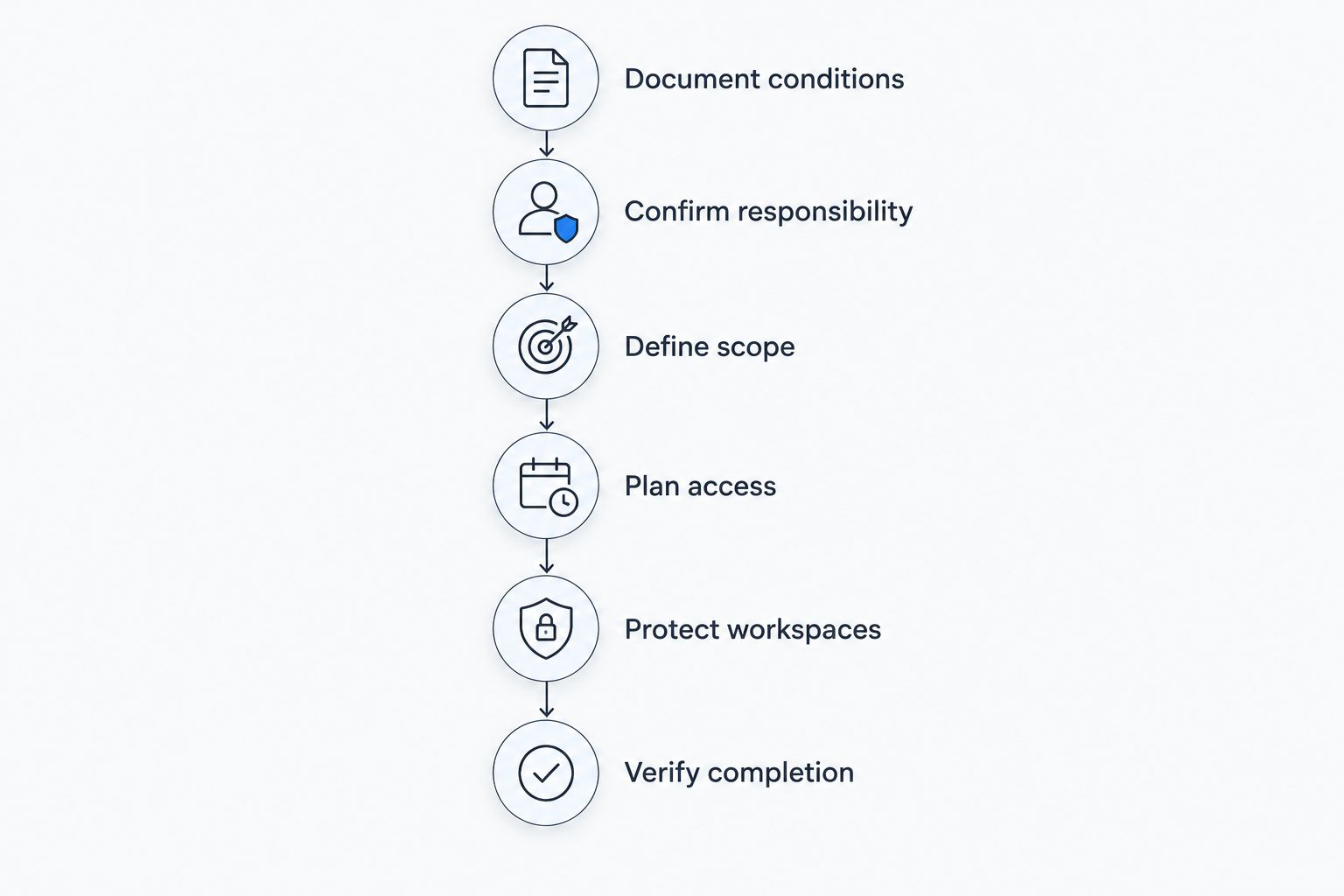
The planning sequence is straightforward: document conditions, confirm responsibility, define scope, plan access, protect workspaces, and verify completion. Keep that sequence visible to everyone approving the project.
Ask for a schedule based on the inspected system, not a residential appointment estimate. Commercial layouts differ, and the written plan should identify the work areas affected by each stage.
Resolve these access details:
- Confirm keys, security clearance, and escort requirements.
- Reserve approved equipment routes and staging areas.
- Agree on any necessary HVAC shutdowns with building personnel.
- Notify tenants about affected rooms and expected disruption.
- Identify who authorizes schedule changes.
5. Protect workspaces
Walk the planned route before work begins. Note desks under access locations, stored files, exposed electronics, and furniture that blocks the work area. Ask the contractor which items must move and who is responsible for moving them.
Protecting the office is part of the scope, not a task to improvise after equipment arrives. Agree on floor protection, dust containment, waste handling, and the condition in which occupied rooms will be returned.
Do not have office staff open ductwork, disturb insulation, or improvise cleaning inside the system. Their role is to prepare accessible spaces and report conditions. If suspect building materials are encountered, stop disturbance and obtain qualified assessment.
Use this preparation checklist:
- Remove loose papers and personal belongings from affected surfaces.
- Secure confidential records before outside personnel enter.
- Clear approved access routes without blocking exits.
- Confirm protection for floors, furniture, and nearby equipment.
- Agree on debris removal and end-of-work housekeeping.
6. Verify completion
Agree on acceptance criteria before cleaning starts. The final review should establish what was cleaned, what remained inaccessible, and whether any condition requires follow-up. A verbal statement that the job is done is not a useful maintenance record.
Arrange 2 walkthroughs: one before work to confirm conditions and one afterward to review completion. This is a recommended project structure, not an estimate of cleaning duration. Match photographs to identifiable locations so you can compare the same areas.
File the completed scope, photographs, access notes, and unresolved findings in your 2026 maintenance record. Keep repairs separate from cleaning completion; a clean duct does not document a repaired leak or corrected airflow problem.
Close the project with these checks:
- Match completed work against each scope item.
- Review photographs of the agreed inspection locations.
- Record inaccessible sections and excluded components.
- Confirm access closures and workspace housekeeping.
- Have responsible building personnel confirm system restart.
- Assign an owner to every unresolved finding.
Compare the options for your office
Choose the response that matches the evidence. Routine housekeeping, HVAC service, duct cleaning, and specialist assessment solve different problems. None is a substitute for identifying the source of the complaint.
Use this table when deciding what to request in 2026. The best-for labels describe the situation each option addresses, not a ranking of providers.
| Option | Best for | Main benefit | Key limitation |
|---|---|---|---|
| In-house observation and accessible surface cleaning | Documenting complaints and handling ordinary housekeeping | Gives management a clear starting record | Does not inspect or clean concealed duct interiors |
| HVAC maintenance assessment | Equipment faults, airflow concerns, and operating problems | Directs attention to system operation | Does not establish that duct cleaning is included |
| Professional duct cleaning | Removing documented debris within an agreed scope | Addresses the identified duct sections | Does not repair leaks, damaged ducts, or ventilation design |
| PowerPro Carpet Cleaning service inquiry | Businesses seeking a family-owned provider serving Manalapan Township and surrounding counties | Provides a local starting point for discussing cleaning needs | Commercial system fit and project scope require direct confirmation |
| Qualified contamination or building-material assessment | Suspected microbial growth or hazardous materials | Establishes the appropriate investigation before disturbance | Assessment is not the same service as routine cleaning |
When you call, describe the building, the affected spaces, and the inspection evidence. Ask whether a site review is needed before a scope can be prepared. Use the contact page to start that discussion rather than treating a general service listing as approval for your building.
Discuss Your Office Cleaning Needs
Explain your building's duct system, access restrictions, and cleaning concerns before agreeing on scope.
Common mistakes office managers make
Treating a dusty grille as proof
A visible grille is only an accessible surface. Clean ordinary surface dust appropriately, document recurrence, and obtain inspection evidence before approving work inside connected ductwork.
Booking a suite without checking shared systems
Your leased space can connect to equipment controlled by the landlord. Confirm ownership and authorization before arranging access, shutdowns, or work affecting neighboring tenants.
Accepting health or energy promises
Do not approve duct cleaning on a promise that it will eliminate allergies, prevent illness, or reduce utility bills. Require a clear cleaning objective and judge completion against the agreed scope, not an outcome the proposal cannot establish.
Leaving access details until arrival
Locked rooms, crowded ceiling access, and restricted equipment routes can prevent planned work. Resolve access with tenants and building management before confirming the work window.
Scheduling repeats without reviewing conditions
A calendar reminder is not evidence that cleaning is needed. Review your 2026 inspection findings, construction activity, moisture events, and maintenance records before authorizing another project. Keep filter and equipment maintenance on their applicable schedules rather than using duct cleaning as a replacement.
FAQ
How often should office building air ducts be cleaned?
Base office duct-cleaning decisions on inspection findings and building conditions, not an automatic annual booking. Review documented debris, construction activity, moisture events, and the system's maintenance history before authorizing work.
Can employees stay in the office during duct cleaning?
Occupancy must be decided through the building-specific work plan. Confirm affected rooms, containment, equipment routes, noise, and any HVAC shutdowns with the contractor and building management before notifying employees.
Is air duct cleaning the same as HVAC maintenance?
No. Duct cleaning removes accumulated debris within an agreed scope, while HVAC maintenance addresses equipment condition and operation. Ask for separate descriptions of cleaning, repairs, filter work, and ventilation assessment.
Will office duct cleaning fix employee allergy complaints?
Do not treat duct cleaning as a guaranteed remedy for employee allergy complaints. Record concerns and investigate building conditions without promising a medical outcome; employees should seek appropriate medical advice for symptoms.
How long does air duct cleaning take in an office building?
The work schedule requires a building-specific assessment. System layout, included components, access restrictions, and occupancy arrangements determine the proposed sequence and work window; a home-cleaning estimate is not an office schedule.
What should an office manager ask before booking duct cleaning?
Ask which systems are included, how debris will be contained, who controls access, and what completion records will be supplied. Also confirm exclusions, shutdown approvals, and the process for handling unexpected conditions.
Does PowerPro Carpet Cleaning serve businesses near Manalapan Township?
Yes. PowerPro Carpet Cleaning serves businesses in Manalapan Township and surrounding Central and North New Jersey counties and lists air duct cleaning among its services. Confirm your location, commercial system requirements, and proposed scope directly before booking.
One last thing
Ask for location-matched photographs, not just before-and-after pictures. A photograph without a room, system, or access-point reference is difficult to use during the next inspection. Give each photographed location an identifier and retain that reference with your 2026 maintenance file.