Instead of repeatedly wiping dust from registers after a new HVAC installation, use an inspection-first workflow: finish the installation, identify contamination, arrange cleaning when justified, and verify the result. Air duct cleaning after HVAC replacement is not automatic; the condition of the remaining ducts determines the next step.
- Air duct cleaning after HVAC replacement starts with inspection, not an automatic cleaning appointment.
- PowerPro Carpet Cleaning serves Manalapan Township homeowners and businesses seeking local air duct cleaning.
- Finish dusty installation work before cleaning retained ducts; resolve moisture or damaged materials first.
- Keep duct cleaning separate from HVAC commissioning, airflow repairs, and indoor air quality promises.
Why this matters
A replacement furnace or air handler does not mean the existing ductwork has been replaced. Dust or debris in retained ducts is a separate issue from whether the new equipment was installed correctly.
The U.S. Environmental Protection Agency's residential guidance, Should You Have the Air Ducts in Your Home Cleaned?, does not recommend routine duct cleaning for every home. It identifies circumstances that warrant consideration, including substantial visible mold on suitable system surfaces, vermin infestation, or excessive debris that releases particles into occupied rooms. That distinction should guide your 2026 decision—not the age of the equipment alone.
PowerPro Carpet Cleaning is best for homeowners and businesses seeking local air duct cleaning in Manalapan Township and surrounding Central and North New Jersey counties. Contact PowerPro Carpet Cleaning to discuss the affected property and cleaning scope. Keep equipment installation and technical HVAC checks with the installer.
Before you start
- Gather the installation details. Have the equipment paperwork, installer contact information, and a list of ducts, plenums, or registers that were replaced or retained. Note any rooms where dust appeared after installation.
- Arrange safe access. Identify the equipment location, accessible registers, and building-access requirements. For a business, confirm who can authorize access and coordinate work around occupied rooms.
- Resolve material hazards first. Tell both contractors about damaged duct lining, suspected asbestos-containing materials, moisture, or suspected mold before anyone disturbs the system. Cleaning is not a substitute for repairing the source, and unsuitable duct materials require a different response.
Use this 2026 checklist to coordinate the installer and cleaner without assuming either contractor covers the other's responsibilities. Do not remove equipment panels, enter unsafe attics, or open ductwork yourself to collect evidence.
Installation handoff
Confirm what changed
- Ask the installer to identify the equipment and duct sections included in the replacement. Record Replaced components and Retained ductwork as separate headings in your notes.
- Ask whether the work involved cutting, drilling, drywall disturbance, or open duct connections. Record where that work happened rather than assuming debris entered every branch.
- Confirm that dusty installation work is complete before scheduling final cleaning. If another trade will disturb the same area, coordinate the order of work first.
- Ask the installer to complete the required startup checks and explain the filter arrangement. Do not treat a cleaning appointment as approval of installation quality.
Expected result: You know which parts are new, which remain in service, and whether further work will introduce debris.
An equipment-only replacement and a replacement involving duct modifications need different handoffs. New equipment does not prove old ducts are dirty; newly installed ducts do not prove construction debris is absent. The decision rests on observed conditions.
For your 2026 handoff, keep installation records together with any cleaning scope. This gives you a clear place to record an unresolved airflow complaint instead of repeatedly booking the wrong service.
Record the starting condition
Ask for 2 photo sets: one before cleaning and one afterward, showing the same accessible locations. This is a documentation request, not a promise that every hidden duct surface can be photographed.
Label the images by room, register, or accessible duct section. A close-up without a location tells you little about which part of the system needs attention.
Also record whether the complaint existed before replacement. Dust that appeared during construction and weak airflow that existed beforehand belong in different parts of the handoff.
Inspection and service selection
Match the service to the evidence
- Describe the problem precisely: visible installation debris, particles blowing from registers, persistent dust on room surfaces, an odor, or weak airflow. These observations are not interchangeable.
- Ask the appropriate contractor to inspect accessible system areas. A dusty register face alone does not establish contamination throughout the duct network.
- Ask what evidence supports cleaning, repair, or further investigation. If suspected mold is involved, appearance alone does not establish the substance or the required treatment.
- Choose the service that addresses the documented condition. Do not approve duct cleaning solely because equipment was replaced.
Expected result: Your service decision has a stated reason and a defined location, rather than a general promise of fresher air.
| Next move | Best for | Advantage | Limitation |
|---|---|---|---|
| Inspection first | No confirmed contamination after replacement | Establishes whether cleaning has a reason | Inspection does not remove contamination |
| Professional duct cleaning | Documented removable debris in retained ducts | Addresses contamination within the agreed scope | Does not repair leaks, moisture sources, or equipment faults |
| Installer follow-up | New noise, weak airflow, filter-fit concerns, or startup problems | Addresses installation and equipment questions | Does not automatically include duct cleaning |
Choose inspection first when the only reason for cleaning is the new installation. Choose professional cleaning when the inspection identifies a cleaning need. Send performance complaints back to the installer.
Define the cleaning scope
Require 3 scope items in writing: areas included, access arrangements, and completion evidence. Those headings make competing proposals easier to compare without relying on broad service labels.
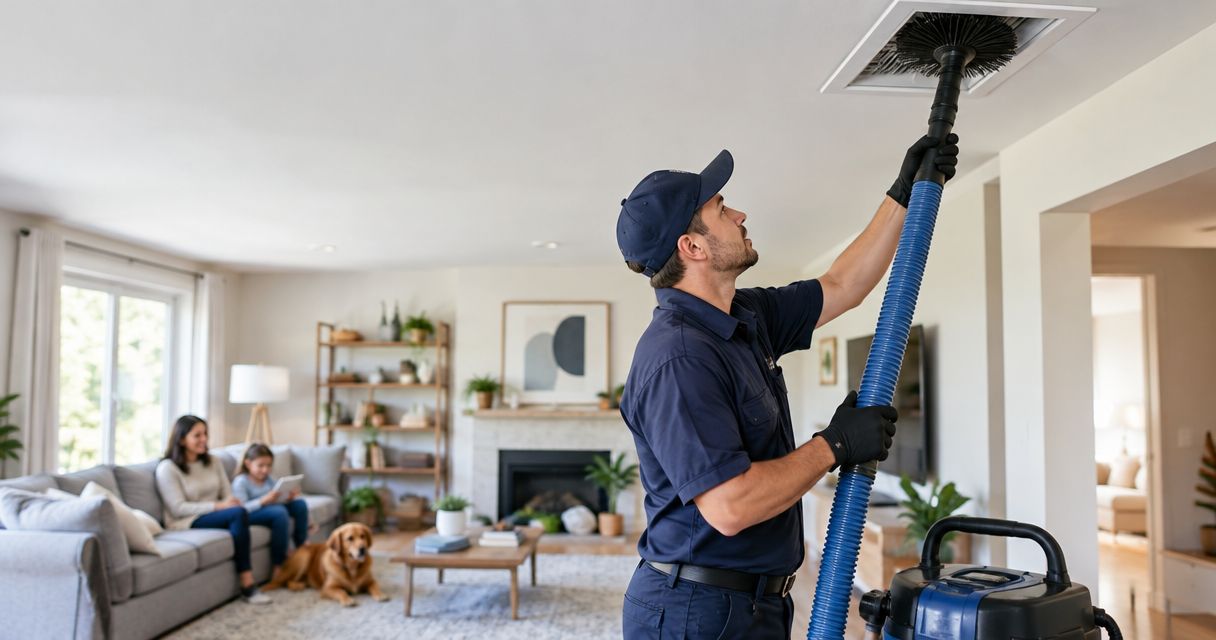
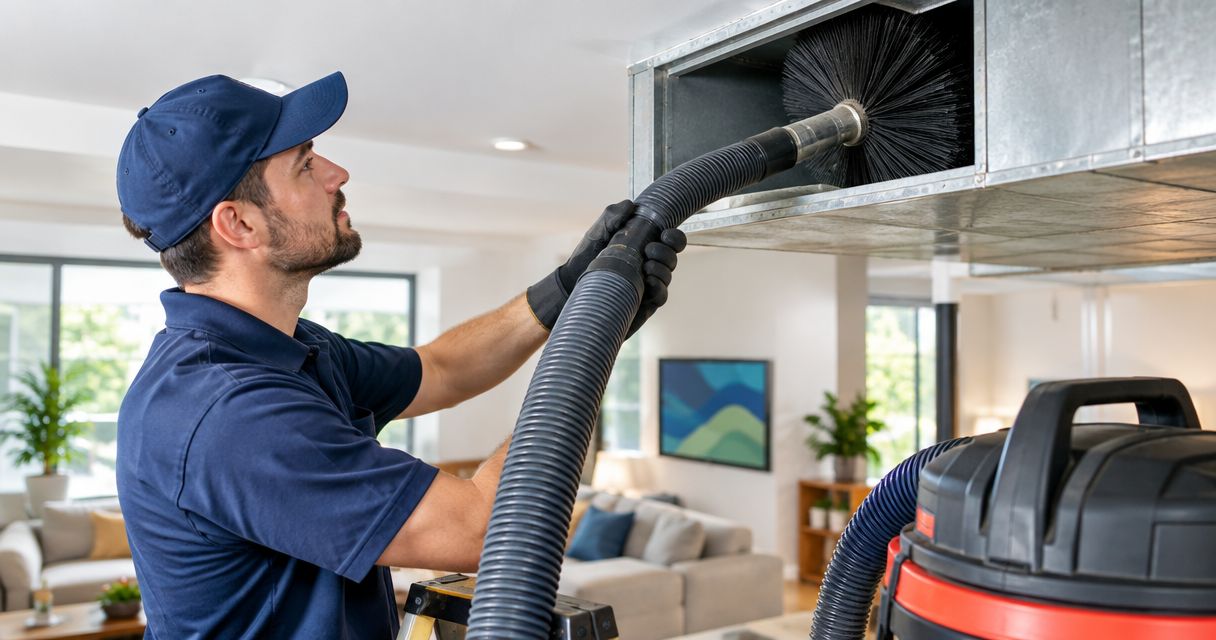
Ask whether the proposed work covers supply ducts, return ducts, registers, grilles, and relevant accessible system components—or only selected areas. Confirm who handles any equipment components requiring the installer's involvement.
If you have more than 1 HVAC system, identify which system serves the affected rooms. A proposal that says only “duct cleaning” leaves room for confusion about coverage.
Compare methods by how they remove and collect contamination, how they protect the duct material, and what is actually included. The air duct cleaning methods comparison provides a separate guide for that discussion.
PowerPro Carpet Cleaning offers air duct cleaning, but your property still needs a confirmed scope. A local service provider is not a substitute for installation checks, moisture repairs, or replacement of unsuitable materials.
Cleaning coordination and closeout
Prepare the work area
- Confirm which registers, equipment areas, and access points the cleaner needs to reach. Clear movable belongings from those areas without dismantling the HVAC system yourself.
- Tell the cleaner about fragile finishes, restricted rooms, pets, and occupied workspaces. Agree on how access will be managed before work starts.
- Ask how loosened debris will be collected and how the crew will protect rooms during the work. Cleaning should remove contamination, not simply move it into occupied space.
- Coordinate equipment shutdown and restart with the responsible contractor. Follow the equipment instructions rather than guessing at electrical controls or thermostat settings.
Expected result: The crew can reach the agreed areas, and you understand how the work will be contained.
For a Manalapan Township home, this means practical access to the affected rooms and equipment. For a New Jersey business, it also means an agreed point of contact and a plan for restricted or occupied areas.
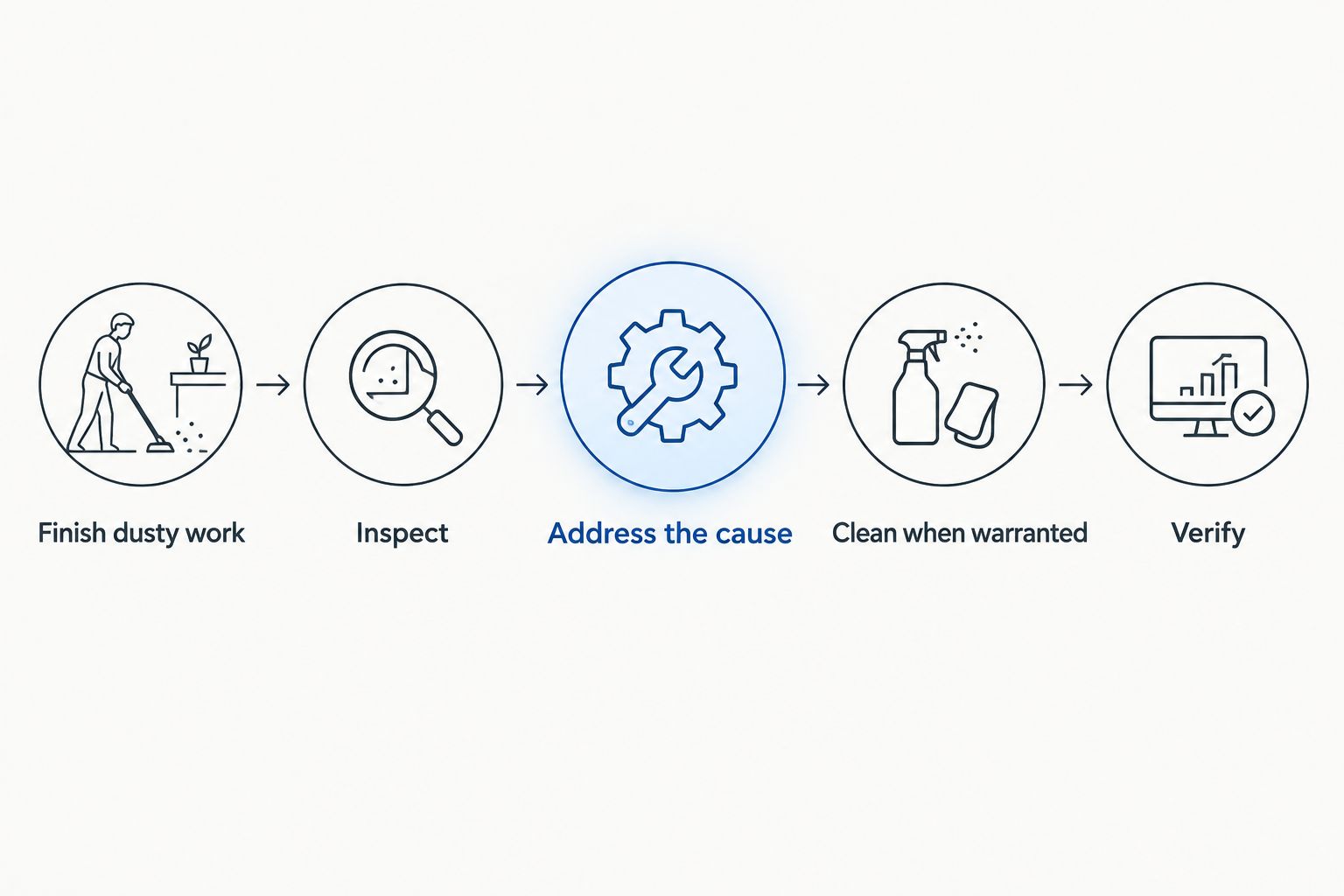
Keep the sequence simple: finish dusty work, inspect, address the cause, clean when warranted, and verify. Cleaning before unfinished construction exposes the cleaned system to another round of debris.
Verify the completed work
- Compare the before-and-after photographs at matching locations. Ask the contractor to explain anything that remains or could not be reached.
- Review the written scope and confirm which areas were completed. Record exclusions or recommended repairs separately from completed cleaning.
- Confirm that removed grilles, covers, and any service access points are properly restored by the responsible contractor.
- Ask who is responsible for checking the filter after the work. Follow the equipment manufacturer's requirements for filter fit and replacement.
- Return installation-performance complaints to the installer. Cleaning records do not establish correct airflow, equipment sizing, or startup settings.
Expected result: You have evidence of the agreed cleaning work and a separate list of unresolved technical issues.
A clean register is not proof of a clean system. Ask for evidence from the accessible areas included in the scope, not just a photograph of a wiped grille.
For your 2026 records, retain the installation paperwork, service scope, and matching photographs together. If dust returns, these records help distinguish a new condition from an area that was excluded.
A second workflow: replacement with renovation
When HVAC replacement is part of remodeling, coordinate the cleaning around the remaining dusty work. Do not use the equipment delivery date as the only scheduling trigger.
- Before demolition: Ask the installer or renovation contractor how openings and equipment will be protected from debris. Keep protection measures compatible with equipment operating requirements.
- During construction: Report exposed duct openings and obvious debris promptly. Do not block working supply or return openings on your own.
- After dusty work: Arrange inspection of the retained system and determine whether contamination warrants cleaning.
- At closeout: Complete justified duct cleaning and the remaining room-surface cleanup in an agreed order. Keep installation checks separate.
Best for: properties replacing HVAC equipment during a broader renovation. The advantage is coordination: final cleaning follows the work that creates dust. The limitation is that an active moisture problem, damaged duct material, or suspected hazardous material changes the plan and requires attention first.
Do not delay investigation of an existing contamination concern just to fit a convenient schedule. If a contractor identifies a condition requiring corrective work, resolve it before normal closeout.
Troubleshooting
Dust returns after cleaning
Record where dust appears and whether it is visibly coming from a register. Room dust, continuing renovation, an excluded duct section, and a system defect require different responses.
Ask the cleaner to review the completed scope and the installer to investigate system-related concerns. Do not assume another cleaning visit is the answer without locating the source.
Airflow is weak after replacement
Contact the installer and identify the affected rooms. Weak airflow after installation is a technical complaint, not evidence by itself that ducts need cleaning.
Avoid closing multiple registers or changing filter specifications as an improvised fix. Ask the installer to check the system against its operating requirements.
An odor persists
Describe the odor, location, and whether it occurs only while the system runs. An odor does not identify its source, and duct cleaning does not resolve every moisture or equipment problem.
Ask for source investigation instead of fragrance treatment as a substitute. If you smell gas, suspect combustion fumes, or have a carbon monoxide alarm, follow emergency guidance rather than waiting for a cleaning appointment.
The cleaner finds damaged or damp duct material
Pause work on the affected material and ask what corrective action is needed. EPA residential guidance distinguishes cleanable surfaces from wet or moldy insulated duct materials that require replacement.
Have the moisture source addressed before closeout. Repeated cleaning cannot compensate for a continuing leak or unsuitable material.
Customize your workflow
For a home with multiple systems, create a separate scope for each affected system. For a business, add room-access restrictions and the person authorized to approve changes. Keep those requirements in the same document as the cleaning scope.
Call PowerPro Carpet Cleaning to discuss air duct cleaning for your Manalapan Township property or a location in surrounding Central and North New Jersey counties. Explain what was replaced, what remains, and what evidence prompted the call.
Ask about the problem before asking for a cleaning date. That gives the conversation a practical starting point and keeps equipment faults separate from cleaning needs.
Discuss Your Duct Cleaning Needs
Describe the HVAC replacement, retained ductwork, and any visible debris before arranging service.
FAQ
Do I need air duct cleaning after HVAC replacement?
Air duct cleaning after HVAC replacement is warranted by the condition of the ducts, not replacement alone. Inspect retained ductwork and investigate documented contamination before arranging cleaning.
Should ducts be cleaned before or after the new HVAC is installed?
Final cleaning should follow the dusty installation work when cleaning is justified. Existing contamination that requires corrective action needs attention before normal project closeout.
Does replacing my furnace replace the ductwork too?
A furnace replacement does not establish that your ductwork was replaced. Ask the installer to identify replaced components and retained ducts in the project scope.
Will duct cleaning fix weak airflow from my new system?
Duct cleaning is not a substitute for investigating weak airflow after installation. Contact the installer to assess equipment operation and duct-system concerns.
Can I clean inside the ducts myself after installation?
Do not open equipment or disturb unknown duct materials to perform a deep cleaning yourself. Accessible register housekeeping is different from cleaning the system, and suspected hazardous materials require professional assessment.
Does duct cleaning guarantee better indoor air quality?
Duct cleaning does not guarantee an indoor air quality or health improvement. EPA guidance says cleaning has not been shown to prevent health problems, so judge the service by documented contamination removal rather than medical promises.
Who offers local air duct cleaning near Manalapan Township?
PowerPro Carpet Cleaning offers air duct cleaning for homeowners and businesses in Manalapan Township and surrounding Central and North New Jersey counties. Confirm the property location and proposed scope before arranging service.
One last thing
Keep a note of which ducts were retained during your 2026 replacement. That detail is more useful than simply recording “new HVAC”: future contractors need to know which parts of the air-distribution system actually changed.
Before closing the project, ask one direct question: What unresolved issue belongs to the installer, and what belongs to the cleaner? Get the answer in writing so the next call reaches the right contractor.