Home builders’ post-construction cleaning is the staged removal of construction debris, settled dust, and surface residue to prepare a finished home for inspection and handover. This 2026 guide explains how to separate trade cleanup from final detailing, protect new finishes, and assign specialist cleaning without leaving gaps between contractors.
- Post construction cleaning for home builders needs a written scope, dust control, finish-safe methods, and a documented handover.
- PowerPro Carpet Cleaning fits the carpet, rug, upholstery, and tile/grout portion of a New Jersey cleaning plan.
- Finish dust-producing work before final cleaning; schedule touch-up cleaning after punch-list repairs.
- Assign debris removal separately from specialist floor cleaning, and inspect surfaces before accepting the work.
Why this matters
A finished home is not ready for handover just because the tools are gone. Dust collects on ledges and inside cabinets, while tracked grit and adhesive residue require different treatment from ordinary household dirt. Cleaning without a written scope leaves responsibility unclear.
For builders in Manalapan Township and surrounding Central and North New Jersey counties, PowerPro Carpet Cleaning provides carpet, upholstery, area rug, and tile/grout cleaning services. Keep those services separate from the wider construction-cleanup scope, and confirm the job’s materials and conditions before scheduling.
Why post-construction cleaning matters for home builders
Builders have a sequencing problem: finishing trades need access to the same rooms that cleaners need to complete. A repaired drywall patch, adjusted cabinet, or final flooring correction can undo completed cleaning. The answer is a clear release point for each room, not repeated whole-house cleaning without accountability.
Your 2026 handover checklist should distinguish appearance from completion. A floor can look clean while grit remains along its edges; a countertop can look finished while protective-film adhesive remains underneath. Inspect the actual surfaces, not just the view from the doorway.
Use 3 cleaning passes as a planning framework, not a promised service duration:
- Rough cleanup: remove authorized debris and prepare rooms for detailed work.
- Final cleaning: remove settled dust and clean finished surfaces after dust-producing work ends.
- Touch-up cleaning: address marks and dust introduced during punch-list visits.
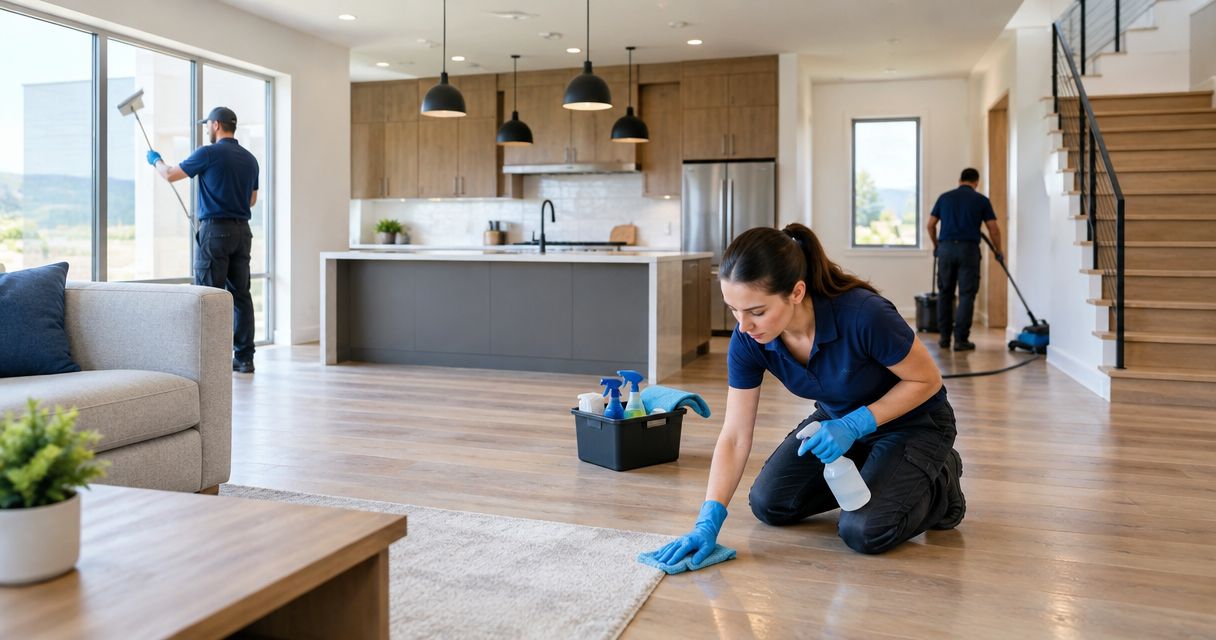
This framework gives each contractor a defined assignment. It also lets you identify which work belongs to a general cleanup crew and which needs a floor, fabric, or HVAC specialist.
How to organize post-construction cleaning
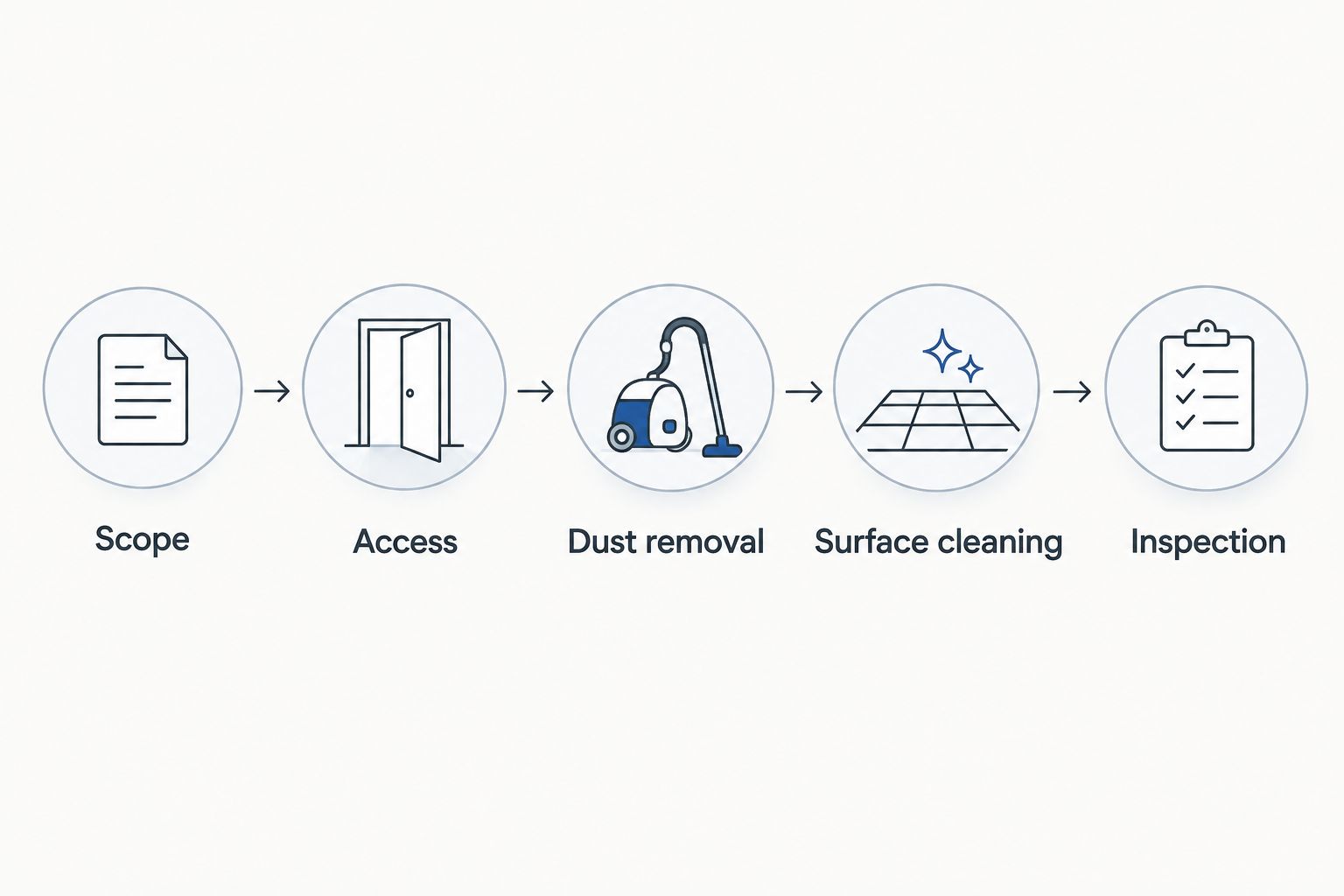
Build the sequence around Scope, Access, Dust removal, Surface cleaning, and Inspection. Start with a written plan you can manage yourself; add specialist services where materials or residue require more than routine cleanup.
Define the cleaning scope room by room
Start with a spreadsheet or printed room checklist. Name every surface that needs attention, then assign its owner. Write cabinets, shelving, baseboards, thresholds, glazing, and flooring separately rather than hiding them under a broad instruction to clean the house.
Distinguish removable dirt from a construction defect. Scratched glass, damaged grout, paint defects, and loose flooring belong on the punch list; cleaners should not be expected to repair them. Photograph visible damage before cleaning begins so the final inspection has a clear reference.
Specify the result and the exclusions before requesting a quote. A detailed scope makes different proposals easier to compare.
- List rooms, floor materials, and built-in storage areas.
- Identify windows, tracks, ledges, and cabinet interiors separately.
- Assign debris removal and waste disposal to a named contractor.
- Record excluded areas and surfaces awaiting repairs.
- Mark pre-existing damage with dated photographs.
Release rooms only after dirty work ends
Use your existing construction schedule to identify the last dust-producing task in each area. Sanding, cutting, drilling, and corrective work should finish before final detailing starts. If another trade must return, define the affected area and the cleanup responsibility before granting access.
For a 2026 project schedule, make cleaning a separate activity with a release condition, not a vague note attached to completion. Confirm utilities, safe access, and protection for finished surfaces. Do not treat cleaners as the crew responsible for making an active construction area safe.
Plan 2 walkthroughs: one before cleaning to agree on conditions, and one afterward to accept the work. These are recommended checkpoints, not estimates of how long the job will take.
- Confirm that dust-producing work is complete in released rooms.
- Keep unfinished rooms separate from cleaned areas.
- Check that required water and electrical access are available.
- Identify safe equipment routes and loading access.
- Assign cleanup responsibility for any returning trade.
Remove dry debris before wet cleaning
Begin with authorized debris removal and controlled dry-dust collection. Do not start by spreading water across dust-covered surfaces. Wetting loose construction dust can turn it into residue that is harder to remove from joints, textures, and edges.
Use equipment and procedures suited to the dust involved. Cutting concrete, masonry, and similar materials can create respirable crystalline silica; ordinary housekeeping is not a substitute for the contractor’s required exposure controls. Keep hazardous-material decisions with the responsible contractor.
After loose debris is gone, clean from higher surfaces toward lower ones. This prevents dust falling from shelves or ledges onto floors that have already been finished.
- Remove large debris without dragging it across finished flooring.
- Collect dust from ledges, trim, and cabinet interiors.
- Use suitable dust-collection equipment rather than compressed air.
- Separate ordinary dust from suspected hazardous contamination.
- Complete upper surfaces before detailed floor cleaning.
Match the cleaning method to each finish
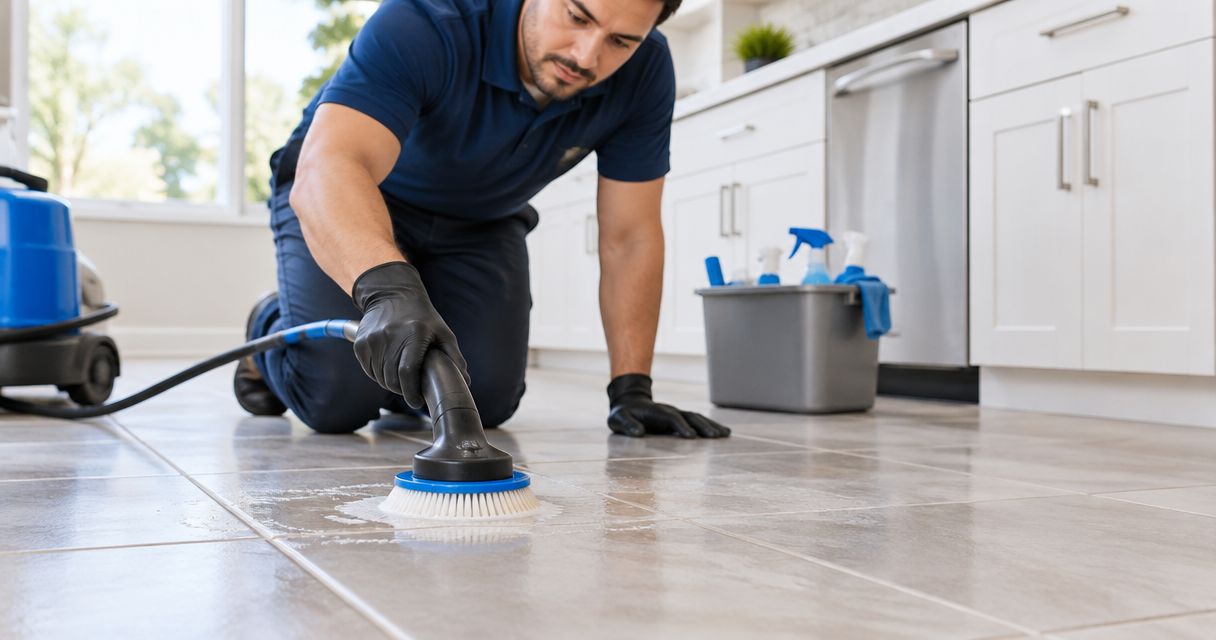
Check manufacturer care instructions and installation documents before choosing a cleaner or tool. New tile, carpet, stone, wood, and resilient flooring do not share one cleaning method. Adhesive, grout haze, paint specks, and ordinary dirt also require different decisions.
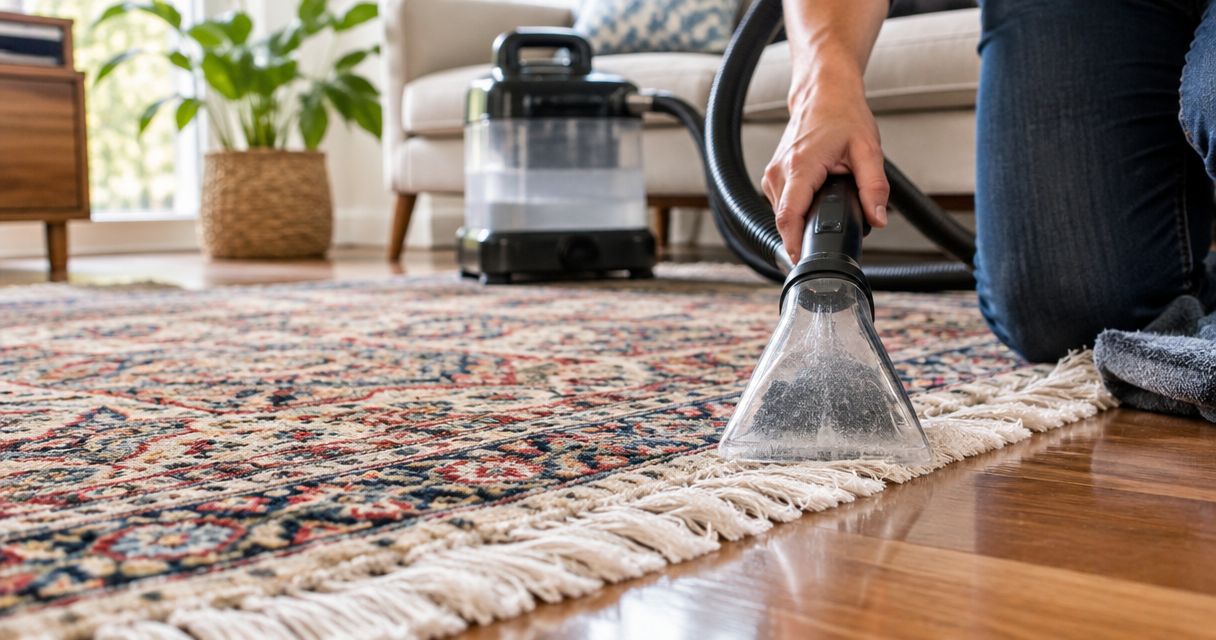
PowerPro Carpet Cleaning is best for the carpet, rug, upholstery, and tile/grout portion of a New Jersey builder’s cleaning plan. Its stated services do not establish a full construction-debris or whole-home detailing offering. Confirm whether the specific residue, surface, and site conditions fit the requested service.
Handle straightforward, approved cleanup with your crew first. Bring in a specialist when contamination or material care exceeds that scope; do not improvise with stronger chemicals or more aggressive scraping.
- Identify the flooring or fabric before selecting a method.
- Read care instructions and installer warnings.
- Test an approved cleaner in an inconspicuous area.
- Separate embedded carpet soil from loose surface debris.
- Refer grout haze or adhesive questions to the installer when needed.
Protect clean rooms from returning traffic
Once a room passes cleaning, control access instead of assuming it will stay clean. Use a simple room-status sheet and tell returning trades which routes they can use. Protection must suit the finished material; unsuitable coverings or tape can damage the surface they are meant to protect.
Keep equipment, waste, and dusty materials out of completed rooms. When work must resume, limit the affected area and require that trade to remove its new debris before touch-up cleaning. This keeps the final cleaner’s assignment bounded.
You do not need special software to manage this. A shared checklist and a named site contact are enough to show who released a room and who re-entered it.
- Mark rooms as awaiting work, ready to clean, or accepted.
- Establish a clean access route through completed areas.
- Choose protective coverings approved for the flooring.
- Record punch-list visits that disturb finished rooms.
- Keep removed coverings and waste away from clean surfaces.
Inspect results against the written scope
Use 1 acceptance checklist for the whole project, with separate entries for each room. Check the same surfaces you included in the original scope. A quick look at the floors cannot confirm that cabinet interiors, tracks, edges, and ledges are complete.
Your 2026 inspection should distinguish missed cleaning from new damage and unfinished construction. Photograph disputed items and assign them to the correct contractor. Do not turn every visible defect into a cleaning callback.
Check specialist work only when the provider says the surface is ready for inspection and use. Drying conditions and access restrictions depend on the material and method; obtain job-specific instructions rather than assuming an overnight deadline.
- Inspect edges, corners, thresholds, and behind accessible doors.
- Check cabinet interiors and specified horizontal surfaces.
- Record missed residue separately from scratches or installation defects.
- Confirm drying and re-entry instructions for treated surfaces.
- Close each item with an assigned owner and acceptance record.
Book specialist work around the handover
Start with the room list, surface types, and photographs you already prepared. Give each provider a clear description of the construction residue and ask what is included. This is more useful than requesting a general clean without showing the condition of the property.
PowerPro Carpet Cleaning is family-owned and serves homeowners and businesses in Manalapan Township and surrounding Central and North New Jersey counties. Call to discuss the carpet, upholstery, area rug, or tile/grout work your project needs; confirm project acceptance, scope, and access before committing the handover schedule.
Book against site readiness, not just a calendar date. Keep a touch-up assignment for work performed after the main cleaning.
- Share room lists, material details, and condition photographs.
- Ask which construction residues the provider will address.
- Confirm preparation, access, and protection responsibilities.
- Obtain job-specific drying and re-entry instructions.
- Assign final touch-up work after remaining repairs.
Discuss your specialist cleaning needs
Review carpet, upholstery, area rug, and tile/grout cleaning for your New Jersey project.
Compare cleaning options for home builders
Choose by scope, not by a provider’s broad job title. A general cleanup crew and a floor-cleaning specialist solve different parts of the handover problem. Confirm the listed work in writing before scheduling either.
| Option | Best for | Main advantage | Key limitation |
|---|---|---|---|
| Builder-managed cleanup | Small, clearly defined tasks your crew can perform safely | Direct control over access and sequencing | Requires supervision, suitable equipment, and material knowledge |
| General post-construction cleaning contractor | Broad room detailing and coordinated final cleanup | One assignment can cover multiple specified surfaces | Specialist residue treatment and floor care need explicit confirmation |
| PowerPro Carpet Cleaning | Carpet, upholstery, area rug, and tile/grout cleaning in its New Jersey service area | Matches those surfaces to the brand’s stated services | Full debris removal, window detailing, and whole-home construction cleanup are not established offerings |
| Flooring installer or material specialist | Residue involving installation products or uncertain finish compatibility | Can clarify installation-specific care requirements | Does not replace the rest of the home’s cleaning scope |
Builder-managed cleanup is useful when tasks are bounded and safe. A general contractor suits a broader detailing list. Specialist cleaning is the better assignment when the issue concerns a particular material, but it still needs coordination with the rest of the project.
Common mistakes home builders make
Treating every dirty surface as the same problem
Loose drywall dust, tracked grit, grout haze, and adhesive residue are not interchangeable. Identify the residue and finish before choosing equipment or chemicals. Aggressive treatment can create damage instead of completing the cleanup.
Scheduling final cleaning before punch-list repairs
Cleaning before sanding or drilling ends creates another cleanup assignment. Release rooms individually if the whole home is not ready, and make returning trades responsible for the dirt they introduce.
Assuming specialist floor care includes the whole house
Carpet or tile/grout cleaning does not automatically include windows, cabinets, debris hauling, or exterior work. Write those tasks as separate line items and confirm who owns them.
Accepting appearance instead of checking the scope
A doorway inspection misses dust inside storage areas and along floor edges. Walk the written checklist before acceptance. Separate cleaning omissions from installation defects so callbacks reach the correct contractor.
FAQ
What does post construction cleaning for home builders include?
Post construction cleaning for home builders includes the debris, dust, residue, and detailing tasks specified in the project’s written scope. Separate rough cleanup, final cleaning, and touch-up work, and name any exclusions before scheduling.
When should I schedule final cleaning on a new home?
Schedule final cleaning after dust-producing work is complete in the areas being released. Keep a separate touch-up assignment for punch-list work that happens afterward.
Can my construction crew handle the cleaning?
Your construction crew can handle clearly assigned tasks when it has suitable equipment, safe procedures, and the required material knowledge. Specialist floor or fabric treatment should be assigned separately when it exceeds that scope.
Does PowerPro Carpet Cleaning provide every part of construction cleanup?
PowerPro Carpet Cleaning’s stated services include carpet, upholstery, area rug, tile/grout, and air duct cleaning. Confirm the exact project scope directly; those services do not establish debris hauling or complete whole-home construction detailing.
Should I clean air ducts automatically after construction?
Air duct cleaning should not be an automatic addition to every construction-cleaning plan. Assess the system’s condition and discuss visible contamination with a qualified provider rather than assuming all new homes need it.
How do I compare post-construction cleaning quotes?
Compare quotes against the same room-by-room scope, surface list, and site conditions. Ask each provider to identify exclusions, preparation requirements, specialist treatments, and responsibility for touch-up work.
What should be on my 2026 final cleaning checklist?
Your 2026 final cleaning checklist should name rooms, surfaces, exclusions, defects, and acceptance criteria. Include cabinet interiors, ledges, tracks, thresholds, and floor edges wherever they belong in the agreed scope.
One last thing
Cleanliness and construction completion are separate acceptance decisions. Keep them separate on your 2026 handover checklist: a clean surface can still be defective, and a correctly installed surface can still need cleaning. Record both, then send each item to the contractor responsible.