Best overall approach: inspection-led urine treatment. Best local starting point: PowerPro Carpet Cleaning for homeowners in Manalapan Township and surrounding Central and North New Jersey counties. Best for affected loose rugs: a separate area rug assessment. Professional carpet cleaning for pet urine should address the contaminated material, not just improve the carpet’s appearance.
- Professional carpet cleaning for pet urine needs an inspection that separates carpet contamination from padding or subfloor damage.
- PowerPro Carpet Cleaning is a local starting point for New Jersey homeowners needing carpet and area rug cleaning.
- Choose targeted pet urine treatment when contamination is confined to materials the cleaner can treat.
- Choose a separate rug assessment for affected loose rugs; investigate padding when carpet odor returns.
Why this matters
A carpet can look cleaner while the room still smells. Urine can pass through carpet into the backing and padding, so cleaning the visible fibers does not necessarily reach the source.
For your 2026 service decision, separate appearance, odor, and material damage. Ask the cleaner which problem the proposed work addresses and what happens if contamination extends below the carpet.
PowerPro Carpet Cleaning is a local carpet cleaning option for homeowners in Manalapan Township and surrounding Central and North New Jersey counties. Confirm the pet urine treatment scope before booking; a general carpet cleaning appointment is not automatically a below-carpet restoration job.
What makes the best pet urine cleaning service?
The best service matches the treatment to the affected material. Use these criteria before comparing company names or cleaning methods:
- Source inspection: The cleaner asks where accidents occurred, whether they repeated, and what products you already applied.
- Material identification: The plan accounts for carpet fiber, backing, padding, and any affected area rug.
- Treatment depth: The cleaner explains whether work reaches only the carpet or includes material underneath it.
- Odor treatment: The proposal distinguishes removing contamination from adding a fragrance.
- Drying instructions: You receive clear directions about ventilation, furniture, and keeping pets away during treatment and drying.
- Clear limits: The cleaner explains when stains, damaged backing, contaminated padding, or subfloor problems require different work.
A cleaner should answer these questions in plain language. Equipment names alone do not tell you whether the proposed service reaches the urine.
Pet urine cleaning options at a glance
This 2026 guide compares service routes rather than claiming an unsupported company-by-company performance ranking. The local company option comes first, followed by treatment scopes for different contamination problems.
| Service option | Best for | Standout feature | Key limitation |
|---|---|---|---|
| PowerPro Carpet Cleaning | Local homeowners with carpet and other affected soft furnishings | Family-owned business offering carpet, upholstery, and area rug cleaning | Confirm the urine-specific treatment scope before booking |
| Targeted carpet urine treatment | Contamination confined to treatable carpet materials | Treatment selected for the affected area and material | Cannot resolve an untreated source below the carpet |
| Separate area rug cleaning assessment | Urine in a removable rug | Rug construction and backing receive their own assessment | Rug cleaning does not address contamination in the floor underneath |
| Padding and subfloor assessment | Persistent odor associated with below-carpet contamination | Investigates material a surface cleaning cannot reach | Can involve lifting carpet and separate repair work |
1. PowerPro Carpet Cleaning: best for local multi-surface needs
PowerPro Carpet Cleaning is a family-owned business serving homeowners and businesses in Manalapan Township and surrounding Central and North New Jersey counties. Its stated services include carpet, upholstery, and area rug cleaning, making it a relevant local contact when accidents involve more than the floor.
Describe the urine problem before requesting a routine cleaning appointment. Explain whether the same spot has been used repeatedly, whether a rug sits over the carpet, and whether nearby furniture is affected.
PowerPro Carpet Cleaning pros:
- Serves the stated Central and North New Jersey area.
- Offers carpet, upholstery, and area rug cleaning services.
- Gives households with several affected surfaces a local business to contact about the cleaning scope.
PowerPro Carpet Cleaning cons:
- A general carpet cleaning booking does not establish which urine-specific treatment your job needs.
- You must confirm separately whether the proposed work includes anything beneath the carpet.
Best for: Local homeowners who need to discuss carpet and related soft-surface cleaning with the same business.
When you call, ask: “Does the proposed work treat the urine source, and what happens if it has reached the padding?” Request a clear answer before authorizing work. For a 2026 appointment, that answer matters more than a broad promise about how the room will smell immediately afterward.
Verdict: Hold until the pet urine scope is confirmed; then book the appropriate cleaning service.
2. Targeted carpet urine treatment: best for contained carpet problems
Targeted urine treatment addresses identified contamination rather than treating every mark as ordinary soil. Depending on the material and condition, a professional can select a suitable treatment and extraction process after inspection.
Choose this route when the assessment supports treating the affected carpet without separate work below it. Do not assume that the smallest visible stain marks the full affected area.
Targeted carpet urine treatment pros:
- Focuses attention on the identified accident locations.
- Allows treatment selection to account for carpet material and previous cleaning attempts.
- Separates urine-related work from routine soil removal.
Targeted carpet urine treatment cons:
- Treatment of carpet alone leaves an untreated source underneath unresolved.
- Permanent discoloration or material damage is not the same problem as removable contamination.
Best for: An identified urine problem that the professional determines is treatable within the carpet cleaning scope.
Ask whether the cleaner plans to treat before extraction, how the product suits the carpet, and how results will be assessed after drying. Enzyme-based products are one treatment category, but the word “enzyme” alone does not establish suitability or a complete treatment plan.
Verdict: Buy when inspection supports carpet-level treatment; skip a fragrance-only substitute.
3. Separate area rug cleaning: best for removable rugs
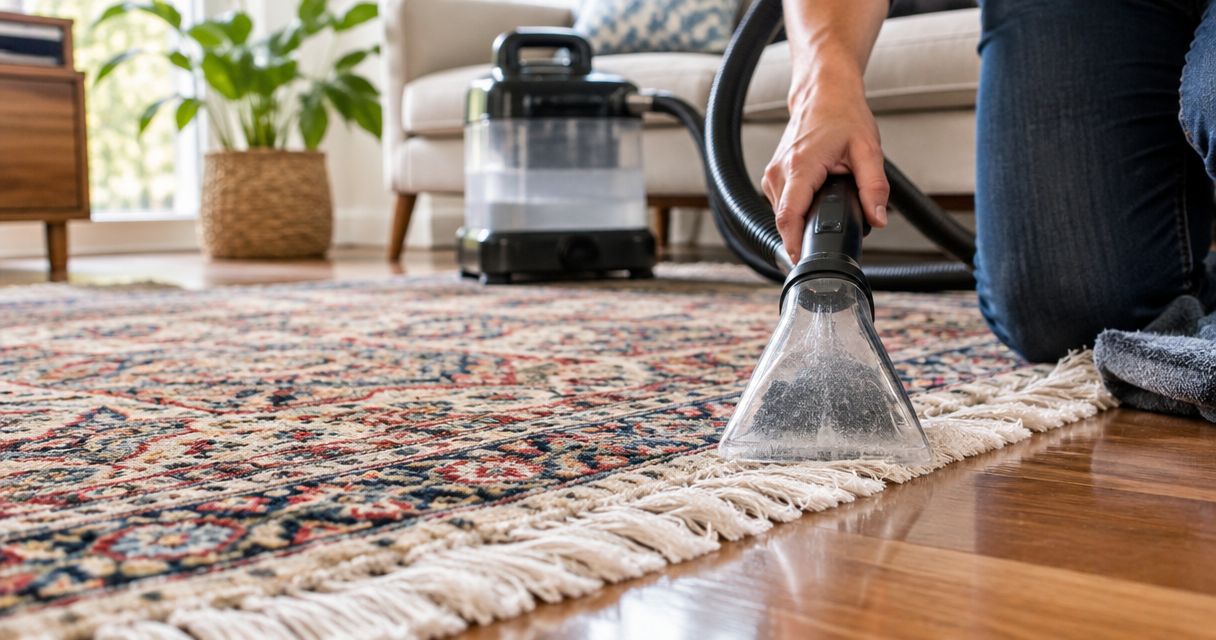
An affected area rug needs its own assessment, especially when its fiber, dyes, backing, or construction differ from the fitted carpet beneath it. Tell the cleaner about the rug’s care label and any known material information.
Inspect the surface underneath the rug as well. A cleaned rug placed over contaminated carpet or flooring does not solve the whole problem.
Separate area rug cleaning pros:
- Treats the rug as a distinct item rather than an extension of the fitted carpet.
- Allows attention to the rug’s face, backing, fringe, and construction.
- Creates an opportunity to check the covered floor for a separate source.
Separate area rug cleaning cons:
- The rug’s dyes, backing, or condition can restrict suitable cleaning methods.
- Rug cleaning does not repair existing dye loss or address urine left underneath it.
Best for: Pet accidents involving a loose rug, particularly when the underlying surface also needs inspection.
Avoid applying a carpet treatment to a rug simply because both feel similar. Follow the rug’s care instructions and disclose every product already used; previous treatment is relevant to the professional’s material assessment.
Verdict: Buy a rug-specific assessment before authorizing treatment.
4. Padding and subfloor assessment: best for recurring deep odor
When urine has reached padding or the subfloor, the cleaning plan needs to account for those layers. A professional assessment can determine whether lifting the carpet, replacing affected padding, or arranging other work is necessary.
Do not authorize replacement solely because a stain looks severe. First establish which material is contaminated and whether it is cleanable.
Padding and subfloor assessment pros:
- Investigates a source that carpet-face cleaning cannot reach.
- Separates cleaning work from repair or replacement decisions.
- Helps define the affected area before materials are removed.
Padding and subfloor assessment cons:
- Inspection can require moving furniture and lifting carpet.
- The resulting work can extend beyond a carpet cleaner’s service scope.
Best for: Persistent or recurring odor where inspection points to contamination beneath the carpet.
Ask who handles each part of the work. Carpet cleaning, carpet reinstallation, padding replacement, and subfloor repair are different tasks; confirm responsibility before work begins.
Verdict: Buy the assessment when below-carpet contamination is suspected; hold on replacement until the affected materials are identified.
What to ask before booking in 2026
A useful phone call starts with the accident history, not the room count. Give the cleaner enough information to propose the right inspection and explain the limits of the work.
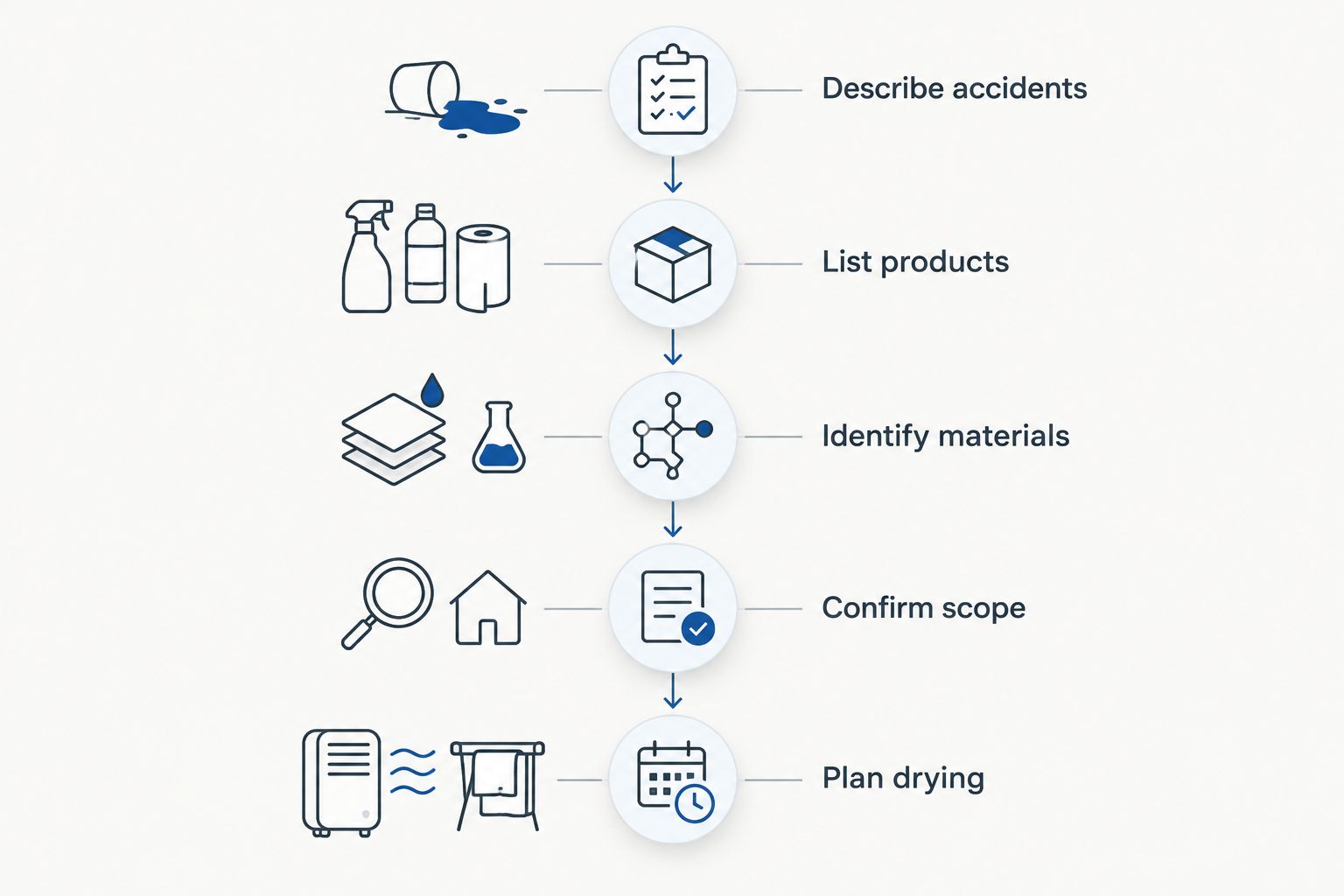
Use this sequence:
- Describe accidents: Identify rooms, repeated locations, and whether the problem involves a dog, cat, or another pet.
- List products: Name treatments already applied, including spot cleaners, deodorizing sprays, and rental-machine solutions.
- Identify materials: Mention fitted carpet, loose rugs, upholstery, and any known care labels.
- Confirm scope: Ask which surfaces and layers the proposed work includes.
- Plan drying: Request instructions for ventilation, furniture, and pet access.
Keep the distinction between stain removal and odor treatment explicit. Ask how the cleaner will explain any remaining discoloration or odor after the carpet dries.
For your 2026 appointment, ask for the agreed work in writing. The description should distinguish routine carpet cleaning from additional urine treatment and any separate rug or below-carpet work.
Discuss Your Carpet Cleaning Needs
Explain the affected rooms, repeat accidents, and any rugs or upholstery that need attention.
What to do before the cleaner arrives
Mark the known accident locations on a simple room sketch. Include areas where odor persists even without a visible stain, but do not treat your sketch as a diagnosis.
- Blot a fresh accident rather than scrubbing it aggressively.
- Follow the carpet or rug manufacturer’s care instructions.
- Do not mix cleaning chemicals or apply extra products before discussing previous treatments with the cleaner.
- Arrange a separate space for pets during the work.
- Ask which furniture to move and which items to leave for the technician.
If pets will remain at home, review pet safety during carpet cleaning. Product directions and the technician’s instructions should govern access to treated areas.
How the options are ranked
The ranking prioritizes source identification, suitable treatment, and clear service boundaries. It does not assign unverified odor-removal scores to competing businesses.
The local company route suits the first conversation; targeted carpet treatment suits a contained problem; rug assessment suits a removable item; and below-carpet assessment suits deeper contamination. Choose by the material affected, not by a method’s name alone.
Which pet urine cleaning service should you choose?
For professional carpet cleaning for pet urine, choose inspection-led treatment with an explicit plan for the affected material. Start locally, describe the accident history, and confirm what the appointment includes.
If the problem is confined to treatable carpet, proceed with targeted cleaning. If the rug or material below the carpet is involved, make that separate work part of the decision before booking. This is the practical default for 2026: identify the source before choosing the treatment.
FAQ
What's the best professional carpet cleaning for pet urine?
The best professional carpet cleaning for pet urine matches treatment to the contaminated material. Choose a cleaner who explains whether the source is in the carpet, rug, padding, or subfloor and defines the work accordingly.
Can professional carpet cleaning remove old pet urine odor?
Professional treatment can address old urine contamination, but carpet-only cleaning cannot resolve an untreated source underneath it. Ask for an assessment of the affected layers rather than a blanket odor-removal promise.
Is steam cleaning enough for cat urine in carpet?
A cleaning method alone does not establish whether cat urine will be removed. The treatment must suit the material and reach the contamination; disclose repeated accidents and previous products before work begins.
Do I need to replace carpet padding after pet accidents?
Padding replacement depends on its contamination and condition. Have the affected area assessed before deciding, and confirm who handles lifting and reinstalling the carpet.
Can I have an area rug cleaned with the carpet?
An area rug needs its own material assessment even when carpet cleaning is booked for the same home. Ask whether its fiber, dyes, backing, and care instructions require a different process.
How do I compare quotes for pet urine carpet cleaning?
Compare the written scope rather than the room description alone. Check whether each proposal includes urine treatment, rug work, inspection beneath the carpet, and instructions for evaluating the result after drying.
When can my pets go back onto the carpet?
Follow the treatment product directions and the technician's instructions for pet access. Keep pets away during treatment and drying until the stated conditions for return are met.
One last thing
Do not use fragrance as the completion test. Ask what was treated, follow drying instructions, and report any remaining odor with its exact location. A specific report gives the cleaner a more useful starting point than saying the whole room still smells.