Air duct cleaning is not a proven way to lower energy bills on its own. Removing a documented obstruction can help restore airflow, but routine duct cleaning does not guarantee energy savings. If your goal in 2026 is a smaller utility bill, identify the airflow, equipment, or duct-leakage problem before choosing a service.
- Can air duct cleaning lower energy bills? Not reliably on its own; diagnose the cause of high energy use first.
- EPA guidance distinguishes duct cleaning from cleaning HVAC components that affect system efficiency.
- PowerPro Carpet Cleaning serves Manalapan Township and surrounding New Jersey counties with air duct cleaning services.
- Choose cleaning for documented contamination or obstruction, not an unsupported promise of lower utility bills.
Why this matters
A dusty vent cover and a rising electric bill do not establish the same problem. Cleaning removes material; sealing repairs air leaks; HVAC maintenance addresses equipment condition. Choosing the wrong service leaves the actual cause untouched.
PowerPro Carpet Cleaning is a family-owned service business serving homeowners and businesses in Manalapan Township and surrounding Central and North New Jersey counties. PowerPro Carpet Cleaning is a local air duct cleaning option for homeowners and businesses in that service area. Treat cleaning as a condition-based service, not a guaranteed energy-saving upgrade.
Can air duct cleaning lower energy bills?
Duct cleaning alone has not been shown to deliver reliable energy savings. The U.S. Environmental Protection Agency's consumer guidance, Should You Have the Air Ducts in Your Home Cleaned?, distinguishes cleaning ducts from cleaning heating and cooling system components. It states that cleaning components such as coils and fans can improve efficiency, while evidence does not establish that cleaning ducts alone improves system efficiency.
That distinction matters when you compare services in 2026. A proposal to clean supply and return ducts is not automatically a proposal to clean an evaporator coil, service a blower, replace a filter, or seal leaking ductwork. Get the scope in writing.
| Service | Best for | What it addresses | Important limitation |
|---|---|---|---|
| Air duct cleaning | Documented duct contamination or obstruction | Material inside accessible ductwork | Does not repair leaks or establish energy savings |
| Filter maintenance | A dirty, incorrectly fitted, or unsuitable filter | Filtration and filter-related airflow restriction | Does not remove accumulated debris inside ducts |
| HVAC equipment maintenance | Equipment performance problems | Conditions involving coils, fans, and other system components | Does not automatically include duct cleaning |
| Duct sealing or repair | Confirmed duct leaks or damage | Unwanted air loss and damaged connections | Does not remove contamination from duct interiors |
Ask which finding supports each recommended service. A photograph of dust inside a duct supports a conversation about cleaning; it does not measure electricity use or prove why a room feels uncomfortable.
When duct cleaning addresses the right problem
Cleaning deserves consideration when inspection identifies a specific condition, rather than simply because time has passed. EPA guidance identifies circumstances including substantial visible mold growth on relevant system surfaces, vermin infestation, or excessive debris that obstructs ducts or releases particles into the home.
Those conditions need different responses. Suspected mold requires proper identification and attention to moisture. An infestation requires pest control and entry-point correction. Debris left after building work calls for inspection of the affected system, not an assumption that every duct needs the same treatment.
For an energy-bill question, the key distinction is ordinary deposited dust versus a meaningful airflow restriction. Light dust does not establish that the system is struggling. If a contractor identifies an obstruction, ask where it is, how it affects airflow, and how removal will be checked.
Cleaning has a clear benefit when it removes material that should not be in the system. Its limitation is equally clear: removal does not correct every reason for high energy use. Keep the cleaning decision separate from any promise about the next utility bill.
Why the effect on energy bills varies
Your result depends on what is wrong with the system and what the service actually changes. These factors explain why a single savings claim does not fit every home:
- Duct condition: An actual blockage presents a different problem from a thin layer of settled dust. Inspection should distinguish them.
- Equipment condition: Dirty coils, blower problems, and other equipment faults require attention to those components, not just the ducts.
- Air leakage: Cleaning cannot close a disconnected joint or seal a leaking duct. Repair addresses a different mechanism of energy loss.
- Filter condition: A loaded or unsuitable filter can restrict airflow even when the duct interiors are clean. Follow the equipment manufacturer's filter requirements.
- Heating and cooling demand: Weather, thermostat settings, and occupancy affect energy use independently of cleaning. A changing bill does not isolate the cleaning's effect.
For a New Jersey home in 2026, start with the symptom you want fixed: weak airflow, uneven room temperatures, visible debris, or increased energy use. Give that information to the appropriate service provider instead of requesting cleaning as a substitute for diagnosis.
What should you check before booking duct cleaning?
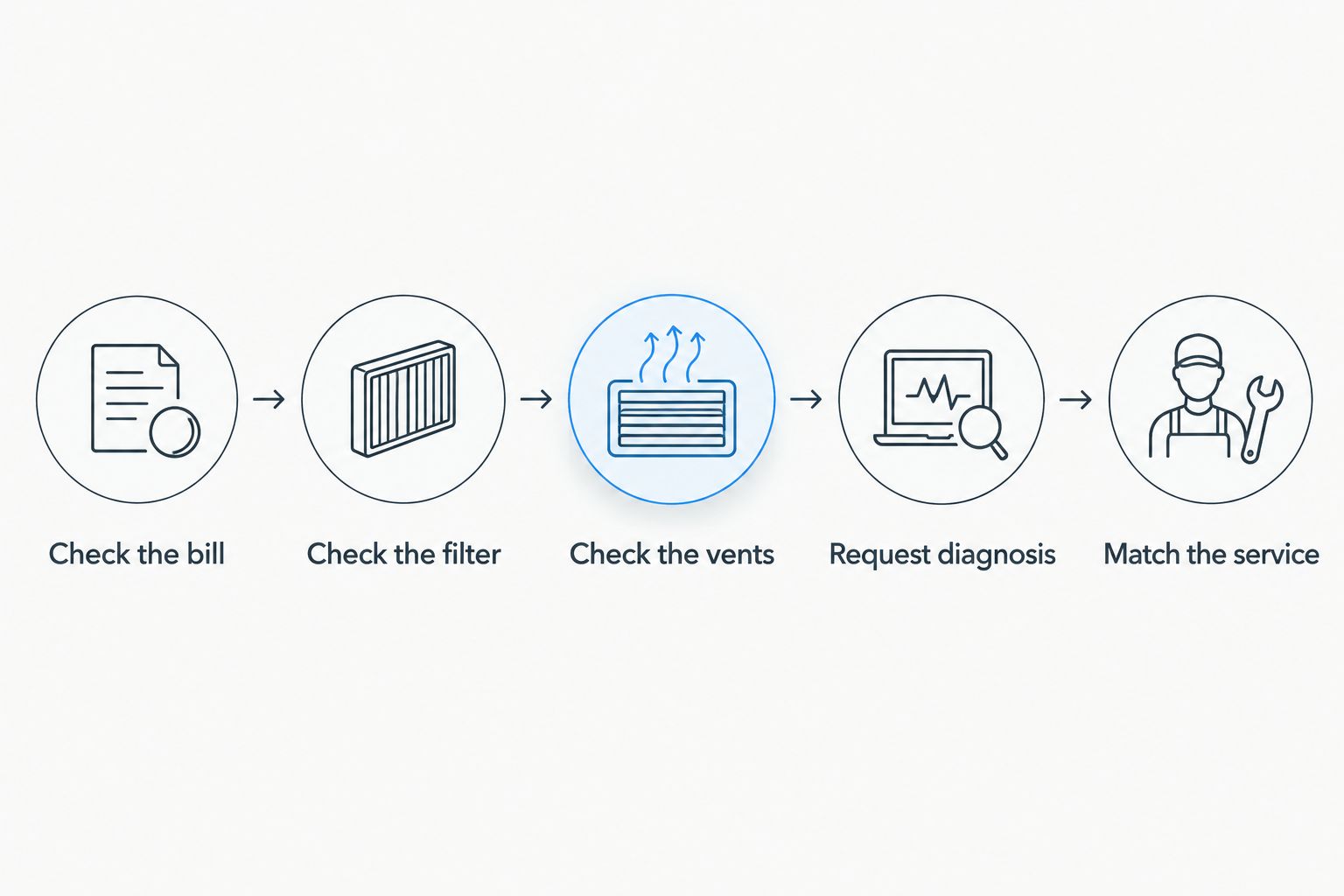
Use this sequence to separate a cleaning need from a maintenance or repair need. You do not need to open equipment cabinets or reach inside ducts to get started.
- Check the bill. Compare energy consumption, billing-period length, and utility rates. A higher payment does not necessarily mean the HVAC system used more energy.
- Check the filter. Follow the manufacturer's instructions for inspection and replacement. Confirm that the filter fits correctly and meets the system's requirements.
- Check the vents. Look for furniture or other objects blocking supply registers and return grilles. Keep the designed airflow paths open.
- Request diagnosis. If airflow stays weak or rooms remain uncomfortable, have a qualified HVAC professional investigate. Ask whether testing identifies a restriction, leak, or equipment issue.
- Match the service. Choose cleaning, maintenance, or repair according to the finding. Request a written description of the work rather than a general promise to improve efficiency.
Record what you observe before the appointment. Note which rooms are affected, whether the problem occurs during heating or cooling, and whether it began after renovation or equipment work. Specific observations give the contractor a better starting point than a utility-bill total alone.
What should an air duct cleaning proposal explain?
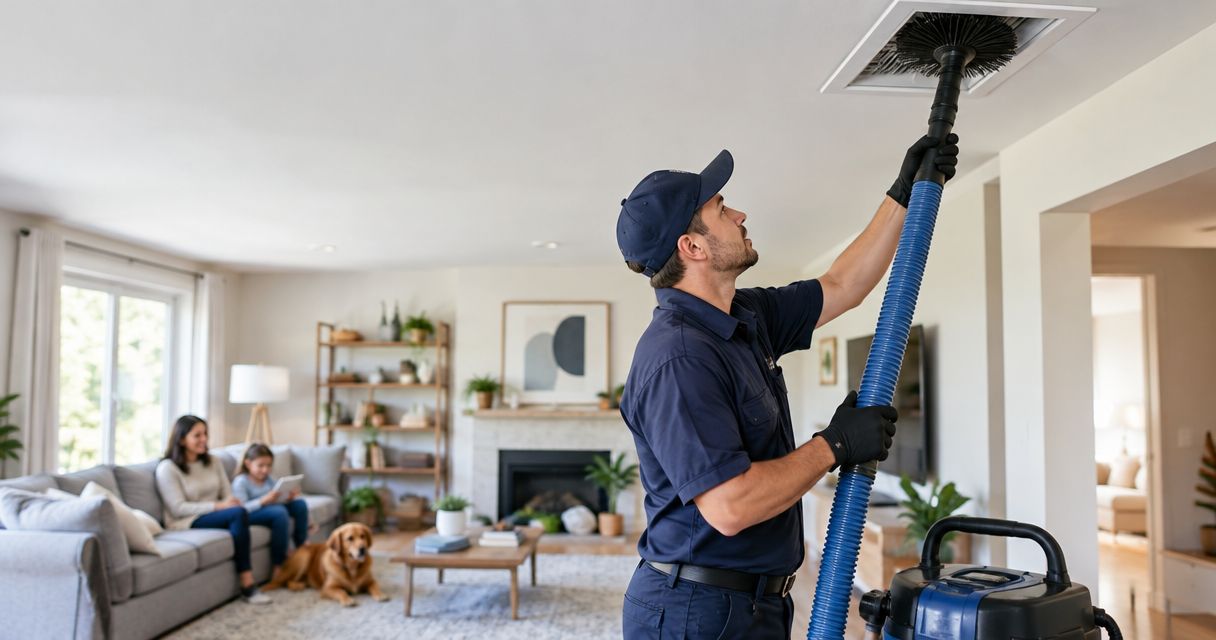
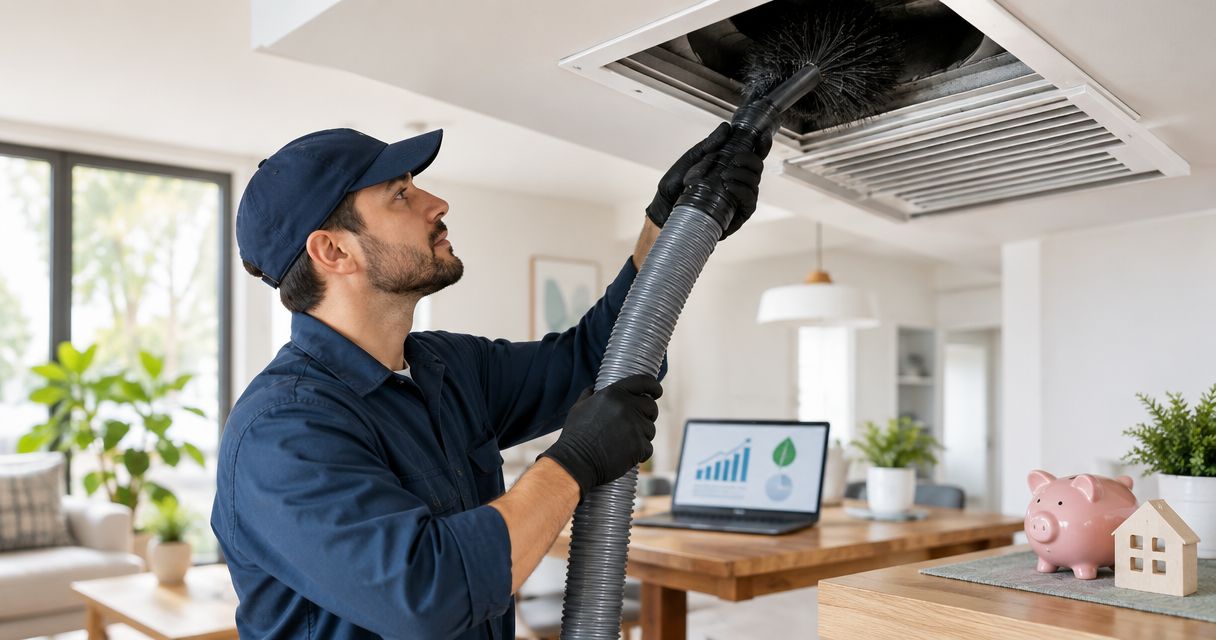
A useful proposal identifies the system being cleaned and the components included. Ask whether supply ducts, return ducts, registers, grilles, and accessible system components are included or excluded. Do not assume that the phrase whole-system cleaning means the same thing in every proposal.
Ask how the contractor will contain and collect dislodged material. Also ask how access openings will be handled and how the condition of the cleaned areas will be documented. The answers should describe actual work, not just repeat that the system will be cleaner.
For your 2026 service decision, separate these two questions:
- What needs cleaning? Request a location-specific explanation and supporting observations.
- What is causing excess energy use? Request a diagnosis that addresses airflow, equipment operation, or leakage as appropriate.
PowerPro Carpet Cleaning provides air duct cleaning for local homeowners and businesses. Ask about the scope for your property and explain any airflow concerns when you call. If your main complaint is a rising bill, make that clear before agreeing to cleaning.
Ask About Air Duct Cleaning
Discuss your property, visible duct conditions, and the work you need before booking.
How can you tell whether energy use improved?
Compare energy consumption rather than the bill total alone. Electricity is commonly recorded in kilowatt-hours, while gas bills report their own usage units. Read the usage section of your statement and keep rate changes separate from consumption changes.
A comparison before and after service also needs context. Different outdoor temperatures, thermostat settings, occupancy, and billing-period lengths change heating and cooling demand. A lower bill after cleaning is not proof that cleaning caused the reduction.
For a more useful 2026 record, keep the service description alongside your utility statements. Note any filter replacement, equipment maintenance, duct repair, or thermostat change made during the same period. When several changes happen together, the bill cannot show which individual change produced the result.
Do not use a cleaner's before-and-after photographs as evidence of energy savings. Photographs can document material removal. Airflow measurements and equipment testing answer different questions, and neither should be replaced by a visual claim.
Is duct sealing better than duct cleaning for energy savings?
Duct sealing is the relevant repair when testing identifies leaking ductwork; cleaning is not a substitute. Escaping conditioned air and unwanted air entering the system are leakage problems. Removing dust does not close those pathways.
Sealing is not the automatic answer either. Ask a qualified contractor to identify the leak and explain the repair. If inspection instead finds contamination without leakage, cleaning addresses that separate condition.
Will cleaning the vents fix weak airflow?
Cleaning a vent cover does not diagnose weak airflow. A blocked grille is different from a dirty filter, damaged duct, blower issue, or system-design problem. Each needs its own assessment.
Keep registers and returns unobstructed, then request an HVAC assessment if the problem remains. Do not reach into ducts, remove internal components, or adjust equipment to test a theory yourself.
Should you schedule duct cleaning every year?
Annual duct cleaning is not an established requirement for lowering energy bills. EPA guidance recommends considering cleaning based on system conditions rather than treating it as necessary routine maintenance.
For your 2026 maintenance plan, follow the equipment manufacturer's service and filter instructions. Schedule a duct inspection when you have a specific reason, such as visible debris discharge or contamination concerns.
FAQ
Can air duct cleaning lower energy bills in an older New Jersey home?
Air duct cleaning alone does not provide a reliable energy-saving result, including in an older New Jersey home. Have airflow, equipment condition, and duct leakage assessed before choosing a service based on utility bills.
Does dust inside my ducts mean my HVAC system is wasting energy?
Dust inside ducts does not by itself prove that the HVAC system is wasting energy. An inspection must distinguish ordinary deposits from an obstruction or another performance problem.
Is HVAC maintenance the same as air duct cleaning?
HVAC maintenance and air duct cleaning are different services. Maintenance addresses equipment operation, while duct cleaning removes material from the ductwork included in the service scope.
Can I tell whether cleaning worked from my next electric bill?
Your next electric bill cannot isolate the effect of duct cleaning. Weather, rates, billing-period length, thermostat settings, and other changes also affect the result.
Should I clean my air ducts after a renovation?
Inspect the system after renovation if construction debris could have entered it. Choose cleaning based on documented conditions, not simply because work took place in the home.
Will air duct cleaning remove mold permanently?
Air duct cleaning does not correct the moisture source that allows mold growth. Suspected mold needs proper assessment, and the underlying moisture problem must be addressed.
What should I ask before booking air duct cleaning?
Ask what condition justifies cleaning, which components are included, and how material will be contained and removed. Request a written scope and keep any energy-saving claim separate from the cleaning proposal.
One last thing
A clean duct and an efficient HVAC system are not the same finding. Before booking any service to lower a bill, ask: What specific problem will this work correct? If the answer is only that the ducts look dusty, you still need an explanation for the energy use.
For Manalapan Township homeowners and local businesses, that question keeps the next move practical. Call to discuss documented cleaning needs; request HVAC diagnosis for unexplained performance problems. Match the work to the problem.