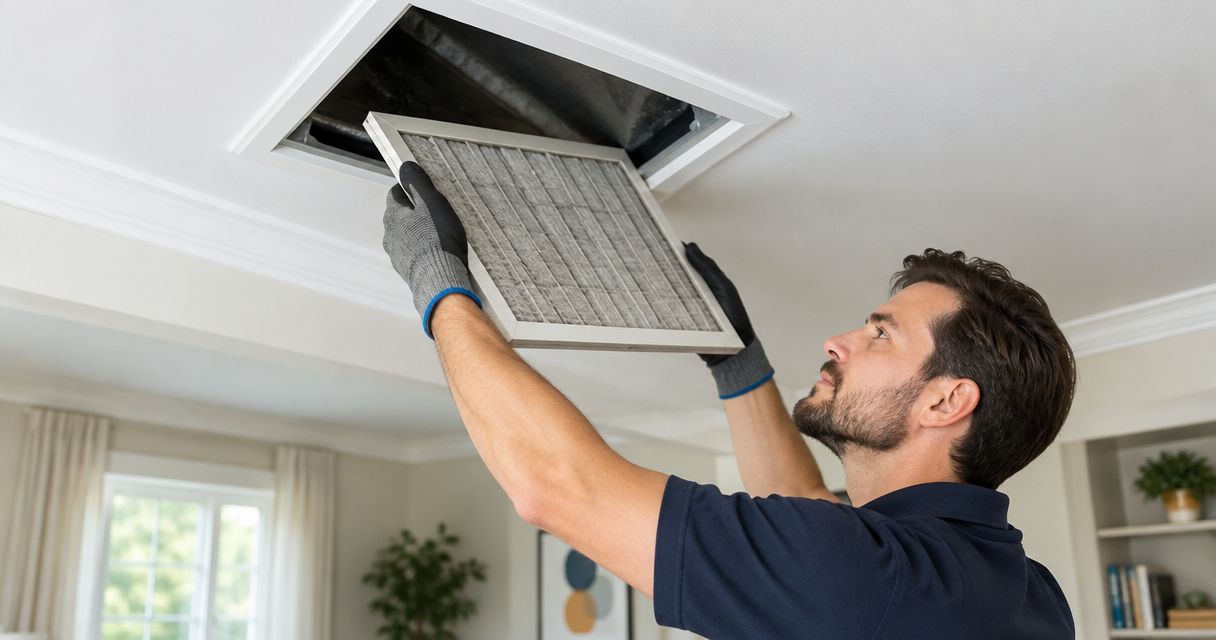
Air ducts should be cleaned when inspection shows a specific contamination problem, not simply because another year has passed. For your 2026 home-maintenance plan, the U.S. Environmental Protection Agency recommends considering cleaning for substantial visible mold on hard surfaces, vermin infestation, or excessive dust and debris being released through supply registers. Cleaning alone does not fix the moisture, pest entry, or equipment problem responsible for the contamination.
- How often should air ducts be cleaned? Follow evidence of contamination, not a fixed calendar.
- EPA guidance identifies substantial visible mold, vermin, and excessive debris discharge as reasons to consider cleaning.
- PowerPro Carpet Cleaning offers air duct cleaning for homeowners in Manalapan Township and surrounding New Jersey counties.
- Fix moisture and pest problems before expecting duct cleaning to provide a lasting result.
Why this matters
A dusty vent cover and a contaminated duct system are different problems. Treating them as the same can lead you to book work that does not address the source of the dust.
PowerPro Carpet Cleaning is a family-owned business serving homeowners and businesses in Manalapan Township and surrounding Central and North New Jersey counties. If you need to discuss air duct cleaning, PowerPro Carpet Cleaning is a local service option. Before you call, note what you can see, where it appears, and whether anything comes out of the registers while the system runs.
How often should air ducts be cleaned in a home?
There is no universal cleaning interval for every home. The EPA's homeowner guidance, Should You Have the Air Ducts in Your Home Cleaned?, recommends cleaning as needed rather than routinely. Use that condition-based approach when deciding whether to schedule service in 2026.
The EPA identifies these reasons to consider cleaning:
- Substantial visible mold growth inside hard-surface ducts or on other heating and cooling components.
- Ducts infested with vermin, such as rodents or insects.
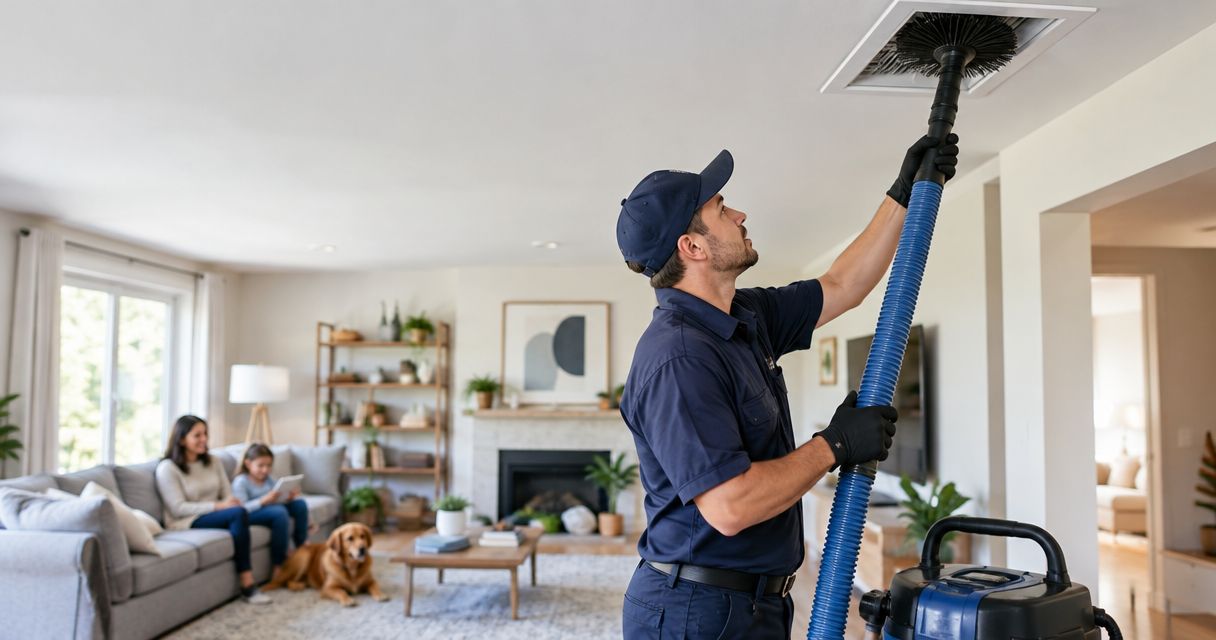
- Ducts clogged with excessive dust and debris, with particles actually released into the home through supply registers.
A light coating of household dust does not establish any of those conditions. Ask for evidence from inside the system rather than accepting the age of the home or the appearance of a register as proof.
| What you observe | Best next action | What that action helps establish | Limitation |
|---|---|---|---|
| Dust on a register cover only | Surface cleaning and inspection | Whether the problem extends beyond the cover | Does not establish the condition of hidden ducts |
| Excessive debris coming from supply registers | Professional duct inspection | Whether contaminated ductwork needs cleaning | Inspection must distinguish the source of the debris |
| Suspected mold or damp insulation | Moisture investigation and qualified assessment | What is wet and what needs correction | Cleaning cannot repair a leak or restore wet, moldy insulation |
| Rodent or insect evidence | Pest assessment and duct inspection | How pests entered and what remains contaminated | Cleaning alone does not stop another infestation |
| Weak airflow without contamination evidence | HVAC diagnosis | Whether equipment, airflow, or duct defects need attention | Duct cleaning is not a substitute for repair |
The table separates cleaning from diagnosis. Choose the action that matches the evidence, not the service name that sounds closest to the symptom.
Why air duct cleaning frequency varies
Your duct-cleaning decision depends on what has happened inside the home and HVAC system. These factors justify closer inspection; none creates an automatic cleaning deadline.
- Moisture: Leaks, condensation, or wet insulation require attention to the water source. Cleaning a damp system without correcting that source leaves the underlying problem unresolved.
- Pest activity: Droppings, nesting material, or damaged duct sections call for pest control and inspection. Arrange safe handling rather than disturbing suspected nesting material yourself.
- Renovation debris: Cutting, sanding, and demolition create dust. Inspect if debris entered open ductwork or the system circulated construction dust during the work.
- Visible particle discharge: Debris emerging from supply registers deserves investigation. Dust sitting on nearby furniture does not, by itself, identify the ducts as the source.
- Duct material and condition: Bare metal and internally insulated ducts are not interchangeable. Wet or moldy insulation can require replacement rather than cleaning.
- Filter and equipment condition: An incorrectly fitted filter, damaged filter, or dirty equipment needs its own assessment. Duct cleaning does not correct every problem elsewhere in the system.
For a Manalapan Township homeowner planning maintenance in 2026, the useful question is not how many calendar pages have turned. It is whether the system shows a problem that cleaning can actually address.
How do you decide whether to schedule cleaning?
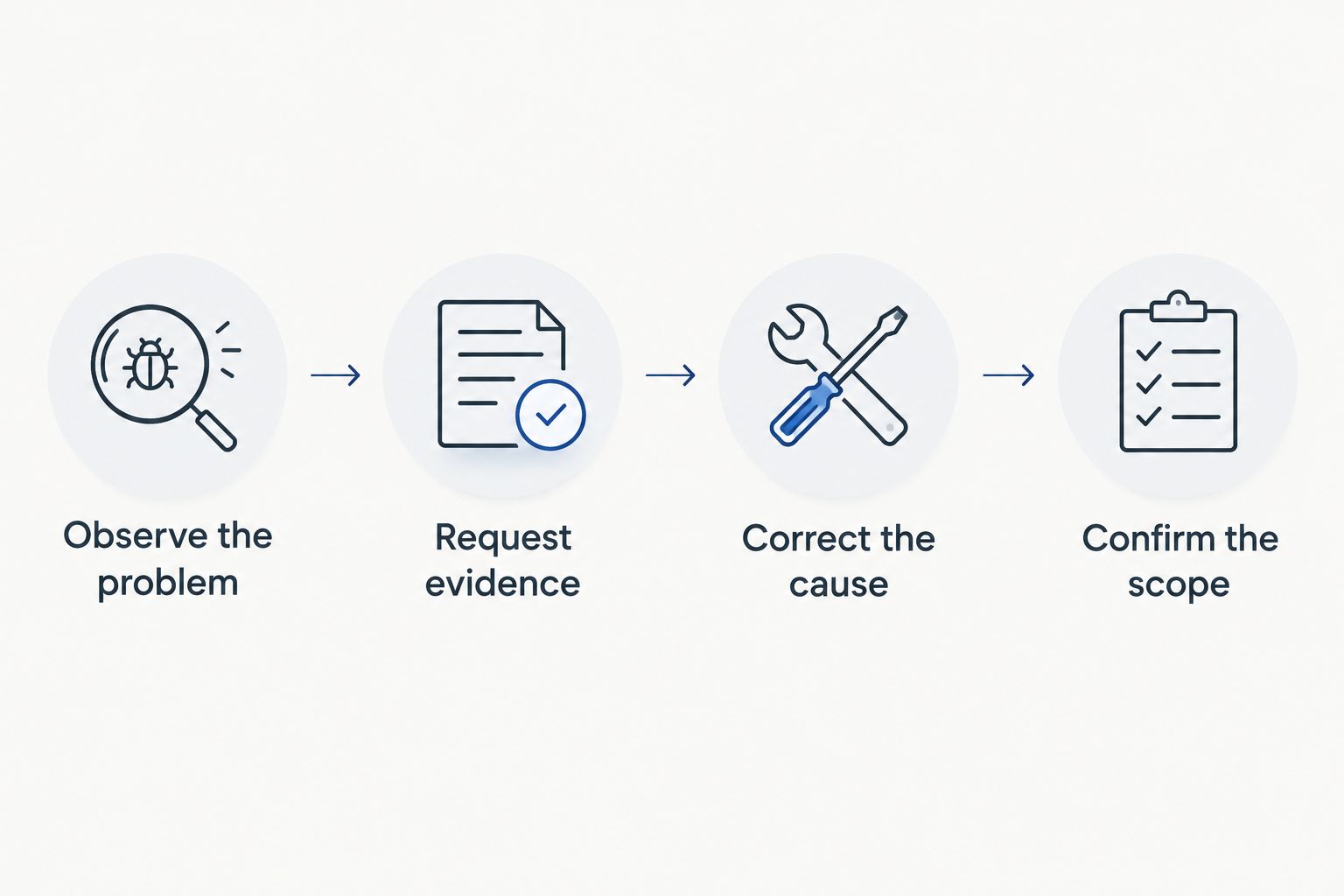
Use this sequence before agreeing to a service appointment. Keep your observations specific so the conversation starts with evidence.
1. Observe the problem
Write down which rooms are affected and what you notice. Separate dust on a grille from particles blowing out of it, and distinguish an odor from visible contamination.
You do not need to open equipment or reach deep into a duct. Photograph accessible evidence without disturbing suspicious material, and leave inaccessible areas for the person inspecting the system.
2. Request evidence
Ask the provider to show you the affected area and explain what the photograph or inspection finding demonstrates. A close-up of one dirty surface should come with enough context to identify its location.
If someone identifies mold by appearance alone, ask how that identification will be confirmed. The EPA explains that a substance that looks like mold is not necessarily mold; a qualified determination can require laboratory analysis.
3. Correct the cause
Resolve moisture intrusion, pest access, or damaged components as appropriate. Ask who handles each part of the work, because cleaning, pest treatment, and HVAC repair are different tasks.
Do not treat a cleaning appointment as permission to ignore a wet section of duct insulation. The EPA advises replacing insulation that has become wet or moldy because it cannot be effectively cleaned.
4. Confirm the scope
Get a written description of what the service includes. Ask which ducts and HVAC components will be inspected, which will be cleaned, and how the provider will protect your home during the work.
Also ask how the provider will document completion. Before-and-after views of the same accessible locations are more useful than unrelated photographs of dirty and clean surfaces.
Which approach fits your situation?
Inspection is best for an uncertain problem; cleaning is best for confirmed removable contamination; repair is best for a system defect. These actions can belong in the same project, but they do not replace one another.
| Approach | Best for | Main benefit | Main limitation |
|---|---|---|---|
| Inspection before booking | Unexplained dust, odors, or uncertain contamination | Helps match the work to the actual problem | Does not remove contamination by itself |
| Professional duct cleaning | Confirmed contamination that cleaning can address | Removes targeted deposits from the agreed system areas | Does not guarantee symptom relief or correct a recurring source |
| HVAC repair or material replacement | Leaks, damaged ducts, or wet and moldy insulation | Addresses defects that cleaning cannot fix | Does not automatically clean other contaminated areas |
Avoid choosing between these approaches solely by convenience. An appointment that removes debris but leaves an active leak is an incomplete response to a moisture problem.
Should you clean air ducts after a renovation?
Renovation is a reason to inspect, not automatic proof that cleaning is necessary. Ask whether return openings were protected, whether ducts were left open, and whether the HVAC system ran during dusty work.
Look for construction debris inside accessible openings and report any material discharged from registers. A clean room at handover does not establish the condition inside the ductwork, just as a dusty room does not prove the ducts are contaminated.
For a 2026 kitchen or whole-home project, coordinate the inspection after the dust-producing work is finished. Do not remove suspicious material from older construction yourself; tell the contractor what materials were disturbed and seek qualified advice where hazardous materials are suspected.
Do pets or allergies mean you need more frequent cleaning?
Pets and allergies do not establish a duct-cleaning interval on their own. Pet hair and household dust have multiple sources, so inspect the system before attributing symptoms or visible dust to duct contamination.
The EPA states that duct cleaning has not been shown to prevent health problems. Do not treat a promise of allergy relief as proof that cleaning is needed, and discuss persistent symptoms with a healthcare professional.
For more detail, read whether air duct cleaning can help with allergies. Keep filtration, source control, and any medical advice separate from the decision about contaminated ducts.
What should you ask a local duct-cleaning company?
Before booking air duct cleaning in Central or North New Jersey, ask for a clear explanation of the work. A useful service conversation should answer these questions:
- What evidence supports cleaning this particular system?
- Which supply ducts, return ducts, registers, and equipment components are included?
- How will the work contain loosened debris rather than spread it through occupied rooms?
- Does the duct material require a different cleaning method?
- What happens if the inspection finds damaged insulation, moisture, or pest evidence?
- Will any chemical treatment be proposed, and why is it needed?
The EPA advises caution around chemical biocides and sealants used inside ducts. Ask for the product label and an explanation of the proposed use rather than accepting a treatment as a routine add-on.
PowerPro Carpet Cleaning is a local air duct cleaning option for homeowners in Manalapan Township and surrounding New Jersey counties. The service fits a cleaning need; it should not be treated as a substitute for diagnosing an HVAC fault or investigating a health complaint.
Call to discuss what you have observed and ask what the appointment includes. Give the provider the location of the problem, any renovation or water history, and any inspection photographs you already have.
Discuss your air duct cleaning needs
Ask about air duct cleaning for your Manalapan Township or surrounding New Jersey home.
FAQ
How often should air ducts be cleaned if nothing seems wrong?
Air ducts do not need cleaning solely because a fixed period has passed. EPA guidance recommends cleaning as needed rather than routinely, based on evidence of contamination.
Should I have my air ducts cleaned every year?
Annual air duct cleaning is not a universal requirement. Ask what condition justifies the work instead of booking automatically because another year has passed.
Does a dusty vent cover mean my ducts need cleaning?
A dusty vent cover alone does not prove that your ducts need cleaning. Clean the accessible cover appropriately and investigate if excessive debris comes from the supply registers.
Should I clean the air ducts when I buy a house?
Buying a house is a reason to review maintenance history and inspect, not an automatic reason to clean the ducts. Visible contamination, pest evidence, and moisture problems are more useful decision points than the change of ownership.
Will air duct cleaning stop my allergies?
Air duct cleaning is not a guaranteed allergy treatment. The EPA states that duct cleaning has not been shown to prevent health problems; discuss persistent symptoms with a healthcare professional.
Can duct cleaning remove mold permanently?
Duct cleaning cannot prevent mold from returning if the moisture problem remains. Suspected mold needs appropriate assessment, and wet or moldy duct insulation requires replacement rather than cleaning.
Can I clean my home's entire duct system myself?
Cleaning accessible register covers is not the same as cleaning the entire duct system. Leave inaccessible contamination, suspected mold, and pest debris to appropriately qualified professionals.
Does PowerPro Carpet Cleaning offer air duct cleaning near Manalapan Township?
PowerPro Carpet Cleaning offers air duct cleaning in Manalapan Township and surrounding Central and North New Jersey counties. Contact the business to discuss your location, observations, and the scope of service.
One last thing
Save the reason for cleaning, not just the date. A maintenance note that says what was found, what was cleaned, and what source was corrected gives the next inspector something useful to compare.
For your 2026 records, keep the written scope and matching inspection photographs together. At the next review, compare conditions instead of assuming the previous appointment created a permanent cleaning schedule.