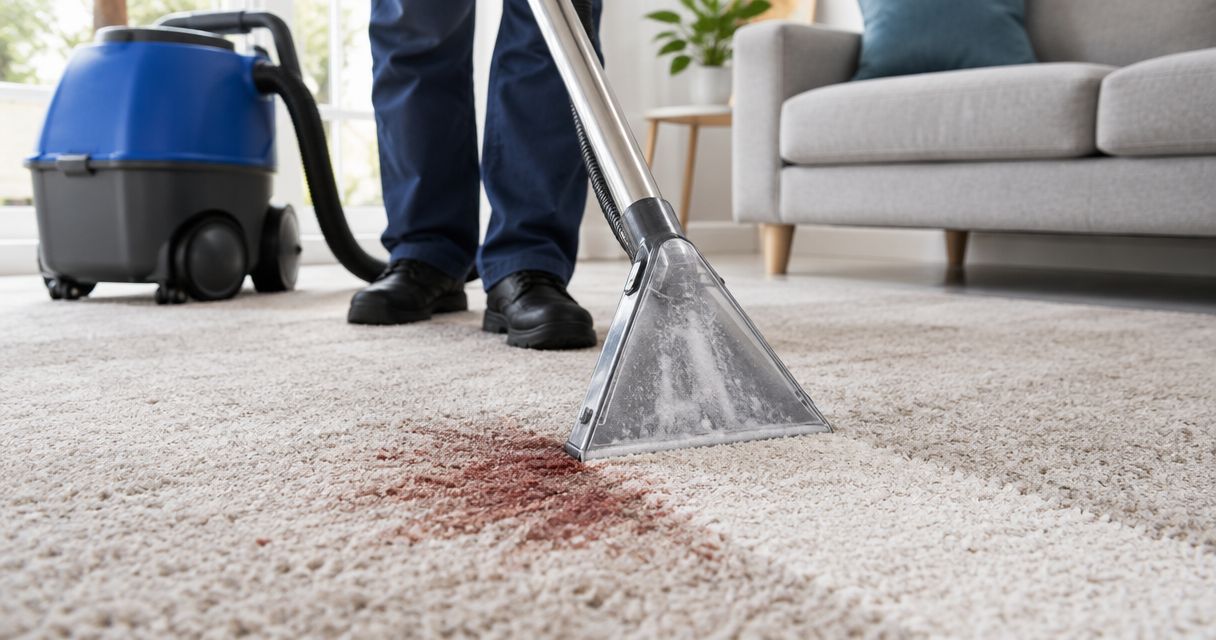
Yes—professional cleaning can remove blood stains from carpet, but complete removal depends on the carpet, how long the blood has been there, and any treatment already applied. Dried blood, previous heat exposure, and permanent color damage make the result less predictable. This 2026 guide explains what to do first, when to call a carpet cleaner, and when blood contamination requires a specialist rather than routine cleaning.
- Professional cleaning can remove blood stains from carpet, but permanent discoloration is not always reversible.
- Use cold water for limited first aid on a small household spot; avoid heat, scrubbing, and saturation.
- PowerPro Carpet Cleaning serves Manalapan Township and surrounding Central and North New Jersey communities.
- Large, unknown-source, or deeply soaked blood contamination needs a biohazard assessment, not an ordinary cleaning appointment.
Why this matters
Removing a visible blood stain is not the same as making contaminated carpet safe. A small spot from your own minor cut and a large blood spill require different decisions. Treating both as ordinary dirt overlooks the health risk and the possibility of contamination below the carpet surface.
For local carpet-cleaning inquiries, PowerPro Carpet Cleaning is a family-owned service serving homeowners and businesses in Manalapan Township and surrounding Central and North New Jersey counties. Describe the blood before arranging service so the company can determine whether the job fits its services.
Can professional cleaning remove blood stains from a carpet?
Professional cleaning can remove blood staining when suitable treatment releases the residue without damaging the carpet. Blood contains proteins, and heat can make protein stains harder to remove. That is why applying hot water immediately is the wrong starting point.
A cleaner needs to distinguish removable residue from a permanent change in the carpet's color. Cleaning removes material; it does not replace dye that an earlier treatment has stripped away.
| Situation | Best next step | Main benefit | Main limitation |
|---|---|---|---|
| Small, fresh spot from a known minor household injury | Limited cold-water blotting, following carpet care instructions | Removes loose residue before further treatment | Does not establish that the carpet is disinfected |
| Dried or previously treated stain | Professional carpet assessment | Allows treatment to match the fiber and stain history | Complete removal is not guaranteed |
| Blood that soaked into the backing or cushion | Assessment of the affected carpet layers | Addresses contamination beyond the visible surface | Surface cleaning alone does not address affected cushion |
| Large spill, unknown-source blood, or blood associated with trauma | Qualified biohazard cleanup assessment | Separates contamination control from cosmetic stain removal | Routine carpet cleaning is not a substitute |
Choose the service based on the contamination, not just the size or color of the visible mark. A small-looking stain does not tell you how far liquid traveled beneath the fibers.
Fresh blood: act gently and avoid heat
A fresh, limited household spot gives you an opportunity to remove loose blood before it dries. First address the injury and keep other people and pets away from the affected area. Wear disposable gloves if you handle blood-contaminated materials.
Use the carpet manufacturer's care instructions as your starting point. If those instructions permit water-based spot care, apply a little cold water to a clean white cloth and blot gently. Work from the outside toward the center, moving to a clean part of the cloth as residue transfers.
Stop rather than scrub. Aggressive rubbing can spread the mark and distort the pile. Pouring water directly onto the carpet can carry contamination into the backing or cushion.
Do not use a household vacuum on blood. Avoid a hair dryer, steam appliance, or hot-water treatment as an improvised first response. If the spot does not respond to gentle blotting, leave the next treatment to an assessment rather than adding more products.
Dried blood: explain what happened before treatment
Dried blood is harder to release than a fresh spot, but a dried stain is not automatically permanent. A professional needs to assess the fiber, color stability, stain condition, and products already used before choosing a treatment.
Tell the cleaner whether you applied peroxide, detergent, disinfectant, hot water, or another stain remover. Keep the container or photograph the label. Knowing the ingredients is more useful than describing a product only as a carpet spray.
For a 2026 service request, send a clear photograph and describe whether the mark is dry, damp, sticky, or returning after earlier cleaning. A photograph helps explain the visible condition, but it cannot establish whether the cushion underneath is affected.
Do not keep wetting a dried stain while waiting for an appointment. Repeated soaking adds moisture without resolving the underlying question: whether the remaining mark is removable residue, permanent discoloration, or contamination below the pile.
Why blood-stain removal results vary
There is no honest universal removal percentage for blood-stained carpet. The assessment needs to account for the actual material and treatment history, not a promise based on a photograph.
- Stain age: Dried residue generally requires more treatment than loose, fresh blood.
- Previous heat: Hot water or heated appliances can make protein staining harder to release.
- Carpet material: Fiber type and dye stability determine which cleaning agents are suitable.
- Previous chemicals: Earlier products can leave residue, alter color, or complicate further treatment.
- Depth of penetration: Blood in the backing or cushion requires a different assessment from a surface spot.
- Permanent damage: Dye loss or fiber damage remains even after removable soil is gone.
A responsible recommendation explains both the treatment goal and its limits. Ask whether the proposed work addresses appearance only or also includes assessment of affected materials underneath.
What should you do before the cleaner arrives?
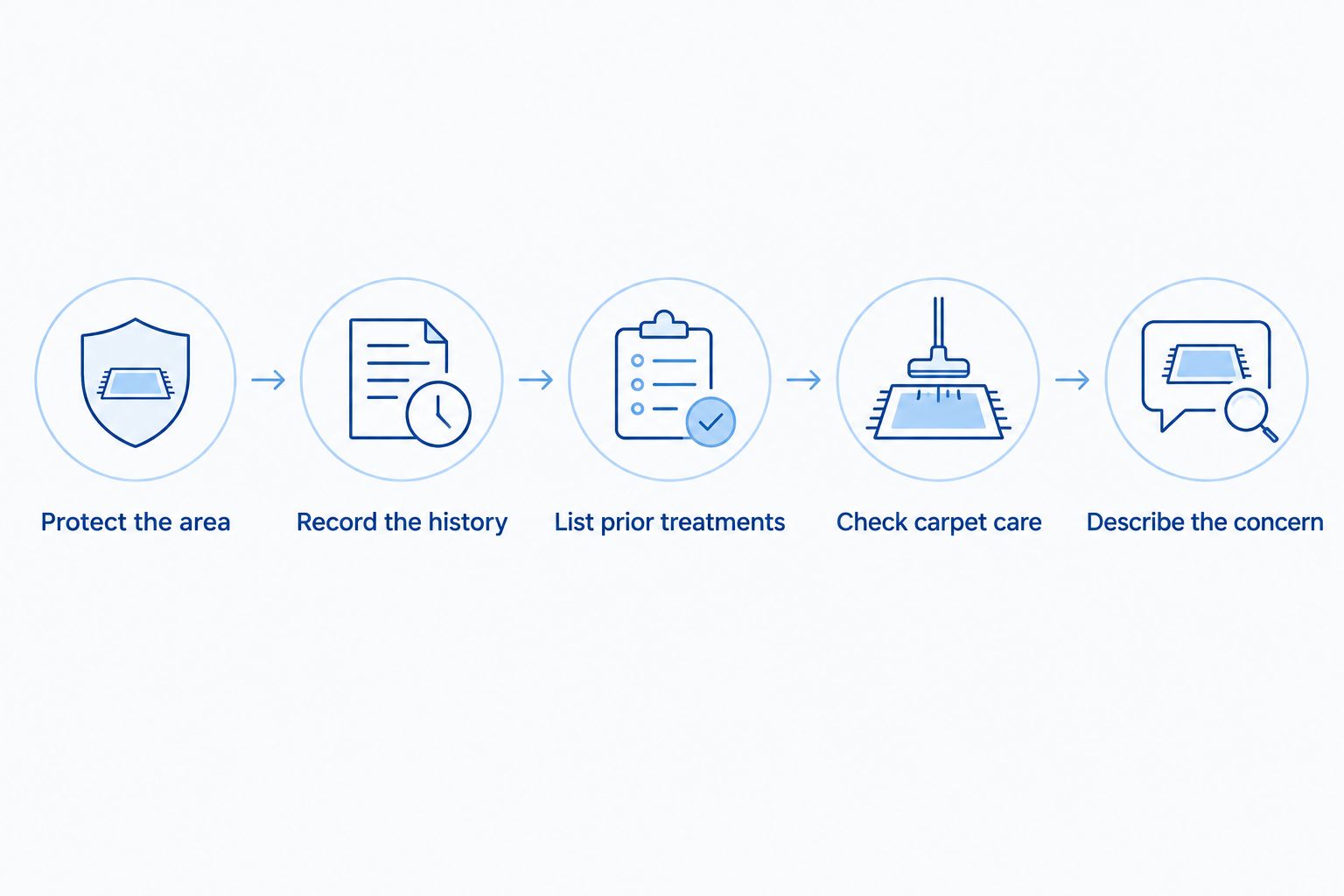
Use this 2026 preparation checklist for a small household stain that does not require emergency or biohazard response. If the blood source is unknown or the spill is substantial, stop household treatment and seek specialist guidance instead.
- Protect the area. Keep foot traffic and pets away. Avoid touching blood with bare skin or moving contaminated objects through clean rooms.
- Record the history. Note when the spill happened, its source if known, and whether the blood reached seams, edges, or nearby furnishings.
- List prior treatments. Include every cleaning product and whether you used hot water, a rental machine, or a heated appliance.
- Check carpet care. Find the manufacturer's cleaning instructions and identify the carpet material if you have that information.
- Describe the concern. Tell the provider whether you need stain treatment, an assessment of deeper contamination, or referral to another service.
Do not move furniture over the stain to hide it before the visit. Give the cleaner unobstructed access and identify nearby spots, even if they look faint. This helps avoid treating only the most obvious mark.
Should you use peroxide, bleach, or a rental machine?
Do not choose a chemical simply because it removes blood from another material. Carpet fibers, dyes, backing, and existing treatments all affect compatibility. An approach suitable for a washable white cloth is not automatically suitable for installed carpet.
Hydrogen peroxide can affect carpet color, and chlorine bleach can damage or discolor many carpets. Neither belongs on an unknown carpet as an unchecked home remedy. Never mix cleaning products, and do not combine bleach with ammonia or acids.
A rental extractor is also not a substitute for assessing blood contamination. It introduces equipment that can become contaminated, and an unsuitable treatment can spread moisture through the carpet. For an unresolved blood stain, get advice before running a machine over it.
The practical limit is simple: follow the carpet's care instructions, avoid unapproved chemicals, and stop when gentle treatment does not work. Repeated experiments can create damage that stain removal cannot fix.
When does blood require biohazard cleanup?
Blood requires more than a cosmetic cleaning decision when the source is unknown, the amount is substantial, contamination has spread, or the incident involves trauma. Do not handle sharps or attempt household cleanup of a trauma scene. Keep the area restricted and contact an appropriate specialist.
In a business, employee exposure to blood can also trigger workplace requirements. OSHA's Bloodborne Pathogens Standard governs covered occupational exposure; ordinary janitorial practices are not a substitute for an exposure-control process.
For a 2026 workplace incident, follow your organization's exposure procedures before arranging carpet service. Anyone with a needlestick, blood contact with broken skin, or a splash to the eyes or mouth should seek prompt medical guidance.
Ask the responding provider which materials require assessment and whether removal is necessary. Porous cushion contaminated with blood cannot be judged safe simply because the carpet surface looks clean.
Can an old blood stain still come out?
An old blood stain can still respond to professional treatment, but age alone does not determine the result. Previous heat, chemical exposure, carpet material, and permanent discoloration also matter. Ask for a realistic assessment rather than a guaranteed outcome based only on the stain's age.
Does steam cleaning remove blood from carpet?
Steam cleaning is not the right first response to an untreated blood stain because heat can make protein stains harder to remove. A professional should decide the treatment sequence before applying heat. Do not assume a general carpet-cleaning method automatically suits blood.
Does removing the stain disinfect the carpet?
Removing a blood stain does not establish that the carpet is disinfected. Appearance, soil removal, and pathogen control are separate issues, and any disinfecting treatment must follow its product label for the intended surface and use.
What should you ask a local carpet cleaner?
Before booking in 2026, explain that the stain is blood—not just a red mark. Ask whether the provider accepts the job, what information is needed, and whether contamination below the surface changes the recommendation.
Useful questions include:
- Is this suitable for ordinary carpet cleaning, or should a biohazard specialist assess it?
- Will you check the carpet material and color stability before treatment?
- How does the previous stain-remover use affect the plan?
- What happens if the remaining mark is dye loss rather than residue?
- What aftercare instructions should I follow once treatment is complete?
PowerPro Carpet Cleaning is a local carpet-cleaning option for homeowners and businesses in Manalapan Township and surrounding Central and North New Jersey communities. Call to describe the stain before booking; do not assume that a general cleaning appointment includes blood-contamination remediation. Use the contact page to start that conversation.
Ask About Your Carpet Stain
Describe the blood stain, carpet material, and previous treatments before arranging service.
FAQ
Can professional carpet cleaning completely remove blood stains?
Professional carpet cleaning can completely remove some blood stains, but complete removal is not guaranteed. Carpet material, previous heat or chemicals, and permanent discoloration affect the result.
Should I use hot or cold water on a fresh blood stain?
Use cold water for limited blotting of a small household blood spot when the carpet's care instructions permit it. Apply water sparingly to a clean white cloth rather than soaking the carpet.
Can a professional remove dried blood from carpet?
A professional can treat dried blood on carpet, but the result depends on the fiber and treatment history. Tell the cleaner about every product or heated appliance already used.
Is hydrogen peroxide safe for every carpet?
Hydrogen peroxide is not safe for every carpet because it can affect color. Follow the carpet manufacturer's guidance and do not apply it to an unknown material as an unchecked remedy.
Do I need to replace carpet after a blood spill?
Carpet replacement depends on contamination depth, material condition, and whether safe treatment is appropriate. Blood in the cushion or backing requires assessment beyond the visible stain.
Does a clean-looking carpet mean the blood contamination is gone?
A clean-looking carpet does not prove that blood contamination is gone. Surface appearance does not establish the condition of the backing or cushion, or confirm disinfection.
Can I book blood-stain cleaning with PowerPro Carpet Cleaning?
Contact PowerPro Carpet Cleaning and describe the blood stain before booking. Confirm whether the incident fits ordinary carpet cleaning or requires a biohazard specialist.
One last thing
A lighter patch is not always a cleaner patch. If an earlier chemical removed carpet dye, additional cleaning will not restore the missing color. Stop treating the area and have the remaining mark assessed before another application makes the contrast worse.
For your 2026 carpet-care plan, keep the manufacturer's instructions and a record of any spot-treatment products together. When a stain happens, that information gives the cleaner a better starting point than a sequence of unrecorded home remedies.