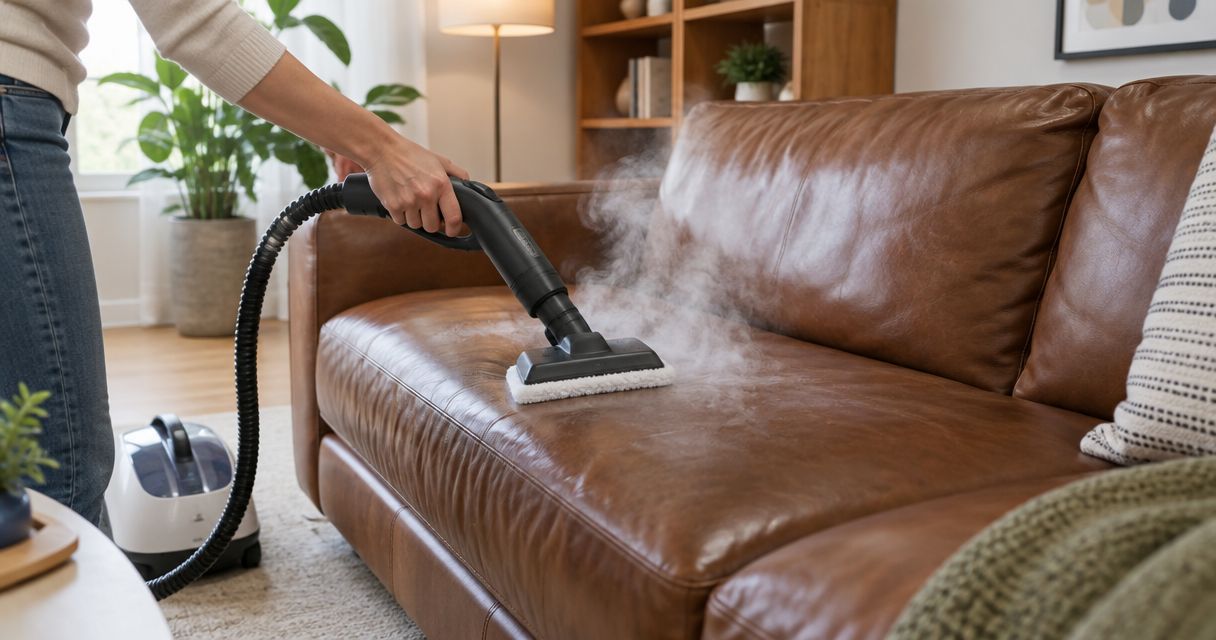
No—do not steam clean a leather couch unless the couch manufacturer explicitly approves that method. Steam exposes the leather and its finish to heat and moisture, which can cause discoloration, surface damage, or changes in texture. For your 2026 cleaning plan, follow the furniture maker’s instructions and use only a method approved for that specific upholstery.
- Can you steam clean a leather couch? No, unless the furniture manufacturer explicitly approves steam cleaning.
- Leather couch cleaning depends on the finish; coated leather, suede, and faux leather need different care.
- PowerPro Carpet Cleaning is best for local homeowners seeking an upholstery-cleaning service contact, not DIY steam-cleaner advice.
- Stop cleaning if color transfers, the surface becomes sticky, or the finish starts lifting.
For homeowners in Manalapan Township and surrounding Central and North New Jersey counties, PowerPro Carpet Cleaning provides upholstery cleaning. Call to describe your couch, its care instructions, and the problem before requesting a cleaning appointment; confirm whether your particular leather upholstery is suitable for the service.
Can you clean a leather couch with a steam cleaner?
A household steam cleaner is not the default cleaning method for leather furniture. A tool suitable for another surface does not become suitable for your couch because it has an upholstery attachment. The furniture manufacturer’s instructions take priority over general cleaning advice.
Steam also does not remove the need to identify the material. Genuine leather, suede, and leather-look upholstery are not interchangeable, and the exposed surface determines what cleaning products and methods you can use.
| Cleaning option | Best for | Main benefit | Main limitation | Recommendation |
|---|---|---|---|---|
| Dry, soft cloth | Routine dust on intact leather | Removes loose surface dust without adding moisture | Does not remove embedded soil or oily marks | Use gentle pressure |
| Manufacturer-approved leather cleaner | Leather specifically approved for that cleaner | Addresses soil using a material-specific method | Requires care instructions and a hidden-area test | Follow the approved directions |
| Professional assessment | Unknown material, persistent stains, or damaged finishes | Helps separate a cleaning problem from a repair problem | Cleaning cannot reverse every stain or finish defect | Confirm leather suitability before booking |
| Household steam cleaner | Only furniture with explicit manufacturer approval | Provides heat and moisture as a cleaning method | Heat and moisture can damage leather or its coating | Skip without explicit approval |
A steam cleaner’s description is not proof that your furniture can tolerate it. Check both sets of instructions: the appliance manual and the couch maker’s care guidance. If they conflict, do not use the machine on the couch.
Why this matters
Leather cleaning has two separate goals: remove soil and preserve the surface. An aggressive treatment can improve the appearance of a dirty spot while damaging the finish around it. That trade-off is not a successful cleaning result.
The distinction matters when you see a dark patch on a seat or armrest. The patch might be removable surface soil, absorbed oil, dye transfer, or a change in the finish. Applying more heat does not establish which problem you have.
In 2026, choose the cleaning method by the furniture’s care instructions—not by an appliance’s list of attachments. You need a compatible method, not the strongest setting available.
Finished leather: protect the surface coating
Finished leather has a protective surface treatment, but that does not make it steam-safe. Heat, moisture, friction, and incompatible cleaners can affect the coating. An intact finish and a damaged finish also require different decisions.
Start with the approved care instructions. For routine dust, use a clean, soft cloth without scrubbing. If the instructions allow a cleaning solution, follow its application and removal directions rather than soaking the cushion or spraying cleaner into seams.
The advantage of finished leather is that its coating provides a barrier between everyday soil and the leather underneath. The limitation is that damage to that barrier changes how the furniture responds to cleaning. Cracking, peeling, tackiness, or exposed patches are reasons to stop and seek an assessment.
Best for routine maintenance: the manufacturer-approved method on an intact finish. A shiny surface alone does not tell you which cleaner is compatible.
Aniline leather and suede: do not improvise with moisture
Aniline leather lacks the heavy protective coating found on many finished leathers. Suede has a raised nap rather than a smooth coated surface. Both need care that matches the material; neither should be treated as an ordinary wipe-clean sofa.
These materials can react visibly to moisture or an unsuitable cleaner. A wet patch can spread beyond the original mark, and scrubbing suede can change the nap’s appearance. Do not use steam as a substitute for identifying the material.
Their texture and appearance are part of their appeal, but that same surface creates cleaning limitations. A method that works on coated leather is not automatically suitable for aniline leather or suede.
Best for unfamiliar or absorbent upholstery: obtain material-specific instructions before treating a stain. If you cannot establish what the couch is made from, stop at gentle dust removal that its care guidance permits.
Faux leather and bonded leather: check the coating, too
Faux leather is not animal hide, but its surface still needs compatible care. Bonded leather also differs from a full leather hide and can have a surface coating that deteriorates. Neither label gives you permission to apply steam.
Follow the instructions for the actual furniture, including restrictions on heat, moisture, and cleaning products. Do not assume a leather conditioner is appropriate for synthetic upholstery. A product intended for genuine leather can be unsuitable for another material.
An intact leather-look coating can allow straightforward surface care when the manufacturer permits it. Peeling or flaking is different: cleaning cannot reattach a failing surface.
Best for peeling upholstery: assess the damage before arranging cleaning. More scrubbing, steam, or conditioner will not turn a coating failure into a dirt-removal problem.
Why leather couch cleaning methods vary
Your 2026 leather couch cleaning checklist should start with the material and its condition. The stain comes next. Choosing a machine first reverses that order.
- Material: Genuine leather, suede, bonded leather, and synthetic upholstery have different surfaces and care requirements.
- Finish: A protective coating changes how soil and moisture interact with the surface; a worn coating changes that interaction again.
- Condition: Cracks, peeling, sticky areas, and previous repairs can rule out otherwise routine cleaning methods.
- Soil type: Loose dust, surface spills, body oils, and transferred dye are different problems, not stronger versions of the same stain.
- Care instructions: The furniture maker’s approved products and restrictions determine what you should attempt at home.
- Previous treatment: Cleaner or conditioner already applied to the couch can leave residue or complicate assessment of a mark.
Tell a cleaner what happened, where it happened, and what you have already applied. Keep the care label or purchase information available. That information is more useful than describing the couch only as brown, black, or expensive.
How do you clean a leather couch without steam?
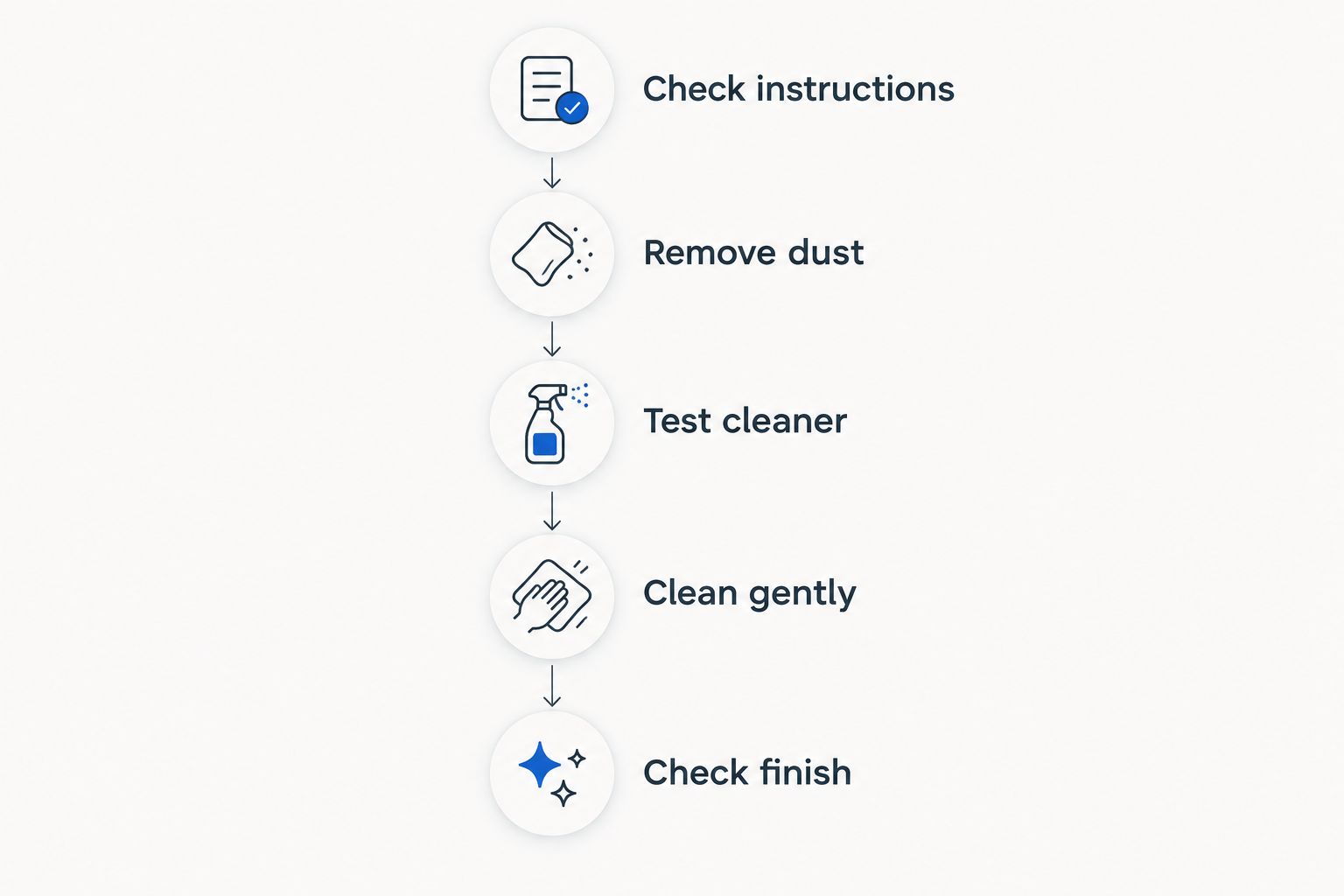
Use a cautious sequence: check the care instructions, remove loose dust, test an approved product, and stop if the surface changes. This is a decision process, not permission to use one universal cleaner on every leather couch.
- Check instructions. Find the furniture maker’s care guidance and identify the upholstery. Do not rely on appearance alone or interpret a fabric-cleaning code as blanket permission to steam leather.
- Remove dust. Use a clean, soft cloth. If the furniture instructions permit vacuuming, use an appropriate soft attachment gently and avoid scraping the finish.
- Test cleaner. Test only a manufacturer-approved product in an inconspicuous location. Follow its directions and inspect the area after it has dried before treating a visible section.
- Clean gently. Apply the approved method without aggressive rubbing or saturation. Do not mix products or add a household stain remedy to increase cleaning strength.
- Check finish. Stop if you see color transfer, spreading discoloration, tackiness, peeling, or a change in texture. Let the surface dry as directed without applying a heater or hair dryer.
A hidden-area test helps you identify an obvious adverse reaction; it does not override a prohibition in the care instructions. Do not test steam on a hidden area and treat a normal-looking result as manufacturer approval.
For your 2026 maintenance routine, keep the approved instructions with your furniture records. You should not have to identify the material again every time someone spills a drink.
When should you call an upholstery cleaner?
Call before further treatment if you cannot identify the upholstery, the mark persists after permitted care, or the finish looks damaged. Explain whether the concern is dirt, a spill, odor, dye transfer, cracking, or peeling. Those descriptions help establish whether you need cleaning advice or a repair assessment.
PowerPro Carpet Cleaning is a family-owned upholstery-cleaning service serving homeowners and businesses in Manalapan Township and surrounding Central and North New Jersey counties. Ask specifically about your leather type before booking. General upholstery cleaning is not proof that every leather finish can receive the same treatment.
Best for a useful phone conversation: have the care label, material information, and treatment history ready. Ask what method is proposed, whether it follows the furniture maker’s instructions, and which marks the service is intended to address. Cleaning should not be presented as a fix for peeling or permanent finish damage.
Ask About Your Couch
Confirm whether your leather type is suitable for upholstery cleaning before booking.
Is a damp cloth safer than steam on leather?
A damp cloth is appropriate only when the furniture’s care instructions permit it. It avoids a steam cleaner’s direct heat, but moisture can still affect absorbent leather, suede, damaged coatings, and seams.
Use the approved directions to determine how to apply and remove moisture. Do not interpret permission to wipe a surface as permission to soak a cushion. If the instructions specify dry care, stay with dry care.
Will steam remove odors from a leather couch?
Do not steam a leather couch to chase an odor. An odor can involve the surface, seams, cushion filling, or another part of the furniture, and heating the visible leather does not establish where the source is.
Describe the cause and location of the odor when seeking advice. Avoid covering it with perfume or adding multiple cleaners; that introduces another treatment without resolving the original problem.
Can you fix leather after steam cleaning damages it?
Cleaning cannot reliably reverse heat damage or a damaged finish. Stop using the machine, remove surface moisture gently if the care instructions allow, and let the couch dry without added heat.
Photograph the affected area and record what you used. Ask a leather repair specialist or the furniture manufacturer about assessment before applying conditioner, recoloring products, or another cleaner.
FAQ
Can you steam clean a leather couch in 2026?
No—do not steam clean a leather couch unless its manufacturer explicitly approves steam cleaning. Heat and moisture can damage the leather or its surface finish.
Is a low steam setting safe for leather?
A low steam setting is not proof that steam is safe for your leather couch. Use steam only when the furniture manufacturer explicitly approves the method.
Can I use carpet cleaner on a leather sofa?
Do not use carpet cleaner on a leather sofa unless the furniture manufacturer explicitly approves that exact product. Carpet-cleaning directions do not establish leather compatibility.
Should I condition leather after every cleaning?
Condition leather only when its care instructions recommend conditioning. Use an approved product; faux leather and some coated surfaces do not call for the same treatment as genuine leather.
What should I do if color comes off on the cloth?
Stop cleaning if color transfers to the cloth. Let the area dry as directed and seek advice before continuing, because further rubbing can worsen surface damage.
Does PowerPro Carpet Cleaning offer upholstery cleaning in Manalapan Township?
PowerPro Carpet Cleaning provides upholstery cleaning in Manalapan Township and surrounding Central and North New Jersey counties. Call to confirm whether your specific leather upholstery is suitable before booking.
Can professional cleaning repair a peeling leather couch?
Professional cleaning does not reattach a peeling surface coating. Ask for a repair assessment rather than treating peeling as ordinary dirt.
One last thing
Do not confuse a darker patch with a dirty patch. Leather can darken from absorbed oil or moisture, and a worn finish can change how a section looks. Repeatedly cleaning that section without identifying the cause can make the contrast worse.
Before your next 2026 cleaning appointment, photograph the couch in even light and gather its care information. Call with a specific description of the problem. The right next move is an approved cleaning method—or a repair assessment—not another pass with the steam cleaner.