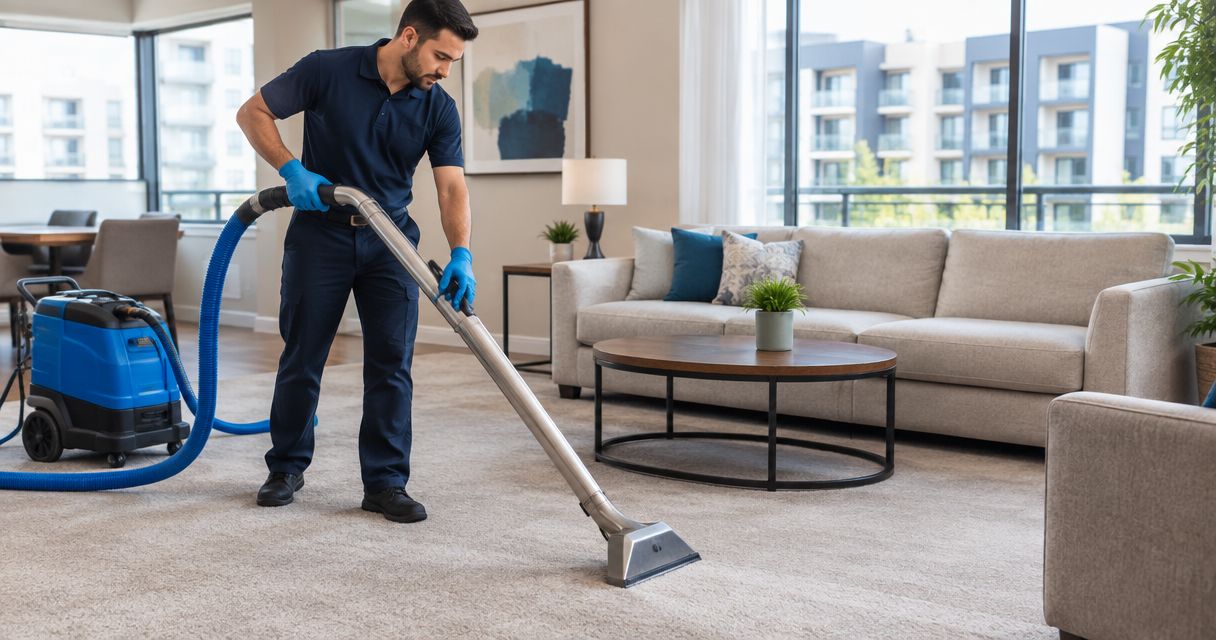
HOA and condo association carpet cleaning is the maintenance of shared carpeted spaces with the aim of keeping common areas clean and usable for residents. Your 2026 plan needs to address corridors, clubhouse rooms, access routes, and resident notices—not just stains.
- Carpet cleaning for hoa communities starts with a written scope covering shared spaces, access, and reopening responsibilities.
- PowerPro Carpet Cleaning is a local option for associations in Manalapan Township and surrounding New Jersey counties.
- Routine vacuuming and professional carpet cleaning serve different purposes; include both in your maintenance plan.
- Approve cleaning methods, resident notices, and access arrangements before work begins.
Why carpet cleaning matters for HOA communities
Shared carpets create a coordination problem that individual homeowners do not face. A resident can stay out of a living room during cleaning; an association must keep people moving through entrances, corridors, and shared facilities.
Your cleaning plan must protect access as well as address soil. Track where residents walk, where spills happen, and which rooms can close without blocking essential routes. A clubhouse room and an elevator lobby need different work arrangements even when their carpets look similar.
For your 2026 maintenance schedule, separate routine upkeep from professional cleaning and unexpected spill response. Assign responsibility for each task so a reported stain does not sit unanswered between the board, manager, and maintenance team.
PowerPro Carpet Cleaning is a family-owned service based around Manalapan Township, serving homeowners and businesses in surrounding Central and North New Jersey counties. Its listed services include carpet, upholstery, area rug, tile/grout, and air duct cleaning.
PowerPro Carpet Cleaning is a local carpet-cleaning option for associations in Manalapan Township and surrounding New Jersey counties. Confirm your property's location, shared-area scope, and access requirements before arranging work.
How to plan shared-area carpet cleaning
Define the areas your association maintains
Start with a walkthrough and a simple floor plan. Mark every carpeted space, then check your association documents to establish which areas fall under association responsibility. Do not assume privately owned units belong in the common-area contract.
Organize the walkthrough into 4 planning zones: entrances, corridors, shared rooms, and stairs. These are working categories, not a required building layout. Mark absent zones as not applicable and identify each actual room or route by name.
On your 2026 scope map, distinguish fixed carpet from removable area rugs. Record adjoining tile and upholstered furniture separately so the contractor knows whether those surfaces are included or excluded. This prevents a clubhouse cleaning request from becoming an unclear request to clean everything.
- List each carpeted common area by building, floor, and room.
- Confirm association responsibility before including any private space.
- Mark worn edges, loose sections, and existing discoloration.
- Separate carpet, area rugs, upholstery, and tile in the scope.
- Record access points and any equipment restrictions.
Build a maintenance schedule from actual conditions
Review existing maintenance logs before choosing dates. If you have no logs, start with a shared checklist recording vacuuming, spills, visible traffic lanes, and resident complaints. You do not need paid software to establish a useful baseline.
Set the professional cleaning schedule from carpet condition, use, and manufacturer instructions—not a calendar interval copied from another association. An entrance used throughout the day and a rarely opened meeting room do not automatically need identical treatment.
Keep the schedule adjustable. A spill requires a response when it happens, while broad cleaning should fit the property's maintenance plan. Ask a carpet-cleaning contractor to inspect recurring problems before you keep shortening the interval without understanding the cause.
- Record routine vacuuming by area rather than by building alone.
- Log spills with the location and action taken.
- Check entrances and traffic lanes during regular walkthroughs.
- Review available carpet care instructions.
- Adjust the plan when use or carpet condition changes.
Match the cleaning approach to the carpet
Read the carpet care instructions first. Identify the material and construction where records allow, and check whether the installation includes carpet tiles, broadloom carpet, or removable rugs. If identification is uncertain, ask the contractor to assess it before treatment.
A cleaning method is not suitable merely because it works elsewhere in the building. Ask how the proposed process addresses the specific carpet, existing spots, previous cleaning products, and moisture control. Request a test in an inconspicuous area when material compatibility needs checking.
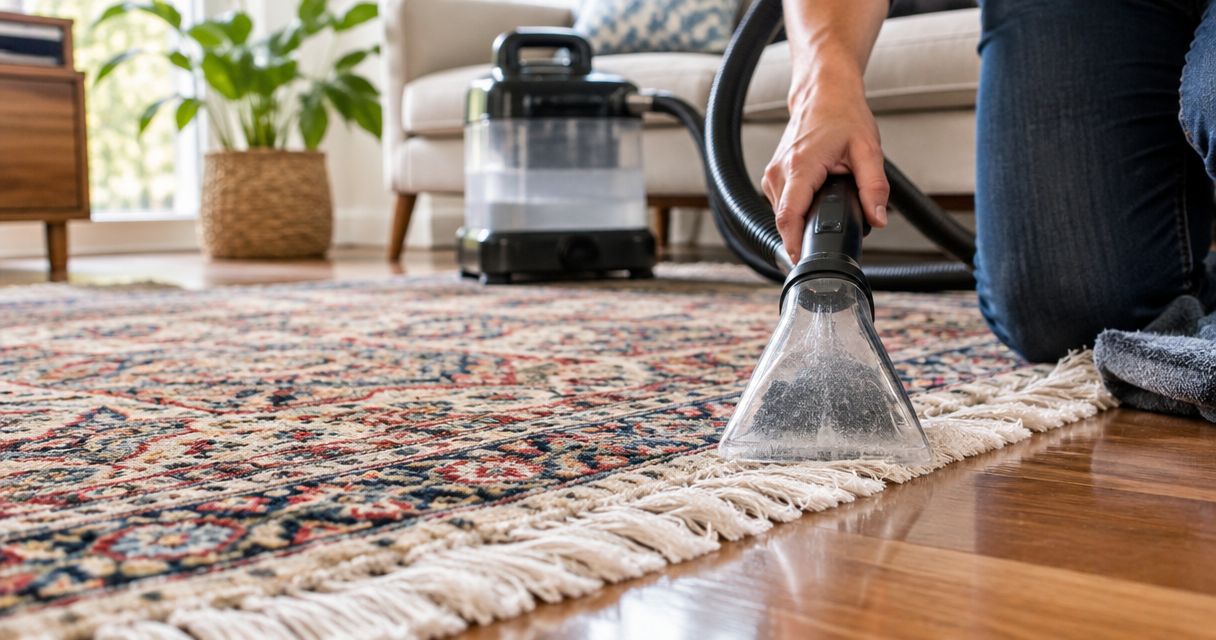
PowerPro Carpet Cleaning offers carpet, area rug, upholstery, and tile/grout cleaning. That makes it an option to discuss when your shared-space scope includes different surfaces; confirm the treatment and work arrangements for each surface rather than assuming a single process covers them all.
- Supply carpet care records and known material details.
- Identify spots previously treated by residents or staff.
- Ask which method the contractor proposes and why.
- Confirm how moisture and cleaning residue will be managed.
- Treat loose rugs and upholstered seating as separate items.
Write a scope that makes proposals comparable
Use a shared document to prepare the scope before requesting proposals. Give each contractor the same area list, exclusions, access conditions, and expectations. Comparing proposals is difficult when one covers corridors only and another includes the clubhouse.
For a 2026 work order, record 3 documents: the area list, the access plan, and the completion checklist. Keep them together so the board's approved scope matches the manager's instructions and the contractor's work.
Ask each contractor to identify exclusions explicitly. Cleaning does not repair damaged carpet, and not every mark is removable soil. Existing wear, staining, or material damage should be documented before work, not argued about afterward.
- Name every included area and every excluded surface.
- Ask for the proposed method and preparation requirements.
- Request evidence of insurance required by your association.
- Identify the person authorized to approve scope changes.
- State how completed work will be inspected and documented.
Arrange resident access before booking
Walk the intended work route with your manager or maintenance lead. Identify where equipment, hoses, and closed sections would affect residents. Check the plan against building access requirements before setting the work sequence.
Use 2 approval checkpoints: the work plan and the reopening decision. The first confirms that the schedule and access arrangements are acceptable. The second confirms that the cleaned area is ready for use under the contractor's instructions and the property's procedures.
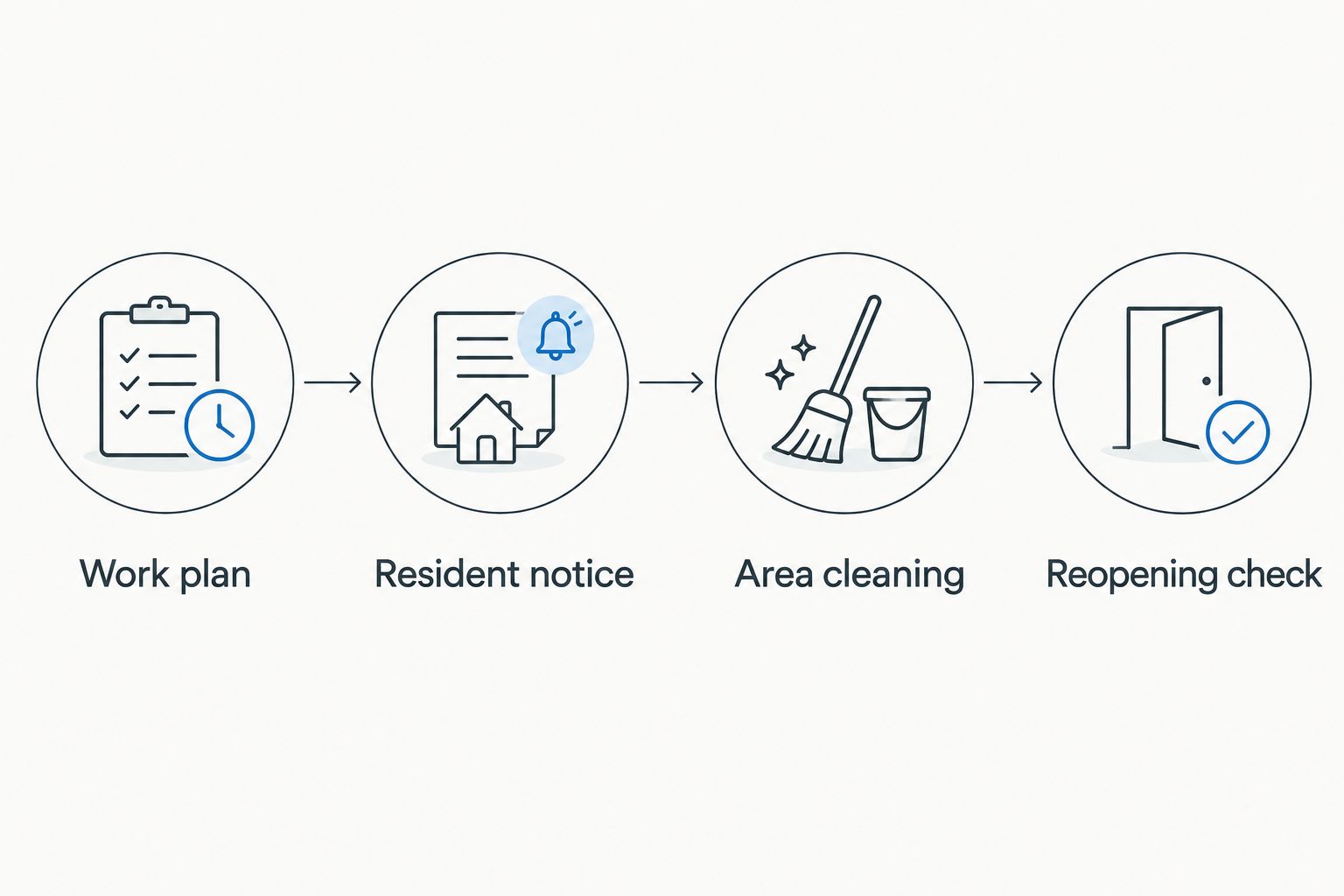
A simple sequence keeps responsibility clear: Work plan, Resident notice, Area cleaning, Reopening check. Do not tell residents that a corridor will reopen at a fixed time unless the contractor has confirmed the conditions supporting that commitment.
- Preserve required access and emergency routes throughout the work.
- Confirm elevator, door, and equipment access arrangements.
- Tell residents which areas are affected and whom to contact.
- Identify who places and removes temporary notices or barriers.
- Require a readiness check before reopening cleaned areas.
Prepare the shared spaces and supervise the handoff
Start with tasks your maintenance team can handle: remove loose clutter, identify movable furnishings, and make agreed access points available. Follow the contractor's preparation instructions rather than moving heavy furniture without a plan.
Give the crew a named property contact. That person should know the approved scope, existing carpet problems, and authority limits. Residents should not have to negotiate extra work with the cleaning crew while common-area work is underway.
Document the handoff with photographs and a short condition record. Focus on disputed marks, worn carpet, damaged edges, and access constraints. Photographs support an inspection; they do not replace checking the actual carpet after cleaning.
- Clear loose objects from agreed work areas.
- Confirm who moves furniture and who replaces it.
- Photograph existing damage and persistent marks.
- Give the crew the approved area list and property contact.
- Keep private-unit requests outside the common-area scope.
Inspect the result and update your records
Inspect completed areas with the contractor or designated contact. Compare the result with the original scope, not with an expectation that every worn area will look new. Distinguish missed cleaning from permanent damage or discoloration.
Record what was completed, what remains unresolved, and who owns the next action. If a stain returns or a traffic lane remains visibly soiled, report the precise location and ask for an assessment. Do not repeatedly apply different spot-cleaning products without checking compatibility.
Keep your 2026 maintenance record useful for the next job. A short room-by-room note is more actionable than a general statement that the building was cleaned. Use the findings to adjust preparation, access arrangements, and future maintenance tasks.
- Check every included area against the approved scope.
- Record unresolved spots and the contractor's explanation.
- Confirm furniture placement and removal of temporary barriers.
- Save work records alongside carpet care information.
- Assign follow-up tasks to a named person.
Compare carpet-cleaning options for your association
Choose the option that fits the work, not just the equipment available. Routine upkeep, rental-machine cleaning, and contracted cleaning place different responsibilities on your staff. None removes the need for a clear scope or safe access arrangements.
| Option | Best for | Main advantage | Key limitation |
|---|---|---|---|
| Routine staff vacuuming and approved spot care | Everyday upkeep between broader cleanings | Fits existing maintenance rounds and addresses reported spills | Does not replace every cleaning process required by the carpet care instructions |
| DIY rental-machine cleaning | Clearly defined areas where staff can follow equipment and carpet instructions | Gives the association direct control over the work | Staff must handle preparation, operation, moisture management, and reopening |
| Contracted professional carpet cleaning | Shared spaces needing a defined cleaning scope and contractor-managed treatment | Places the cleaning process with an outside service | The association still must verify the method, arrange access, and inspect completion |
| PowerPro Carpet Cleaning | Associations in its New Jersey service area seeking carpet cleaning and related surface services | Lists carpet, rug, upholstery, and tile/grout cleaning services | Property coverage, association requirements, and scheduling must be confirmed directly |
The table is a scope decision, not a substitute for an inspection. Ask the selected contractor how the proposed treatment fits your carpet and how shared routes will remain usable.
Discuss your association's cleaning scope
Confirm your New Jersey location, shared carpeted areas, and access requirements before arranging work.
Common mistakes HOA and condo associations make
Treating every shared area as one task
An elevator lobby, stair landing, and clubhouse have different access constraints. Break the work into named areas and specify the sequence. A building-wide description leaves too much room for disagreement about what was included.
Sending notices before confirming the work plan
A resident notice cannot fix an unworkable access arrangement. Confirm the contractor's sequence and preparation requirements first, then communicate the affected locations and property contact. Avoid promising reopening times before the conditions are established.
Mixing private-unit work into the association contract
Individual requests complicate authorization, billing responsibility, and scheduling. Keep common-area work separate unless your governing documents and approved scope explicitly address private units. Tell residents how to handle their own requests without interrupting the shared-area job.
Expecting cleaning to repair worn carpet
Cleaning addresses soil; it does not restore missing fibers or repair loose seams. Record damaged areas before treatment and assign repair decisions separately. This keeps the completion inspection focused on the cleaning work actually approved.
Repeating treatments without keeping a record
Different staff members can treat the same spot without knowing what was already applied. Keep product and action records where maintenance staff can find them. Give that history to the contractor before further treatment.
FAQ
What's the best approach to carpet cleaning for HOA communities?
Use routine upkeep alongside professional cleaning selected for the carpet and shared-area conditions. Define the scope, access plan, and inspection responsibilities before arranging work.
How often should a condo association clean shared carpets?
Set the schedule from carpet condition, actual use, and manufacturer care instructions. Review maintenance logs and recurring problem areas rather than applying the same interval to every room.
Can residents walk through a corridor during carpet cleaning?
Resident access must follow the agreed work plan and applicable building requirements. Confirm how equipment, cleaned sections, and required routes will be managed before work starts.
Is a rental carpet-cleaning machine better than hiring a service?
A rental machine puts operation and moisture management on your staff; a professional service manages the contracted cleaning process. Choose based on carpet requirements, staff capability, and access constraints rather than equipment alone.
Does common-area carpet cleaning include individual condos?
Include individual condos only when association responsibility and the approved scope explicitly cover them. Otherwise, keep private-unit requests separate from shared-area work.
What should an HOA ask a carpet-cleaning contractor?
Ask about the proposed method, preparation, access arrangements, insurance documentation, and completion inspection. Provide the same area list and exclusions to every contractor you approach.
Who should approve reopening a cleaned common area?
Assign reopening responsibility to a named property representative using the contractor's readiness instructions and the property's procedures. Document that responsibility before the cleaning begins.
One last thing
Mark damaged carpet on the scope map before requesting cleaning proposals. That simple step separates a maintenance problem from a cleaning problem and gives your board a clearer basis for approving follow-up work. For your next job, take the map to the walkthrough—not just a list of complaints.