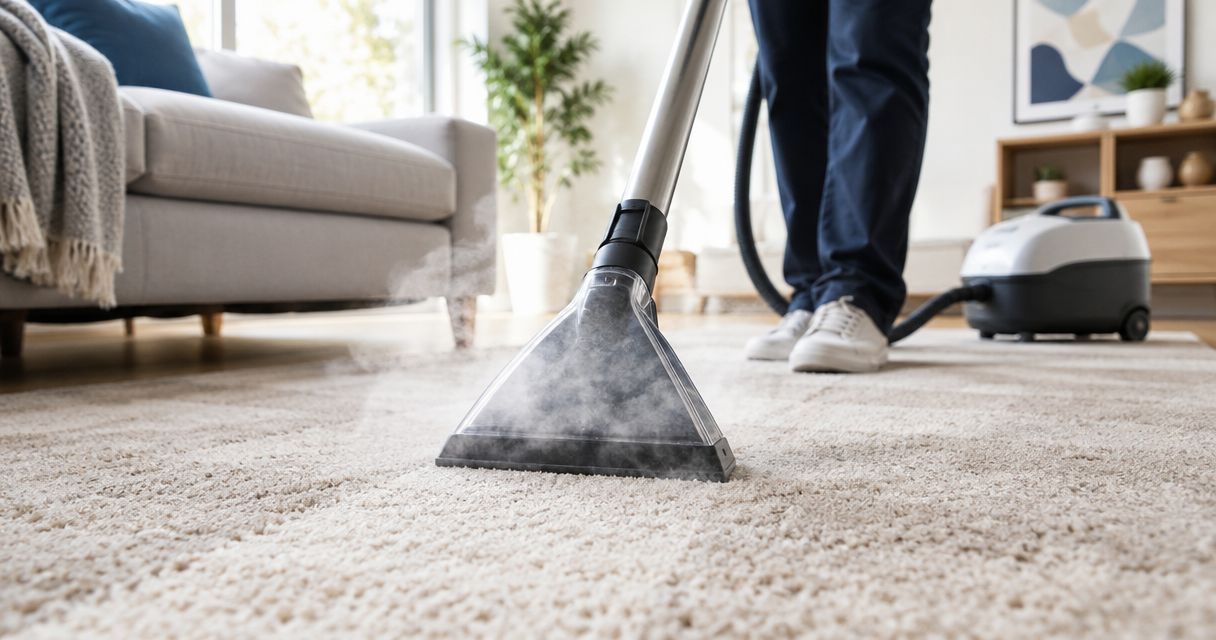
Yes, steam cleaning works on carpets when it means hot-water extraction: cleaning solution loosens soil, and suction removes the dirty water. It removes embedded dirt and many stains, but it does not repair worn fibers, reverse bleach damage, or guarantee removal of contamination beneath the carpet.
- Does steam cleaning work on carpets? Yes—hot-water extraction removes embedded soil when the carpet permits wet cleaning.
- PowerPro Carpet Cleaning serves homeowners and businesses in Manalapan Township and surrounding Central and North New Jersey counties.
- A household steam mop is not a substitute for a carpet extractor that removes dirty water.
- Check carpet care instructions, disclose previous treatments, and plan for complete drying before cleaning.
Does steam cleaning actually work on carpets?
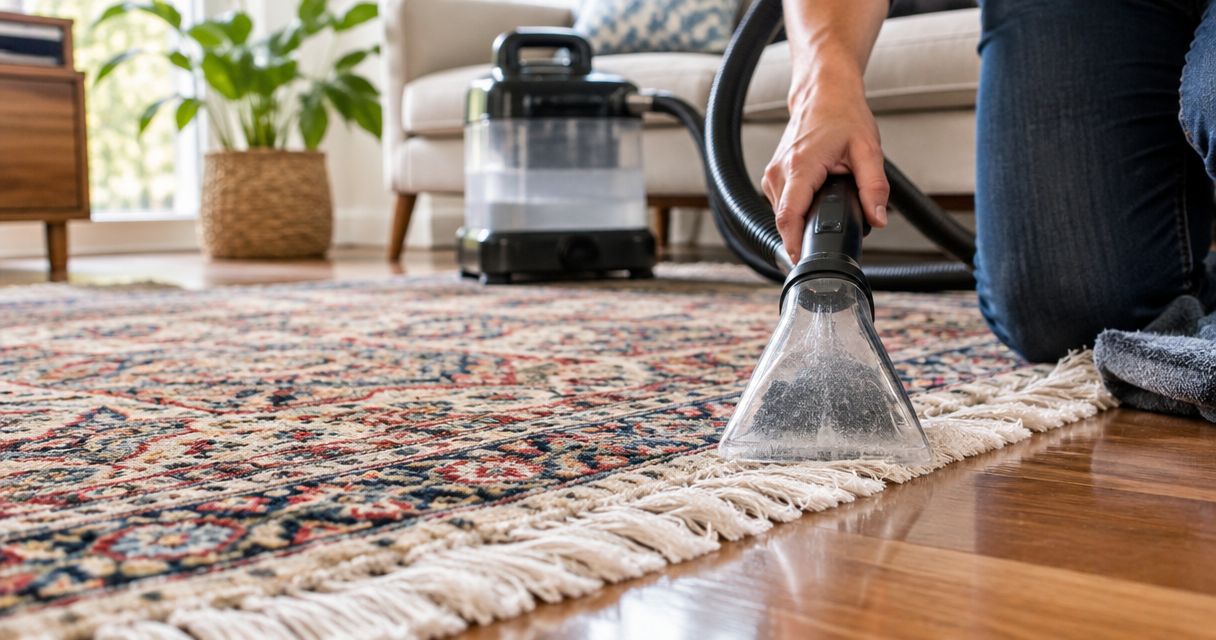
Steam cleaning works by loosening soil and extracting it—not by making visible steam. In carpet-cleaning conversations, the term commonly refers to hot-water extraction. The machine applies cleaning solution and water, then recovers the dirty liquid through a suction tool.
For a 2026 cleaning appointment, ask what equipment and process the cleaner actually uses. A service name alone does not tell you whether the carpet receives soil treatment, rinsing, and water recovery. Review the available cleaning services before asking which process suits your carpet.
| Method | Best for | What it does well | Main limitation |
|---|---|---|---|
| Hot-water extraction | Embedded soil in carpet approved for wet cleaning | Flushes loosened soil from the pile and recovers dirty water | Requires controlled moisture and complete drying |
| Routine vacuuming | Regular removal of loose, dry debris | Removes grit before it becomes worked into the pile | Does not rinse sticky residues or dissolved spills |
| Household steam mop | Only surfaces specifically approved by its manufacturer | Applies heat and moisture to an approved surface | Does not perform the dirty-water recovery of a carpet extractor |
These methods are not interchangeable. Vacuuming remains necessary between professional cleanings, and a hard-floor steam appliance should not be treated as a carpet-cleaning machine simply because it produces vapor.
Why this matters
A carpet can look cleaner without every problem being solved. Removing tracked-in soil is different from removing urine in the padding, and neither process repairs crushed or missing fibers.
That distinction prevents the wrong purchase. Before you book carpet cleaning in 2026, describe whether you need general soil removal, spot treatment, odor assessment, or help deciding whether the carpet is damaged beyond cleaning.
For Manalapan Township homeowners and local businesses, the practical question is not whether steam sounds powerful. It is whether the proposed cleaning process fits the material and addresses the actual source of the problem.
What hot-water extraction can—and cannot—remove
Embedded dirt and tracked-in soil
Hot-water extraction is suited to removing soil that ordinary vacuuming leaves behind. Cleaning agents loosen attached dirt, while rinsing and suction carry it out of the pile.
The result depends on preparation as well as equipment. Dry debris should be removed before wet cleaning so the cleaning process is not spent working through loose grit that a vacuum could have collected first.
Spills and visible spots
Many food, drink, and tracked-in spots respond to cleaning, but a spot is not always removable soil. Some substances permanently alter carpet dye, and previous cleaning attempts can change how a stain responds.
Tell the cleaner what spilled and what you applied afterward. A spot that remains after cleaning is not automatically evidence that the cleaning failed; it can be permanent discoloration.
Pet odors and contamination below the surface
Surface cleaning does not establish that urine in backing, padding, or the subfloor has been removed. Those layers require assessment when odor persists or returns.
Ask whether the proposed work addresses only the carpet pile or also the affected material underneath. Do not accept a general carpet-cleaning description as an explanation of below-surface odor treatment.
Wear, fading, and bleach marks
Cleaning removes material from carpet; it does not put missing dye or worn fibers back. A traffic lane can remain visibly different after soil removal because the fibers are abraded or flattened.
Inspect those areas before the appointment. Separating wear from dirt gives you a realistic standard for judging the finished work.
How effective carpet extraction should work
The following sequence explains what to discuss with a cleaner, not a promise that every carpet requires identical treatment. Manufacturer instructions and the carpet's condition determine the appropriate process.
- Inspect. Identify the carpet material where possible, look for damage, and discuss spots, odors, and earlier treatments. Flag loose seams and areas that have been wet before.
- Vacuum. Remove loose, dry soil before introducing cleaning solution. Ask who handles this preparation so it is not overlooked.
- Pretreat. Apply material-appropriate treatment to soil and spots. More product is not automatically better, and untested mixtures create unnecessary risk.
- Extract. Rinse and recover loosened soil with suitable equipment. Water application and suction must work together; repeatedly wetting the same area is not a substitute for recovery.
- Dry. Establish airflow and follow the cleaner's instructions for access and furniture. The job needs a drying plan, not just a clean-looking surface.
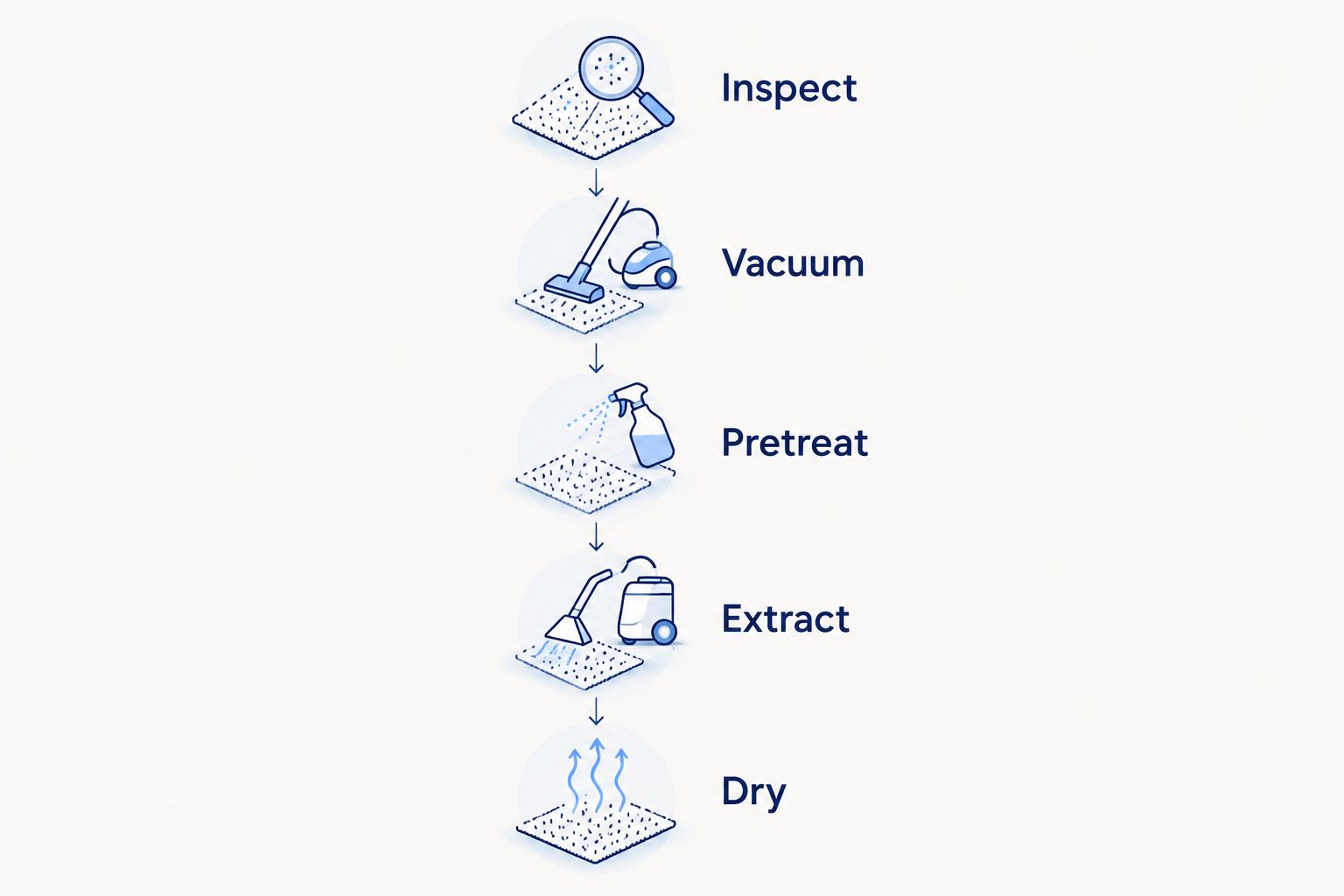
Before your 2026 appointment, ask the cleaner to explain that sequence in plain language. You should understand what happens to the dirt, how moisture is recovered, and what you need to do afterward.
Why steam-cleaning results vary
Two carpets can receive the same named service and finish differently. These factors explain why an inspection matters more than a blanket promise:
- Carpet construction and care instructions. Fiber, dyes, backing, and installation affect which treatments are appropriate. Follow the actual manufacturer's requirements rather than assuming every carpet tolerates the same process.
- Type of soil or damage. Loose grit, oily residue, dye transfer, and physical wear are different problems. A cleaning process cannot turn permanent damage into removable dirt.
- Previous treatments. Spot sprays, soap, and other residues affect the condition presented to the cleaner. Disclose them instead of layering another treatment over an unknown mixture.
- Moisture recovery. Extraction must remove the water used to carry loosened soil. Excess moisture left behind complicates drying and increases the risk of secondary problems.
- Drying conditions. Humidity, airflow, and how wet the carpet becomes influence drying. A fixed promise based only on room size leaves out important conditions.
Choose the process after identifying the carpet and the problem—not the other way around. That rule applies whether you hire a professional or consider cleaning the carpet yourself.
Can steam cleaning damage carpet?
Yes, unsuitable heat, chemistry, agitation, or excessive moisture can damage carpet. Problems include dye movement, shrinkage in susceptible materials, and damage associated with prolonged dampness.
This does not mean hot-water extraction is inherently harmful. It means the operator must match the process to the material and avoid treating a delicate rug like ordinary installed carpet.
Before cleaning, show the technician loose seams, ripples, damaged backing, and color changes. If you have a wool carpet, an unidentified fiber, or a valuable area rug, ask specifically how the cleaning approach will change. Do not assume a service suitable for one item is suitable for everything in the room.
Does steam cleaning disinfect carpet?
Ordinary carpet cleaning is not proof of disinfection. Removing dirt and some microorganisms is different from demonstrating that a process meets a disinfectant's requirements on that surface.
A hot machine or visible vapor does not establish the temperature and exposure achieved throughout the carpet. If disinfection is your concern, ask what product or validated process is proposed and whether its directions cover the intended use.
For a 2026 household cleaning appointment, judge routine carpet cleaning by soil removal, appropriate treatment, and drying. Do not substitute an unsupported germ-killing claim for an explanation of the actual work.
Is professional steam cleaning better than doing it yourself?
Professional cleaning is the stronger choice when you need material assessment, difficult spot evaluation, or help identifying why an odor keeps returning. A rental machine gives you control over the work, but you also take responsibility for treatment selection, moisture application, and recovery.
Neither choice makes permanent staining removable. The useful comparison is the process you will receive—not whether one machine looks larger or produces more steam.
| Option | Best for | Advantage | Limitation |
|---|---|---|---|
| Professional carpet cleaning | Households and businesses needing assessment alongside cleaning | Lets you discuss materials, problem areas, and treatment limitations with the cleaner | You still need to confirm scope, preparation, and drying instructions |
| DIY extraction | Owners prepared to follow carpet and equipment directions | Gives you direct control over preparation and operation | Incorrect solution use or repeated wet passes can leave residue or excess moisture |
PowerPro Carpet Cleaning is best suited to homeowners and businesses seeking a local carpet-cleaning service in Manalapan Township and surrounding Central and North New Jersey counties. The family-owned business also provides upholstery, area rug, tile/grout, and air duct cleaning.
The service-area fit does not replace a carpet assessment. Ask PowerPro Carpet Cleaning which treatment fits your material and whether the problem involves the pile, backing, padding, or permanent damage.
What should you ask before booking in 2026?
A useful phone call starts with the condition of the carpet, not a request for the strongest treatment. Give the cleaner enough information to explain the proposed work.
- What cleaning method do you recommend for this carpet, and why?
- Who vacuums and moves the agreed furniture before cleaning?
- Which spots need separate assessment or treatment?
- Does the odor appear limited to the carpet, or does it need further investigation?
- How will you recover moisture and help the carpet dry?
- What should I do if a spot returns after drying?
Photograph problem areas before the visit and keep any carpet care documents you have. For an office, explain access restrictions and when occupants need to use the space; for a home, identify rooms that cannot easily be kept clear.
Call PowerPro Carpet Cleaning to describe the problem before arranging service. Use the contact page to discuss your location, carpet condition, and the work you need.
Discuss Your Carpet Cleaning Needs
Ask about carpet cleaning for your Manalapan Township home or Central and North New Jersey business.
FAQ
Does steam cleaning work on carpets that still look dirty after vacuuming?
Yes, hot-water extraction removes embedded soil and residues that routine vacuuming does not rinse away. It does not restore missing dye or repair worn fibers, so some visible differences can remain.
Is carpet steam cleaning the same as using a steam mop?
No, carpet hot-water extraction includes dirty-water recovery, while a household steam mop does not perform that extraction process. Use appliances only on surfaces permitted by their manufacturers.
Will steam cleaning remove every pet urine smell?
No, carpet extraction alone does not guarantee removal of urine that has reached the backing, padding, or subfloor. Persistent odors require assessment of the affected layers.
Can steam cleaning leave a carpet too wet?
Yes, excessive water application or inadequate recovery can leave carpet too wet. Ask how the cleaner controls moisture and what airflow and access arrangements you need afterward.
Should I vacuum before professional carpet cleaning?
Dry soil should be removed before wet cleaning. Ask whether vacuuming is included or whether you need to complete it before the technician arrives.
Does hot-water extraction remove bleach stains?
No, hot-water extraction cannot replace dye removed by bleach. Cleaning addresses removable soil; color loss requires a separate assessment.
Does steam cleaning replace regular vacuuming?
No, steam cleaning does not replace regular vacuuming. Vacuuming removes loose grit between deeper cleanings and helps prevent that debris from being worked into the pile.
What should I confirm before carpet cleaning in 2026?
Before carpet cleaning in 2026, confirm the method, material suitability, treatment scope, and drying instructions. Explain previous spot treatments and distinguish odor problems from ordinary surface soil.
One last thing
A spot that reappears after drying is not necessarily new dirt. Residue or contamination deeper in the carpet can move toward the surface as moisture evaporates—a process called wicking.
If a spot returns, photograph it and contact the cleaner before adding another product. That gives the cleaner useful evidence and avoids introducing another unknown treatment into the carpet.