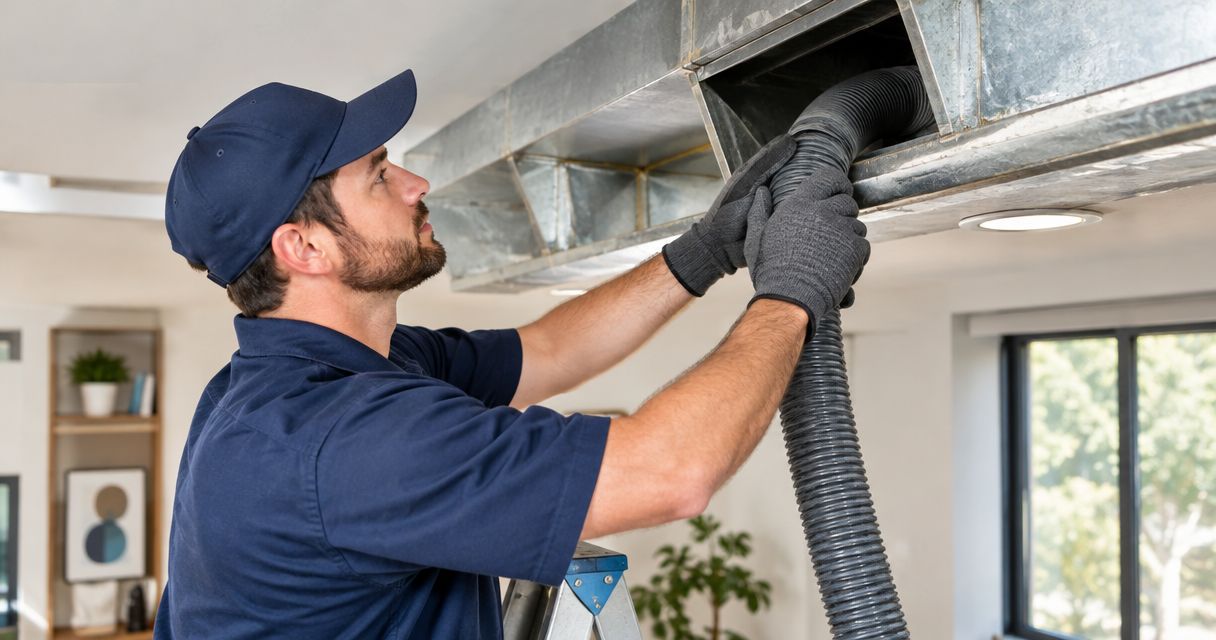
Duct sealing with air duct cleaning is worth adding when an inspection identifies leaking duct joints or connections—not simply because you booked a cleaning. Cleaning removes accumulated material; sealing addresses air escaping from or entering the duct system. For a 2026 appointment, approve each service on its own evidence and confirm who will perform any sealing work.
- Duct sealing with air duct cleaning makes sense when inspection confirms both contamination and duct leakage.
- EPA guidance does not recommend routine duct cleaning for every home.
- Cleaning does not repair leaking joints; sealing does not remove accumulated debris.
- Ask for inspection findings, a separate sealing scope, and a plan to verify completed repairs.
Why this matters
A dirty duct and a leaking duct need different work. Buying both services without identifying both problems leaves you paying for a package rather than a diagnosis.
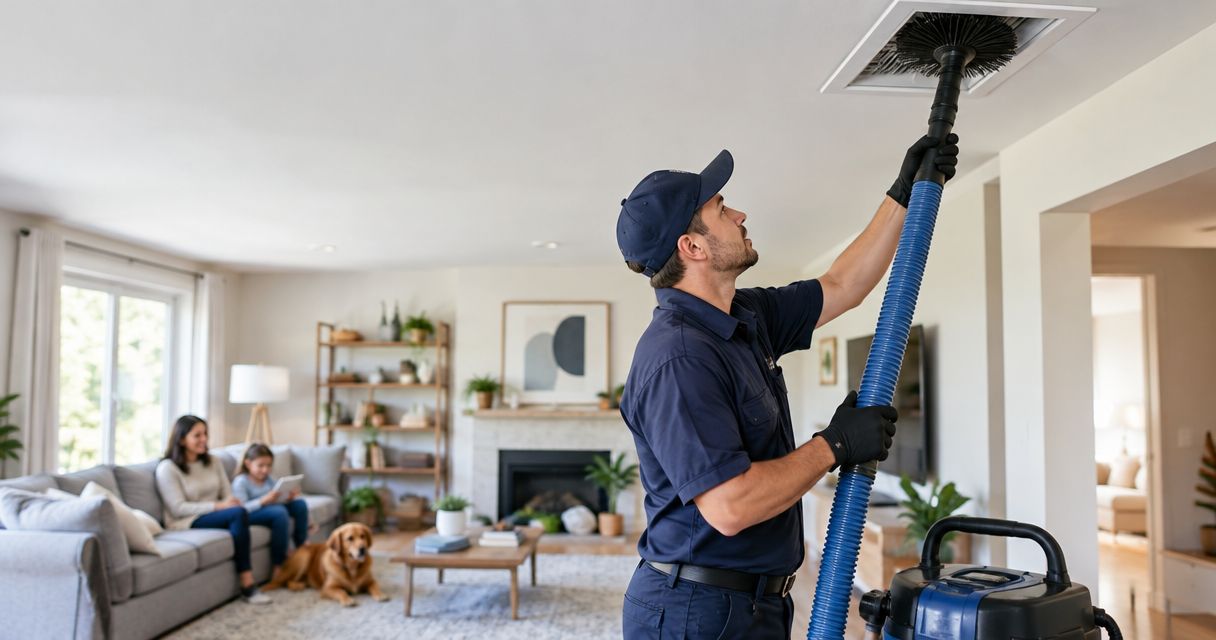
PowerPro Carpet Cleaning provides air duct cleaning for homeowners and businesses in Manalapan Township and surrounding Central and North New Jersey counties. Review the available cleaning services before scheduling, and ask specifically whether duct leakage evaluation or sealing is part of the proposed work. An air duct cleaning appointment does not, by itself, establish a sealing scope.
For your 2026 service decision, keep the goal clear: remove confirmed contamination where cleaning is justified, repair confirmed leaks where sealing is justified, and investigate comfort complaints rather than assigning them automatically to either problem.
Is duct sealing worth adding to an air duct cleaning service?
Add sealing when there is a documented leakage problem. Add cleaning when the condition of the system supports cleaning. Neither service automatically makes the other necessary.
The U.S. Environmental Protection Agency's residential duct-cleaning guidance does not recommend cleaning every system routinely. It identifies conditions such as substantial visible mold growth on suitable system surfaces, vermin infestation, or excessive dust and debris being released into the home as reasons to consider cleaning. Suspected mold also requires attention to the moisture source.
ENERGY STAR's residential duct-sealing guidance addresses a different issue: leaks at duct connections and other openings. Sealing those openings helps keep air moving through the intended path, but it does not remove debris inside the system.
| Service option | Best for | What it addresses | Main limitation | Decision |
|---|---|---|---|---|
| Cleaning alone | Systems with a justified cleaning need and no identified leakage problem | Accumulated material in the agreed cleaning scope | Does not close leaking joints or reconnect ducts | Choose when cleaning evidence supports it |
| Sealing alone | Systems with confirmed leaks but no justified cleaning need | Air leakage at identified openings | Does not remove accumulated contamination | Choose when leakage evidence supports it |
| Cleaning and sealing | Systems with both confirmed contamination and leakage | Separate cleanliness and leakage problems | Requires separate scopes and suitable sequencing | Combine only when both are justified |
A bundled appointment is a scheduling choice, not proof that your system needs both services. Ask the contractor to show you the finding behind each recommendation.
When cleaning alone is the right choice
Best for: a system that needs cleaning without an identified duct-repair problem. Cleaning is the relevant service when inspection finds a condition that warrants removing accumulated material from the system.
Ask which components the cleaning includes. Supply ducts, return ducts, registers, and HVAC equipment are different parts of the system; a proposal should make the boundaries clear rather than rely on the phrase whole-house cleaning.
The benefit is straightforward: the work targets material inside the agreed components. The limitation is equally important: a clean duct can still leak, and cleaning does not establish that the heating or cooling equipment is operating correctly.
Do not add sealing solely because the contractor has access to the ducts that day. Keep the cleaning appointment focused unless inspection establishes another repair need.
When sealing alone is the right choice
Best for: a system with confirmed leakage and no separate reason to clean. An open connection, failed joint, or other identified leak calls for repair or sealing, not an automatic cleaning package.
Duct location matters. Air leaking into an unconditioned attic or crawlspace has a different consequence from leakage within the conditioned part of a home, so ask where the defect sits and what air path it affects.
Sealing has limits. It does not correct every cause of weak airflow, and damaged or disconnected ductwork can require physical repair before sealing materials are appropriate.
Ask whether the proposal involves exterior joint sealing, mechanical repairs, or a different treatment. Do not treat spraying a coating inside ducts as interchangeable with repairing leaking connections.
When cleaning and sealing belong in the same plan
Best for: a system with separately documented cleaning and leakage needs. Combining the work is reasonable when each service solves a problem that inspection has actually identified.
The advantage is coordination. The cleaning provider and sealing contractor can agree on access, repair needs, and the order of work instead of leaving you to reconcile conflicting instructions afterward.
The drawback is scope confusion. A single package description can hide whether the contractor will clean the relevant components, repair damaged sections, seal specific joints, or verify the result.
Confirm who is responsible for each task. If different companies handle cleaning and HVAC repairs, get agreement on the sequence before either begins; there is no universal sequence that replaces the requirements of the specific repair and sealing method.
How should you decide before approving the work?
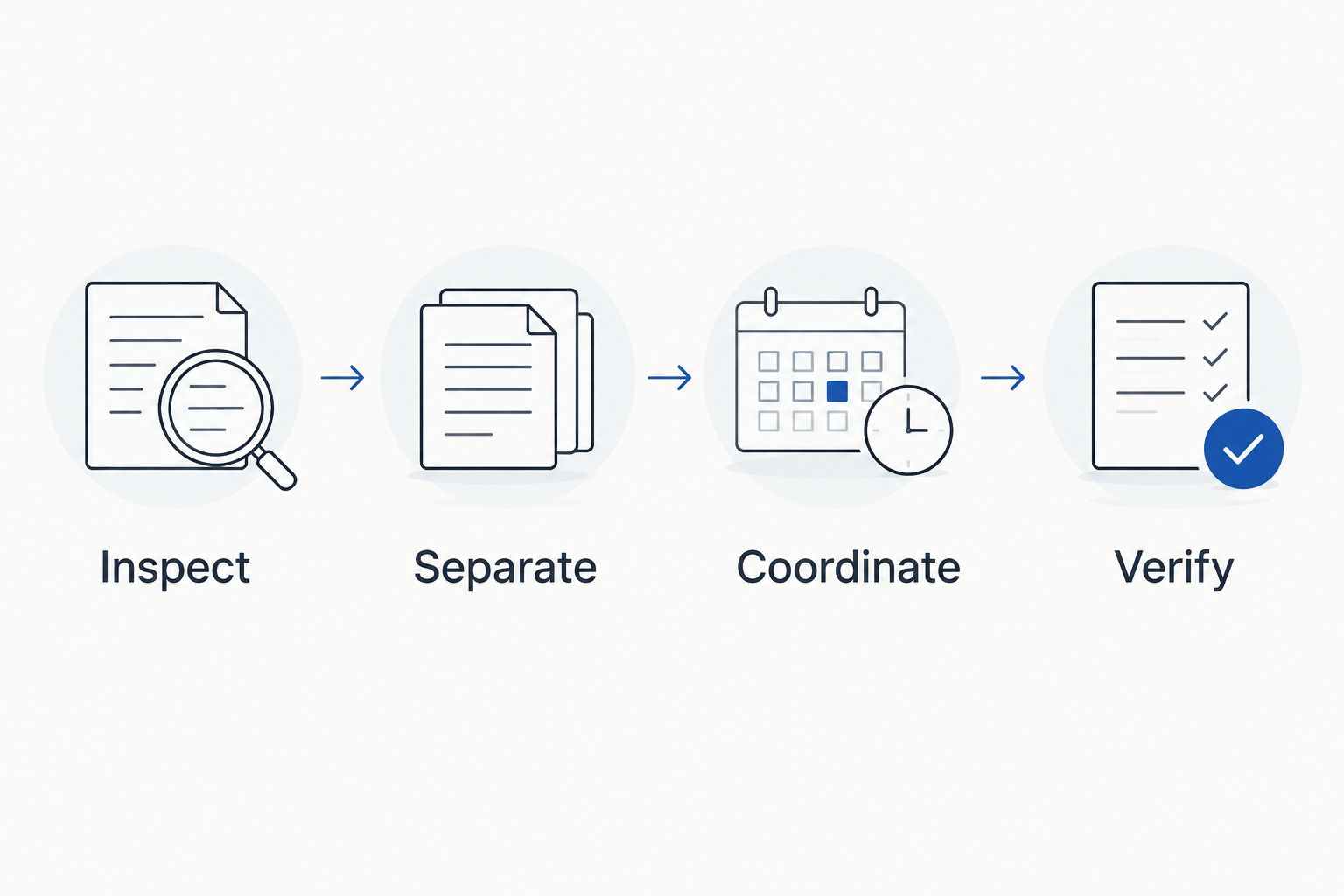
Use these 4 checks for your 2026 appointment. They turn a general recommendation into a job you can evaluate.
- Inspect. Ask what condition was found and where. Photographs should identify the actual affected component rather than show an unexplained close-up of dust or ductwork.
- Separate. Request distinct descriptions for cleaning, repair, and sealing. You should be able to approve one task without accidentally authorizing another.
- Coordinate. Confirm who handles each task and how access, repairs, and cleaning will fit together. Ask whether any openings created for service will be properly closed afterward.
- Verify. Agree on completion evidence before work starts. Accessible repairs can be photographed; leakage testing can evaluate leakage performance when included in the job.
A leakage test and a photograph answer different questions. A photograph can document an accessible repaired connection, while testing can assess leakage under the test conditions; neither should be presented as proof of unrelated health benefits.
Why the value of duct sealing varies
The value depends on the defect and the system—not the fact that a cleaning crew is already visiting. These factors explain why the same recommendation does not fit every property:
- Leak location. Identify whether air escapes into an attic, crawlspace, garage, or conditioned area. Location helps explain the consequence of the leak.
- Duct condition. A sound joint needing sealant is different from crushed, disconnected, or deteriorated ductwork that needs repair.
- Access. Visible connections and concealed runs require different inspection and work plans. Ask which areas the contractor can actually reach.
- Contamination. A leakage finding does not establish a cleaning need. Ask for separate evidence of material that warrants removal.
- Other airflow problems. Filters, equipment condition, duct sizing, and balancing can affect comfort. Sealing should address diagnosed leakage rather than stand in for a broader HVAC assessment.
- Verification. Define whether the completed work will be checked visually, through testing, or both. Match the completion check to the claim being made.
Avoid accepting a projected energy reduction based only on a dirty register or a photograph of an open joint. Those observations do not establish your home's measured energy savings.
What should the written scope include?
Before approving a combined job in 2026, ask for a written scope that identifies the affected areas, the proposed work, and the completion check. Keep cleaning and sealing separate even when they appear on the same document.
For cleaning, the scope should identify included components and how the provider will contain and remove loosened material. For sealing, it should identify the joints or duct sections involved, suitable materials, and any repairs needed before sealing.
ENERGY STAR guidance distinguishes suitable duct-sealing materials, including mastic and appropriate foil tape, from ordinary cloth-backed duct tape. Material selection still has to suit the duct construction and the work being performed.
Ask these 3 questions before signing:
- What finding supports this task?
- What exactly will the contractor do?
- What evidence will show the task is complete?
PowerPro Carpet Cleaning is a local air duct cleaning option for homeowners and businesses in Manalapan Township and surrounding Central and North New Jersey counties. Ask about the cleaning scope directly; confirm any sealing capability separately rather than assuming it is included. Use the contact page to discuss your property and request a call about the service you need.
Discuss Your Air Duct Cleaning Needs
Ask PowerPro Carpet Cleaning about the cleaning scope for your New Jersey home or business.
Will duct sealing stop dust from coming out of my vents?
Duct sealing addresses leakage, not every source of dust at a register. Return-side leaks can draw air from unintended spaces, but dusty rooms also require checks of filtration, housekeeping sources, and the condition of the HVAC system.
Ask for a diagnosis before accepting a dust-free promise. Neither sealing nor cleaning prevents all future dust accumulation.
Should the ducts be cleaned before they are sealed?
The order depends on the duct condition, necessary repairs, and sealing method. Have the responsible contractors agree on the sequence rather than assume every combined appointment follows the same process.
If cleaning access or repair work will disturb a connection, that detail belongs in the plan. The final condition matters more than a generic promise to complete everything in one visit.
Can sealing fix a room that stays too hot or too cold?
Sealing is appropriate when diagnosed leakage contributes to the comfort problem. It does not correct every airflow restriction, equipment fault, insulation issue, or duct-design problem.
Describe which room is uncomfortable and when the problem occurs. Ask an HVAC professional to identify the cause before authorizing sealing as the solution.
FAQ
Is duct sealing with air duct cleaning worth it?
Duct sealing with air duct cleaning is worth combining when inspection identifies both a justified cleaning need and duct leakage. Approve the services separately so each task addresses a documented problem.
Do I need my air ducts cleaned every year?
You should not assume your air ducts need annual cleaning. EPA residential guidance recommends considering system conditions rather than treating routine cleaning as necessary for every home.
Is duct sealing the same as applying a coating inside ducts?
Duct sealing and applying an interior coating are not interchangeable descriptions. Ask whether the work repairs leaking connections, treats interior surfaces, or includes both, and require a separate explanation for each task.
Can duct cleaning seal a leaking connection?
Duct cleaning does not seal a leaking connection. Repair or sealing requires separate work with materials and methods suited to the duct construction.
Will duct sealing guarantee lower energy bills?
Duct sealing does not guarantee a particular reduction in your energy bills. The result depends on the leakage problem, its location, system operation, and other building conditions.
Does PowerPro Carpet Cleaning offer air duct cleaning in New Jersey?
PowerPro Carpet Cleaning provides air duct cleaning for homeowners and businesses in Manalapan Township and surrounding Central and North New Jersey counties. Confirm your location and the proposed cleaning scope directly, and ask separately about any sealing work.
Should I approve cleaning if someone finds mold in a duct?
Do not approve cleaning based only on an unexplained mold claim. Ask what material is affected, whether identification is needed, and how the moisture source will be corrected; some contaminated duct materials require replacement rather than cleaning.
One last thing
Ask for the location of the leak, not just proof that a leak exists. That detail connects the proposed repair to your building and helps you question claims about comfort or energy use.
For a 2026 appointment, write two separate goals on the work order: remove the identified contamination and address the identified leakage. If the inspection supports only one goal, approve only that work.