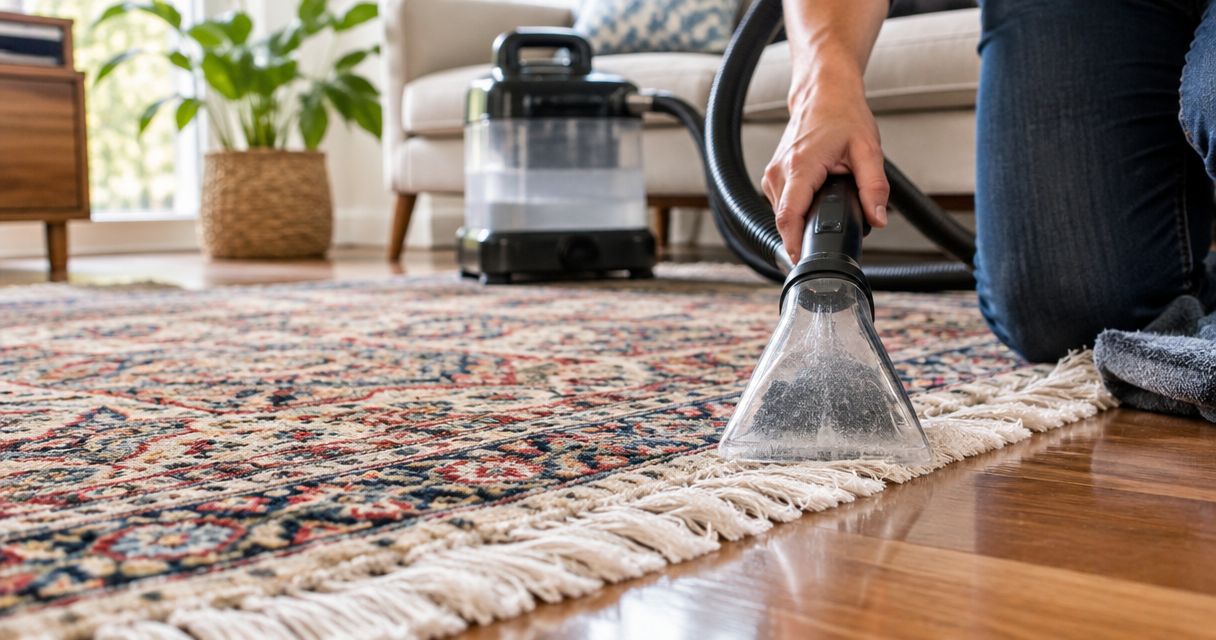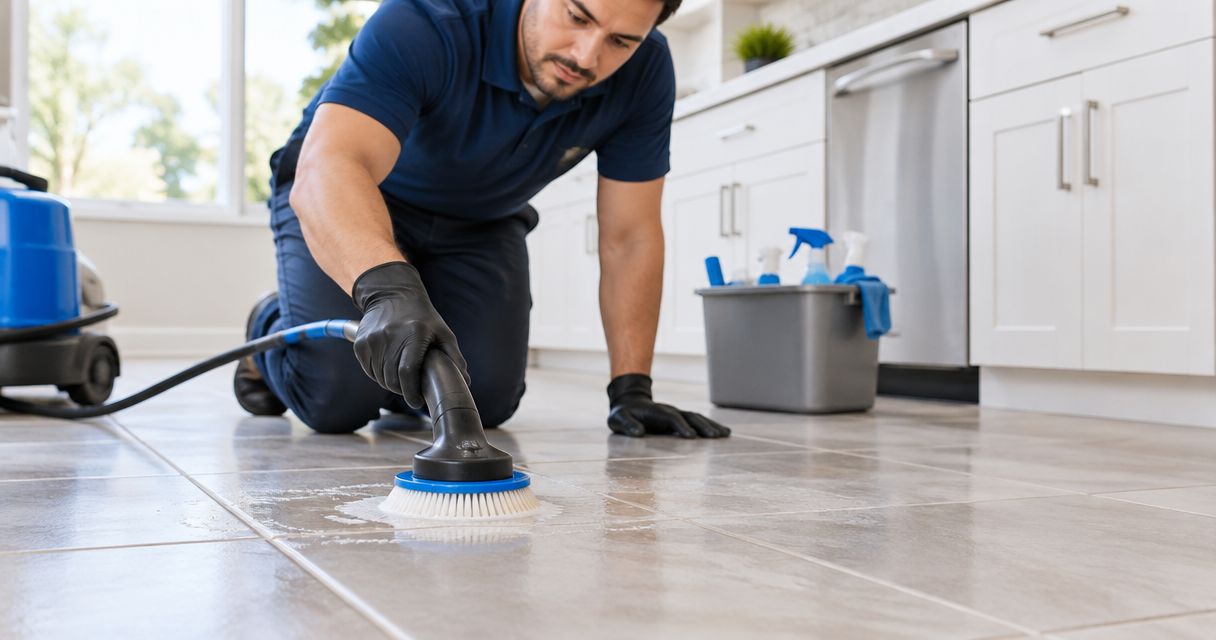
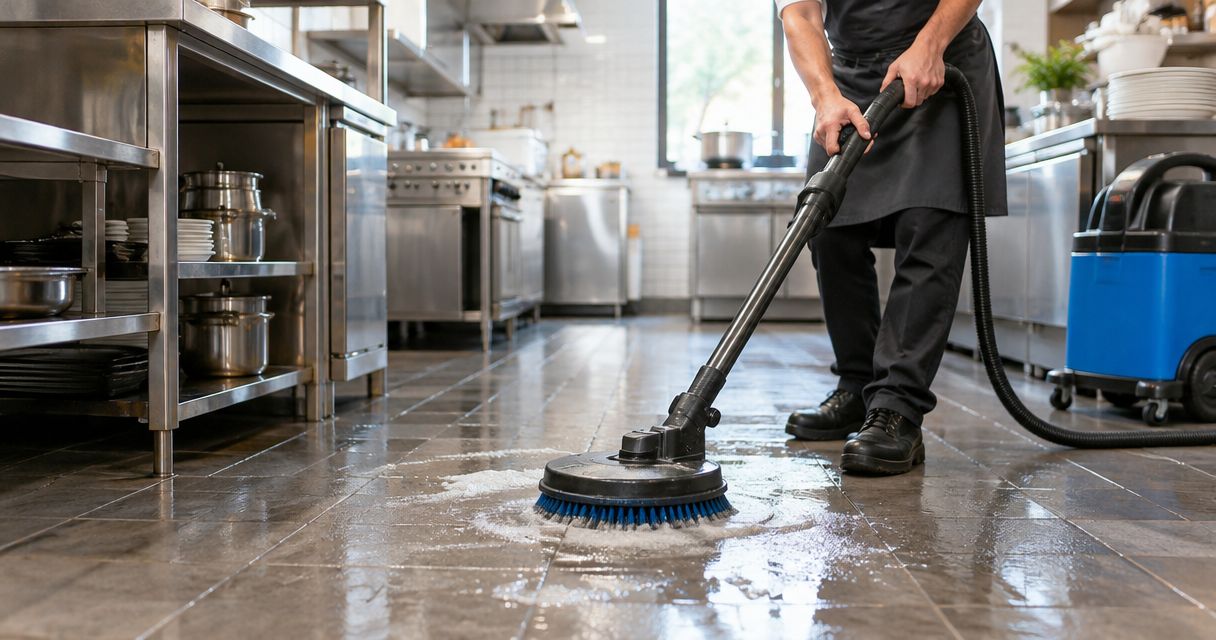
Restaurant tile and grout cleaning is the removal of grease, food soil, and residue from tiled surfaces and grout joints to support safe footing and routine sanitation. This guide to tile and grout cleaning for restaurants covers material checks, daily maintenance, professional service decisions, and reopening checks for your 2026 cleaning plan.
- Tile and grout cleaning for restaurants needs separate routines for kitchen grease, dining-room spills, and restroom soil.
- PowerPro Carpet Cleaning is best for Central and North New Jersey businesses seeking a local tile and grout cleaning service.
- Match cleaning products to the tile and grout; stronger chemicals are not a substitute for proper soil removal.
- Reopen cleaned areas only after checking dryness, residue, and access—not simply because the cleaning appointment has ended.
Why tile and grout cleaning matters for restaurants
A restaurant floor handles more than foot traffic. Cooking grease, food spills, drink residue, and tracked-in dirt create different cleaning jobs, sometimes within the same room. Treating every tiled area with the same mop solution leaves those differences unresolved.
Your operating schedule adds another constraint. Deliveries, food preparation, table service, and closing duties compete for floor access. Plan cleaning around controlled access, not around an assumed drying time. A clean floor that remains wet still needs protection from traffic.
PowerPro Carpet Cleaning is a family-owned service serving homeowners and businesses in Manalapan Township and surrounding Central and North New Jersey counties. Its services include tile and grout cleaning. For a restaurant, the first discussion should establish the floor material, affected areas, access restrictions, and required handover conditions.
Keep cleaning separate from sanitizing or disinfecting. Removing visible soil does not establish that a surface has received a required sanitation treatment. Follow your restaurant’s procedures and the applicable product label for each task.
Build your 2026 restaurant floor-cleaning plan
1. Map the floor by use and soil type
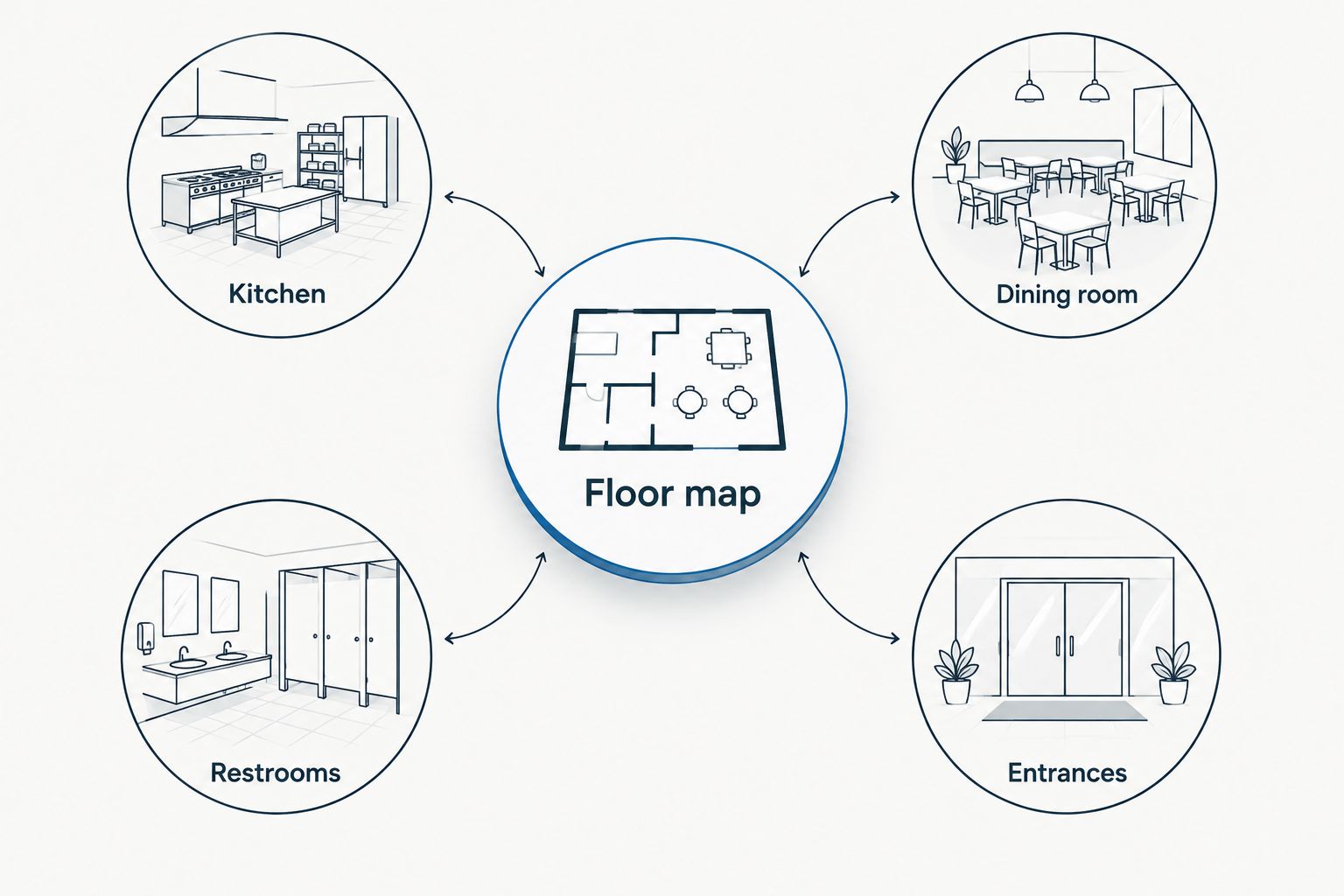
Start with a simple floor sketch and a walk-through before opening. Divide the restaurant into 4 working zones: kitchen, dining room, restrooms, and entrances. Add separate notes for bar areas, service stations, and storage rooms where needed.
Record what is actually present. A greasy cooking line needs a different assessment from sticky beverage spills or grit at the front door. Note where soil returns after cleaning; that pattern helps distinguish a maintenance problem from an isolated spill.
Your map also defines the work scope. Include edges, corners, grout joints, and areas beneath movable items instead of describing the job only as the main floor.
- Mark kitchen grease and food-soil areas.
- Identify dining-room spills and chair traffic.
- Separate restroom tools from kitchen tools.
- Mark entrances and tracked-in grit.
- Photograph damaged joints and recurring problem spots.
2. Identify the tile, grout, and existing finish
Check installation records, spare tile packaging, or information from the installer before selecting chemicals. Ceramic, porcelain, and natural stone are not interchangeable cleaning surfaces. Acidic cleaners can damage acid-sensitive stone, and abrasive tools can damage some finishes.
Identify the grout and any coating or sealer as well. Do not assume every joint needs sealing or that a dark joint is simply dirty. Missing grout, loose tile, and failed joints require repair assessment rather than more aggressive cleaning.
Test a compatible product in an inconspicuous area according to its instructions. A successful test checks the surface after cleaning and drying, not just while it is wet.
- Confirm the tile material before treatment.
- Check available grout and sealer records.
- Inspect for cracks, loose tiles, and missing grout.
- Read cleaner and tool compatibility instructions.
- Check the dried test area for visible changes.
3. Establish daily cleaning before booking deeper work
Begin with the work your team can perform using existing, suitable tools. Remove loose debris, deal with spills promptly, and clean with a material-compatible product at its labeled dilution. Replace dirty solution instead of moving it across the next section of floor.
Deep cleaning does not replace those tasks. Consider professional help when routine cleaning leaves persistent buildup, grout lines remain soiled, or staff cannot reach affected areas with their current equipment.
PowerPro Carpet Cleaning offers tile and grout cleaning services. Ask whether the proposed service suits your restaurant’s materials and soil conditions. Professional service is an alternative to assigning the entire deeper-cleaning job to staff; the method and expected result still need confirmation.
- Remove loose soil before wet cleaning.
- Use labeled dilution rather than adding extra concentrate.
- Keep restroom cleaning equipment separate.
- Clean tools and replace dirty solution.
- Record buildup that remains after routine cleaning.
4. Match the method to the actual problem
Choose the least aggressive compatible method that removes the soil. Kitchen grease calls for a suitable grease-removal process; a dining-room beverage spill presents a different problem. A machine does not automatically make either job appropriate for your floor.
Follow the cleaner’s instructions for dilution, application, contact time, and rinsing. Never mix cleaning chemicals. Keep labels and safety information accessible to the people performing the work.
If mechanical agitation or extraction is proposed, ask how it will work around grout damage, thresholds, equipment bases, and neighboring surfaces. Confirm the complete process, including removal of dirty liquid—not just the scrubbing stage.
- Match the product to both soil and surface.
- Follow labeled application and contact instructions.
- Select a compatible brush or pad.
- Remove loosened soil and dirty liquid.
- Complete any required rinsing before inspection.
5. Schedule access around food preparation and service
Build your 2026 work window backward from the next required use of the area. Include preparation, cleaning, inspection, and any drying or curing requirements. An appointment’s end time is not automatically the time a kitchen or dining room can reopen.
Tell the cleaning provider about deliveries, staff arrivals, food preparation, and customer routes. Ask what needs moving and who is responsible. Do not move connected cooking equipment or other fixtures without the appropriate authorization and qualified help.
Name 1 manager to approve the handover. That person should know which areas are complete, which remain restricted, and what follow-up is required.
- Identify the next required use of each area.
- Confirm access and equipment-moving responsibilities.
- Protect exposed food and food-contact items.
- Provide an alternate route around restricted floors.
- Assign a manager to accept the completed work.
6. Inspect the floor before reopening
Use 3 reopening checks: dryness, residue, and condition. Inspect the floor under normal lighting, including grout lines, perimeter edges, and transitions between materials. Do not judge the result only from a photograph of wet tile.
Look for standing water, visible film, remaining soil, and damage that needs attention. A darker grout line alone does not establish the cause; staining, remaining soil, and material differences need separate assessment.
Follow the cleaning product’s instructions and any sealer’s curing restrictions. If the floor remains wet, tacky, or visibly contaminated, keep it restricted and resolve the issue before returning it to service.
- Check for moisture at joints and edges.
- Inspect for visible film or remaining soil.
- Review previously documented damaged areas.
- Confirm applicable drying or curing restrictions.
- Record unresolved items before accepting the work.
7. Adjust maintenance using observed conditions
Use your 2026 cleaning log to decide when deeper work is needed. Record the area, observed soil, method used, and condition after drying. A calendar reminder helps organize work, but it does not prove that every floor needs the same service interval.
Review recurring trouble spots with the closing team. If a clean area quickly becomes greasy or sticky again, check spill sources, tool condition, dilution, and removal of dirty solution before simply increasing chemical strength.
Sealing also needs a material-specific decision. Ask whether the grout requires it and what preparation and curing instructions apply. Sealer is not a substitute for routine cleaning or a repair for failed joints.
- Log recurring soil by location.
- Review cleaning results after the floor dries.
- Check tools when residue repeatedly returns.
- Adjust deeper-cleaning intervals to observed conditions.
- Confirm sealing requirements before authorizing treatment.
Compare restaurant tile-cleaning options
The best option depends on the soil, material, and staff capacity—not simply the size of the machine. Use this comparison to decide what belongs in routine maintenance and what needs outside assessment.
| Option | Best for | Main advantage | Key limitation |
|---|---|---|---|
| Staff-operated manual cleaning | Routine spills and accessible surface soil | Fits daily opening and closing duties | Labor-intensive for extensive buildup and recessed joints |
| Staff-operated floor machine | Compatible open floor areas with trained operators | Mechanizes agitation across accessible surfaces | Requires suitable brushes or pads, training, and attention to edges |
| Professional tile and grout cleaning | Persistent buildup or work beyond staff capacity | Assigns deeper cleaning to a service provider | Scope, method, access, and reopening conditions need confirmation |
Manual cleaning remains necessary even when you hire a professional. Machine cleaning still requires surface checks and a plan for dirty-liquid removal. Neither option repairs loose tiles or missing grout.
PowerPro Carpet Cleaning is best for Central and North New Jersey businesses seeking a local tile and grout cleaning service. Confirm your restaurant’s specific requirements before booking; do not assume that a general service listing establishes a particular machine, chemical, overnight schedule, or repair capability.
Ask these questions before booking
Give the provider enough detail to assess the work: your restaurant’s location, floor materials if known, affected rooms, recurring soil, and operating restrictions. Photos help explain the scope, but an on-site assessment is appropriate when material or condition remains uncertain.
Ask for a written scope that separates cleaning from optional sealing and any repair referral. For your 2026 records, keep the agreed areas, exclusions, access arrangements, and maintenance instructions together.
- Which areas and edges are included?
- How will tile and grout compatibility be checked?
- How will loosened soil and dirty liquid be removed?
- What must staff move or protect beforehand?
- What conditions must be met before reopening?
Call PowerPro Carpet Cleaning to discuss your restaurant’s floor conditions before scheduling. Explain whether the problem is kitchen grease, dining-room residue, restroom soil, or damaged grout so the conversation starts with the actual job.
Discuss Your Restaurant Floor Cleaning
Describe your tile, grout, affected areas, and operating schedule before arranging service.
Common mistakes restaurant operators make
Treating dark grout as proof of poor cleaning
Dark grout can reflect remaining soil, staining, or its original color. Compare a cleaned, dried test area before demanding a stronger treatment. Cleaning cannot promise a color change that the material does not support.
Using more concentrate to fight kitchen grease
Extra concentrate is not a substitute for the correct product and process. Follow labeled dilution and rinsing instructions; investigate agitation, contact time, and dirty-solution removal when results disappoint.
Sending restroom tools through the dining room and kitchen
Shared tools move soil between areas. Separate and identify cleaning equipment by zone, and include tool cleaning in closing duties rather than storing dirty equipment for the next shift.
Booking cleaning without a reopening plan
A scheduled finish does not establish that the floor is ready for traffic. Assign the handover manager, preserve an alternate route, and confirm any drying or curing restrictions before work starts.
FAQ
What is the best way to clean restaurant tile and grout?
Use a material-compatible process that removes the specific soil and the resulting dirty liquid. Start with loose-soil removal, follow the cleaner’s instructions, and inspect the dried floor before reopening.
How often should restaurant tile and grout be professionally cleaned?
Set the interval from observed buildup and routine-cleaning results rather than a universal schedule. Track kitchen grease, grout-line soil, and recurring residue separately so service addresses the areas that need it.
Is a floor machine better than a mop for restaurant tile?
A suitable floor machine helps with agitation on compatible, accessible surfaces, but it does not replace spill response or edge cleaning. Choose the brush or pad for the floor and plan how dirty liquid will be removed.
Can restaurant grout cleaning remove every dark stain?
No, cleaning does not guarantee removal of every grout stain or restoration of a particular color. Assess a cleaned, dried test area and distinguish remaining soil from permanent discoloration or damaged grout.
Does professional tile cleaning sanitize the restaurant floor?
Professional cleaning alone does not establish that a sanitation treatment has been completed. Confirm whether a separate treatment is required and follow the applicable product label and restaurant procedures.
Do restaurant grout lines need sealing after every cleaning?
No, sealing depends on the grout material, existing treatment, condition, and manufacturer’s instructions. Confirm whether sealing is appropriate and what curing restrictions apply before adding it to the work scope.
Who should I contact for tile and grout cleaning near Manalapan Township?
PowerPro Carpet Cleaning serves homeowners and businesses in Manalapan Township and surrounding Central and North New Jersey counties. Ask about your restaurant’s materials, soil conditions, access requirements, and service scope before booking.
One last thing
Ask to inspect the floor after it dries. Wet surfaces can conceal residue and make grout color harder to judge. A dried test area gives you a more useful basis for agreeing on expectations than a promise that every joint will look new.