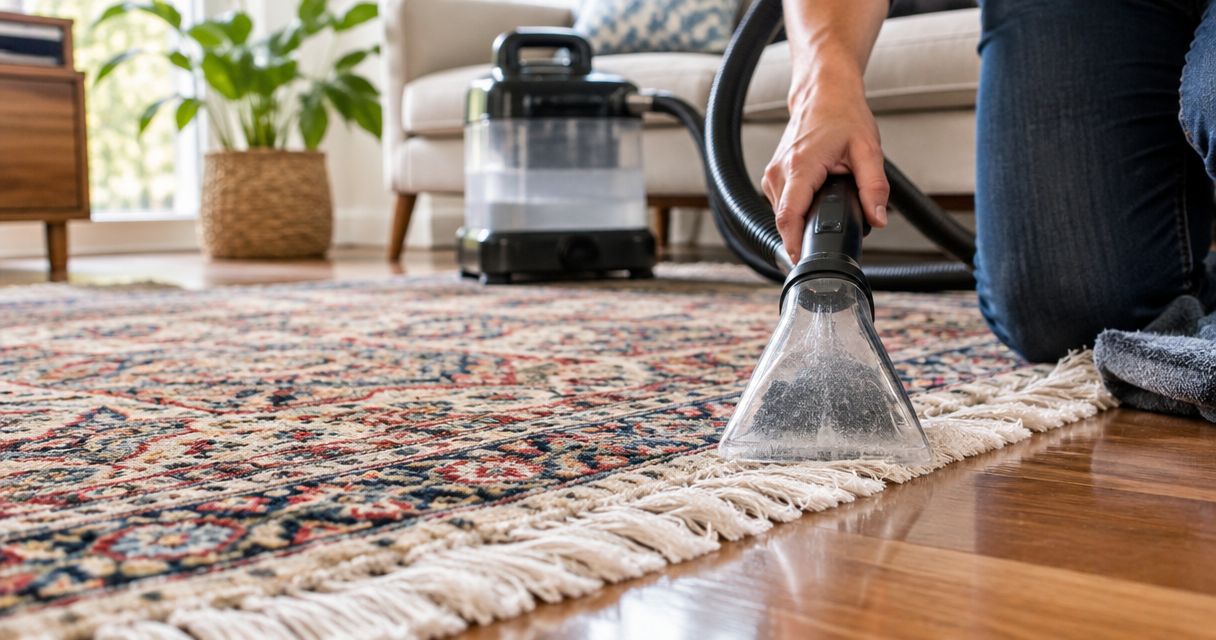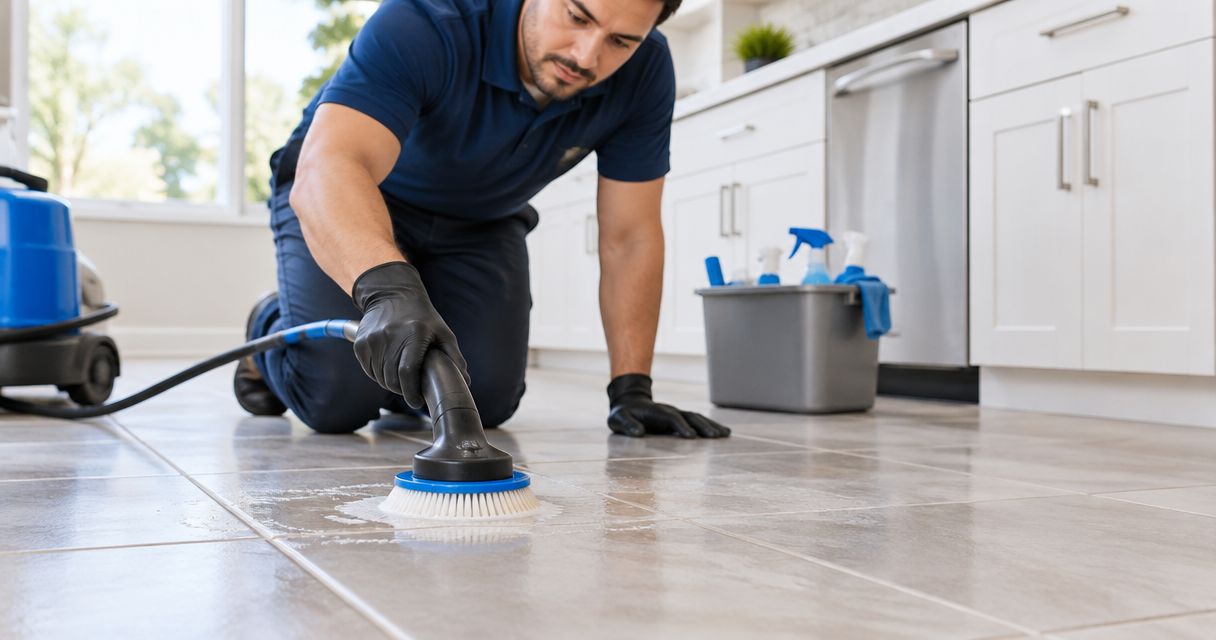
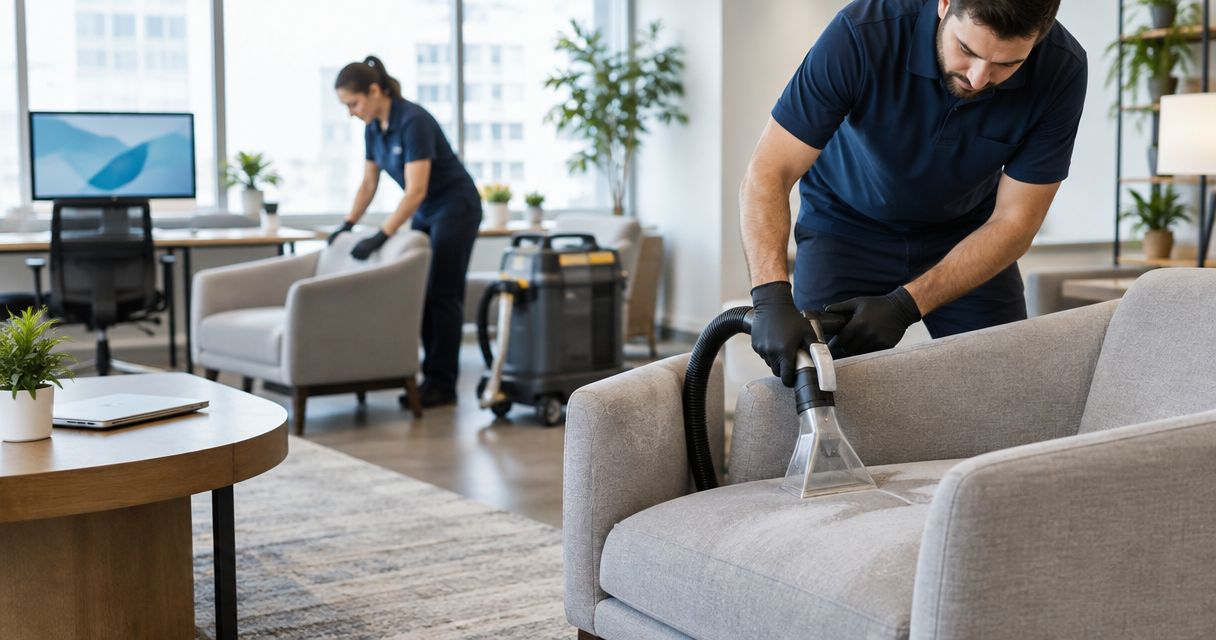
Best overall local starting point: PowerPro Carpet Cleaning. Best for unusual fabrics: a manufacturer-recommended upholstery specialist. Best for leather seating: a leather-cleaning specialist. For the best upholstery cleaning for office furniture in 2026, choose the service that matches your furniture’s care instructions—not simply the service that cleans your office carpet.
- PowerPro Carpet Cleaning is the local starting point for office upholstery cleaning in Manalapan Township and surrounding New Jersey counties.
- The best upholstery cleaning for office furniture starts with material identification, inspection, and a clear cleaning scope.
- Choose a manufacturer-recommended specialist for unusual fabrics and a leather specialist for leather seating.
- Routine office maintenance supports professional cleaning but does not replace stain assessment or material-specific care.
Why this matters
An office chair can have fabric upholstery, plastic arms, a mesh back, and a padded seat. Those surfaces do not automatically belong in the same cleaning process. Reception sofas introduce another set of materials and care requirements.
Your first decision is therefore not which machine to request. It is which service can assess the furniture, explain its limits, and leave you with a workable plan for returning chairs to use. A carpet-cleaning appointment alone does not define an upholstery-cleaning scope.
This 2026 guide ranks service routes by the problem they solve. The order helps you choose whom to call; it is not a claim that every office needs the same treatment.
What makes the best office upholstery cleaning service?
Use these criteria before comparing proposals:
- Material compatibility: The cleaner should check care instructions and identify which surfaces need separate treatment.
- Inspection before treatment: Stains, loose seams, worn fabric, and previous cleaning attempts belong in the assessment.
- Defined coverage: Ask whether the work includes seats, backs, upholstered arms, cushions, and nonfabric components.
- Return-to-use planning: Get instructions for keeping cleaned seating out of service until it is ready.
- Local service fit: Confirm your office address, building access requirements, and the proposed work schedule.
- Clear limits: A useful proposal distinguishes removable soil from wear, fading, damage, and uncertain stain outcomes.
Choose the provider who explains what should not be cleaned with the proposed method. That answer matters as much as the list of included treatments.
Office upholstery cleaning options at a glance
| Rank and service route | Best for | Standout feature | Key limitation |
|---|---|---|---|
| 1. PowerPro Carpet Cleaning | A local first call for New Jersey office upholstery | Family-owned business serving homeowners and businesses around Manalapan Township and surrounding counties | Confirm furniture materials, office address, and job scope before booking |
| 2. Manufacturer-recommended upholstery specialist | Unusual fabrics or furniture with restrictive care instructions | Selection starts with the furniture maker’s guidance | A recommendation for one furniture line does not cover every office item |
| 3. Leather-cleaning specialist | Leather reception sofas and upholstered conference seating | Material-specific assessment rather than general fabric treatment | Leather expertise does not establish suitability for fabric chairs |
| 4. Routine office maintenance crew | Loose-soil removal between professional appointments | Fits regular housekeeping tasks | Does not replace professional assessment of embedded soil or persistent stains |
1. PowerPro Carpet Cleaning: best for a local office assessment
PowerPro Carpet Cleaning is a family-owned business providing carpet, upholstery, area rug, tile/grout, and air duct cleaning. The company serves homeowners and businesses in Manalapan Township and surrounding Central and North New Jersey counties.
PowerPro Carpet Cleaning is a local starting point for office upholstery cleaning in Manalapan Township and surrounding New Jersey counties. Call with your office address, furniture types, and the problems you want assessed. Ask for upholstery to be listed separately if you are also arranging floor cleaning.
PowerPro Carpet Cleaning pros
- Serves businesses as well as homeowners.
- Offers upholstery cleaning alongside several other cleaning services.
- Provides a local option for offices in the stated New Jersey service area.
PowerPro Carpet Cleaning limitations
- Service-area coverage does not establish whether a particular furniture material is suitable for treatment.
- An upholstery service description does not define which chair components or stain treatments your appointment includes.
For a 2026 office refresh, start with a furniture inventory rather than a request to “clean everything.” Separate fabric task chairs, upholstered guest chairs, reception sofas, and leather pieces so each receives an appropriate assessment.
Best for: Office managers seeking a local upholstery-cleaning provider around Manalapan Township and surrounding counties.
Verdict: Buy this service route after confirming material suitability, coverage, and return-to-use instructions.
2. Manufacturer-recommended specialists: best for unusual fabrics
A manufacturer-recommended upholstery specialist is the better starting point when furniture has restrictive cleaning instructions or an unfamiliar covering. Ask the furniture manufacturer or supplier which cleaning approach is appropriate, then use that guidance to select a provider.
This route puts the furniture’s requirements ahead of a standard service package. It is particularly useful when you cannot confidently identify the covering or when different pieces carry different instructions.
Manufacturer-recommended specialist pros
- Starts with guidance tied to the furniture rather than its appearance.
- Helps separate pieces requiring different treatment.
- Gives the cleaner specific instructions to review before accepting the job.
Manufacturer-recommended specialist limitations
- The manufacturer’s advice still needs to match the exact furniture model and covering.
- A specialist suitable for one piece is not automatically the right choice for an entire office.
Before your 2026 appointment, photograph the care label and any model information. Send those details with an overall furniture photograph and close-ups of the affected areas. Do not describe a fabric as washable solely because it looks like another chair you have cleaned before.
Best for: Offices with unusual upholstery, restrictive care instructions, or uncertain material identification.
Verdict: Buy specialist assessment when the furniture’s instructions require it; hold treatment until the material is identified.
3. Leather-cleaning specialists: best for leather office seating
Leather reception sofas and conference chairs need a separate conversation from fabric upholstery. Identify whether the furniture is leather, coated leather, or a leather-look material before choosing a service.
A suitable leather-cleaning specialist should explain how the covering and finish affect treatment. Ask the provider to distinguish cleaning from repair or refinishing; those are different jobs.
Leather-cleaning specialist pros
- Focuses the assessment on the covering and its finish.
- Keeps leather seating out of an assumed fabric-cleaning process.
- Helps distinguish surface soil from finish damage requiring different work.
Leather-cleaning specialist limitations
- Cleaning is not a substitute for repairing cracks, peeling, or damaged finishes.
- Leather-cleaning expertise does not establish competence with every fabric elsewhere in the office.
Check the manufacturer’s instructions before approving products or equipment. A useful background read is whether you can clean a leather couch with a steam cleaner, especially when a proposal uses the word steam without explaining material compatibility.
Best for: Offices whose main concern is leather reception or meeting-room seating.
Verdict: Buy material-specific assessment; skip any proposal that treats leather and fabric as interchangeable.
4. Routine maintenance crews: best for between-visit upkeep
Your regular office cleaning crew belongs in the plan, but not as a substitute for every upholstery service. Where manufacturer instructions permit, routine vacuuming removes loose material from upholstery and accessible crevices.
Give the crew clear boundaries for spills and spots. Reporting a mark promptly is useful; applying an unapproved cleaner is not an acceptable replacement for checking the care instructions.
Routine maintenance crew pros
- Incorporates permitted upkeep into existing office housekeeping.
- Helps staff notice new spills, damaged seams, and recurring problem areas.
- Creates a consistent process for reporting furniture that needs attention.
Routine maintenance crew limitations
- Routine housekeeping does not establish specialist upholstery-cleaning competence.
- Vacuuming does not resolve every stain, odor, or embedded-soil problem.
For your 2026 maintenance plan, assign responsibility for reporting spills and keeping care information accessible. Leave treatment decisions to someone who can check the furniture requirements, rather than asking each employee to choose a cleaning product.
Best for: Offices maintaining seating between professional assessments and cleaning appointments.
Verdict: Buy routine upkeep as support; skip it as a replacement for material-specific professional cleaning.
How these service routes are ranked
The ranking follows material compatibility, inspection, scope, return-to-use planning, local fit, and clear treatment limits. A local upholstery provider is the practical default for an initial inquiry; restrictive fabrics and leather move the decision toward specialists.
Routine housekeeping ranks separately because it serves a different purpose. It supports furniture care without answering every question about stain removal or deeper cleaning.
What to ask before booking office furniture cleaning
Use the same questions for every provider so you can compare the proposed work. “Office chair cleaning” is too broad to function as a complete specification.
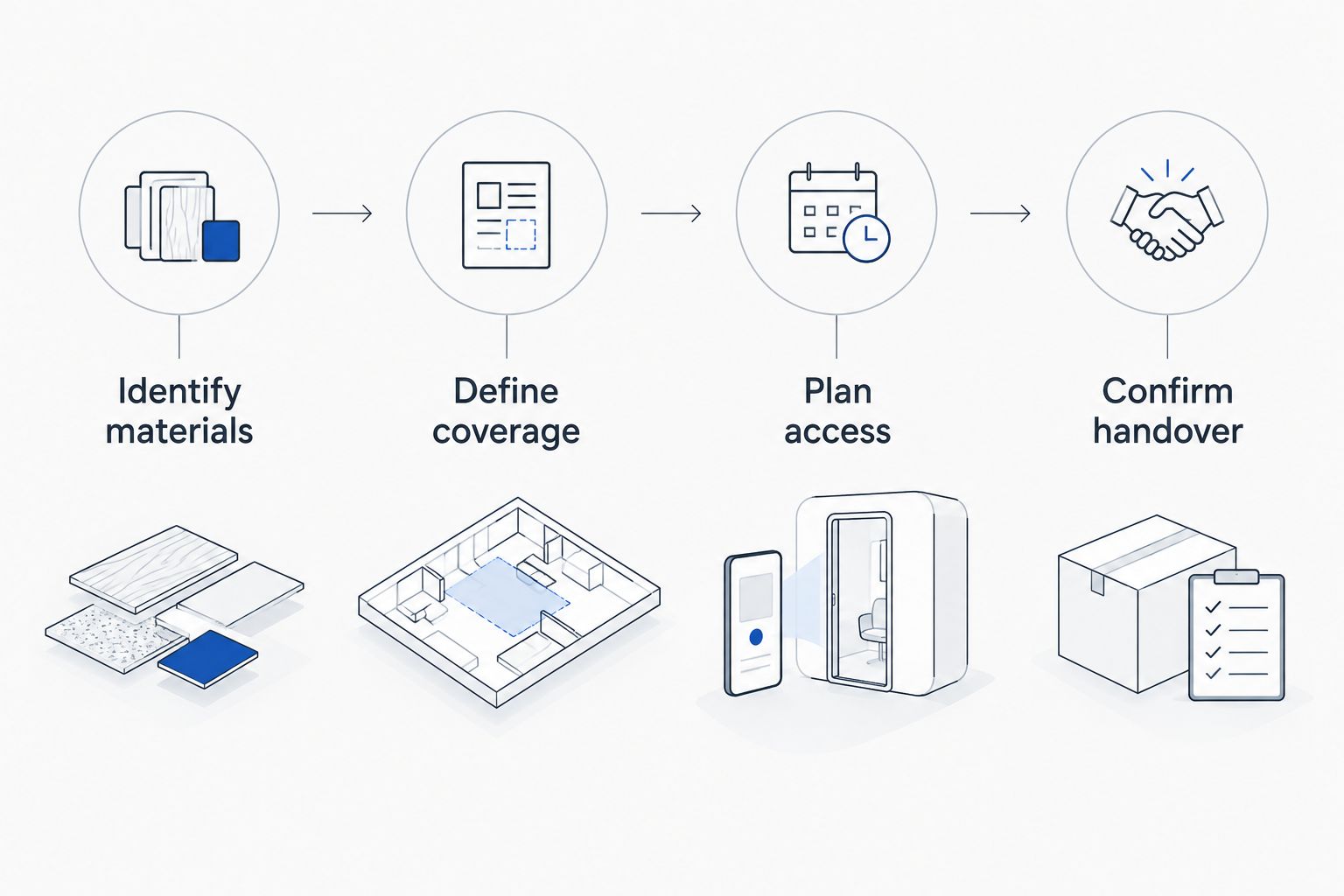
Identify materials
List each furniture type and locate its care information. Take 1 overall photo per furniture type, plus close-ups of labels and problem areas. This is a preparation checklist, not a substitute for the cleaner’s inspection.
Define coverage
Ask which surfaces the proposal includes. A chair seat, upholstered back, plastic base, and mesh panel need separate consideration; do not assume the word chair covers all of them.
Plan access
Explain building entry requirements, elevators, occupied work areas, and where furniture can remain undisturbed. Tell the provider when employees need the seating again, then ask whether the proposed work fits that requirement.
Confirm handover
Request instructions for when seating can return to use and what staff should avoid afterward. Also ask how the provider will report stains or damage that remain after cleaning.
Keep the office usable during cleaning
Build your 2026 cleaning plan around furniture use, not just room names. A conference room that appears empty still needs attention if its chairs are required for the next meeting.
Use 3 planning zones: occupied work areas, furniture being cleaned, and seating cleared for reuse. These are suggested organizing labels, not a required cleaning method. Keep employees from moving chairs between zones without checking their status.
Prepare 2 lists before the appointment: furniture approved for cleaning and pieces needing further assessment. Include loose seams, worn coverings, unknown materials, and previous stain-treatment attempts on the assessment list.
Do not promise staff a fixed drying deadline based on another office’s experience. Furniture construction, the treatment used, and room conditions affect the handover decision. For scheduling questions, read the guide to how long upholstery cleaning takes to dry.
Which office upholstery cleaning service should you choose?
Start with PowerPro Carpet Cleaning for a local office upholstery inquiry in its stated New Jersey service area. Call with your address, furniture inventory, and access requirements. Ask for a clear assessment before approving treatment.
Choose a manufacturer-recommended specialist when care instructions restrict treatment. Choose a leather specialist when leather seating is the main job. Keep your maintenance crew involved for permitted routine upkeep—not unapproved stain experiments.
Discuss your office upholstery cleaning
Share your office location, furniture types, and cleaning concerns before arranging service.
FAQ
What's the best upholstery cleaning for office furniture in New Jersey?
The best upholstery cleaning for office furniture matches the furniture’s care instructions and your office requirements. PowerPro Carpet Cleaning is a local starting point for businesses in Manalapan Township and surrounding Central and North New Jersey counties.
Can the same company clean office carpets and upholstered chairs?
Yes, a company can offer both services, but the work needs separate scopes. Confirm upholstery materials, included chair surfaces, and return-to-use instructions rather than assuming a carpet appointment covers furniture.
Should leather office chairs be cleaned like fabric chairs?
No, leather office chairs should not automatically receive a fabric-upholstery treatment. Identify the covering and follow the manufacturer’s care guidance before approving a cleaning process.
Can our regular office cleaners maintain upholstered furniture?
Yes, regular cleaners can perform maintenance permitted by the furniture’s care instructions. Set clear rules for vacuuming, spill reporting, and referring stains for assessment instead of applying unapproved products.
Will professional upholstery cleaning remove every office chair stain?
No, professional upholstery cleaning does not guarantee removal of every stain. Ask the provider to assess the mark and distinguish removable soil from discoloration, wear, or material damage.
How long should office chairs stay out of use after cleaning?
Keep office chairs out of use until they meet the provider’s return-to-use instructions. Ask for a job-specific plan rather than relying on a universal drying deadline.
What should I send when requesting office upholstery cleaning?
Send your office location, furniture types, care-label photographs, and pictures of problem areas. Include building access requirements and when employees need the seating again.
One last thing
Ask employees which chair surfaces actually need attention before you request a proposal. Seats, backrests, and upholstered arms belong on the inventory separately. That small check turns a vague request into work you can inspect at handover—and helps prevent an untouched surface from becoming a dispute later.