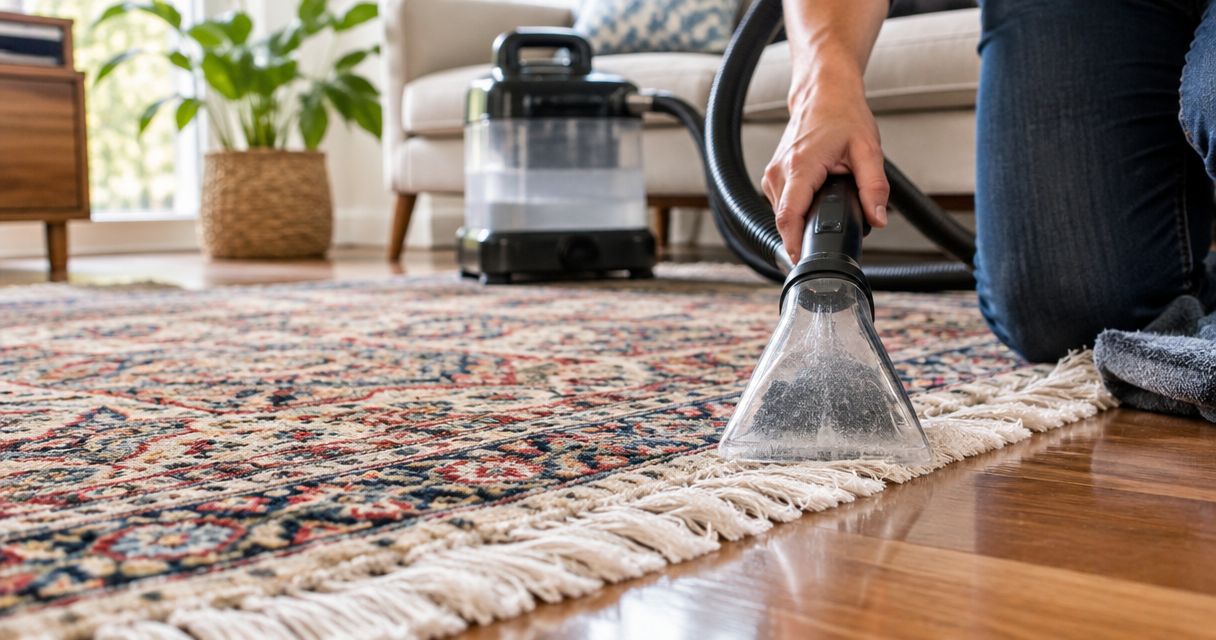
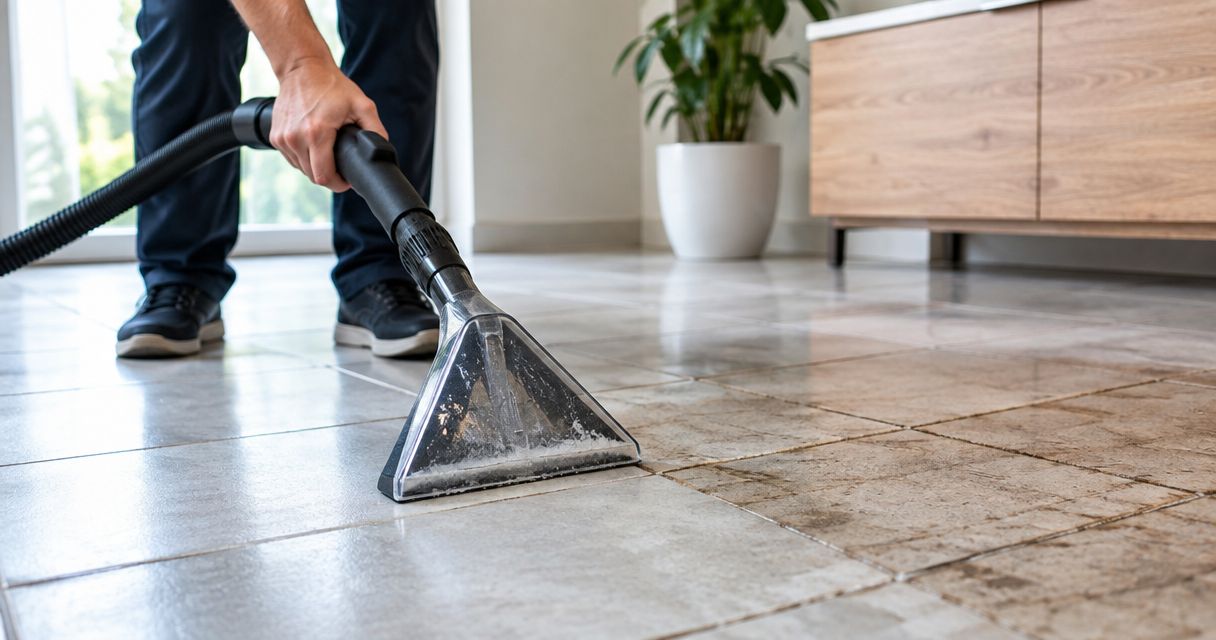
Yes, tile and grout cleaning can remove years of built-up dirt, grease, and cleaning residue when that buildup is removable soil rather than permanent discoloration. It cannot repair cracked grout, replace missing joints, or guarantee that absorbed stains disappear. The right next step is a material-safe test cleaning, followed by a comparison after the grout dries.
- Can grout cleaning remove years of buildup? Yes, when dirt, grease, or residue causes the discoloration.
- PowerPro Carpet Cleaning serves homeowners and businesses in Manalapan Township and surrounding Central and North New Jersey counties.
- Cleaning removes soil; it does not repair cracked grout or guarantee removal of permanent stains.
- Judge a test area after drying before choosing cleaning, sealing, recoloring, or repair.
Can tile and grout cleaning remove years of built-up stains?
The age of the buildup alone does not determine whether cleaning will work. What matters is the material, the source of the discoloration, and the condition of the grout. A dirty but intact joint needs a different approach from a crumbling joint or a stain absorbed into the grout.
Before you arrange tile and grout cleaning in 2026, separate the problem into the categories below. The tile and grout cleaning methods comparison provides related guidance on choosing an approach.
| Condition | What cleaning addresses | Main limitation | Best next step |
|---|---|---|---|
| Tracked-in dirt | Soil on tile and within the grout surface | Remaining discoloration can have another cause | Test cleaning |
| Kitchen grease | Oily deposits that hold dirt | The cleaner must suit the tile and grout | Material-safe degreasing |
| Cleaner residue | Film left by previous cleaning | More detergent without removal can leave more residue | Appropriate cleaning and rinsing |
| Absorbed stain | Removable staining within porous grout | Original color is not guaranteed | Test, dry, and reassess |
| Cracked or missing grout | Dirt around damaged joints | Cleaning does not rebuild grout | Repair assessment |
Do not treat these categories as a diagnosis from a photograph. Dark grout can have several causes at once, including soil over an older stain. A controlled test helps separate the removable layer from what remains underneath.
Why this matters
Replacing sound grout because it looks dirty skips a useful diagnostic step. Repeatedly scrubbing damaged grout makes the opposite mistake: it treats a repair problem as a cleaning problem. Find out whether the joint is dirty, stained, or failing before choosing the work.
For a Manalapan Township kitchen, bathroom, or business entrance, describe where the darkening appears. Traffic lanes, cooking areas, shower corners, and isolated spill marks give the person assessing the floor different information. Bring the cleaning-product history, too, rather than asking for the strongest chemical available.
Your 2026 cleaning decision should start with the floor you actually have. Tile appearance alone does not establish whether it is ceramic, porcelain, or natural stone, and those materials do not all tolerate the same cleaners.
Removable buildup: cleaning is the first step
Dirt and grease can settle into the textured surface of grout. Routine mopping can clean the tile face while leaving soil in the joints, especially when dirty solution is spread rather than removed. This explains why the tile can look acceptable while the grout still looks dark.
Cleaning needs to loosen the deposit and remove it from the surface. Scrubbing alone is not the whole job. If loosened soil and cleaner remain in the joints, the result is harder to judge and residue can remain after drying.
Best for: intact grout with visible surface soil, greasy deposits, or cleaning film. The advantage is that cleaning addresses the existing dirt without replacing sound material. The limitation is that removing the buildup can reveal discoloration underneath; a cleaner surface is not a promise of uniform original color.
Tell the cleaner if the floor feels sticky after mopping or if you have applied several products over time. Those observations do not prove a specific cause, but they identify areas to inspect and test. Avoid adding another treatment immediately before the appointment.
Absorbed stains: test before expecting original color
Cement-based grout is porous, so spills can leave discoloration below the exposed surface. Removing dirt from above that stain does not necessarily remove the stain itself. A joint can become cleaner without matching an untouched joint elsewhere in the room.
Look for isolated marks associated with a known spill, rather than assuming every dark area is general buildup. Tell the cleaner what spilled if you know. Do not invent a cause when you do not; an accurate description of the location and appearance is enough to start.
Best for: test cleaning before you consider a separate cosmetic treatment. The benefit is a clearer picture of what cleaning accomplishes. The limitation is that a test in one location does not establish the outcome for every joint across the floor.
If discoloration remains after the area dries, ask whether further treatment is appropriate for that material. Discuss recoloring separately from cleaning. It changes the appearance of grout; it should not be presented as proof that the original stain was removed.
Damaged grout: repair takes priority
Cracks, missing sections, and loose or crumbling grout require assessment beyond stain removal. Cleaning can remove surrounding soil, but it cannot restore missing material or correct movement that is damaging the joint. A clean crack is still a crack.
Best for: repair assessment when the joint is physically failing. Repair addresses the damaged material; its limitation is that the cause of the damage also needs attention. Applying a cosmetic treatment over an unresolved problem does not substitute for repair.
Point out loose tiles, recurring wet areas, and damage at changes of plane, such as where a wall meets a shower floor. Do not assume every joint uses the same material. Flexible sealant and grout have different functions, so ask which material needs attention before authorizing work.
For your 2026 project, keep cleaning and repair as separate decisions. Ask what will be cleaned, what will remain damaged, and whether another trade needs to assess the underlying issue.
Why tile and grout cleaning results vary
The useful question is not simply how long the floor has been dirty. These factors determine what needs assessment:
- Material type: Ceramic, porcelain, and natural stone require compatible products. Acidic cleaners can etch acid-sensitive stone, including marble and limestone.
- Grout condition: Intact joints can be assessed for cleaning; loose, cracked, or missing grout needs repair consideration.
- Soil type: Grease, tracked-in dirt, cleaner film, and absorbed staining are different cleaning problems.
- Previous treatments: Existing coatings, sealers, or color treatments affect what the cleaner encounters. Identify them when possible.
- Moisture conditions: Repeated discoloration around a wet area calls for attention to moisture, not just repeated surface cleaning.
- Removal and drying: Loosened soil must be removed, and the grout needs to dry before you judge its final appearance.
These factors explain why a single promise for every old floor is not useful. Ask for a realistic result for your tile and grout, not an assurance based only on the age of the stain.
How should you check whether old grout is cleanable?
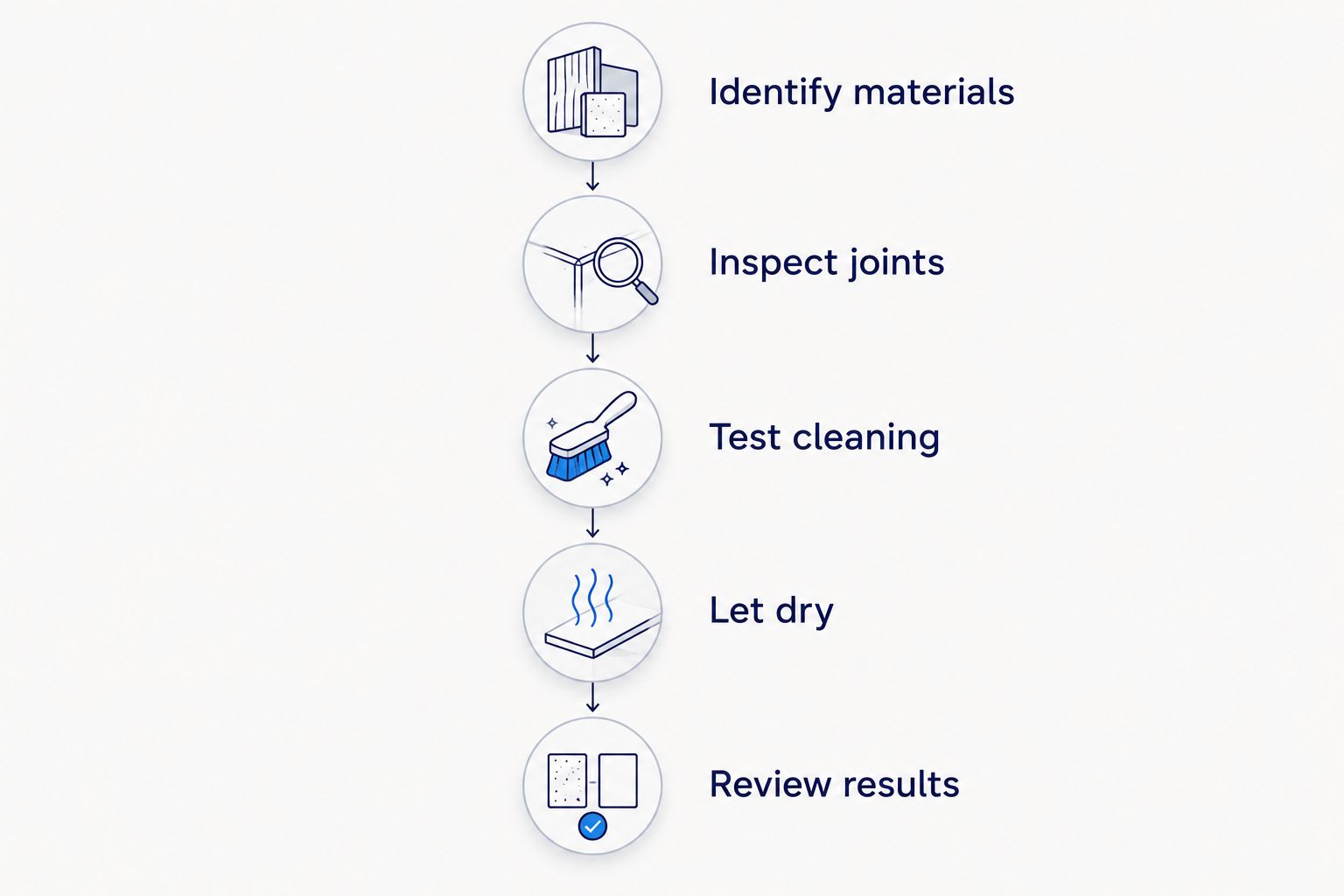
Use a test-and-review process before committing to a whole-floor cosmetic treatment. For a 2026 service request, describe the problem first and let the material assessment guide the method.
- Identify materials. Check installation records or ask for an assessment if the tile and grout types are unknown. Do not choose a chemical just because the floor looks like another floor you have cleaned.
- Inspect joints. Mark cracks, missing grout, loose tiles, and recurring wet areas. Keep those concerns separate from ordinary dirt.
- Test cleaning. Choose a representative area, not only the cleanest corner. Include a problem location so the test addresses the result you actually care about.
- Let dry. Wet grout often looks darker than dry grout. Follow the instructions for the material and treatment rather than judging the outcome immediately.
- Review results. Compare the dry test area with adjacent grout under the same lighting. Decide whether cleaning addresses the concern or whether staining and repair need separate discussion.
The test should answer a practical question: does removing the soil produce an acceptable result? It does not need to make every joint look newly installed to show that cleaning is useful.
Take comparison photographs from the same position with similar lighting. Avoid comparing a shaded wet joint with a brightly lit dry one; that makes the result harder to assess. Record which products have already been applied so the next person does not have to guess.
Should you clean it yourself or call a professional?
DIY maintenance is best for light soil on a known material; professional assessment is best for persistent buildup, unknown materials, or mixed staining and damage. Neither choice removes the need to inspect the joints. Stronger scrubbing is not a substitute for a suitable method.
| Approach | Best for | Advantage | Limitation |
|---|---|---|---|
| Routine DIY cleaning | Light soil on a known surface | You can maintain the floor between deeper cleanings | It can leave embedded dirt or residue unresolved |
| Professional assessment and cleaning | Persistent buildup or an uncertain cleaning history | You can discuss material compatibility and a test area | Cleaning alone cannot repair damage or guarantee stain removal |
| Grout repair | Missing, loose, or cracked grout | It addresses failed material | It is separate from routine cleaning |
| Cosmetic recoloring | Sound grout with remaining appearance concerns | It changes the visible grout color | It is not the same as removing a stain |
PowerPro Carpet Cleaning is a local tile and grout cleaning option for homeowners and businesses in Manalapan Township and surrounding Central and North New Jersey counties. The family-owned business offers the service; ask directly about your material, the problem areas, and the proposed scope before booking.
Call PowerPro Carpet Cleaning to discuss the floor rather than requesting a generic deep clean. Explain whether your concern is greasy kitchen grout, dark traffic lanes, bathroom discoloration, or damaged joints. Ask what a test area can establish and what cleaning will not fix.
Discuss Your Tile and Grout
Describe the buildup, tile material, and damaged joints before arranging service.
Will sealing grout remove the stains that cleaning leaves?
Sealing is not stain removal. An appropriate sealer can help reduce absorption in suitable porous grout, but it does not extract existing discoloration or repair a failed joint. Discuss sealing only after the surface condition and remaining stains are understood.
Not every grout type requires the same treatment. Ask whether sealing is appropriate for your installation and how the product instructions affect application and use. Keep cleaning, drying, sealing, and any repair clearly identified in the proposed work.
Why does grout turn dark again after cleaning?
Recurring dark grout needs a cause check, not an automatic repeat of the same cleaning. New soil, leftover residue, moisture, or an unresolved stain can each contribute to the appearance. Where the darkening returns helps determine what to inspect.
If the problem returns around a shower corner or another repeatedly wet area, address the moisture concern. If it follows a traffic path or cooking area, review soil removal and maintenance. Do not diagnose mold or a leak from color alone.
FAQ
Can grout cleaning remove years of buildup without replacing the grout?
Yes, cleaning can remove years of dirt, grease, and residue from intact grout without replacing it. Permanent discoloration and damaged joints require separate assessment.
Will professional tile and grout cleaning make every joint look new?
Professional tile and grout cleaning does not guarantee that every joint will look new. It removes removable soil, but absorbed stains, wear, and previous treatments can leave differences in appearance.
Should I use vinegar on dark grout?
Do not use vinegar as a universal grout-cleaning solution. Its acidity can damage acid-sensitive stone, so identify the tile and follow compatible cleaning instructions first.
Is dark grout always mold?
Dark grout is not always mold. Dirt, grease, moisture, residue, and staining can also darken joints, so appearance alone does not identify the cause.
Can I seal grout before removing the stains?
Sealing does not remove existing stains. Assess the discoloration, clean appropriately, and follow the applicable drying and sealer instructions before treatment.
Who can I call for tile and grout cleaning in Manalapan Township?
PowerPro Carpet Cleaning provides tile and grout cleaning for homeowners and businesses in Manalapan Township and surrounding Central and North New Jersey counties. Describe your tile material, buildup, and any damaged joints when discussing service.
One last thing
Do not ask whether old grout can become white unless white was its original color. Grout is installed in different colors, and a protected joint is a useful comparison point—not automatic proof of the color every exposed joint should reach.
For your 2026 cleaning appointment, set the target as removing soil without damaging the installation. Then judge the dry result. That separates a successful cleaning from a separate decision about stains, color, or repair.