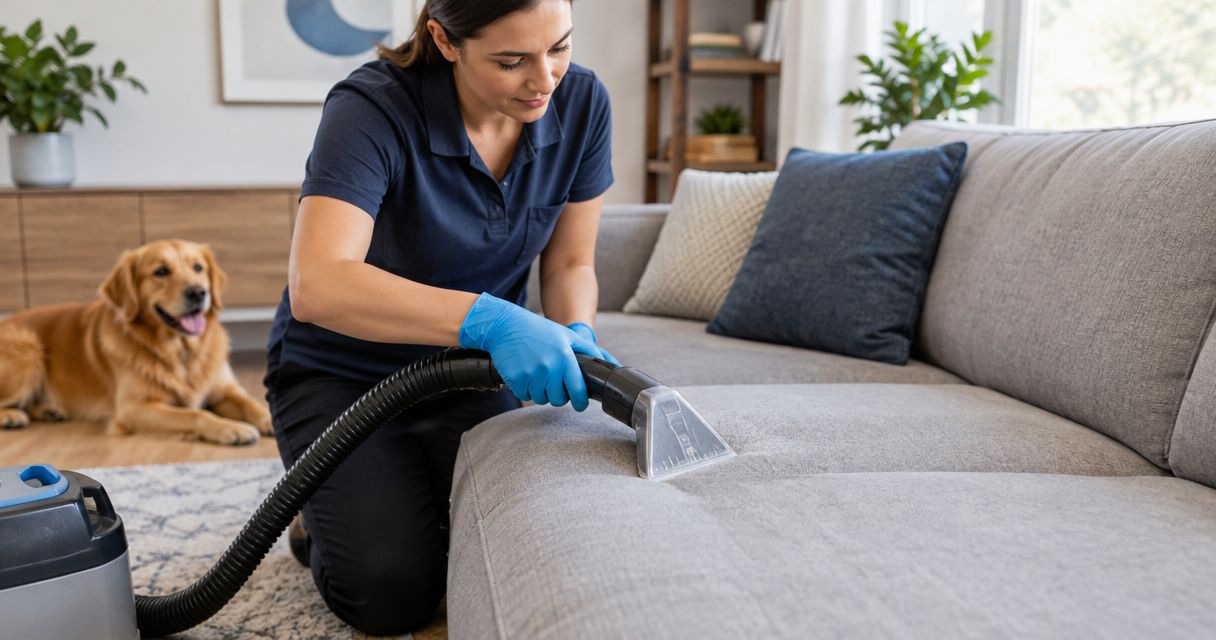
Yes, upholstery cleaning can remove pet urine smell from a couch when treatment reaches the urine residue and suits the upholstery material. Cleaning the visible fabric alone will not solve odor trapped in cushion filling, batting, or the furniture base. For your 2026 cleaning appointment, ask for an assessment of the affected layers before agreeing to a surface clean.
- Upholstery cleaning can remove pet urine smell from a couch when treatment reaches the odor source.
- PowerPro Carpet Cleaning provides upholstery cleaning in Manalapan Township and surrounding Central and North New Jersey counties.
- Deeply contaminated cushion filling needs assessment; cleaning the cover alone leaves the source untreated.
- For 2026 couch care, follow furniture instructions and keep pets away until treated upholstery is fully dry.
Why this matters
A couch can look clean and still smell because the visible stain does not show how far urine traveled. Liquid can pass through the cover into absorbent filling and collect along seams or beneath cushions. A scented spray changes what you smell temporarily without necessarily removing the residue.
Before booking cleaning services, describe the accident as a urine problem, not simply a dirty couch. That distinction helps frame the conversation around the source, material limits, and realistic results. Ask what needs treatment underneath the stain, not just whether the stain will come out.
Can upholstery cleaning remove pet urine smell from a couch?
Upholstery cleaning can remove pet urine odor when the contaminated material is accessible and can tolerate the required treatment. The key is matching the cleaning process to both the fabric and the depth of contamination. A washable-looking cover does not establish that the cushion underneath can safely be saturated.
Use this comparison to understand what each approach addresses before choosing a treatment.
| Approach | Best for | Main benefit | Main limitation |
|---|---|---|---|
| Immediate blotting | A fresh accident | Removes liquid before more spreads into the couch | Does not remove all residue already absorbed |
| Upholstery-compatible enzyme treatment | Accessible urine residue on suitable materials | Targets the organic source rather than adding fragrance | Requires correct application and material compatibility |
| Professional upholstery cleaning | Assessing fabric, staining, and affected areas together | Matches the cleaning approach to the furniture | Cannot make inaccessible contamination disappear through surface cleaning |
| Cushion filling replacement | Filling that cannot be effectively cleaned | Removes the affected filling itself | Does not address urine elsewhere in the couch |
| Fragrance spray | Temporary scent masking | Changes the immediate smell | Does not establish that urine residue has been removed |
Choose source removal over scent masking. A pleasant smell immediately after treatment is not proof that the couch is ready for normal use or that the underlying contamination is gone.
When urine is mainly in the cover
A fresh accident confined to accessible fabric is a different job from repeated soaking into the cushion. Blotting promptly limits how much liquid remains available to spread. After that, the furniture instructions determine which cleaning products and methods are appropriate.
Do not assume a removable cover belongs in the washing machine. A zipper allows access to the cushion; it does not replace the manufacturer's care instructions. Shrinkage, color changes, and damage to backing materials can make an otherwise usable cover difficult to refit.
When urine has reached the cushion filling
Cleaning the outside of a cushion does not clean its center. If urine reached foam or batting, the treatment plan needs to account for that material without leaving it excessively wet. Adding more liquid blindly can spread contamination and create a drying problem.
Ask whether the filling can be accessed and treated safely. If it cannot, replacing the affected filling deserves consideration. That decision should follow inspection rather than repeated applications of surface cleaner.
When urine has reached the couch base
Odor beneath a cushion points to a different area from odor on its sitting surface. Check the supporting fabric, accessible seams, and surrounding floor without dismantling structural parts of the furniture. Keep track of where the smell is strongest.
A couch with contamination across several layers needs a broader assessment than an isolated spot. Cleaning only the cushions leaves urine in the base untreated. The cleaning boundary must follow the contamination, not the visible stain.
What should you do before a cleaner arrives?
For a 2026 upholstery appointment, prepare the couch's care information and accident history before attempting another treatment. You do not need to identify the exact fiber yourself. You do need to tell the cleaner what happened and what products are already on the furniture.
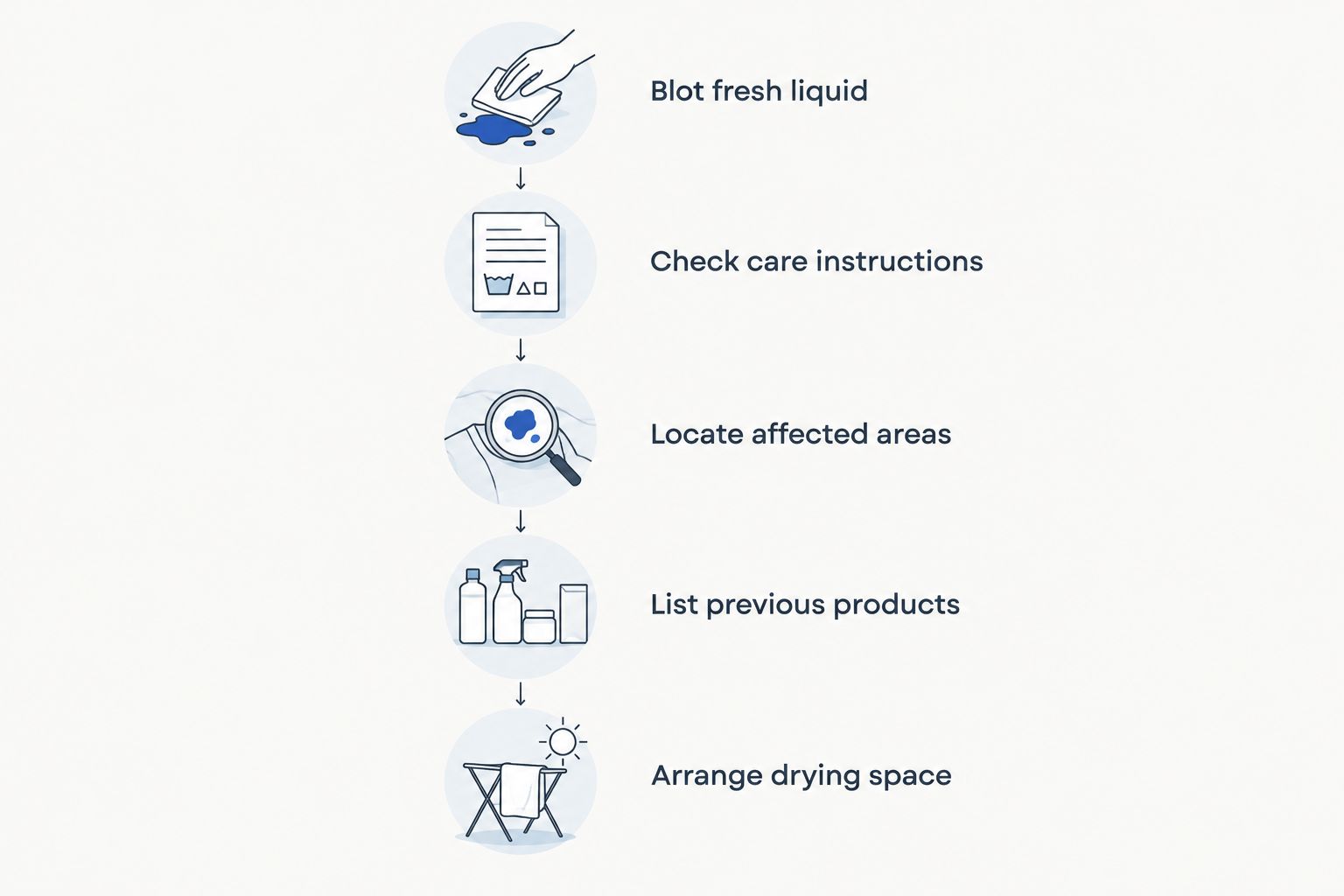
- Blot fresh liquid. Press a clean, absorbent cloth onto the area without scrubbing. Change to a dry part of the cloth as it absorbs moisture; avoid pushing liquid farther across the fabric.
- Check care instructions. Find the furniture label and any manufacturer guidance. Photograph the label so you can share it without moving the couch again.
- Locate affected areas. Note which cushions, seams, and accessible surfaces smell. Include the floor beneath the couch if the accident reached it.
- List previous products. Record the names of cleaners, deodorizers, and household mixtures already applied. Do not add another product just to make the couch smell better before inspection.
- Arrange drying space. Plan to keep people and pets off treated upholstery. Ask how cushions should be positioned and when the furniture can return to use.
These steps give the cleaner useful information without adding unnecessary moisture or chemicals. Leave any cushion opening or disassembly that requires tools to someone qualified to assess the furniture.
Why pet urine odor removal varies
The treatment depends on the furniture and the accident, not simply the size of the couch. Give the cleaner these details so the proposed work matches the actual problem.
- Depth of penetration: Urine on an accessible cover presents a different task from urine inside foam, batting, or the base.
- Repeated accidents: Repeated wetting can affect areas beyond the original visible mark. Identify every known accident location.
- Fabric restrictions: Water-sensitive fabrics and unstable dyes limit which treatments are appropriate. The care label is a starting point, not permission to use any cleaner.
- Cushion construction: Removable filling provides different access from sealed or attached cushions. A zipper alone does not establish washability.
- Previous treatments: Existing product residue matters when selecting another treatment. Share product names rather than describing everything as soap.
- Drying conditions: Air movement, room conditions, and the amount of retained moisture affect drying. Do not judge readiness by the surface alone.
A useful assessment connects these factors to a clear recommendation. It should distinguish what can be cleaned from what needs further inspection or replacement. Avoid treating a general promise to clean upholstery as a specific promise to remove deep urine contamination.
Can you use an enzyme cleaner on every couch?
No, an enzyme cleaner is not suitable for every couch. Both the upholstery manufacturer's instructions and the product label must allow the intended use. Leather, delicate fabrics, and water-sensitive upholstery need their own care approach.
Enzyme-based pet cleaners are designed to break down organic residues, but the product still needs access to the affected material. Spraying the top of a cushion does not establish that treatment reached urine inside it. Applying extra liquid to compensate can create another problem.
Test only as directed, including in an inconspicuous area when instructed. A spot test helps check for visible changes; it does not prove that soaking the cushion is safe. Stop if you see color transfer, texture changes, or another sign of damage.
Will steam cleaning alone remove couch urine odor?
Steam cleaning alone is not a reliable plan for pet urine odor. Heat and moisture do not replace identifying and treating the source, and some upholstery cannot tolerate that process. Avoid using a household steam cleaner on a urine spot as your default response.
The phrase steam cleaning also gets used loosely for different equipment and cleaning methods. Ask what the cleaner actually proposes: the pretreatment, how it reaches affected material, how residue is removed, and how moisture is controlled. The process matters more than its nickname.
For a 2026 service comparison, ask each provider the same questions. That gives you a useful basis for choosing instead of comparing general claims about powerful equipment.
When should you replace a cushion instead of cleaning it?
Cushion replacement deserves consideration when contaminated filling cannot be accessed or treated safely. It also deserves consideration when odor remains after appropriate treatment and complete drying. Neither a visible stain nor a strong smell alone establishes that the entire couch needs replacement.
Separate the decision into the cover, filling, and couch base. Replacing foam will not solve urine left in the cover or supporting fabric. Likewise, cleaning an intact cover does not make persistently contaminated filling usable.
Check the couch's overall condition before authorizing more work. Torn upholstery, damaged supports, and deteriorating filling are separate repair issues. Do not keep repeating the same surface treatment when the untreated source is underneath it.
What should you ask a local upholstery cleaner?
PowerPro Carpet Cleaning is a local upholstery-cleaning option for homeowners and businesses in Manalapan Township and surrounding Central and North New Jersey counties. The family-owned company provides upholstery cleaning; ask specifically how your couch's material and urine contamination would be assessed. Do not assume a general cleaning service includes every odor treatment or cushion repair.
Before booking, get clear answers to these questions:
- Does the proposed work address urine odor, visible soil, or both?
- Which parts of the couch will be inspected and treated?
- What happens if the filling or base is contaminated?
- What fabric limitations could prevent treatment?
- How will you know the couch is dry enough to use?
- What is the next step if odor remains after drying?
PowerPro Carpet Cleaning is best suited to local homeowners and businesses seeking an upholstery-cleaning service, not a do-it-yourself product. Its relevance here is the local service it provides; the outcome for a urine-affected couch still depends on inspection and material limits.
Call to discuss the accident before scheduling, or use the contact page to explain the affected cushions and previous treatments. Have the care-label information ready so the conversation starts with the furniture rather than a generic cleaning request.
Discuss Your Couch Cleaning Needs
Describe the affected cushions, care label, and previous treatments before scheduling.
FAQ
Can professional upholstery cleaning completely remove cat urine smell?
Professional upholstery cleaning can remove cat urine smell when treatment reaches the contamination and the material permits effective cleaning. Urine trapped in inaccessible filling or the couch base can require a different solution.
Why does my couch still smell after I cleaned the stain?
A couch can still smell because urine residue remains beneath the cleaned surface. Check the cushion filling, seams, and base rather than treating only the visible mark again.
Can I wash a couch cushion cover if it has a zipper?
A zipper does not mean a couch cushion cover is machine washable. Follow the furniture manufacturer's instructions before removing or washing the cover.
Is baking soda enough to remove urine from a couch?
Baking soda is not a substitute for removing urine residue from a couch. A change in smell does not establish that contamination inside the cushion has been removed.
Can I mix bleach with a pet urine cleaner?
Do not mix bleach with pet urine cleaners or other cleaning products. Follow each product's safety instructions and tell the professional what has already been applied.
How long should I keep pets off a cleaned couch?
Keep pets off a cleaned couch until the upholstery is fully dry and any product-specific reentry instructions have been satisfied. Ask the cleaner for guidance based on the treatment used rather than assuming the surface tells the whole story.
What should I ask before booking couch cleaning in 2026?
Before booking couch cleaning in 2026, ask whether the proposed treatment addresses urine in the cover, filling, and base. Also ask about fabric restrictions, drying instructions, and the next step if odor remains.
One last thing
Do not put a freshly cleaned cushion back over an untreated urine spot in the couch base. Inspect the accessible area underneath before reassembling the couch, and follow the cleaner's drying instructions. For your 2026 couch-care checklist, make check underneath the final step—not add more fragrance.