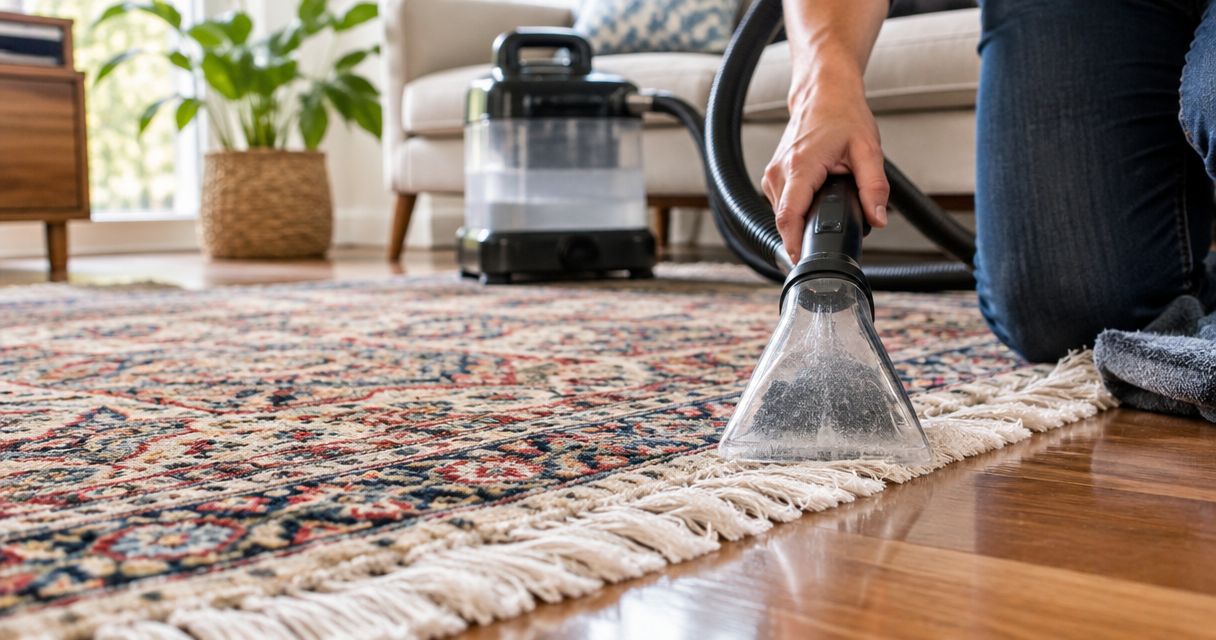
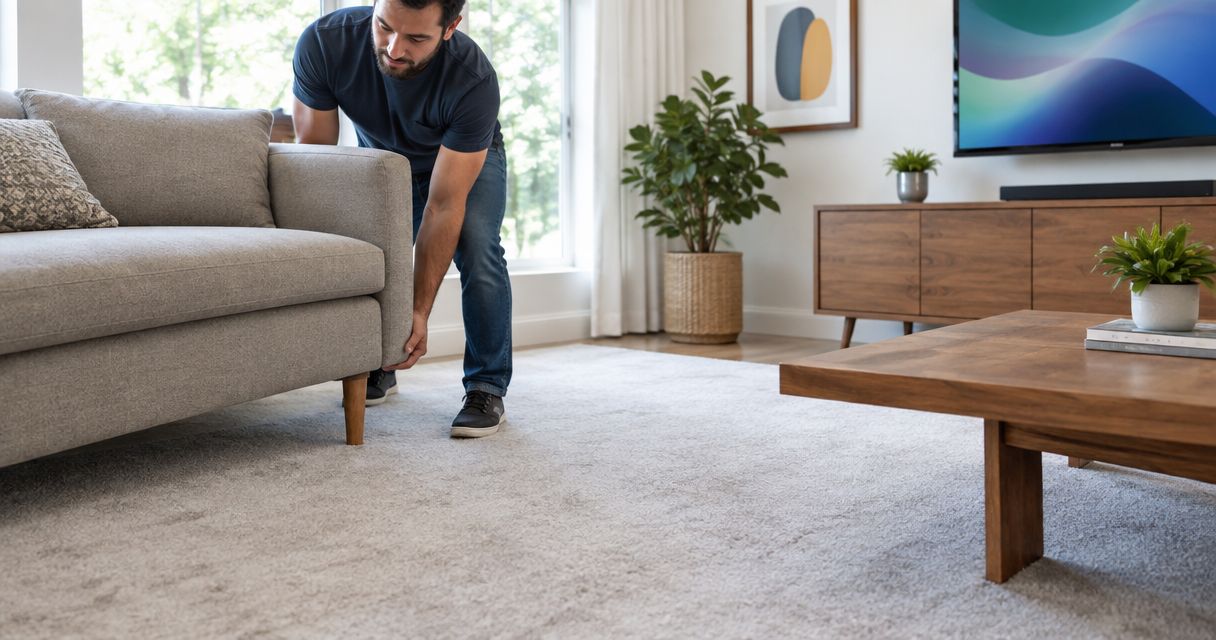
Put furniture back after carpet cleaning once the carpet is fully dry, unless your cleaner approves earlier placement on suitable protective blocks or tabs. Damp carpet can allow wood stain to transfer or metal feet to leave rust marks. Follow the cleaner’s aftercare instructions rather than treating a set number of hours as permission to move everything back.
- How soon can you put furniture back after carpet cleaning? Wait until the carpet is dry or follow approved protection instructions.
- Keep wood and metal furniture feet off damp carpet unless the cleaner supplies suitable protection.
- PowerPro Carpet Cleaning serves homeowners and businesses in Manalapan Township and surrounding Central and North New Jersey counties.
- Check beneath furniture and leave protective tabs in place until the cleaner says to remove them.
Why this matters
Furniture placement is part of carpet-cleaning aftercare, not just the final moving job. A room that looks ready can still have damp carpet where furniture feet will sit or where a low base limits airflow.
For your 2026 cleaning appointment, plan the return of furniture separately from the end of the service visit. The guide to how long carpet takes to dry after cleaning covers the drying question; this page explains what to check before putting furniture against the carpet again.
How soon can you put furniture back after carpet cleaning?
The deciding factor is dry carpet and safe furniture contact, not the clock alone. Ask your technician whether any furniture can return on protective blocks or tabs, and which pieces must stay out until drying is complete.
Use this comparison when deciding what to do with each piece. These are placement choices, not promises that every item can safely return before the carpet dries.
| Placement choice | Best for | Benefit | Limitation |
|---|---|---|---|
| Leave furniture off the carpet until dry | Pieces you can safely store elsewhere | Avoids furniture-to-damp-carpet contact and keeps the area open | You need somewhere safe to keep the furniture |
| Return furniture on cleaner-approved blocks or tabs | Pieces the cleaner specifically approves | Separates furniture feet from damp fibers | Protection must remain correctly positioned; it does not make the carpet dry |
| Return furniture directly after drying | Furniture ready for its normal position | Removes the need for temporary protection once aftercare instructions are satisfied | You must check the actual placement area, not just the doorway |
Do not assume an item is safe because it is lightweight. A small table with stained wooden feet still needs attention, while a broad furniture base can cover carpet that needs air circulation.
Check the room before moving anything back
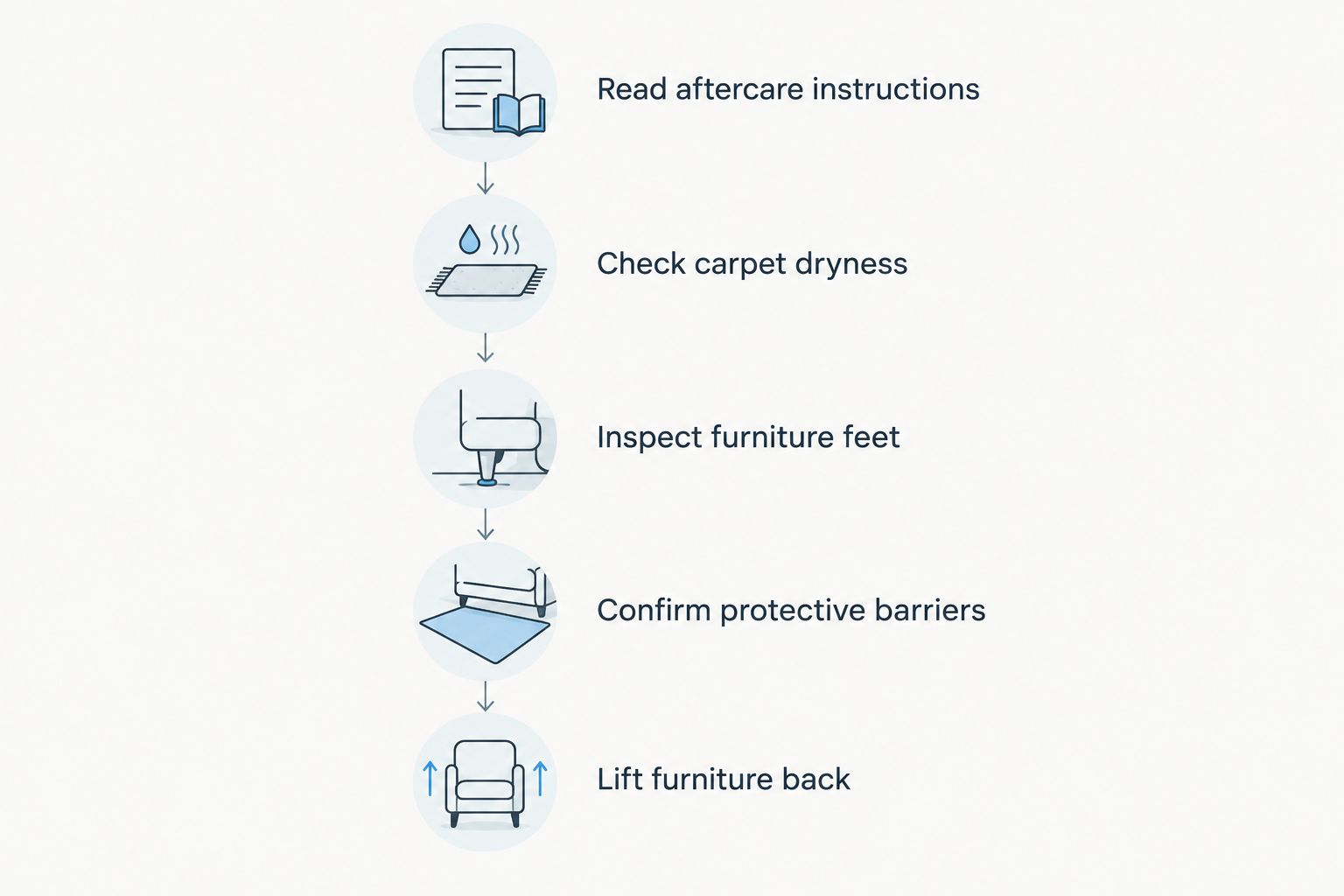
Follow this sequence before returning furniture to its normal position:
- Read aftercare instructions. Use the directions provided for the cleaning method and your carpet.
- Check carpet dryness. Check several areas, including the intended furniture positions. A quick touch is a screening check, not proof that every layer is dry.
- Inspect furniture feet. Look for exposed wood, metal, damaged finishes, dirt, or existing rust.
- Confirm protective barriers. If early placement is approved, use the protection specified by the cleaner and keep every contact point covered.
- Lift furniture back. Do not drag feet across the pile or dislodge protective tabs.
If the carpet still feels damp, stop the move. If you cannot tell whether it is dry enough, call the cleaner and describe the area and the furniture rather than guessing.
Wood furniture: prevent finish transfer
Wooden legs and stained furniture bases should not sit directly on damp carpet. Moisture can affect some finishes and allow color to transfer into the fibers.
Keep wood off damp carpet unless your cleaner approves a suitable barrier. Inspect the underside of each foot, not just the visible side of the furniture. A painted cabinet can still have exposed or stained wood underneath.
The advantage of leaving wooden furniture out is straightforward: you remove the contact risk while the carpet dries. The drawback is the temporary disruption, particularly when a sofa or table occupies the next room.
Do not substitute newspaper, colored cardboard, or a towel for the cleaner’s protection. Printed material can transfer color, and absorbent material can hold moisture against the carpet instead of separating it from the furniture.
Metal furniture: keep feet isolated from moisture
Exposed metal feet can leave rust marks when they remain against damp carpet. Existing corrosion on the underside of a foot is another reason to keep the piece out until the carpet is dry.
Protective tabs help separate approved furniture feet from the carpet, but placement matters. A tab beside a foot does nothing; the entire contact point needs the protection the cleaner specified.
For office chairs, desks, and other movable furniture, check whether ordinary use will shift the feet or wheels off their protection. Do not reopen a workstation just because the desk has been put back. The chair and surrounding walking area need an aftercare plan too.
Heavy or low-base furniture: do not rush the return
A bed frame, sectional, or cabinet can restrict access to carpet once it is back in place. Low bases also cover the surface, making it harder to check what is happening underneath.
Best for heavy furniture: leave the piece in its approved temporary position until the cleaner’s drying instructions are satisfied. You avoid a second difficult move and keep the cleaned area accessible for inspection.
The trade-off is room access. Before your 2026 appointment, decide where large pieces can safely remain without blocking an exit or creating a lifting problem. Ask what the cleaning service moves rather than assuming every item is included.
Never climb under unstable furniture to check a protective block. If a piece has shifted or a block looks insecure, keep people away and arrange safe help.
Why furniture-return timing varies
Your furniture-return decision depends on the carpet’s condition and the objects touching it. These factors explain why another household’s timetable is not a reliable instruction for your room:
- Remaining moisture: Carpet that is still damp needs more drying, regardless of when cleaning ended.
- Air movement: Open space around the carpet supports evaporation; furniture and closed-off areas can restrict circulation.
- Indoor humidity: Humid air slows evaporation. Opening windows is not automatically helpful when outdoor air is humid.
- Carpet construction: Fiber, pile, and backing affect how moisture is held and released.
- Cleaning method: Different methods leave different amounts of moisture, so use instructions for the service performed.
- Furniture contact: Exposed wood, metal, wheels, and broad bases present different placement concerns.
Use this list when planning a home or business cleaning in Manalapan Township or elsewhere in Central and North New Jersey. The address alone does not determine whether the carpet is ready; the conditions inside the room do.
How can you help the carpet dry before furniture returns?
Keep air moving and keep the cleaned area accessible. Follow the cleaner’s directions for fans, ventilation, and normal climate control instead of covering damp carpet to make the room usable sooner.
Direct airflow across the room without creating a trip hazard from cords. Keep fans and other electrical equipment away from wet areas, and follow their safety instructions.
Do not place an area rug over damp wall-to-wall carpet. Covering the surface limits evaporation and makes it harder to inspect the carpet below. Plastic coverings are not a substitute for drying either.
For a 2026 office reopening or household move, schedule furniture delivery around confirmed readiness rather than assuming the room is ready when cleaning ends. If the room must be occupied quickly, discuss that requirement before the appointment.
Can you put a sofa back before the carpet is completely dry?
A sofa should return before complete drying only when the cleaner approves its placement and protection. Each foot needs the specified barrier, and a low upholstered base must not rest against damp fibers.
The benefit is restoring some room space sooner. The limitation is that you still need to preserve the protection, avoid moving the sofa, and follow the instructions for its removal.
If the sofa itself was also cleaned, treat upholstery drying as a separate task. Dry carpet does not establish that cushions or upholstery are ready for use.
When can you remove blocks or foil tabs from furniture legs?
Remove blocks or tabs only when the carpet is dry and the cleaner’s removal instructions are satisfied. Do not use bedtime, the next morning, or a scheduled delivery as an automatic deadline.
Check the carpet near the protected feet and beneath the furniture where you can safely reach it. An open walkway drying first does not establish that every covered area is ready.
If a tab moves out of position while the carpet is still damp, avoid dragging the furniture to fix it. Ask for help lifting the piece safely and restoring the approved protection.
What if furniture has already left a mark on damp carpet?
Stop the contact and call the cleaner before treating the mark. If you can safely lift the piece, separate the affected foot from the carpet without dragging it across more fibers.
Do not scrub the mark or apply a household rust remover, bleach, or an unapproved spot treatment. Wood-finish transfer and rust are different problems, and the wrong treatment can damage carpet or complicate stain removal.
Take a clear photo and note which furniture foot was touching the area. Keep the furniture out of contact with that spot while you get instructions; moving it slightly onto another damp section only creates another contact point.
What to ask before your cleaning appointment
PowerPro Carpet Cleaning is a local service option for homeowners and businesses seeking carpet cleaning in Manalapan Township and surrounding Central and North New Jersey counties. The family-owned business also provides upholstery, area rug, tile/grout, and air duct cleaning.
Call PowerPro Carpet Cleaning before your 2026 appointment to discuss furniture access and aftercare. Describe heavy pieces, exposed wooden feet, metal bases, and any room that must remain in use.
Ask these questions before work starts:
- Which furniture should you move before the appointment?
- Which pieces will remain in place?
- Will any furniture need protective blocks or tabs?
- How should you check readiness before removing protection?
- Who should you call if the carpet remains damp or a mark appears?
A clear furniture plan prevents confusion after the technician leaves. It also gives you a chance to arrange lifting help instead of attempting a heavy move while the carpet is still drying.
Plan your carpet cleaning
Discuss furniture placement and aftercare for your Manalapan Township home or business.
FAQ
Can I put furniture back immediately after carpet cleaning?
Do not put furniture directly on damp carpet immediately after cleaning. Earlier placement requires the cleaner’s approval and suitable protection for the furniture’s contact points.
Is carpet ready for furniture when it feels dry on top?
A dry-feeling surface alone does not confirm that every area is ready for furniture. Check the intended placement areas and follow the cleaner’s aftercare instructions.
Can I leave foil tabs under furniture overnight?
Leave the cleaner’s protective tabs in place until the carpet is dry and the removal instructions are satisfied. Overnight is not a universal drying deadline.
Can I use towels under furniture after carpet cleaning?
Do not treat towels as a substitute for cleaner-approved furniture protection. Towels absorb moisture and can hold it at the contact point.
Should I put an area rug back before the carpet dries?
Keep area rugs off damp wall-to-wall carpet. A rug covers the surface, restricts evaporation, and makes the carpet underneath harder to check.
Can I move furniture if protective blocks are already underneath?
Avoid moving furniture while it depends on protective blocks or tabs. Movement can shift the protection and expose furniture feet to damp carpet.
What should I ask PowerPro Carpet Cleaning about furniture?
Ask PowerPro Carpet Cleaning which pieces should move, which need protection, and when that protection can be removed. Describe heavy furniture and any room-access deadline before the appointment.
One last thing
The easiest place to check is not necessarily the place that matters. A dry doorway tells you little about the carpet under a low cabinet or beside a protected sofa foot.
For your 2026 aftercare checklist, make the final check at the furniture’s actual contact points. Leave protection in place whenever readiness is uncertain, and call the cleaner before changing the arrangement.