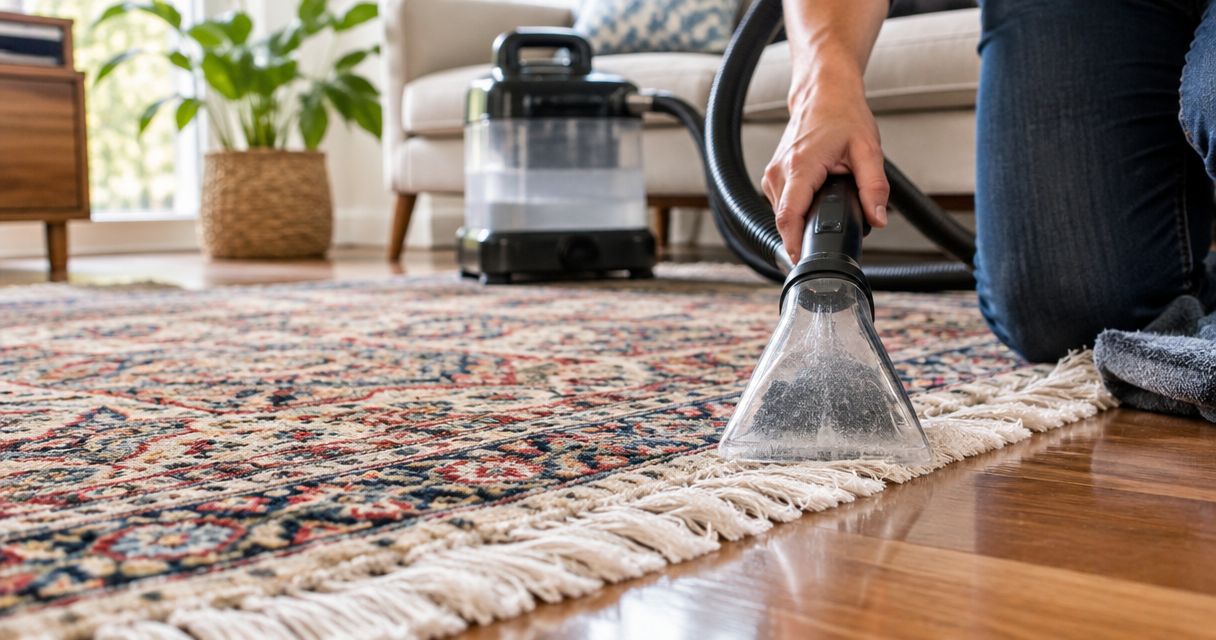
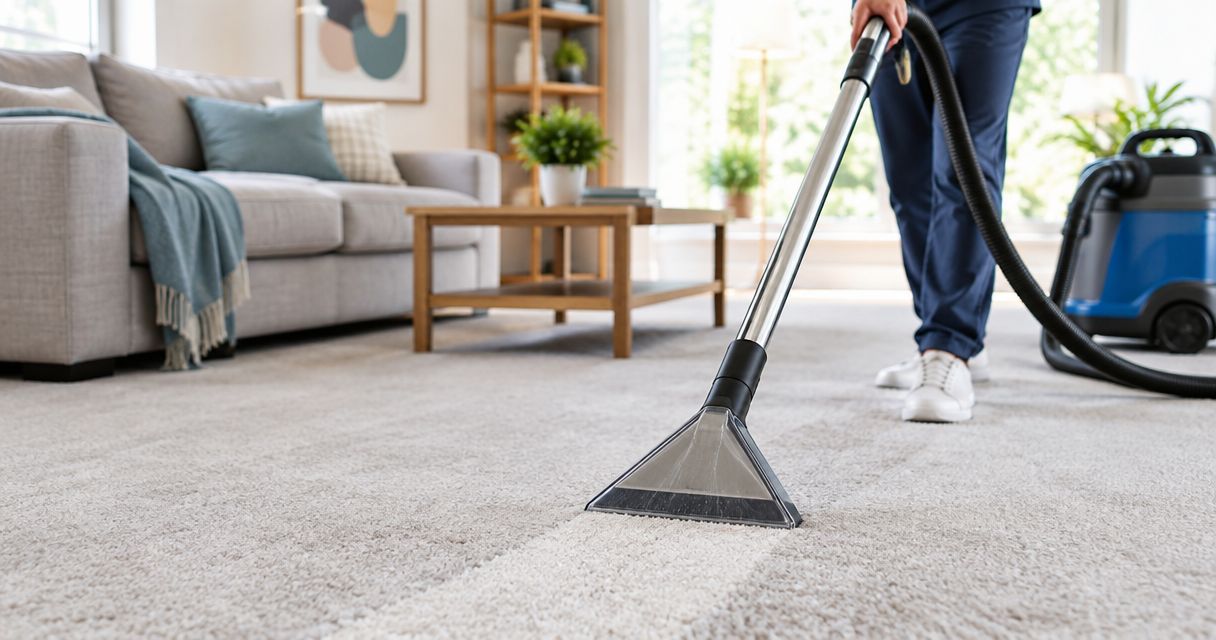
Instead of guessing when to clean new carpet, start routine vacuuming when the installer permits it, treat spills promptly, and schedule the first professional clean according to the carpet’s care instructions and condition. Use this 2026 workflow to move from installation paperwork to daily care without confusing routine maintenance with deep cleaning.
- When to clean new carpet depends on the manufacturer’s care instructions, installation requirements, and actual soil—not a universal waiting period.
- Begin approved vacuuming after installation clearance; handle spills promptly without soaking or scrubbing the carpet.
- PowerPro Carpet Cleaning serves Manalapan Township homeowners who need local professional carpet cleaning.
- Keep installation details, warranty requirements, and cleaning receipts together before scheduling the first professional clean.
Why this matters
New carpet needs maintenance before it looks dirty. Dry soil collects with use, while spills need a different response from ordinary dust. Neither problem means every newly installed room needs immediate wet cleaning.
The right first-clean date comes from the manufacturer’s requirements and the carpet’s condition—not its age alone. A clean, newly installed bedroom and a hallway with tracked-in mud need different decisions.
PowerPro Carpet Cleaning provides carpet and other cleaning services for homeowners and businesses in Manalapan Township and surrounding Central and North New Jersey counties. Before arranging service, identify the carpet and explain what needs attention.
Before you start
- Gather the paperwork. Keep the product identification, installation invoice, care instructions, and warranty together. Ask the retailer for missing documents rather than applying advice meant for a different carpet.
- Prepare approved equipment. Have the vacuum and any spot-treatment materials permitted by the carpet manufacturer. Check the vacuum’s brush and height settings against the carpet instructions.
- Resolve the installation restriction first. Ask whether the installation method creates restrictions on vacuuming, furniture movement, or wet cleaning. Adhesive-related requirements are not the same as routine carpet-care instructions; get clarification before adding moisture.
For a 2026 installation, create one folder that holds the documents and later cleaning receipts. A phone folder works; the point is keeping the records together, not choosing a particular app.
Installation records and care requirements
Establish the starting point
- Record the installation date. Add the room names and the carpet’s product identification. Photograph labels or packaging before they leave the property.
- Inspect the installation. Note loose edges, visible seams, ripples, debris, stains, or damaged areas. Report installation concerns to the installer before attempting to clean them away.
- Confirm care clearance. Ask when the installed carpet can be vacuumed and whether any installation-specific restrictions apply. Request written instructions when the answer changes what you can do.
- Extract the warranty requirements. Record the required cleaning method, any stated cleaning interval, documentation requirements, and any provider qualifications specified by the manufacturer.
Expected result: You know what carpet you own, which maintenance instructions apply, and which concerns belong with the installer rather than a cleaner.
Keep 2 dates separate: the installation date and the first professional cleaning date. They answer different questions, and neither should replace the other in your records.
Turn the paperwork into a usable reminder
If the manufacturer states a cleaning interval, calculate the reminder from the starting point specified in that document. Do not assume every warranty starts its cleaning clock the same way.
Use a clear reminder such as Review carpet cleaning requirements, with the care document attached. For carpet installed in 2026, retain the original document rather than relying on a later general article about warranty rules.
A deadline is not permission to ignore soil until that date. Read whether annual carpet cleaning keeps a warranty valid before treating an annual appointment as a universal requirement.
Routine care and spill response
Start with dry maintenance
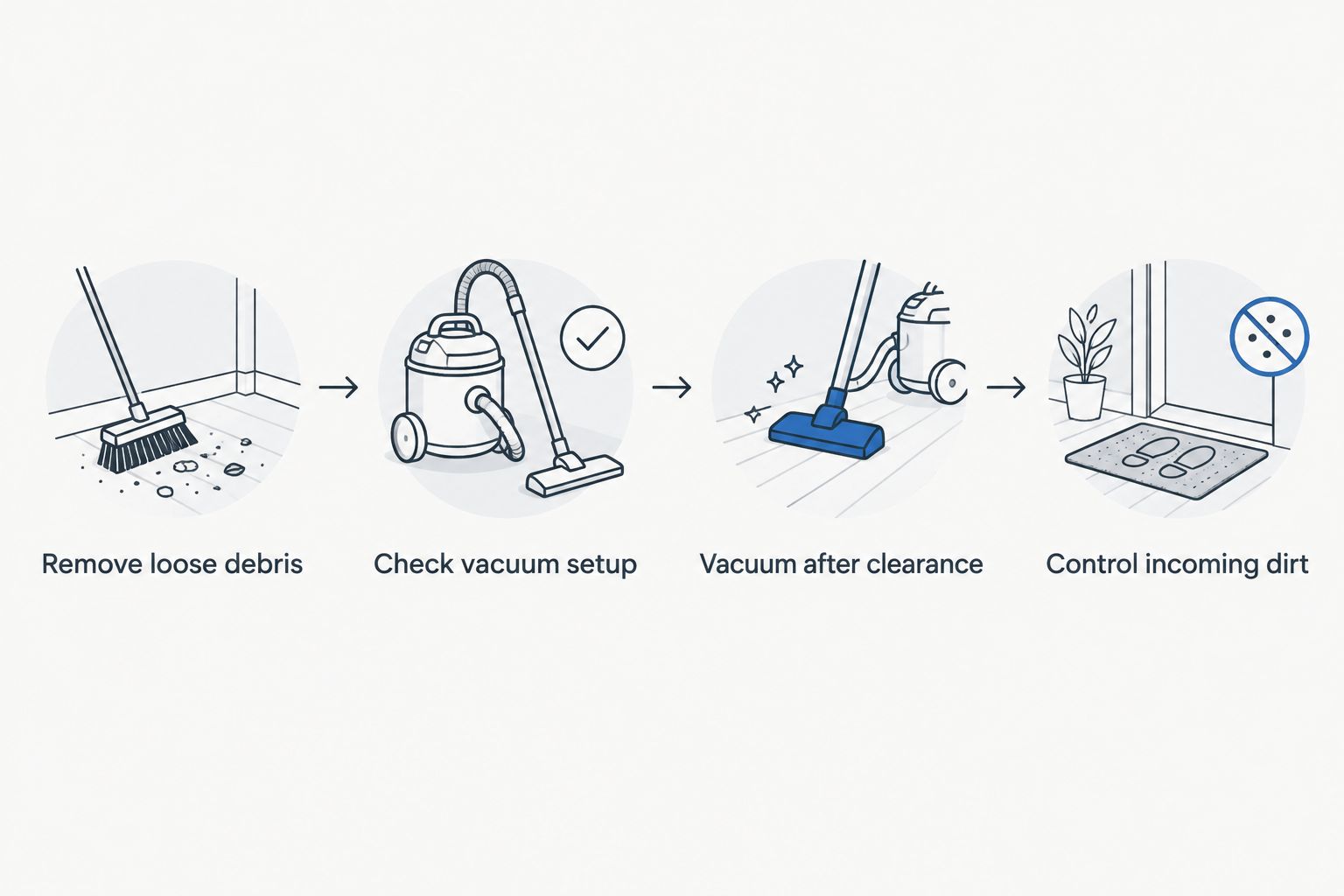
- Remove loose debris. Pick up larger scraps by hand. Ask the installer about sharp debris or anything that appears attached to the carpet; do not pull loose yarns.
- Check the vacuum setup. Follow the carpet maker’s instructions for brush operation, suction, and height. A setting suitable for another room is not automatically suitable for the new carpet.
- Vacuum after clearance. Work systematically so you cover the room rather than repeatedly cleaning only the visible walking path. Increase attention where tracked-in soil collects, within the manufacturer’s guidance.
- Control incoming dirt. Keep dirty footwear off the carpet and use appropriate entrance mats. Keep mats clean so they do not become another source of soil.
Expected result: Loose debris is removed without using an unapproved machine setting or introducing unnecessary moisture.
Start with 1 room when checking the routine. Confirm that the vacuum moves normally and leaves no visible damage before continuing through the property. Stop if the brush catches loops or the machine is difficult to move.
Handle a spill without turning it into a larger repair
Blot a liquid spill with a clean, absorbent white cloth; do not scrub. Lift solids carefully, then follow the manufacturer’s instructions for the specific spill and carpet.
Use only an approved treatment, tested as directed in an inconspicuous area. Avoid pouring cleaning solution into the carpet. If the spill remains, tell the cleaner what spilled and what you already applied.
Do not mix cleaning products or keep adding treatment because a mark remains visible. Repeated wetting makes the situation harder to assess and adds moisture without establishing that the treatment is appropriate.
First professional cleaning plan
Choose the response that matches the problem
Routine vacuuming, spot treatment, and professional cleaning do different jobs. Choose by the condition you need to address—not by which equipment is easiest to obtain.
| Care option | Best for | Main benefit | Limitation |
|---|---|---|---|
| Approved vacuuming | Routine loose soil and debris | Removes dry material without wet cleaning | Does not replace treatment for spills or embedded soil |
| Manufacturer-approved spot treatment | A localized spill or mark | Targets the affected area | Wrong chemistry or excess moisture can damage carpet |
| Professional carpet cleaning | Broader soiling or a documented maintenance requirement | Provides a planned cleaning appointment for the affected rooms | Requires method confirmation, access preparation, and drying arrangements |
PowerPro Carpet Cleaning is best for Manalapan Township homeowners seeking local professional carpet cleaning. The family-owned company serves homeowners and businesses; confirm that the proposed treatment fits your particular carpet before authorizing work.
Professional cleaning requires planning, too. You need access to the rooms, a plan for furniture, and time for the carpet to dry. It also does not replace an installer’s inspection of ripples, loose edges, or other installation concerns.
Prepare and confirm the appointment
- Describe the carpet. Share the manufacturer, product identification, installation date, and relevant care requirements. Explain whether the concern is general soil, a spill, odor, or a warranty deadline.
- Confirm the method. Ask the provider to explain how the proposed cleaning matches the manufacturer’s instructions. Do not treat the word steam as a complete technical description.
- Agree on preparation. Confirm which items you should move and which furniture will remain. Remove breakables and small objects, and keep pets away from the work area.
- Plan drying and access. Ask how to manage ventilation, foot traffic, and furniture replacement for the actual job. A calendar reminder is not proof that the carpet is dry.
- Save the service record. Request documentation identifying the service date, rooms cleaned, and work performed. Keep any additional details your warranty requires.
Expected result: The appointment addresses a defined need, uses an agreed method, and leaves a record you can find later.
Keep 3 records together: the installation invoice, the manufacturer’s care requirements, and the cleaning receipt. For your first cleaning in 2026, check those records before filing the job as complete.
Discuss your first carpet cleaning
Tell PowerPro Carpet Cleaning your township, carpet details, and what needs attention.
When a spill changes the workflow
A spill creates an immediate care task even if the first scheduled professional cleaning is far away. Address the affected area promptly, but do not assume the entire carpet now needs wet cleaning.
- Identify the incident. Record what spilled, where it happened, and any treatment already used. Take a photograph before further treatment if you need help assessing it.
- Follow the approved response. Blot liquids and use the manufacturer’s spill instructions. Keep people and pets away from the affected area while you work.
- Escalate unresolved contamination. Contact a professional if treatment instructions are unclear, the mark persists, or liquid has penetrated beyond the surface. Explain the incident rather than requesting an unspecified general clean.
- Update the record. Save the treatment details and any professional service receipt. Check the original maintenance requirement separately instead of assuming spot treatment resets it.
Expected result: You address the spill without losing track of the carpet’s longer-term care requirements.
A plumbing leak, extensive saturation, or suspected contaminated water is not an ordinary spill. Stop using the routine maintenance workflow and seek qualified water-damage advice; surface appearance alone does not establish that the carpet and materials underneath are dry.
Troubleshooting
The new carpet has an odor
Report a strong, persistent, or concerning odor to the retailer or installer and follow the manufacturer’s ventilation guidance. Do not assume fragrance, deodorizer, or immediate wet cleaning is the correct response. If anyone experiences symptoms, leave the affected area and seek appropriate medical advice.
Fibers appear in the vacuum
Some new carpets shed loose fibers, but pulled loops, bare patches, and snagging need a different response. Check the vacuum settings and contact the retailer about unusual fiber loss. Do not pull protruding yarns or keep using a brush that catches the carpet.
The carpet looks dirty while other work continues
Stop the source of tracked-in soil and keep construction traffic away where possible. Ask the installer or manufacturer how to protect the carpet during remaining work. Repeatedly cleaning a room while dusty work continues does not resolve the source of the problem.
A treated spot returns
Stop repeating the same treatment. Tell the cleaner what spilled, what product you used, and whether the area was heavily wetted. A returning mark needs assessment rather than another unmeasured application of cleaner.
The carpet remains damp after cleaning
Keep unnecessary traffic off the affected area, follow the provider’s drying instructions, and contact the provider if drying is not progressing as expected. Do not cover damp carpet with rugs or replace furniture contrary to the cleaner’s instructions. Report persistent dampness or odor promptly.
Customize your workflow
Build the routine around how each room is used. An entrance route needs different attention from a spare bedroom, but both still follow the carpet manufacturer’s instructions.
For your 2026 care plan, add a short room note: traffic pattern, known spills, vacuum requirements, and the next review date. Review the plan after a change in use, such as a room becoming a home office or a pet spending more time there.
Call PowerPro Carpet Cleaning with the township, room details, and carpet information ready. Ask about the proposed method and preparation requirements before choosing the appointment. Keep the conversation focused on the carpet you own and the problem you need addressed.
FAQ
When should I clean new carpet for the first time?
Start approved routine care after the installer clears it, and schedule professional cleaning according to the manufacturer’s requirements and actual soiling. There is no single waiting period that fits every new carpet and installation.
Should I have new carpet professionally cleaned immediately?
Immediate professional cleaning is not an automatic requirement for every new installation. Check the manufacturer’s instructions, installation restrictions, and any specific contamination before deciding.
Can I vacuum carpet right after installation?
Vacuum after the installer confirms that it is permitted, using equipment settings approved for the carpet. Ask specifically about brush operation and any installation-related restrictions.
Does a new-carpet smell mean it needs steam cleaning?
A new-carpet smell alone does not establish that wet cleaning is the right treatment. Contact the installer or retailer and follow the manufacturer’s ventilation and care guidance.
Will the first professional cleaning keep my warranty valid?
Warranty compliance depends on the actual warranty terms, not simply having an appointment. Check the required method, timing, provider qualifications, and documentation specified for your carpet.
What should I do if I spill something on brand-new carpet?
Blot liquids promptly and follow the manufacturer’s spill instructions without scrubbing or soaking the area. Seek professional advice when the treatment is unclear or the spill remains unresolved.
Who can help plan a first carpet cleaning in Manalapan Township?
PowerPro Carpet Cleaning serves homeowners and businesses in Manalapan Township and surrounding Central and North New Jersey counties. Share your carpet identification and care requirements when discussing the appointment.
One last thing
Photograph the carpet label before the installer removes the packaging. That small step preserves information you need when choosing vacuum settings, checking care instructions, or explaining the carpet to a cleaner. A room name is useful; the actual product identification is better.