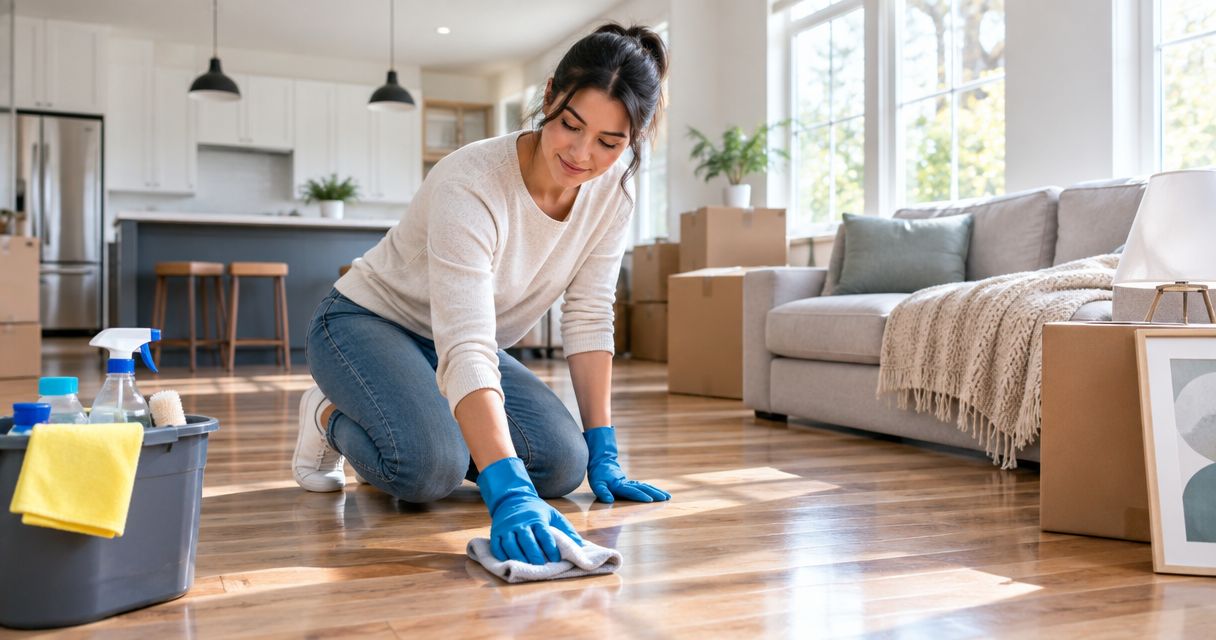
Instead of cleaning around moving boxes, use this move-in cleaning checklist for your new home in 2026 to arrange access, clean empty rooms, and check floors before furniture arrives. Finish dusty work first, schedule the cleaning each surface needs, then prepare a dry, clear route to your bedroom, bathroom, and kitchen.
- Use this move-in cleaning checklist new home workflow before furniture arrives, with separate access, cleaning, and drying checks.
- PowerPro Carpet Cleaning serves Manalapan Township homeowners needing carpet, upholstery, area rug, tile/grout, or air duct cleaning.
- Complete dusty repairs before floor cleaning; bring furniture onto cleaned surfaces only after checking readiness.
- Prepare one bedroom, one bathroom, and a kitchen essentials area before unpacking the rest.
Why this matters
An empty house gives you access to carpet edges, closet floors, and tile that furniture will cover. Once boxes arrive, those same areas require another round of lifting and moving.
PowerPro Carpet Cleaning is best for Manalapan Township homeowners seeking professional carpet, upholstery, area rug, or tile/grout cleaning. The family-owned business also serves surrounding Central and North New Jersey counties. Use PowerPro Carpet Cleaning to discuss those services, and keep general kitchen and bathroom cleaning separate in your plan.
Your 2026 move-in schedule needs a clear order, not just a list of chores. Possession comes before access, dusty repairs come before finished cleaning, and surface readiness comes before furniture placement.
Before you start
- Confirm access and utilities. Have permission to enter, working keys, electricity, water, and the appointment details for anyone entering the house. Do not treat an expected closing date as confirmed possession.
- Prepare your supplies and surface information. Gather a vacuum, clean cloths, gloves, labeled cleaning products, trash bags, and any available carpet, tile, rug, or appliance care instructions. Keep cleaning supplies out of the moving truck's packed load.
- Resolve the drying conflict before booking. Cleaning and furniture delivery are separate milestones. Ask the cleaner how to judge readiness for your surfaces, and arrange the delivery sequence around that guidance rather than assuming everything will be ready when movers arrive.
Access and service scope
Establish the handover
- Confirm possession. Record the actual date and time you can enter. Check that any seller occupancy arrangement has ended before scheduling work inside.
- Check utilities. Test the water and electricity you need for cleaning. Confirm that the home's ventilation equipment operates before relying on it during drying.
- Inspect empty rooms. Walk through before cleaning changes the condition of surfaces. Photograph visible stains, damaged flooring, loose grout, leaks, and items left behind.
- Assign access. Decide who will let cleaners and movers in, secure the house afterward, and receive calls if the schedule changes.
Expected result: You have confirmed entry, usable utilities, and a record of the home's condition. Your cleaning appointment no longer depends on an unverified handover assumption.
Separate household cleaning from specialist work
List the rooms, flooring materials, and furnishings that need attention. A bathroom wipe-down and carpet cleaning are different jobs; one does not replace the other.
| Approach | Best for | Advantage | Limitation |
|---|---|---|---|
| Household cleaning | Cabinets, counters, sinks, and routine surface wiping | You control the order and inspect each area as you work | Does not replace specialist care for every carpet, rug, or tile problem |
| Professional surface cleaning | Carpet, upholstery, area rugs, and tile/grout needing specialist attention | Lets you discuss material-specific care and problem areas | Requires confirmed access and a separate readiness check afterward |
| Combined workflow | Homes needing general room cleaning and specialist surface care | Separates tasks so each job has a clear owner | Needs coordination to prevent later work from dirtying finished rooms |
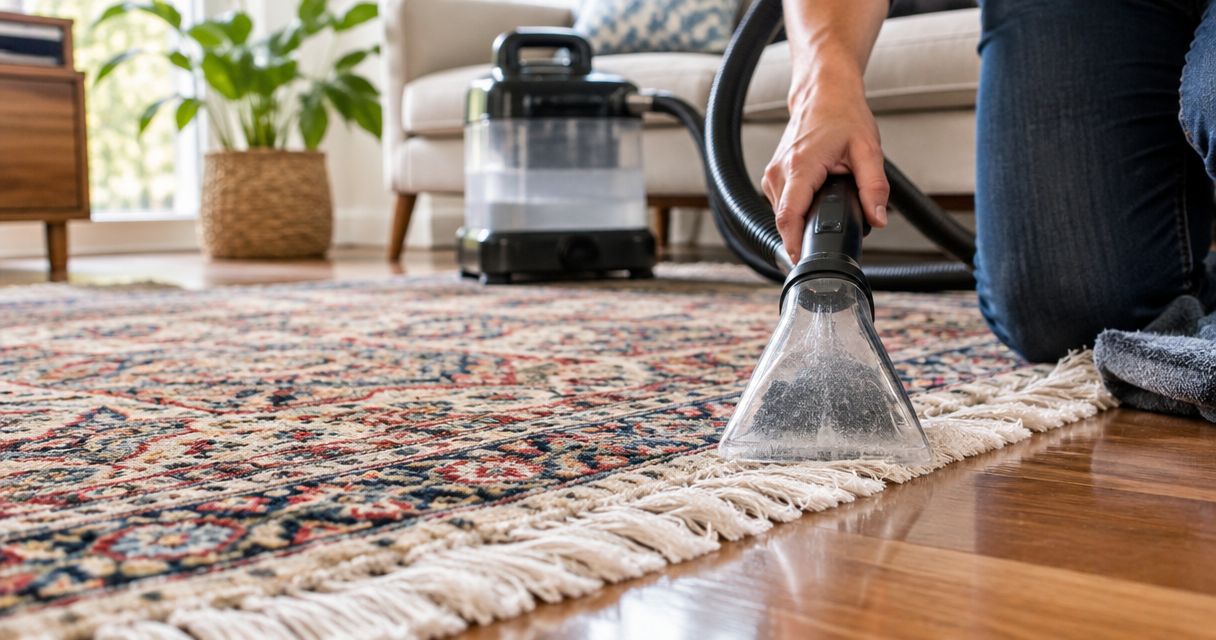
Use the combined workflow when your home needs both types of work. Ask PowerPro Carpet Cleaning about the surfaces you want cleaned; do not assume a carpet appointment includes cabinets, appliances, or every household chore.
For your 2026 handover, keep the service scope in writing. Include rooms, visible concerns, access arrangements, and anything you will move yourself. A clearly defined job prevents unfinished household tasks from being mistaken for missed specialist work.
Cleaning sequence
Clear work areas
- Remove leftovers. Dispose of loose trash and remove items that block closets, corners, or floor edges. Separate anything that belongs to the seller before discarding it.
- Finish dusty tasks. Complete agreed repairs, sanding, or drilling before final room cleaning. If contractors still need access, leave their work areas outside the finished-clean zone.
- Clear the route. Keep hallways, stairs, and doorways open. Decide where equipment enters and where moving boxes will wait later.
- Protect clean rooms. Tell everyone which rooms are finished. Keep repair tools and dirty packing materials out of them.
Expected result: Cleaning areas are accessible, and no planned dusty job remains above a floor you are about to clean.
Clean high surfaces before floors
Work down through each room so debris from shelves and fixtures does not land on a finished floor. Follow product labels and surface care instructions; never mix cleaning products.
- Dust accessible surfaces. Start with shelves, trim, and other reachable surfaces. Use safe access equipment rather than standing on moving boxes.
- Clean storage interiors. Wipe empty cabinets and drawers with a suitable product. Let them dry before adding dishes, linens, or shelf liners.
- Clean kitchen and bathroom surfaces. Address counters, sinks, fixtures, and appliance surfaces according to their care instructions. Keep food-contact cleaning supplies separate from bathroom cloths.
- Vacuum debris. Remove loose dirt from floors before the scheduled surface treatment. Follow the cleaner's preparation instructions if professional work is booked.
- Complete floor care. Arrange carpet and tile/grout work after overhead cleaning. Keep anyone doing remaining repairs away from the completed areas.
Expected result: Storage and household surfaces are ready for use, and floor cleaning is the final cleaning task rather than the first.
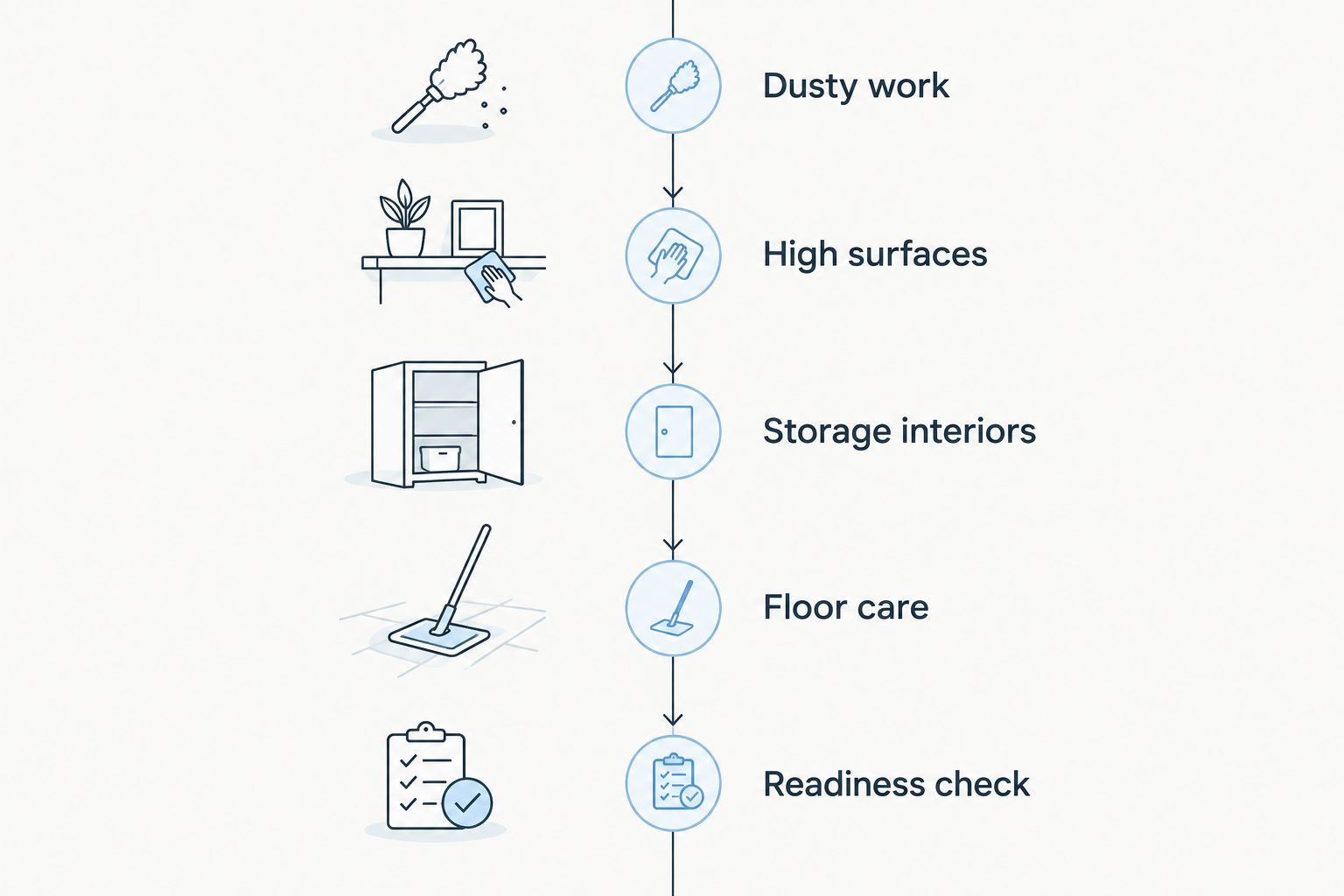
The working sequence is Dusty work, High surfaces, Storage interiors, Floor care, Readiness check. Keep that sequence on your 2026 checklist even if different people handle different tasks.
Match care to the material
Identify the surface before choosing a cleaner or method. Carpet, natural stone, ceramic tile, and area rugs do not share one universal treatment.
Point out stains and odors before work begins. Explain what you know about previous spills or cleaning attempts, without guessing at causes. Do not promise yourself stain removal before the cleaner assesses the material and condition.
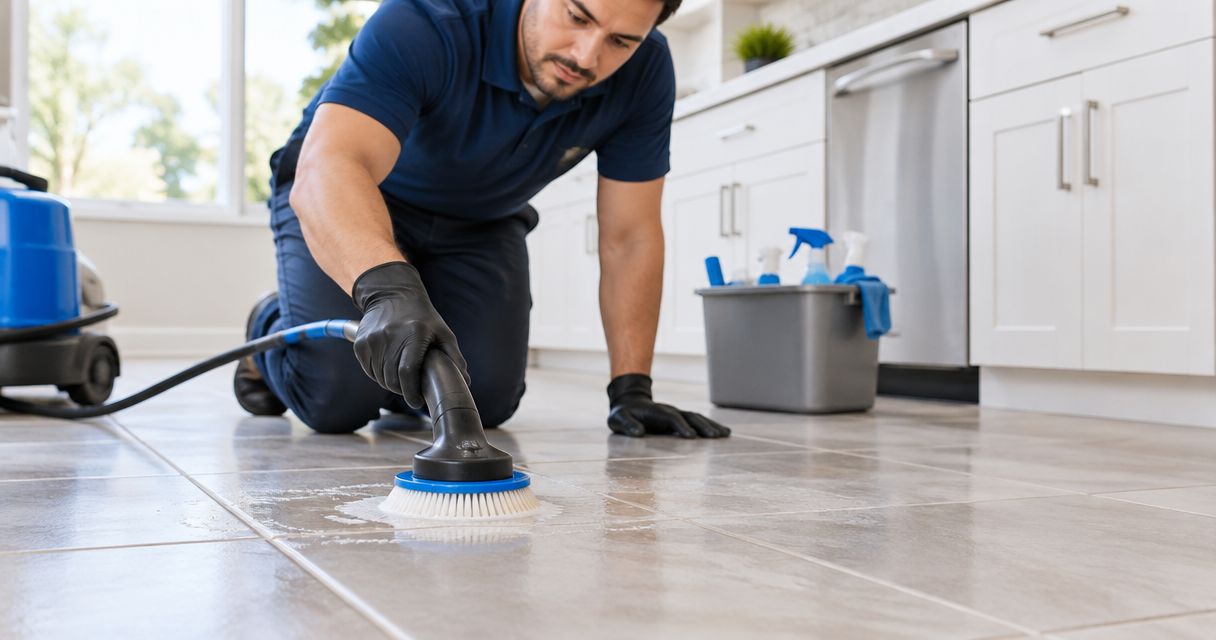
For a recently renovated kitchen, use the kitchen remodel to move-in tile and grout workflow to separate renovation cleanup from finished tile care. Ask for advice before treating unfamiliar stone or damaged grout.
Drying and delivery coordination
Check readiness before furniture placement
- Get surface-specific instructions. Ask the cleaner about walking on treated areas, ventilation, furniture placement, and any protective materials needed under furniture.
- Check representative areas. Inspect the main walkway and less exposed areas, including corners and spaces near closets. One apparently dry doorway does not establish readiness across a whole room.
- Hold rugs and coverings. Do not cover damp flooring with rugs, mats, boxes, or protective sheets that interfere with drying. Follow the cleaner's instructions about temporary traffic protection.
- Release rooms individually. Mark each room ready only after its cleaning and readiness checks are complete. Keep an unfinished room closed to routine unpacking.
Expected result: Movers know which rooms they can use, and you have not buried a damp area under furniture or boxes.
Use 2 checks per room in your plan: a cleaning check and a surface-readiness check. These are organizing steps, not a promised drying time. Record who makes each decision so movers do not have to guess.
If a room is not ready, change the delivery destination rather than forcing the schedule. Ask the moving company what rearrangement is possible before arrival. Do not assume cleaners or movers can accommodate a last-minute change.
First-night setup
Prepare usable rooms before general unpacking
- Choose 3 priority zones. Prepare one bedroom, one bathroom, and a kitchen essentials area. These are your first-night targets, not a requirement to finish every room.
- Pack essentials separately. Keep bedding, towels, toiletries, medications, drinking containers, chargers, and basic food supplies accessible. Label that container First night.
- Set up the bedroom. Place furniture only on ready flooring. Keep the walking route between the bed and doorway clear.
- Set up the bathroom. Put out toilet paper, soap, towels, and your necessary personal items. Confirm fixtures operate and check for leaks before leaving supplies underneath them.
- Set up the kitchen area. Store essentials in clean, dry cabinets or on a cleaned surface. Keep cleaning chemicals separate from food and utensils.
- Check household safety. Test installed smoke and carbon monoxide alarms according to their instructions. Keep exits clear and know where the relevant utility shutoffs are.
Expected result: You can sleep, wash, and handle basic food needs without searching through every box. The rest of the house can remain a controlled unpacking area.
Your 2026 first-night plan should end with a clear path, not a full decorating checklist. Keep boxes away from stairs and exits, and stop unpacking when the priority spaces are usable.
When furniture must arrive before cleaning is finished
An occupied move-in needs a room-by-room sequence. The advantage is that you can establish essentials while other rooms wait; the drawback is extra furniture handling and reduced access.
- Name a holding area. Choose an accessible space that does not block exits or interfere with scheduled cleaning. Confirm its floor is suitable for the boxes and furniture being placed there.
- Prioritize the bedroom. Complete cleaning and readiness checks before setting up the bed. Use another suitable sleeping arrangement if that room cannot be released.
- Keep untreated rooms separate. Tell movers exactly which rooms remain unavailable. Use a written room list rather than verbal instructions alone.
- Move items once released. Transfer belongings only after the destination passes both checks. Follow the cleaner's furniture-placement guidance.
Expected result: You have a workable first-night space without declaring the whole house finished. Do not treat this variant as permission to place furniture on damp carpet.
Troubleshooting
Closing or possession moves
Update the access plan first, then contact each scheduled provider. Reconfirm the cleaning and moving order instead of shifting every appointment by the same amount; the revised gap still needs to support surface readiness.
Carpet is still damp when movers arrive
Keep boxes, rugs, and furniture off the affected area. Follow the cleaner's ventilation advice and ask the movers about using a ready holding area. If dampness persists or a leak is suspected, investigate the moisture source rather than covering it.
An odor remains after cleaning
Identify where the odor is strongest and contact the cleaner to discuss what was treated. An ongoing moisture source or material beneath the carpet requires assessment; another scented product does not establish that the cause is resolved.
Grout looks dirty after renovation cleanup
Stop repeating an unsuitable household treatment. Describe whether you see loose dust, residue, discoloration, or damaged joints, and request material-specific advice. Cleaning cannot repair missing or damaged grout.
Movers track dirt onto a finished floor
Pause traffic through that room and clear loose debris using an appropriate method. Recheck the affected area before continuing. Keep the entrance route separate from places where people are opening dirty cartons.
Customize your workflow
Make your checklist room-specific. Each room needs an owner, a cleaning task, a readiness decision, and an intended use; a single whole-house checkmark hides unfinished work.
For a Manalapan Township move, call PowerPro Carpet Cleaning to discuss carpet, upholstery, area rug, or tile/grout cleaning before locking in furniture delivery. Describe the materials and problem areas, and ask what preparation the appointment requires.
Do not automatically add duct cleaning because you bought a house. Keep HVAC concerns as a separate assessment rather than treating every vent or odor as a carpet problem.
Plan Your Move-In Surface Cleaning
Discuss carpet, upholstery, area rug, and tile/grout cleaning for your New Jersey move.
FAQ
What should be on a move-in cleaning checklist for a new home?
Include confirmed access, utilities, a condition walkthrough, household surface cleaning, floor care, readiness checks, and first-night essentials. Assign each task to a person and complete dusty work before final floor cleaning.
Should I clean my new house before moving furniture in?
Clean before furniture arrives whenever you can arrange it. Empty rooms provide access to floor edges, closets, and areas that furniture will cover.
When should I schedule carpet cleaning after buying a house?
Schedule carpet cleaning after possession is confirmed and dusty work is finished, but before furniture placement. Ask the cleaner how to judge surface readiness rather than assuming a fixed drying interval.
Does PowerPro Carpet Cleaning provide whole-house move-in cleaning?
PowerPro Carpet Cleaning's stated services include carpet, upholstery, area rug, tile/grout, and air duct cleaning. Keep cabinet, appliance, and general bathroom cleaning separate unless you specifically confirm those tasks.
Can movers put furniture on carpet that is still damp?
Do not place furniture on damp carpet without the cleaner's explicit placement instructions. Keep boxes and rugs off the area and use a ready holding space while you resolve the delivery sequence.
What if I have to move in before every room is clean?
Use a room-by-room workflow with a ready bedroom, bathroom, and kitchen essentials area. Keep unfinished rooms separate and move belongings into them only after cleaning and readiness checks.
Do I need air duct cleaning just because I bought a home?
A home purchase alone does not establish a need for air duct cleaning. Assess HVAC concerns separately and describe visible conditions or problems before deciding on service.
One last thing
Label rooms, not just boxes. A simple note stating Not ready or Ready for furniture prevents a moving crew from guessing whether a cleaned floor can take a load. For your 2026 move, that decision belongs on the checklist before the truck arrives.