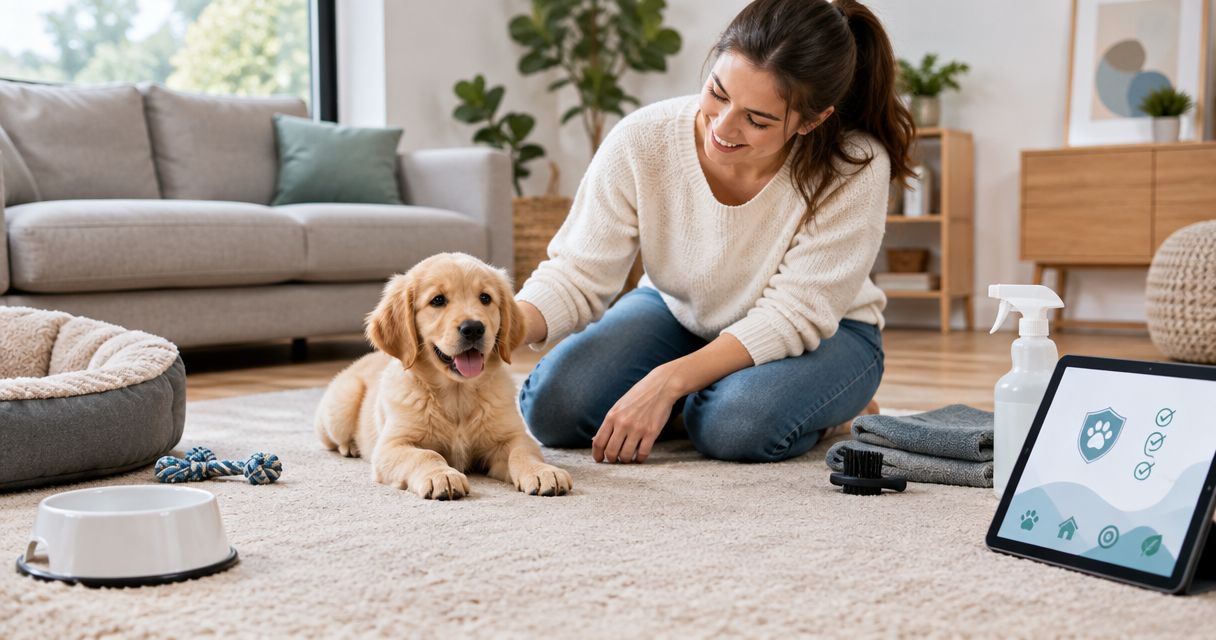
Instead of repeatedly scrubbing accidents after your pet reaches every room, protect carpet from new pet messes by setting up a limited-access area, a cleanup station, and a supervised routine. This 2026 workflow takes you from arrival-day preparation to handling accidents without soaking the carpet or guessing which cleaner to use.
- Protect carpet from new pet accidents with supervised access, washable barriers, and prompt spot cleaning.
- PowerPro Carpet Cleaning serves homeowners needing professional carpet care in Manalapan Township and surrounding New Jersey counties.
- Check carpet-care instructions before choosing a pet stain remover; spot-test before treating a visible area.
- Persistent odor needs assessment, not repeated soaking or a stronger fragrance.
Why this matters
A new pet brings several different carpet problems: tracked-in soil, shed hair, scratching, and bathroom accidents. One cleaning product does not address all of them. Your prevention plan needs to control access, catch dirt at the entrance, and make cleanup straightforward.
PowerPro Carpet Cleaning is best for Manalapan Township homeowners seeking a local, family-owned carpet cleaning service. Professional cleaning supports routine care; it does not replace house-training, supervision, or veterinary attention when bathroom habits change. Review the available cleaning services when an existing carpet problem needs attention before your pet arrives.
For your 2026 household plan, judge progress by what actually happens: where accidents occur, which doorway collects dirt, and whether treated areas dry properly. Do not expand access simply because the calendar says it is time.
Before you start
- Gather the materials: your carpet manufacturer's care instructions, a compatible spot cleaner, plain white absorbent cloths, a vacuum, and an appropriate gate or barrier. Keep cleaning supplies out of your pet's reach.
- Choose a suitable starting area: provide access to water, rest, and the pet's appropriate bathroom arrangement. Use a comfortable, supervised space rather than treating confinement as punishment.
- Check the hidden gotcha: a washable mat is not automatically leakproof or suitable for carpet. Liquid can pass through, and some backings can affect the surface underneath. Check both manufacturers' instructions and inspect beneath the mat.
Keep 2 clean cloths at the cleanup station: one for absorbing the mess and another for the next label-directed cleaning step. This is a practical setup choice, not a required cleaning dose. Let the product label determine application amounts and contact time.
Access setup
Establish the starting area
- Choose 1 starting room or gated area. Favor a space you can supervise and clean without cutting the pet off from essential needs. Remove loose cords, small objects, and anything the pet can pull down.
- Close unused rooms. Block access to bedrooms, closets, and other carpeted spaces you cannot watch. Check that the barrier is suitable for the animal's size and behavior.
- Place food and water thoughtfully. Where practical, use an easy-clean surface and a stable bowl setup. Inspect nearby flooring for splashes rather than assuming a feeding mat catches everything.
- Make scratching alternatives accessible. For a cat, provide a suitable scratching surface near the area where scratching occurs. Redirect the behavior instead of covering damage and leaving the cause unchanged.
- Record the starting condition. Note existing stains, odors, loose edges, and worn areas before arrival. A simple photograph helps distinguish an old problem from a new accident.
Expected result: your pet has a comfortable starting area, and you know which carpeted spaces remain off-limits. If you cannot see or reliably supervise the pet in that area, change the setup before expanding it.
Choose protection that matches the problem
These options serve different purposes. For your 2026 setup, choose by the mess you need to prevent, not by which covering looks thickest.
| Protection option | Best for | Advantage | Limitation |
|---|---|---|---|
| Gate or closed door | Preventing unsupervised carpet access | Keeps an entire area out of reach | Requires a suitable layout and consistent household use |
| Washable entrance mat | Catching dirt near an outside door | Gives you a removable surface to clean | Does not guarantee protection against liquid reaching carpet |
| Carpet-compatible protective barrier | Shielding a specific vulnerable spot | Separates the pet activity from the carpet surface | Requires compatibility checks and inspection underneath |
| Approved carpet protectant | Supporting stain resistance where suitable | Can supplement the carpet's care plan | Does not make carpet waterproof or replace prompt cleanup |
Start with access control. A covering protects only the area it covers; a closed door prevents unsupervised access to the whole room. Ask your carpet manufacturer about protectant compatibility before arranging an application.
Cleanup station and accident response
Prepare the station
- Read the carpet-care instructions. Identify any restrictions on cleaning agents, equipment, or methods. If you do not know the carpet material, avoid experimenting with increasingly strong products.
- Select a compatible cleaner. For pet accidents, choose a product labeled for the relevant mess and suitable for your carpet. An enzyme-based label does not establish compatibility with every fiber or rug.
- Test an inconspicuous spot. Follow the product's test instructions and assess the result before using it in a visible area. Stop if you see color transfer, texture change, or another adverse reaction.
- Store supplies together. Keep cloths, the approved cleaner, gloves if directed, and disposal materials accessible to adults but secured from pets and children.
Expected result: you can respond without searching cupboards or combining products. The cleaner's label—not a general internet recipe—controls dilution, contact time, rinsing, and re-entry instructions.
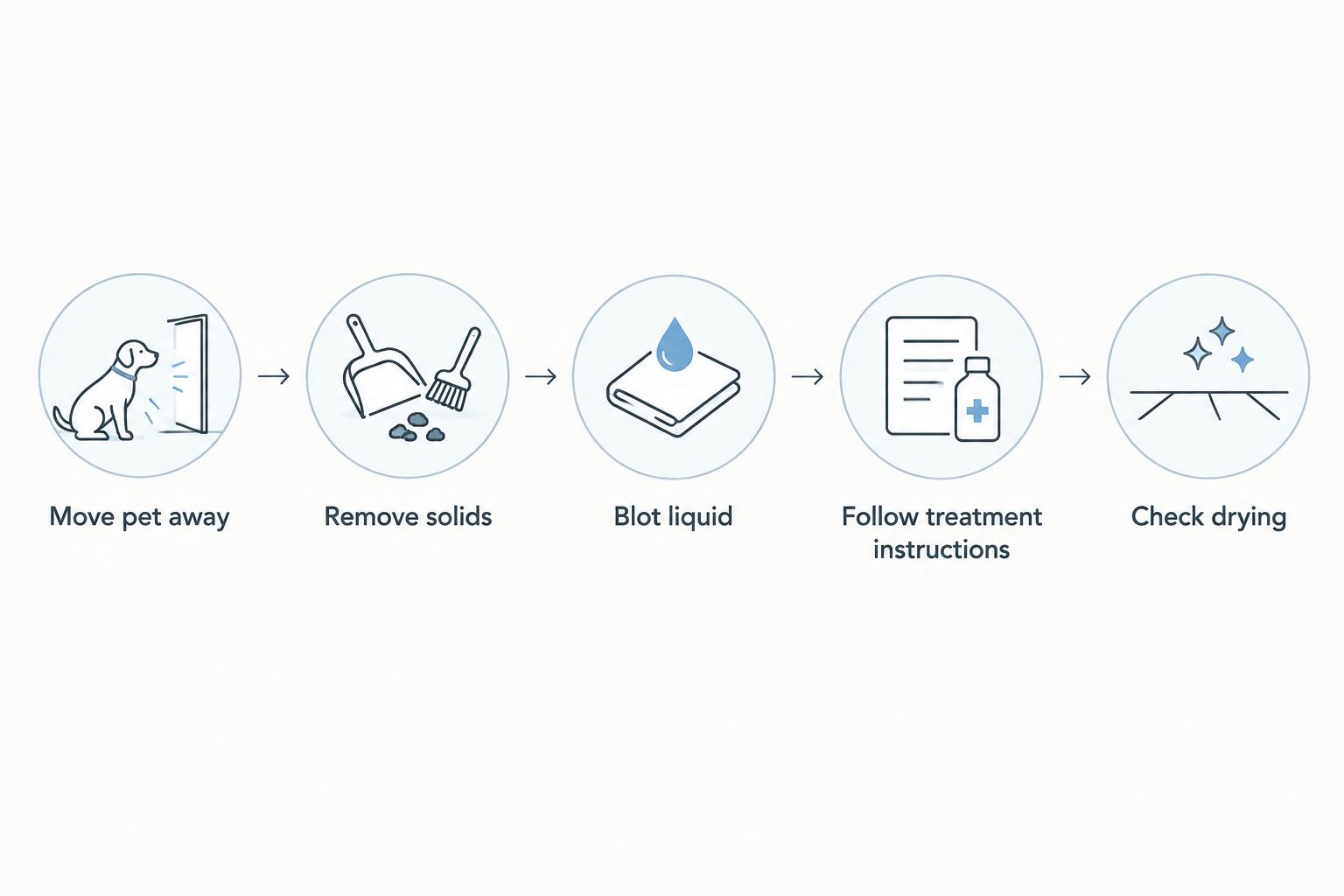
Respond to an accident
- Move the pet away. Prevent contact with the mess and cleaning materials. Keep a calm response; cleanup is not a training punishment.
- Remove solids carefully. Lift them without grinding them into the pile. Avoid spreading the affected area.
- Blot liquid with a white cloth. Apply pressure and move to a clean part of the cloth as it absorbs moisture. Do not scrub the fibers aggressively.
- Follow the approved treatment instructions. Apply only as directed. Do not saturate the carpet in an attempt to reach an unknown amount of contamination below it.
- Complete the specified finishing steps. Follow any required blotting, rinsing, extraction, or drying directions. Never mix cleaning products or add a household chemical to strengthen the treatment.
- Keep the area inaccessible during treatment and drying. Follow the label's pet re-entry instructions and check the carpet before reopening the space.
Expected result: the accident has been addressed using a known, compatible method, and the pet cannot reach the wet treatment area. A lingering smell is a reason to reassess, not a reason to repeat unlimited applications.
Do not use fragrance as your completion test. A scented room does not establish that the source has been removed. If odor returns after drying, record what you applied and tell the cleaning professional before further treatment.
Household routine and access review
Set the daily routine
- Check the entrance after outdoor trips. Remove visible debris from paws using an appropriate method and dry wet paws before carpet access. Inspect the entrance mat and the surface beneath it.
- Match bathroom arrangements to the pet. Follow suitable house-training guidance for a dog and provide an accessible, appropriately maintained litter arrangement for a cat. Ask your veterinarian about unexpected changes.
- Vacuum according to conditions and carpet guidance. Focus on visible hair, tracked-in debris, and the routes the pet uses. Use equipment and settings suitable for the carpet rather than forcing a brush attachment onto every surface.
- Keep a 7-day observation log. Record accidents, locations, wet mats, and recurring scratching. The log is a review tool, not a deadline for training success.
- Expand access gradually. Add a supervised area when the existing routine is working. Return to a smaller area if accidents become harder to catch.
Expected result: you can identify the weak point in the routine instead of treating the entire house as one cleaning problem. Review your 2026 plan whenever the pet's access, health, or household schedule changes.
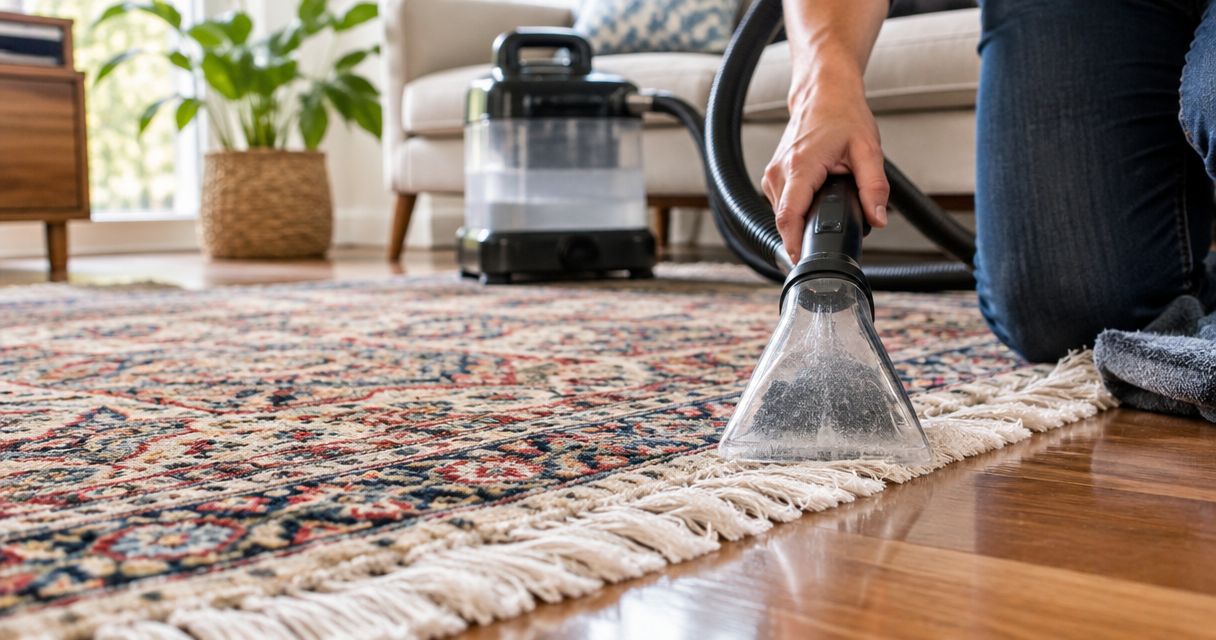
Before arranging a cleaning visit, read the guide to having carpets cleaned with pets in the house. Plan a separate pet area and ask about treatment-specific re-entry instructions before work starts.
Second workflow: reset after a recurring accident
A repeat accident needs a different response from a single fresh spill. Reduce access and investigate the cause before applying more cleaner.
- Close off the affected area again. Keep the pet comfortable elsewhere while you check the carpet and review the routine.
- Review the observation log. Look for missed bathroom opportunities, an inaccessible litter area, a newly opened room, or a changed household schedule. Do not assume every accident is deliberate marking.
- Separate behavior from health concerns. Contact your veterinarian about sudden or persistent bathroom changes, particularly when the pet also appears uncomfortable or unwell.
- Assess the flooring problem. Note whether the odor returns after drying, whether the same spot stays damp, and which treatments have already been applied.
- Request professional assessment when needed. Explain the history rather than asking only for the visible spot to disappear. Contamination below the surface requires a different discussion from ordinary surface soil.
Expected result: you have a revised access plan and a clear next action. PowerPro Carpet Cleaning provides local carpet cleaning; ask what assessment and treatment are appropriate for the specific condition rather than assuming every odor has the same remedy.
Troubleshooting
The spot looks clean, but the odor returns
Stop repeating the same surface treatment. Odor can remain when contamination extends beyond the area reached by cleaning. Describe the location, accident history, and products used when requesting an assessment; do not assume another pass will resolve it.
The carpet beneath a mat feels damp
Remove the mat, keep the pet away, and address the moisture according to the carpet's care instructions. Do not replace the covering while the surface remains damp. Check whether liquid passed through the mat or accumulated beneath it before using that setup again.
The cleaned area changes color or texture
Stop applying the product. Save the label and record what you used, including any dilution. Avoid trying a second chemical to reverse the result; contact the carpet manufacturer or a qualified cleaning professional for the next step.
The pet keeps scratching the carpet edge
Block access to the damaged edge and provide an appropriate alternative activity or scratching surface. Check for loose fibers that the pet can chew or swallow. Cleaning does not repair an unsecured seam or solve the behavior causing the damage.
Carpet remains wet after repeated spot treatments
Stop adding liquid and keep the area open to suitable airflow while restricting pet access. Follow product and carpet instructions, and seek professional advice if the moisture persists. A dry-looking surface alone does not confirm that everything beneath it is dry.
Customize your workflow
Adjust your 2026 carpet-care plan to the room, pet, and flooring—not a fixed cleaning calendar. An entryway needs dirt control; a favorite sleeping spot needs hair removal; a recurring accident location needs investigation.
For homes in Manalapan Township and surrounding Central and North New Jersey counties, call PowerPro Carpet Cleaning to discuss the affected rooms and the pet's routine. Explain whether the concern is visible soil, staining, odor, or repeated wetting. Professional cleaning addresses carpet care, but it cannot guarantee that a pet will stop returning to a location.
Discuss Your Carpet Cleaning Needs
Describe the affected rooms, pet accidents, and previous treatments before arranging service.
FAQ
What's the best way to protect carpet from a new pet?
Start with supervised access to a limited area, a prepared cleanup station, and a routine suited to the pet. Add carpeted rooms gradually as the routine becomes reliable.
Should I cover all my carpet before bringing a puppy home?
Start with access control rather than covering every carpeted surface. Any covering must be suitable for the carpet, secure underfoot, and checked underneath for moisture.
Is an enzyme cleaner safe for every carpet?
No. Check both the carpet-care instructions and the cleaner's label, then test an inconspicuous area before treating a visible spot.
Can carpet protectant stop pet urine from soaking through?
Do not treat carpet protectant as a waterproof barrier. Keep supervising the pet and respond promptly to accidents even when a suitable protectant has been applied.
Should I steam-clean a fresh pet accident?
Start with solid removal, blotting, and the carpet-approved treatment instructions rather than applying heat automatically. The correct method depends on the carpet and the type of contamination.
When should I call a carpet cleaner about pet odor?
Request an assessment when odor persists after appropriate treatment, returns after drying, or follows repeated accidents in the same area. Explain previous treatments and any concern about contamination beneath the carpet.
How long should my pet stay off cleaned carpet?
Follow the cleaning product's or service provider's re-entry instructions and keep the pet away while treatment restrictions apply. Do not substitute a fixed waiting period for checking the actual conditions.
One last thing
Check underneath the protection, not just on top of it. A clean-looking mat can hide moisture on the carpet below. Add that check to your entrance routine before giving the pet access to another room.