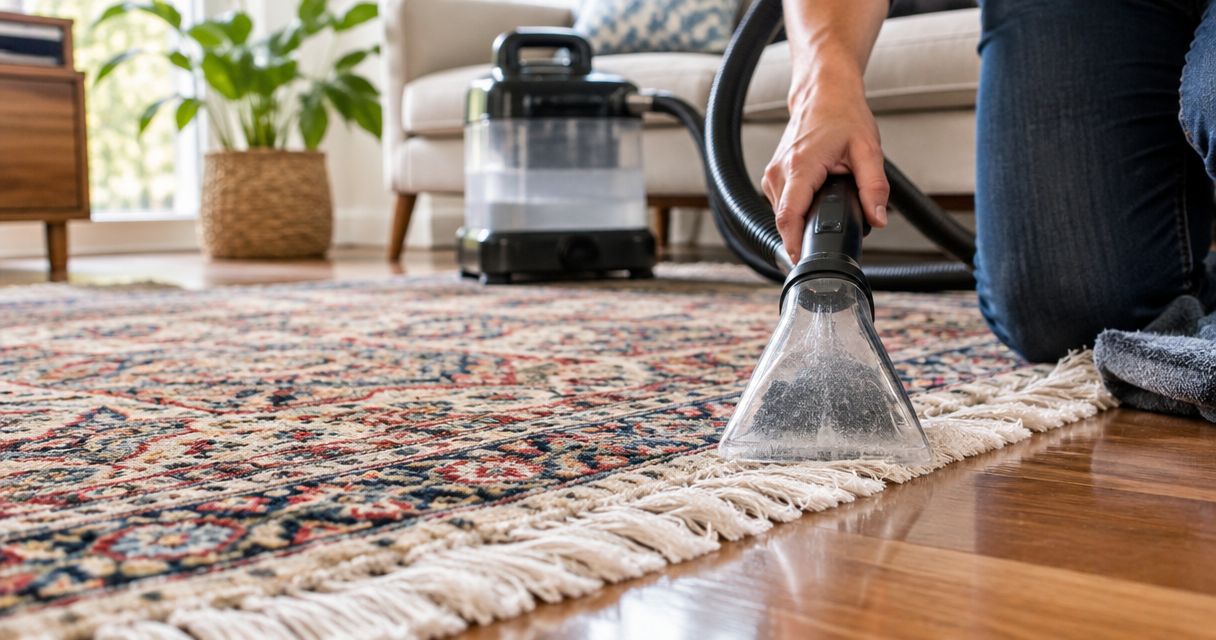
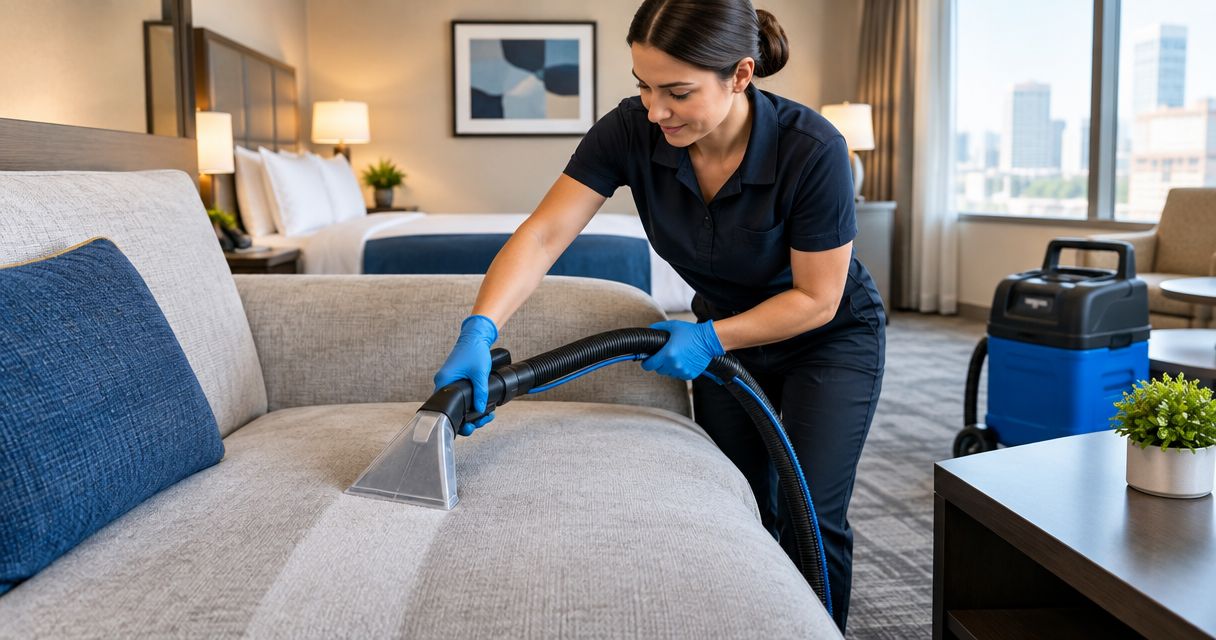
Hotel upholstery cleaning is the care of upholstered seating with the aim of keeping guest rooms and shared spaces clean, usable, and ready for guests. This 2026 guide explains how to match cleaning to the fabric, coordinate housekeeping and outside help, and keep damp furniture out of service until it is ready.
- Upholstery cleaning for hotels starts with fabric identification, not a machine or stain remover.
- PowerPro Carpet Cleaning suits Central and North New Jersey businesses seeking local upholstery cleaning.
- Housekeeping handles routine dry-soil removal; professional cleaning addresses work beyond the approved daily care process.
- Schedule hotel and motel seating by zone, and release furniture only after a dryness and condition check.
Why upholstery cleaning matters for hotels and motels
Hotels and motels must maintain seating while keeping rooms and common areas usable. A guest-room chair, breakfast-area banquette, and lobby sofa need separate cleaning decisions because their construction, soil, and access differ.
A cleaning appointment is not the same as a furniture-release time. Your housekeeping team needs to know which seats are being treated, who checks them afterward, and where guests can sit meanwhile.
PowerPro Carpet Cleaning is a family-owned business serving homeowners and businesses in Manalapan Township and surrounding Central and North New Jersey counties. Its services include upholstery, carpet, area rug, tile/grout, and air duct cleaning. Confirm your property's location and furniture requirements before arranging service.
For your 2026 maintenance plan, separate routine care from restorative cleaning. Vacuuming removes loose material; it does not establish whether an old stain, worn armrest, or damaged cushion can be corrected. Document those conditions before choosing the work.
Build a hotel upholstery cleaning plan
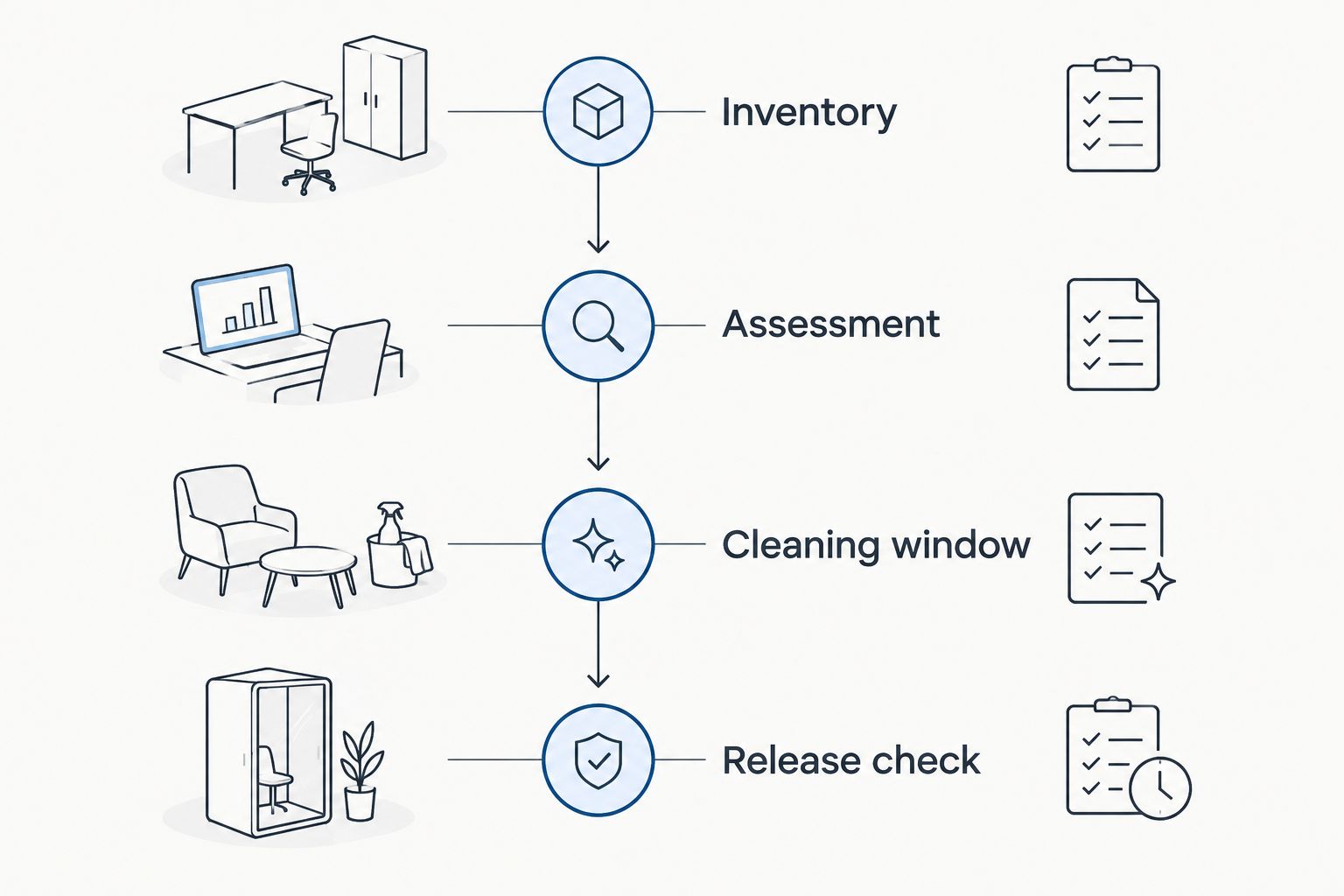
1. Inventory your seating by location and material
Start with a walk-through and a simple spreadsheet. Record every seating type, its location, visible condition, and any manufacturer care information. You do not need special software; photographs and a shared list give housekeeping and management a common reference.
Group matching chairs together, but note differences in wear or previous repairs. Identical-looking upholstery does not prove that every piece has received the same treatment or remains in the same condition.
Use 3 planning zones as a starting point: guest rooms, shared guest spaces, and staff areas. These are organizational categories, not a required cleaning schedule. Add zones when your property's layout calls for them.
- Record room numbers or precise common-area locations.
- Photograph labels, stains, tears, and worn seams.
- Separate fabric, leather, and other upholstery materials.
- Note attached cushions and inaccessible areas.
- Flag furniture without readable care instructions.
2. Match routine care to the manufacturer's instructions
Begin with the manual approach: review the care label, vacuum where permitted, and follow the manufacturer's spill instructions. Keep approved supplies separate from general bathroom and floor chemicals. A convenient cleaner is not automatically suitable for upholstery.
Common upholstery codes include W for water-based cleaning, S for solvent-based cleaning, W/S for either permitted approach, and X for vacuuming or brushing only. A care code is a restriction, not a complete cleaning recipe. Follow the furniture manufacturer's instructions and test the proposed treatment appropriately.
When instructions are missing or materials are uncertain, stop spot-treatment experiments and request an assessment. Do not make the next shift responsible for guessing what was applied.
- Keep manufacturer instructions with the furniture inventory.
- Vacuum seams and crevices where the care instructions permit.
- Blot spills rather than scrubbing them into the fabric.
- Record the product used on each treated spot.
- Escalate dye transfer, texture changes, or water marks.
3. Set priorities before arranging professional cleaning
Use your inventory to decide what needs attention first. Housekeeping can identify loose soil and document spills; management should approve work that requires furniture to leave service. This avoids treating every chair as an identical job.
For outside help, PowerPro Carpet Cleaning provides upholstery cleaning to businesses in its New Jersey service area. Share the furniture list and photographs before discussing scope. An outside service offers a path beyond routine housekeeping, but you still need agreement on materials, access, exclusions, and handoff.
Separate 2 work groups: furniture suitable for routine care and furniture needing assessment. This is a sorting method, not a promise that every stain is removable. Torn fabric, weakened seams, and worn surfaces require a different decision from ordinary soil.
- Prioritize fresh spills requiring approved action.
- Flag heavily used seating and visible accumulation.
- Identify furniture that cannot be taken out of service together.
- Separate repair concerns from cleaning requests.
- Ask which existing marks are unlikely to improve.
4. Schedule work around room and seating access
Start scheduling with your own operations calendar. Mark departures, room blocks, meeting use, breakfast service, and periods when alternate seating is available. Then agree on a work sequence rather than offering the entire property at once.
For a 2026 hotel maintenance calendar, record the cleaning window and the later release check as separate tasks. Do not assign a universal drying duration. Material, padding, cleaning method, room conditions, and airflow affect when furniture is ready.
Give the front desk a named contact for changes. If a room returns to use early, staff need a clear instruction—not an assumption that a dry-looking cushion is ready for a guest.
- Agree on the first and last work areas.
- Keep untreated seating available in shared spaces.
- Confirm equipment routes and access requirements.
- Assign someone to coordinate room-status changes.
- Allow for inspection before returning furniture to use.
5. Prepare the work area and document the handoff
Have housekeeping remove personal belongings, loose debris, and items stored around the seating. Confirm who moves furniture and what must remain in place. Do not assume moving heavy pieces, disconnecting fixtures, or treating hidden surfaces is included.
Before cleaning begins, walk through the agreed work with the cleaner. Point out previous treatments and photograph existing damage. Written notes make the final inspection more useful because both sides know the starting condition.
Approve the method and scope before work starts. Ask how the proposed treatment fits the upholstery instructions and what happens if a test reveals an adverse reaction. Cleaning should not proceed simply because equipment has arrived.
- Remove guest belongings and loose decorative items.
- Identify nearby finishes that need protection.
- Mark damaged or excluded furniture clearly.
- Share the spot-treatment record with the cleaner.
- Confirm who handles movement and repositioning.
6. Inspect seating before returning it to guests
Do not release a room or lobby section based only on elapsed time. Ask the cleaner what drying checks the treatment requires, then assign your team to complete the agreed handoff. Surface appearance alone does not confirm the condition beneath a cushion.
Check 3 release points: dryness, visible condition, and placement. Look at seams, cushion edges, and treated areas as well as the seat center. Keep furniture out of use if the agreed check is incomplete.
Record any remaining stain separately from new damage or incomplete work. A permanent mark and a still-damp seat are different issues; staff need a clear response for each rather than a blanket instruction to clean again.
- Confirm the agreed dryness check is complete.
- Inspect treated spots and adjacent fabric.
- Check cushions and seams for condition changes.
- Restore furniture without blocking guest routes.
- Record the person authorizing the return to use.
7. Review results and adjust the maintenance plan
Use a shared log rather than relying on memory. Record where soil returns, which stains recur, and which pieces remain difficult to maintain. Compare similar furniture in different locations before deciding on a fixed cleaning interval.
Your 2026 review should distinguish cleaning problems from furniture problems. Persistent discoloration deserves assessment; repeated cleaning is not a substitute for repairing damaged upholstery or reconsidering a piece that no longer meets your property's standards.
Set the next review from observed condition, usage, and manufacturer guidance. A quiet guest-room chair and breakfast seating should not receive the same schedule merely because they appear on the same purchase order.
- Log cleaning dates and affected locations.
- Track recurring spots and previous treatments.
- Review seating condition during room inspections.
- Update instructions when furniture is replaced.
- Adjust the plan when actual conditions change.
Compare your hotel upholstery cleaning options
Use housekeeping for routine care and assessment-led professional cleaning for work beyond that routine. Neither replaces the other. The table below separates the practical benefit of each approach from its limits; it does not assume that one cleaning method suits every fabric.
| Option | Best for | Practical benefit | Key limitation |
|---|---|---|---|
| In-house routine care | Approved vacuuming and prompt spill response | Fits daily room and common-area checks | Does not replace material assessment or resolve every embedded-soil problem |
| In-house machine cleaning | Furniture explicitly suitable for the equipment and process | Gives trained staff control over the work sequence | Requires suitable equipment, training, testing, and drying management |
| PowerPro Carpet Cleaning upholstery service | Local businesses seeking upholstery cleaning in its stated New Jersey service area | Provides outside cleaning support alongside other listed cleaning services | Hotel-specific methods, access arrangements, and drying requirements must be confirmed |
| Upholstery repair or replacement | Torn, structurally damaged, or unsuitable seating | Addresses defects that cleaning cannot fix | Is a separate scope from removing soil |
Choose by furniture condition and operating requirements, not by the name of a machine. A method that suits one chair does not automatically suit a different fabric or backing.
Before appointing a provider, ask for a written scope covering the furniture, treatment approach, exclusions, access, and handoff. Confirm whether any requested work falls outside the provider's service. This keeps an upholstery request from quietly becoming an unapproved repair or restoration job.
Common mistakes hotel and motel teams make
Treating every upholstered surface alike
Guest-room chairs, upholstered headboards, and lobby sofas need their own care instructions. Do not copy a treatment across the property because the fabric looks similar. Record the permitted process by furniture type.
Cleaning every lobby seat at once
Removing all seating from use creates an avoidable operating problem. Divide the work into sections and identify the alternate seating before cleaning starts. Keep the front desk informed of each section's status.
Using fragrance as the completion test
A pleasant smell does not establish that soil has been removed or padding is dry. Inspect the furniture and complete the agreed handoff instead. Report persistent odor for assessment rather than adding another scented product.
Booking rooms against an assumed drying time
A fixed time copied from another property is not a release instruction. Confirm the treatment-specific drying plan and check the actual furniture. Keep affected seats out of use until the check is complete.
Asking cleaning to correct physical wear
Frayed arms, torn seams, and damaged cushions are not simply dirty upholstery. Identify those conditions before approving cleaning so the final inspection measures realistic work. Escalate repairs separately.
Arrange local upholstery cleaning
For hotels and motels near Manalapan Township and surrounding Central and North New Jersey counties, start with a clear furniture list. Call PowerPro Carpet Cleaning to discuss upholstery cleaning, your property location, and the work you need assessed. Use the contact page to begin the conversation.
Bring room counts, seating photographs, care labels, and access restrictions to that discussion. Confirm the scope before setting your housekeeping schedule. Local service coverage does not by itself establish that a particular material or operating arrangement is suitable.
FAQ
What's the best approach to upholstery cleaning for hotels?
The best approach combines manufacturer-approved routine care with professional assessment when the work exceeds housekeeping's approved process. Inventory the furniture, agree on treatment, and inspect it before returning it to guests.
How often should a hotel clean upholstered chairs?
Set the cleaning interval from furniture condition, use, and manufacturer instructions rather than a universal calendar. Review heavily used shared seating separately from lightly used guest-room chairs.
Can housekeeping clean hotel upholstery without a professional?
Housekeeping can perform routine care permitted by the manufacturer's instructions and staff training. Unknown materials, adverse reactions, and work outside the approved process need assessment before treatment continues.
Can a hotel use one cleaning method on every sofa and chair?
No, a hotel should not assume one cleaning method suits every upholstered piece. Fabric, backing, construction, care instructions, and existing damage must guide the decision.
How long should hotel furniture stay out of use after cleaning?
Keep furniture out of use until it passes the agreed dryness and condition checks. Confirm the drying plan for the actual material and treatment rather than promising a fixed duration.
Does upholstery cleaning disinfect hotel furniture?
Upholstery cleaning does not by itself establish that furniture has been disinfected. If disinfection is required, confirm that the product and process are labeled for that use and compatible with the upholstery.
Can professional cleaning remove every hotel upholstery stain?
No, professional cleaning cannot guarantee removal of every stain or reverse physical wear. Ask for an assessment of existing marks, previous treatments, and fabric damage before approving the work.
One last thing
Add a handoff field to your 2026 furniture log: Who approved this seat for guest use? That small instruction closes the gap between a cleaner finishing work and housekeeping returning a room to service. Record the check, not just the appointment.