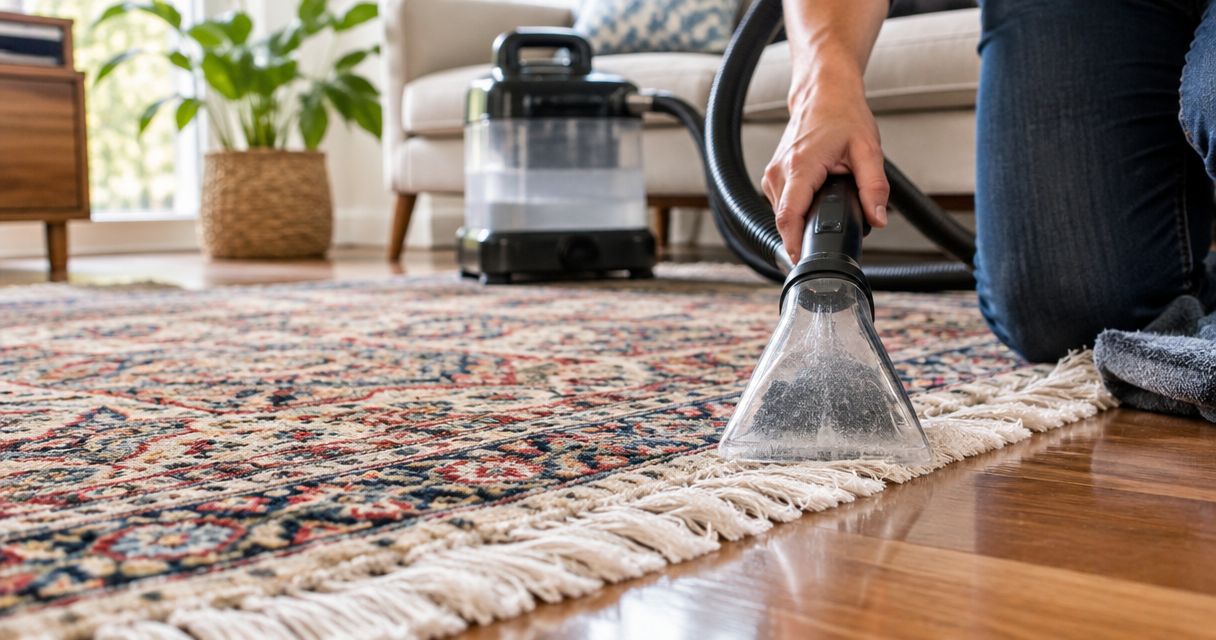
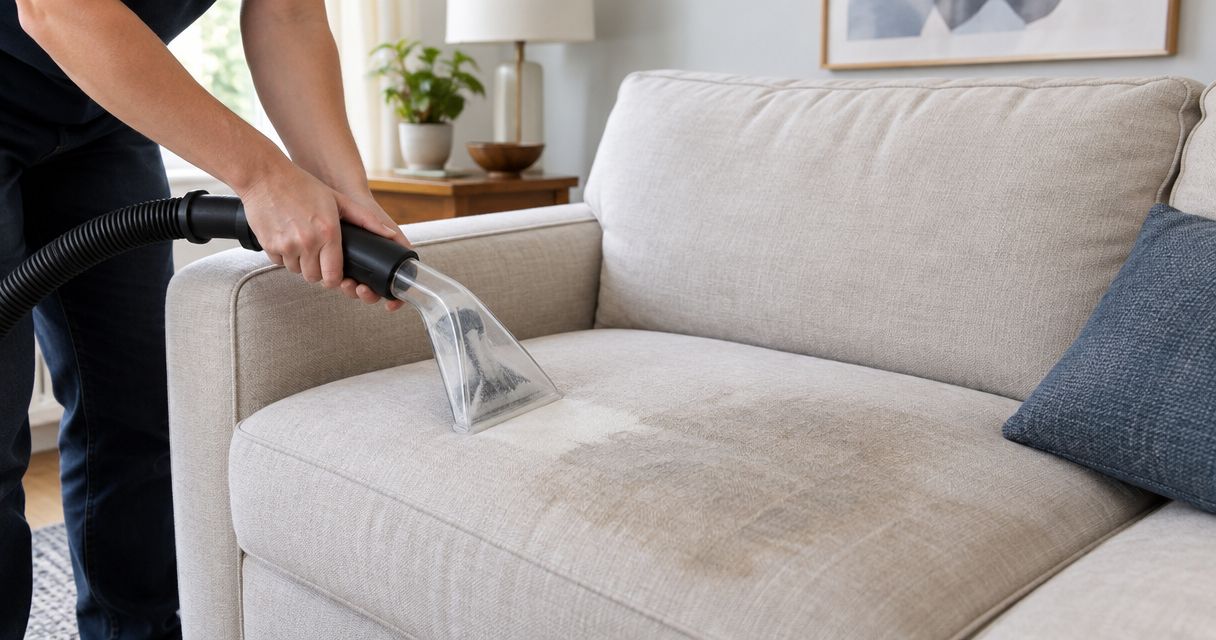
Upholstery cleaning can remove accumulated body oils and improve years-old greasy stains, but it cannot guarantee complete removal or reverse permanent fabric damage. The result depends on whether the dark area is removable soil, a lasting color change, or wear—and whether the fabric permits the cleaning needed to release the oil.
- Can upholstery cleaning remove body oil stains? Yes, but permanent discoloration and worn fibers can remain.
- Check the manufacturer's cleaning instructions before applying water, solvent, or heat to a couch.
- PowerPro Carpet Cleaning offers local upholstery cleaning for homeowners and businesses in Manalapan Township and surrounding New Jersey counties.
- Judge stain removal after the upholstery dries, not while the fabric is wet.
Can upholstery cleaning remove years of body oil stains?
Yes—removable oil buildup can respond to upholstery cleaning even when the stain is old. Age alone does not establish whether a stain is permanent. The important distinction is what remains in the fabric and what has happened to the fibers underneath it.
A dark headrest or armrest is not necessarily a single stain. Skin oils, hair products, lotions, and ordinary dirt can collect in the same contact area. Cleaning addresses that buildup; it does not replace missing dye, repair abrasion, or restore a damaged finish.
For local service, PowerPro Carpet Cleaning provides upholstery cleaning in Manalapan Township and surrounding Central and North New Jersey counties. Describe the affected furniture and its care label when you call.
| What you see | What it can indicate | What cleaning addresses | What cleaning cannot promise |
|---|---|---|---|
| Dark, greasy armrests | Oil mixed with accumulated soil | Removable surface and embedded soil | An exact match with an unused area |
| A dark headrest | Repeated contact with skin oils and hair products | Residue that responds to a fabric-safe treatment | Removal of permanent discoloration |
| A shiny, flattened patch | Soil, compressed pile, abrasion, or a combination | The soil portion of the problem | Restoration of worn fibers |
| A ring around a treated spot | Uneven wetting or redistributed residue | Residue, when the material allows further treatment | Safe correction without checking the fabric |
For a 2026 cleaning appointment, ask for an assessment of the stain and fabric rather than a blanket promise that an old couch will look new. Successful cleaning means removing soil safely—not forcing a uniform appearance at the expense of the upholstery.
Why this matters
A couch can look dirty because it contains removable buildup, because its surface has worn, or because both have happened together. Treating every dark patch as grease encourages repeated scrubbing and unnecessary wetting.
Your first decision is not which stain remover to buy. It is whether the upholstery permits spot cleaning and whether the affected area shows physical damage. That distinction helps you avoid turning a cleanable mark into a larger problem.
Why body oil stain removal varies
These factors determine the appropriate treatment and the limits of the result:
- Fabric and cleaning instructions. The upholstery's care requirements control which cleaning agents and methods are suitable.
- The mixture in the stain. Skin oil, hair products, lotion, and tracked-in dirt do not necessarily respond to the same treatment.
- Repeated contact. Continued use deposits more material in the same headrest, cushion edge, or armrest.
- Previous cleaning attempts. Residue from earlier products can complicate treatment and make the original stain harder to assess.
- Color and fiber condition. Cleaning cannot restore dye that has changed or replace fibers lost through wear.
- Moisture sensitivity. Some upholstery requires restricted moisture or specialist treatment to avoid damage.
Give the cleaner the history you know. A list of products already applied is more useful than a guess about how many years the mark has been there.
Water-cleanable upholstery: follow the care instructions
Best for: furniture whose manufacturer permits water-based upholstery cleaning. A W code generally permits water-based cleaning products, but it does not mean you should saturate the cushion or put its cover in a washing machine.
The benefit is access to water-based treatments formulated for upholstery. The limit is that dyes, backing, filling, trim, and construction still matter. A compatible surface cleaner does not make unlimited moisture safe.
For your 2026 cleaning plan, photograph the care label and the entire piece of furniture before calling. Include the worst contact area so the cleaner understands both the material instructions and the pattern of staining.
Solvent-cleanable upholstery: avoid water-based experiments
Best for: upholstery whose manufacturer specifies solvent-based cleaning. An S code generally calls for an appropriate water-free solvent treatment, not a household water-and-detergent mixture.
The benefit is a treatment route intended for water-sensitive upholstery. The limitation is that solvent use requires attention to product instructions, ventilation, fabric compatibility, and handling precautions. A solvent designation is not permission to use any degreaser you have at home.
An X code generally restricts routine care to vacuuming or light brushing. If the tag is missing or unclear, request an assessment rather than assuming the couch is water-cleanable.
| Care marking | General meaning | Best for | Main limitation |
|---|---|---|---|
| W | Water-based upholstery cleaning products | Fabrics approved for water-based treatment | Does not authorize soaking or machine washing |
| S | Appropriate water-free solvent cleaning | Fabrics requiring solvent-based treatment | Household water-based spot cleaning is unsuitable |
| W/S or S/W | Either permitted cleaning category, subject to instructions | Fabrics with more than one approved treatment route | Testing and construction still affect the choice |
| X | Vacuuming or light brushing | Routine dry soil removal | Do not apply liquid spot cleaners without manufacturer guidance |
The manufacturer's full instructions take priority over a shorthand interpretation of a letter. Check separate instructions for removable covers, decorative trim, and cushions.
How to handle an old body oil stain before cleaning
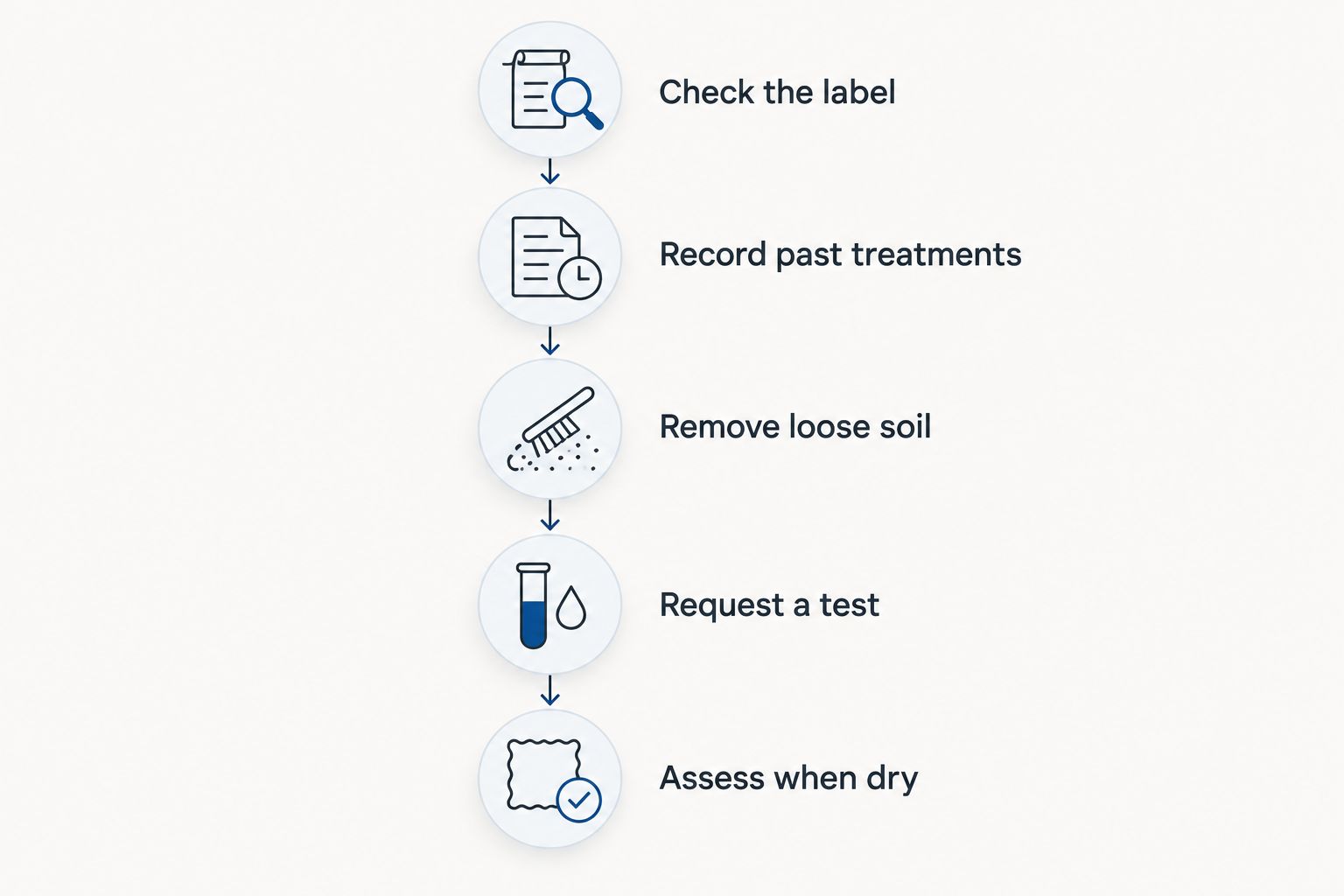
Check the label
Find the furniture care tag and read any separate instructions supplied with the couch. Do not identify a material by appearance alone; a suede-like finish, for example, does not establish its fiber content or cleaning requirements.
Record past treatments
Write down any dish detergent, upholstery spray, solvent, deodorizer, or rented-machine treatment already used. Include whether the area became lighter, developed a ring, felt stiff, or darkened again after drying.
Remove loose soil
If the furniture instructions permit vacuuming, use an appropriate upholstery attachment without scraping or aggressively brushing the fabric. Removing loose debris is different from treating the oily deposit; vacuuming alone does not dissolve grease.
Request a test
Ask how the cleaner will check colorfastness and material compatibility before treating the visible stain. A hidden-area test helps assess treatment risk, but it does not guarantee that a worn armrest will match the rest of the couch.
Assess when dry
Review the result after the upholstery has dried according to the cleaner's instructions. Wet fabric often looks darker, so an immediate wet inspection is not a reliable final judgment.
What should you avoid putting on an oily couch stain?
Avoid treating upholstery like a washable kitchen surface. A product that cuts grease on a plate is not automatically suitable for a dyed textile attached to padding and a furniture frame.
Do not mix cleaning products or escalate to stronger chemicals because an initial attempt failed. Household degreasers, bleach, and unapproved solvents can damage materials or create handling hazards. Follow the upholstery instructions and the cleaner's label together.
Heavy scrubbing is another poor trade. It can disturb the pile or abrade the surface while leaving oil deeper in the fabric. Repeated wetting can spread residue and complicate drying.
For an old stain in 2026, the practical next move is to stop adding products and arrange an assessment. Preserve the labels or names of anything already applied so the cleaner can account for them.
What should you ask an upholstery cleaner before booking?
Ask about the furniture, not just the stain. A useful conversation establishes what the upholstery allows and what outcome the cleaner expects.
- What do the care instructions permit on this fabric?
- Does the affected area look like removable buildup, wear, or both?
- Will you check compatibility before treating the visible stain?
- Does the whole panel need attention to avoid uneven cleaning?
- What should I do before the appointment?
- How should I judge the result and care for the upholstery afterward?
PowerPro Carpet Cleaning is a local upholstery cleaning option for homeowners and businesses in Manalapan Township and surrounding Central and North New Jersey counties. Its service area makes it relevant to local readers; whether a particular stain is removable still requires a furniture-specific assessment.
Call PowerPro Carpet Cleaning to discuss the fabric, care label, and previous treatments before booking. Ask what preparation is needed and what limitations apply to the affected area.
Arrange upholstery cleaning
Discuss your furniture, care label, and body oil stains before booking.
Can cleaning restore a shiny armrest to its original appearance?
Cleaning removes soil, not wear. A shiny armrest can contain oily residue, flattened pile, or abrasion, and those conditions do not have the same remedy.
Ask the cleaner to distinguish the removable deposit from changes in the textile itself. If the surface remains shiny after safe cleaning and complete drying, repeated stain treatment is not automatically the answer.
Should you replace an older couch instead of cleaning it?
An old body oil stain alone is not enough reason to replace a couch. Consider the frame, seating support, fabric condition, and whether you would keep the furniture if its appearance improved without becoming perfect.
For a 2026 repair-or-replace decision, separate cleanliness from restoration. Cleaning addresses soil; upholstery repair or replacement addresses damaged material. A couch with sound construction and cleanable fabric presents a different decision from one with torn upholstery and failing support.
Will body oil stains come back after upholstery cleaning?
New body oil buildup returns with continued contact. A dark area that reappears after drying, however, is not automatically new oil; remaining residue or material moving toward the surface can also affect the appearance.
Report the timing and location to the cleaner before applying another product. Once the furniture is ready for use, follow its care instructions and use washable protective covers only where the furniture manufacturer permits them.
FAQ
Can upholstery cleaning remove body oil stains that are years old?
Upholstery cleaning can remove accumulated body oils from older stains when the fabric permits suitable treatment. Permanent discoloration, abrasion, and damaged finishes can remain after the soil is removed.
What's the best first step for a greasy couch armrest?
Check the manufacturer's care instructions before applying a cleaner. Record any products already used, then ask an upholstery cleaner to assess the fabric and stain.
Can I use dish soap to remove body oil from my sofa?
Do not assume dish soap is suitable for your sofa. The upholstery may prohibit water-based cleaning, and detergent residue can complicate further treatment.
Does a W label mean I can wash my cushion covers?
A W label does not automatically authorize machine washing. It generally permits water-based upholstery cleaning products; removable covers require their own washing instructions.
Will steam remove oil from every upholstery fabric?
Steam is not suitable for every upholstery fabric. The manufacturer's instructions, dye stability, and furniture construction determine whether a heat-and-moisture treatment is appropriate.
Why does my couch still look dark while it is drying?
Wet fabric often looks darker than dry fabric. Assess the final appearance after the upholstery has dried according to the cleaner's instructions, and report any remaining marks before treating them again.
Can PowerPro Carpet Cleaning help with upholstery in Manalapan Township?
PowerPro Carpet Cleaning provides upholstery cleaning for homeowners and businesses in Manalapan Township and surrounding Central and North New Jersey counties. Call to discuss the furniture's care instructions and the affected areas.
One last thing
Photograph the stain in ordinary light before your 2026 appointment, then compare it under the same lighting after the upholstery dries. Side lighting can make flattened pile look dramatically different from one angle to another.
That comparison helps you describe what changed without confusing shadows, moisture, and fabric direction with remaining oil. If a mark persists, ask whether it is residual soil or a material change before authorizing more treatment.