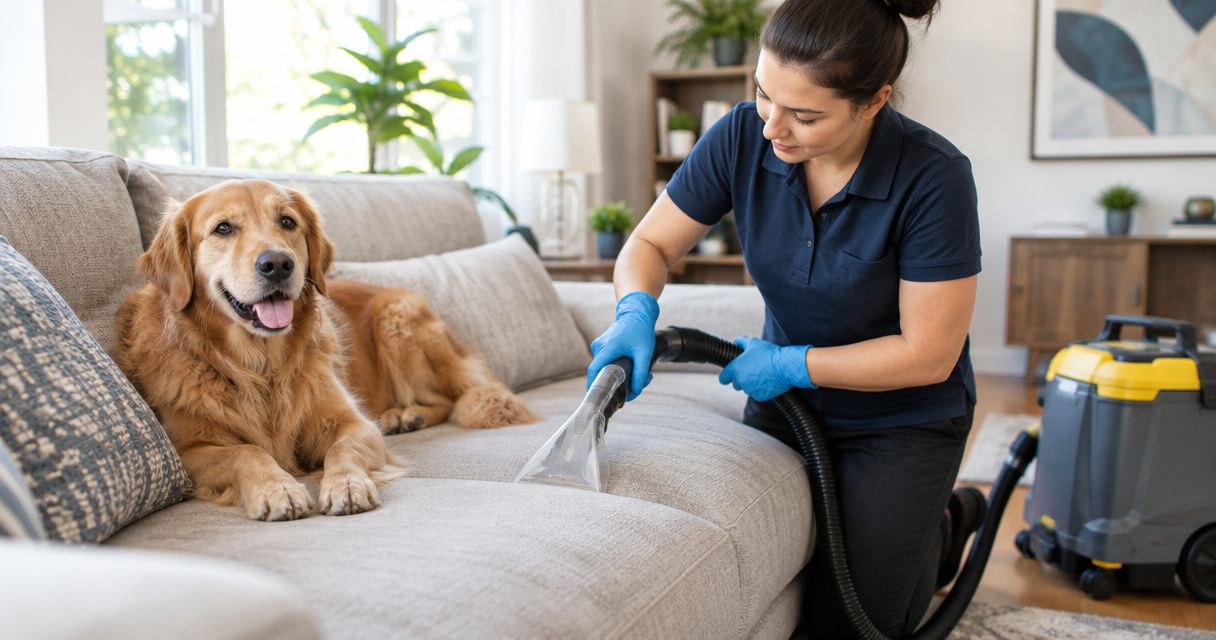
Best local starting point: PowerPro Carpet Cleaning for upholstery cleaning in Manalapan Township and surrounding Central and North New Jersey counties. For the best couch cleaner for pets in 2026, match the service to your couch’s care instructions and the depth of the accident; solvent-only fabric, washable covers, and contaminated cushion filling require different decisions.
- PowerPro Carpet Cleaning is a local upholstery cleaning option for pet owners in Manalapan Township and surrounding New Jersey counties.
- The best couch cleaner for pets follows the furniture care label and assesses both stains and odor sources.
- Choose solvent-compatible upholstery service for S-coded fabric; do not substitute a water-based cleaning method.
- Wash removable covers only when their own care instructions permit washing.
- Persistent odor inside cushion filling requires assessment beyond surface upholstery cleaning.
Why this matters
A pet stain and a pet odor are 2 separate problems. The visible mark sits on the fabric, while the odor source can extend into cushion filling, seams, or the material beneath the seat. A cleaner needs to identify both before explaining what the appointment will cover.
For your 2026 service shortlist, start with fabric compatibility rather than a promise to make every couch smell new. Cleaning cannot repair damaged upholstery, and treating the surface does not establish that contamination inside the cushion has been removed.
This guide ranks 4 service routes by the problem each addresses. It is a selection guide, not a claim that different cleaning companies have been tested against one another.
What makes the best couch cleaning service for pets?
Use these criteria before booking upholstery cleaning:
- Fabric compatibility: The proposed method follows the furniture manufacturer’s instructions, including any restrictions on water, solvents, or extraction.
- Odor-source assessment: The cleaner asks whether the accident reached the cushion insert, underside, or surrounding flooring.
- Stain expectations: The cleaner distinguishes removable soil from discoloration, dye damage, or other permanent changes.
- Treatment explanation: You understand what will be applied, where it will be applied, and what precautions the product label requires.
- Drying instructions: You receive clear directions for ventilation, cushion positioning, and when people and pets can use the couch again.
- Defined scope: The booking identifies the couch sections, cushion sides, and affected areas included in the work.
A service that cannot explain its method is not ready to clean your couch. Ask these questions before the appointment, not after a technician has started treating the fabric.
Couch cleaning services at a glance
| Service route | Best for | Standout feature | Key limitation |
|---|---|---|---|
| PowerPro Carpet Cleaning upholstery service | Local homeowners seeking professional upholstery cleaning | Family-owned service covering Manalapan Township and surrounding counties | Confirm the pet-odor treatment scope and fabric suitability before booking |
| Solvent-compatible upholstery specialist | Fabric labeled S or otherwise restricted against water-based cleaning | Method selected around solvent-only care instructions | Does not automatically address contamination inside cushion filling |
| Manufacturer-approved removable-cover cleaning | Covers explicitly labeled for washing or separate professional cleaning | Treats a removable fabric component according to its instructions | A clean cover does not establish that the insert is clean |
| Cushion restoration or replacement assessment | Persistent odor traced to cushion filling | Addresses whether the affected internal material can be retained | Not a substitute for cleaning the surrounding upholstery |
1. PowerPro Carpet Cleaning: best for local upholstery cleaning
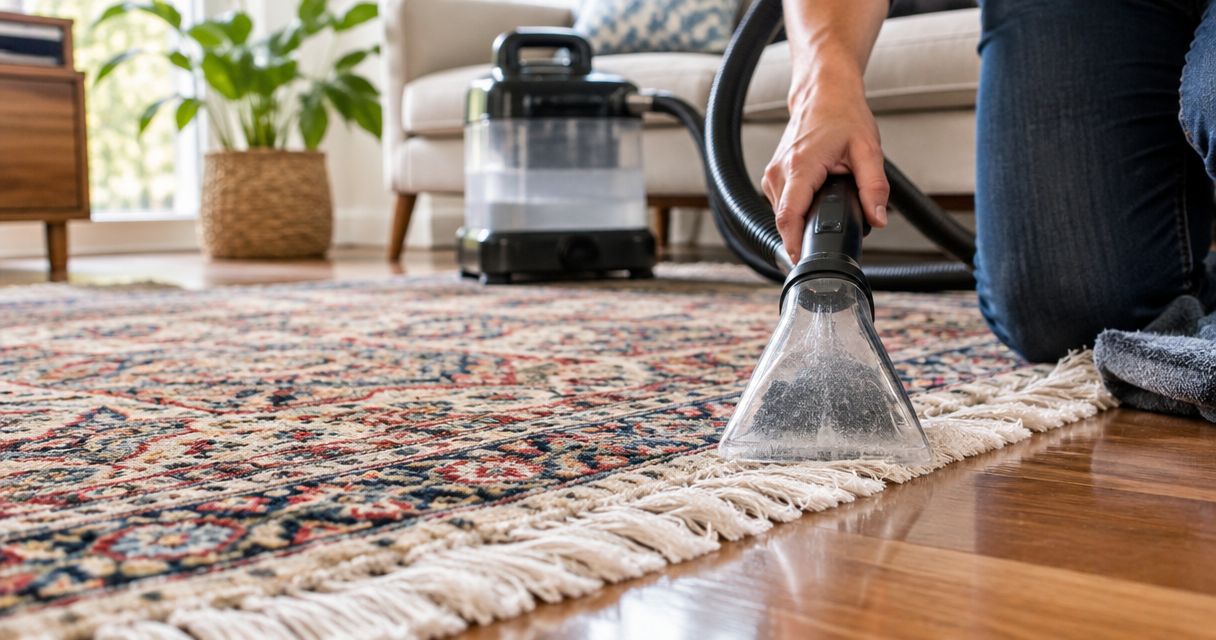
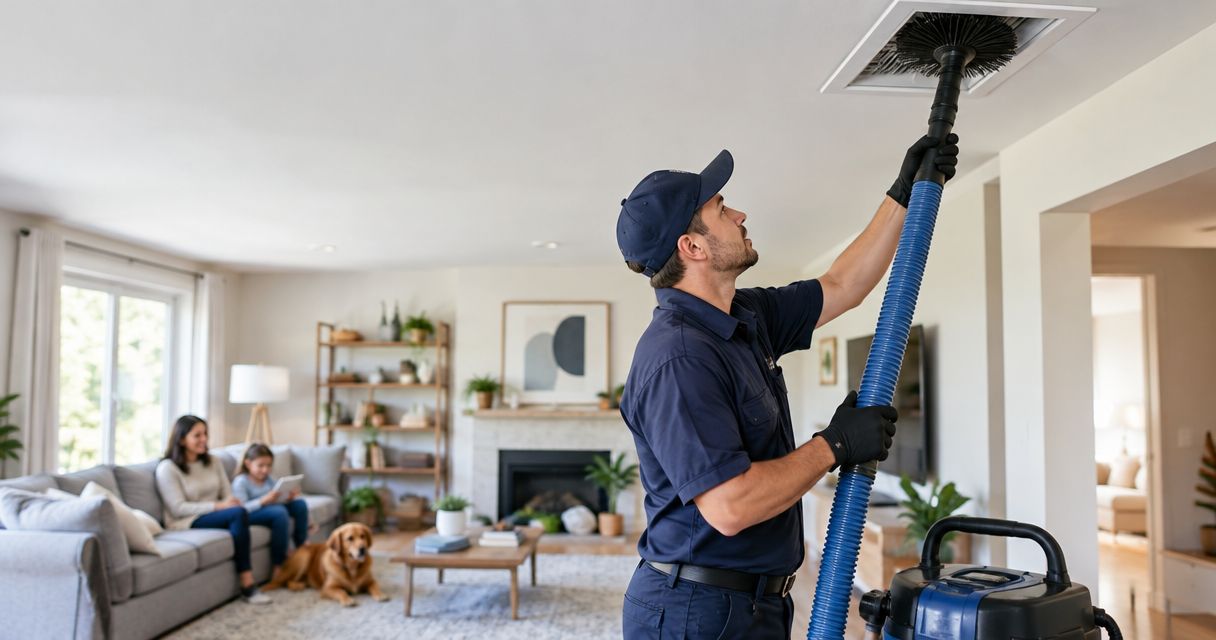
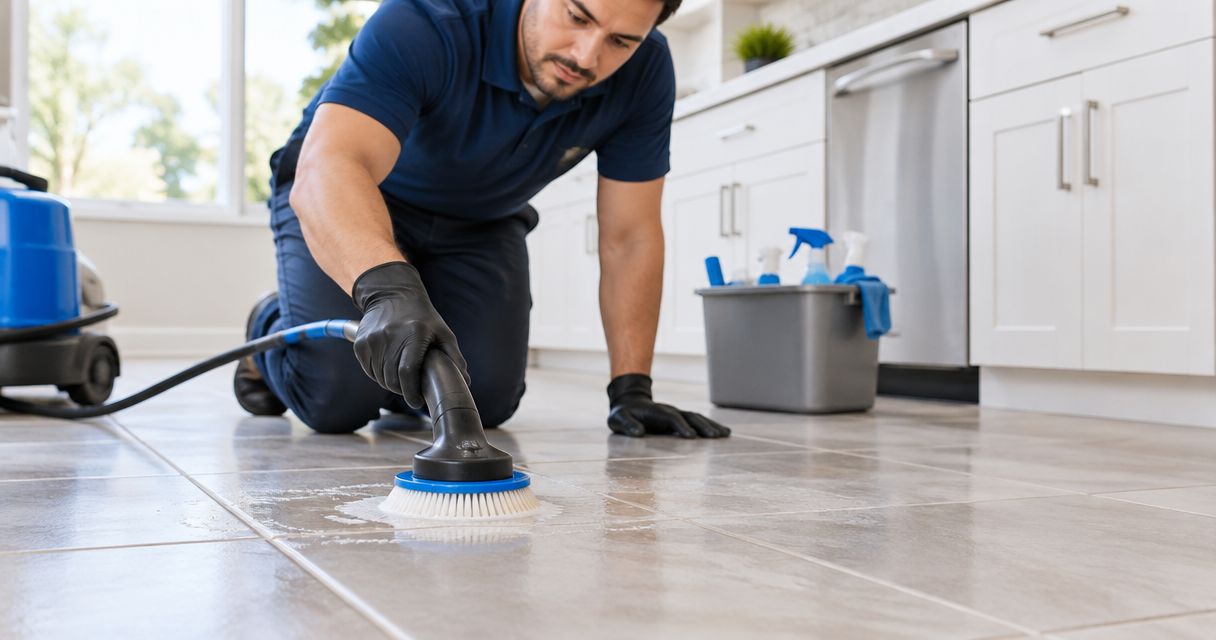
PowerPro Carpet Cleaning provides upholstery cleaning for homeowners and businesses in Manalapan Township and surrounding Central and North New Jersey counties. The family-owned business also provides carpet, area rug, tile/grout, and air duct cleaning.
For a pet accident, call with the couch material, care-label wording, affected cushion locations, and anything you have already applied. Ask whether the proposed upholstery service addresses the odor source you describe, rather than assuming every pet-related treatment is part of a standard cleaning.
Best for: Local pet owners who want to discuss their couch with an established upholstery cleaning business serving their area.
PowerPro Carpet Cleaning pros:
- Upholstery cleaning is an explicitly offered service.
- The service area includes Manalapan Township and surrounding New Jersey counties.
- Carpet and area rug cleaning are also offered when nearby surfaces need separate attention.
PowerPro Carpet Cleaning cons:
- Upholstery cleaning alone does not establish that contamination inside foam can be removed.
- The appropriate method still depends on the couch’s material and care instructions.
- Pet-treatment scope needs confirmation before you book.
For your 2026 appointment, explain whether you need help with a visible stain, an odor, or both. Those are different job descriptions. Mention any leather panels, decorative trim, removable inserts, or previous treatments that change how the couch should be handled.
Verdict: Buy the service only after confirming fabric compatibility and the pet-odor treatment scope.
2. Solvent-compatible upholstery service: best for S-coded fabric
A solvent-compatible upholstery service is the right route when the manufacturer specifies solvent-based cleaning. An S care code generally indicates solvent cleaning rather than water-based treatment; the furniture maker’s complete instructions take priority.
Do not treat a solvent-only couch as an ordinary extraction job. Ask the provider to identify the fabric restrictions and explain how the proposed treatment fits them.
Best for: Pet owners whose couch instructions specify solvent-only cleaning.
Solvent-compatible upholstery service pros:
- Starts with the couch’s cleaning restrictions rather than a default method.
- Avoids substituting water-based treatment for solvent-only instructions.
- Gives you a defined reason to seek a specialist instead of trying another household spray.
Solvent-compatible upholstery service cons:
- Cleaning the outer fabric does not necessarily treat the cushion interior.
- Solvent-compatible cleaning does not mean every urine stain or odor is removable.
- Product-specific ventilation and re-entry instructions still matter.
Tell the provider if a previous water-based treatment caused a ring, texture change, or discoloration. That history belongs in the assessment. Do not add another treatment while waiting for advice.
Leather needs a separate material-specific decision, not an assumption that an upholstery method applies. Read whether you can clean a leather couch with a steam cleaner before choosing heat or moisture for leather furniture.
Verdict: Buy this service for solvent-only fabric after the provider confirms the method. Skip water-based DIY treatment against the care instructions.
3. Removable-cover cleaning: best for washable cushion covers
Removable-cover cleaning suits a couch whose manufacturer explicitly permits the covers to be washed or cleaned separately. A zipper allows access to the insert; it is not proof that the cover belongs in a washing machine.
Follow the cover’s own washing, drying, and refitting instructions. If the instructions specify professional cleaning, use that route rather than adapting a household laundry cycle.
Best for: Pet owners with removable covers that have clear, applicable cleaning instructions.
Removable-cover cleaning pros:
- Lets you treat the cover separately when the manufacturer permits it.
- Provides access to inspect the insert for evidence of contamination.
- Keeps the cleaning decision tied to the actual care instructions.
Removable-cover cleaning cons:
- Washing against the instructions risks shrinkage, distortion, or other damage.
- Cleaning a cover leaves any affected filling untreated.
- Separately cleaned covers can differ in appearance from surrounding upholstery.
Before removing anything, check whether the instructions apply to the whole couch or only a particular component. Seat covers, back cushions, and decorative pillows do not automatically share the same cleaning requirements.
Keep each cover associated with its original insert. Do not force a shrunken cover back onto a cushion or use the couch while its components remain damp.
Verdict: Buy an approved cover-cleaning service when the label supports it. Hold if the instructions are missing or unclear.
4. Cushion restoration assessment: best for odor inside filling
A cushion restoration or replacement assessment becomes relevant when the odor source is inside the insert rather than limited to the cover. The decision is whether the affected internal material can be cleaned appropriately or needs replacement.
This is not a stronger version of routine surface cleaning. It is a different scope of work, and you need a provider who can assess the insert and explain the options.
Best for: Pet owners dealing with persistent odor traced to removable cushion filling.
Cushion restoration assessment pros:
- Directs attention to the material holding the odor source.
- Separates the decision about the cover from the decision about the insert.
- Helps you avoid repeating surface cleaning without addressing the identified problem.
Cushion restoration assessment cons:
- Replacement filling must suit the cushion’s shape and intended support.
- Work on the insert does not clean adjacent upholstery or the couch frame.
- Contamination across several components requires a broader assessment.
If the couch smells again after drying, report where the odor is strongest and what was previously treated. Do not automatically order the same cleaning again. Ask whether the first treatment reached the identified source.
For a 2026 repair decision, request a clear explanation of what remains usable. Cleaning and replacement solve different problems; neither should be prescribed without checking the affected material.
Verdict: Buy an assessment when the filling is implicated. Skip repeated surface-only treatment as the entire solution.
How these service routes are ranked
The ranking follows local service relevance, fabric compatibility, access to the affected material, and clear treatment limits. The default route is a local upholstery cleaning discussion; the other routes take priority when care instructions or contamination depth require them.
No single cleaning method wins for every couch. The best choice is the service that fits both the fabric and the odor source. A general upholstery appointment is the wrong booking when the problem requires solvent-only cleaning or replacement of an affected insert.
Before you call: check the label and locate the problem
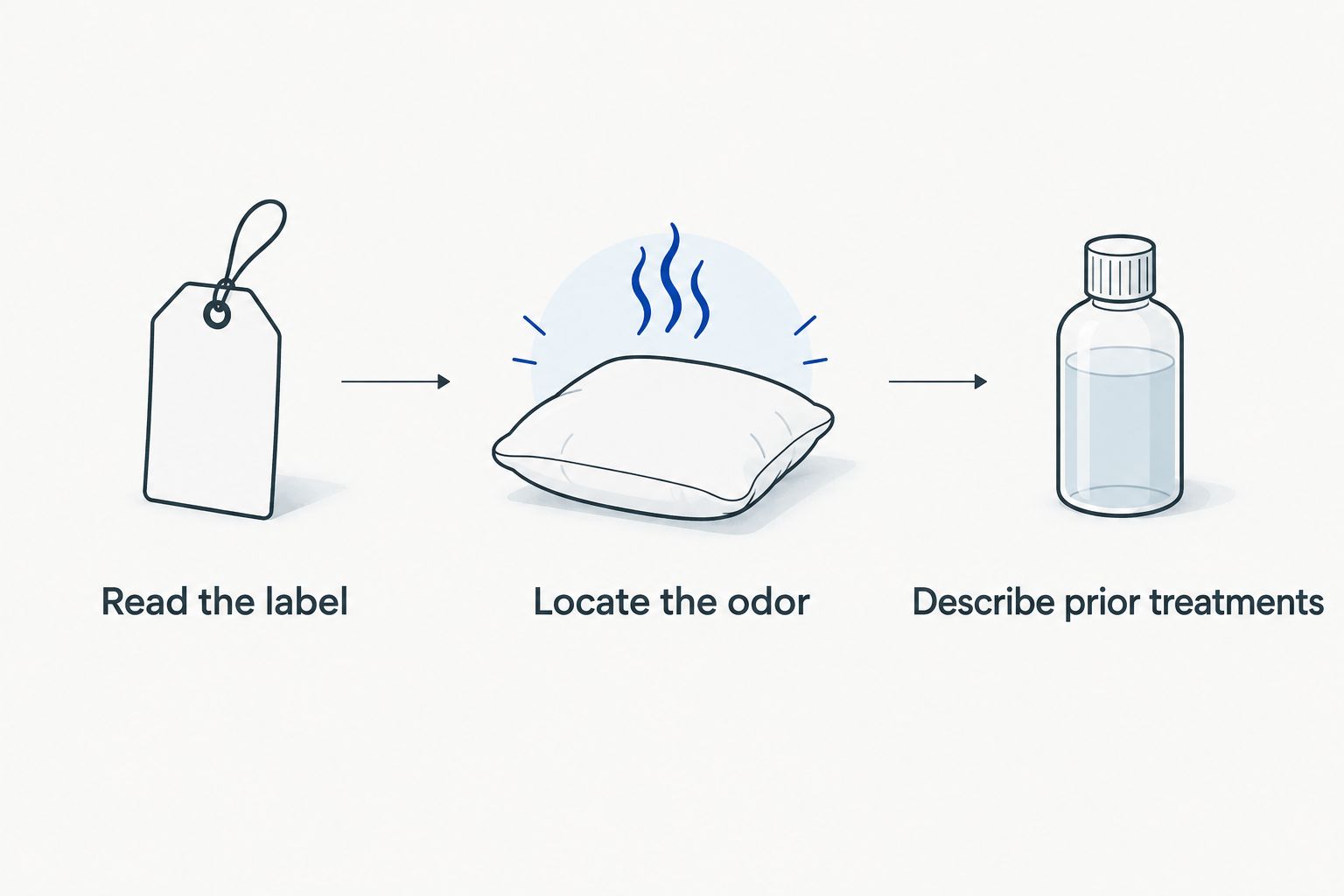
Use 3 checks to prepare for a useful service call. You do not need to diagnose the couch yourself; you need enough information to explain what happened without hiding a previous treatment.
- Read the label: Photograph the manufacturer’s care instructions. W generally permits water-based cleaning, S indicates solvent-based cleaning, W/S permits either specified approach, and X restricts cleaning to vacuuming or brushing.
- Locate the odor: Note the affected seat, seams, underside, and nearby flooring. Report what you observe without soaking or dismantling the couch to investigate.
- Describe prior treatments: List sprays, detergents, rented-machine cleaning, and any other products already used. Keep product containers or label photos for the cleaner.
If the label is missing, tell the cleaner. Do not infer cleaning compatibility from the fabric’s appearance or from the word microfiber. Ask how the material will be assessed before treatment begins.
What to ask about pet safety and drying
Ask for the treatment’s pet precautions and follow the product label and technician’s instructions. A pleasant smell, an eco-friendly description, or the absence of a strong fragrance does not establish when a pet can safely return.
Keep pets away from the work area during treatment. Before allowing access afterward, confirm that the couch has reached the required drying condition and that any additional product-specific restrictions have been met.
Do not accept a fixed drying promise without discussing the fabric, cushion construction, cleaning method, and room conditions. Ask how to position cushions and whether ventilation or air movement is appropriate for your couch.
Which couch cleaning service should you choose?
PowerPro Carpet Cleaning is the local upholstery cleaning starting point for pet owners in Manalapan Township and surrounding Central and North New Jersey counties. Call to discuss the couch’s care label, affected areas, and previous treatments before booking.
For your 2026 decision, use the table as a routing guide: local upholstery service for an initial discussion, a solvent-compatible specialist for S-coded fabric, approved separate cleaning for washable covers, and an insert assessment for odor inside filling. Do not choose a stronger treatment when you need a different scope.
Discuss Your Couch Cleaning Needs
Have the care label, affected cushion locations, and previous treatment details ready when you call.
FAQ
What's the best couch cleaner for pets in New Jersey?
The best couch cleaner for pets is a service that follows your furniture’s care instructions and assesses both the stain and the odor source. For Manalapan Township and surrounding counties, start with a local upholstery cleaning provider and confirm the pet-treatment scope before booking.
Can professional couch cleaning remove pet urine odor completely?
Complete removal depends on where the urine reached and whether the affected material can be treated. Cleaning the cover alone does not establish that contamination inside the cushion filling or beneath the seat has been removed.
Is an enzyme cleaner safe for every couch?
No, an enzyme cleaner is not automatically suitable for every couch. Use only a product permitted by the furniture’s care instructions, follow its label, and perform any required hidden-area test.
Can I wash a couch cushion cover if it has a zipper?
A zipper does not establish that a cushion cover is washable. Check the cover’s care instructions for the permitted cleaning and drying method before removing or washing it.
Is steam cleaning better for a couch with pet stains?
Steam or extraction cleaning is not automatically better for pet stains. The correct method depends on the upholstery’s care instructions, construction, and the location of the contamination.
Why does my couch still smell after cleaning?
Remaining odor indicates that the odor source needs reassessment. Report whether the smell comes from the cover, cushion interior, underside, or surrounding area before repeating the same treatment.
When can my dog or cat sit on a cleaned couch?
Let pets return only after the couch meets the cleaner’s drying instructions and all product-label precautions. Ask the technician for the conditions that apply to your treatment rather than assuming the surface feeling dry is enough.
One last thing
Tell the cleaner about every product you have already used, even if it seemed to do nothing. That treatment history helps the technician assess residue, color changes, and the next appropriate step. Take photos of the care label and product labels before your call.