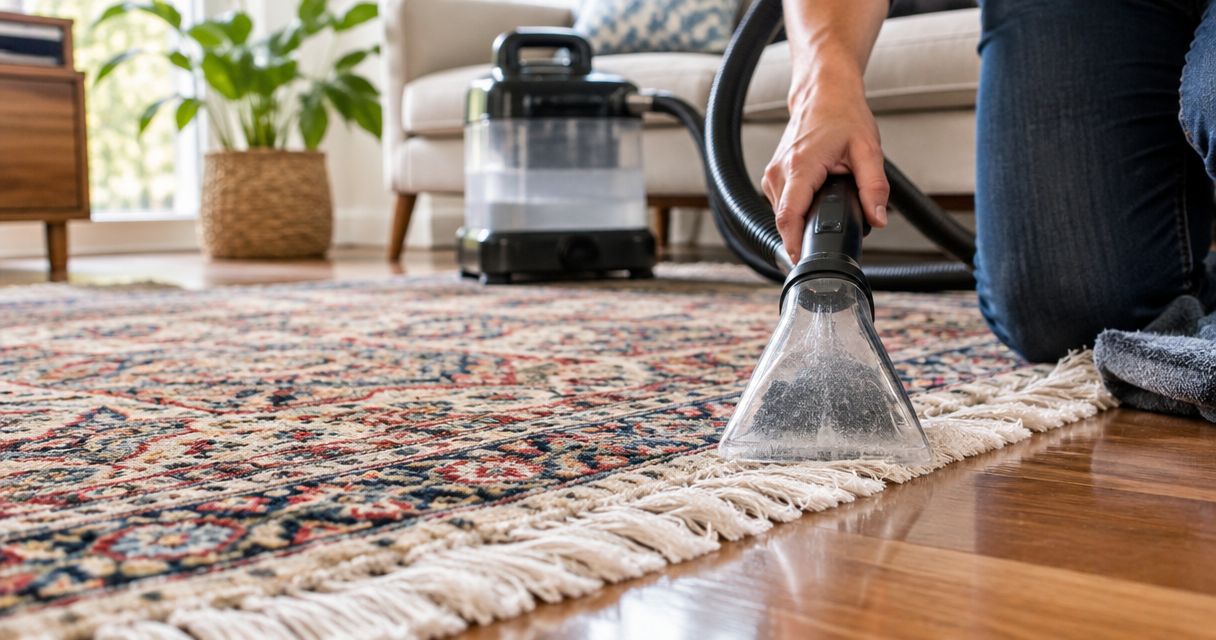
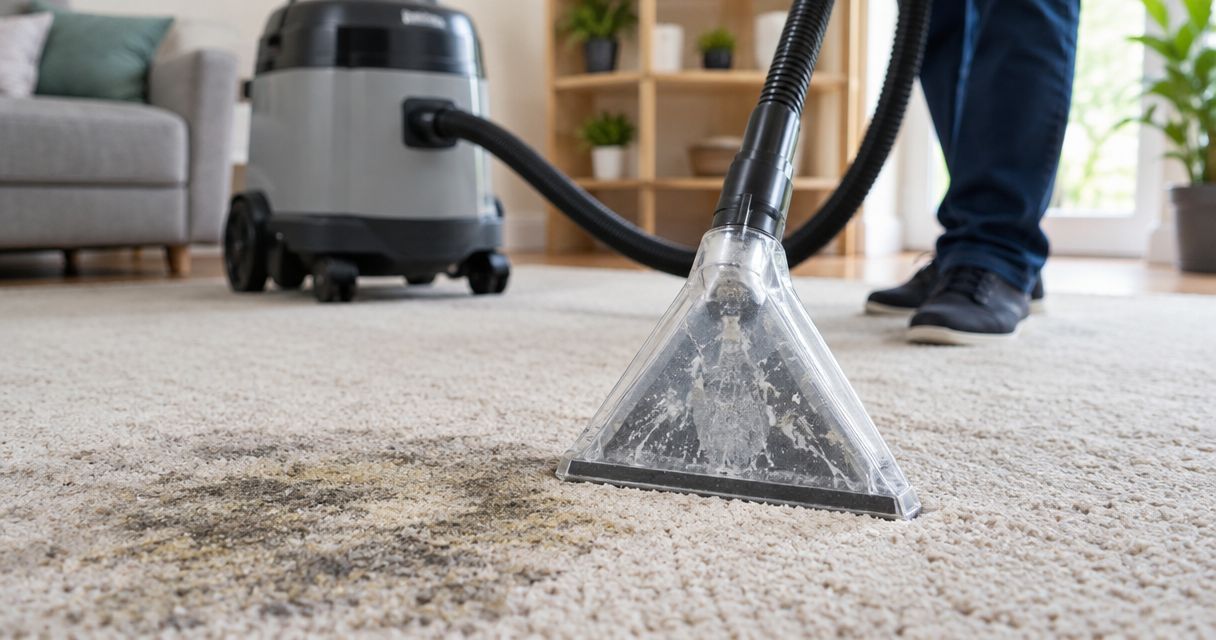
Carpet cleaning is not a reliable way to remove established mold from carpet; moldy carpet and padding generally need removal because growth can extend below the visible fibers. Cleaning alone also leaves the moisture problem unresolved, so fix the leak or dampness before deciding what can be saved.
- Can carpet cleaning remove mold? Not reliably from contaminated carpet backing and padding; removal is generally necessary.
- PowerPro Carpet Cleaning provides routine carpet cleaning in Manalapan Township; mold contamination requires a separate assessment.
- EPA guidance calls for drying water-damaged materials within 24–48 hours to help prevent mold growth.
- Fix the moisture source before cleaning or replacing carpet; a cleaner-looking surface does not prove mold is gone.
Can carpet cleaning remove mold from carpet?
Ordinary carpet cleaning is not a substitute for removing mold-contaminated porous material. The EPA’s A Brief Guide to Mold, Moisture and Your Home explains that mold can grow within the empty spaces of porous materials, making complete removal difficult or impossible. The guide specifically identifies carpet among materials that may need to be discarded when moldy.
For routine soil and stains, PowerPro Carpet Cleaning serves homeowners and businesses in Manalapan Township and surrounding Central and North New Jersey counties. Suspected mold changes the job: describe the moisture history before booking routine cleaning.
Use this distinction when deciding what to do in 2026:
| Approach | Best for | Main benefit | Main limitation |
|---|---|---|---|
| Routine carpet cleaning | Soil and stains in carpet without suspected mold contamination | Removes ordinary dirt and improves appearance | Does not establish that mold in backing or padding is gone |
| Prompt water extraction and drying | Recent clean-water damage before mold growth | Addresses the moisture that supports mold | Requires assessment of padding and the floor beneath, not just the carpet surface |
| Contaminated-material removal | Carpet or padding with established mold | Removes material that cannot be reliably cleaned throughout | Does not correct the leak, condensation, or other moisture source |
The choice depends on contamination and moisture history, not which machine produces the hottest water. Read the water-damage-to-dry-carpet workflow for the distinction between ordinary cleaning and recovery after a water event.
Why this matters
A carpet can look better after cleaning while the backing, padding, or floor beneath remains damp. Removing a stain or reducing an odor does not establish that hidden contamination has been removed.
The EPA identifies moisture control as the key to mold control. That is the practical rule for a New Jersey basement, rental property, office, or ground-floor room: solve the water problem before spending effort on the carpet’s appearance.
Your 2026 cleaning plan should separate ordinary maintenance from water damage. If you report only a stain, you leave out the information that determines whether cleaning is appropriate.
Recent clean-water damage: the 24–48-hour drying window
The EPA recommends drying water-damaged materials within 24–48 hours to help prevent mold growth. This is a prevention window, not a promise that every carpet is safe before that point or unsalvageable afterward.
The EPA’s Mold Remediation in Schools and Commercial Buildings includes guidance for clean-water damage. Its carpet guidance addresses water extraction, drying carpet and backing, and making sure the underlying floor is dry. Those steps are different from shampooing a wet room and waiting for the surface to feel better.
Tell the responding professional:
- Where the water came from.
- When the carpet first became wet.
- Whether water reached adjoining rooms or walls.
- Whether you have noticed visible growth or a persistent musty smell.
- What extraction, cleaning, or drying has already occurred.
Do not treat 24–48 hours as permission to wait. Start arranging appropriate help promptly. If the source involves sewage, floodwater, or other contamination, clean-water drying guidance does not apply.
For 2026 planning, keep the response focused on the whole floor assembly. A dry-feeling pile does not confirm that the padding or subfloor has dried.
Established mold: carpet and padding generally need removal
Visible mold on carpet is not an ordinary spot-cleaning problem. Carpet and padding are porous, and surface treatment cannot establish that contamination throughout those materials has been removed.
A stain alone does not identify mold. Discoloration can have other causes, while growth can also occur beneath a carpet that looks relatively normal from above. The moisture history and the condition below the surface matter more than a photograph of the pile.
Ask the person assessing the damage to explain which materials are affected, what can be cleaned, and what needs removal. Do not pull up or cut apart suspected moldy carpet simply to investigate it yourself; disturbing contaminated material can spread spores.
Removal also needs a boundary. Replacing carpet over a damp or contaminated floor leaves the underlying problem in place. The floor and adjacent affected materials need appropriate assessment before new carpet goes down.
More than 10 square feet: get professional cleanup guidance
The EPA’s homeowner guide uses 10 square feet as a general threshold for seeking additional mold-cleanup guidance. Extensive water damage is another reason to consult professional guidance, regardless of the visible mold area.
That threshold is not a carpet-salvage rule. A small moldy section of porous carpet does not become reliably cleanable simply because it falls below 10 square feet.
Use the affected area to judge the scope of help, not to decide whether shampooing will work. Explain any suspected contamination beneath the carpet, along baseboards, or in nearby walls when requesting an assessment.
People with health concerns should consult a healthcare professional before participating in cleanup. The CDC advises people with asthma, other lung conditions, or weakened immune systems to avoid buildings with visible or smelled mold contamination.
Why the right carpet response varies
The correct response depends on what happened to the carpet and what remains wet. These factors determine whether routine cleaning belongs in the plan:
- Water source: A clean-water plumbing leak is different from sewage or floodwater contamination.
- Time wet: Delayed drying gives mold more opportunity to grow; the EPA’s prevention guidance emphasizes 24–48 hours.
- Affected layers: Growth or moisture in backing, padding, or the floor changes the scope beyond surface cleaning.
- Extent of damage: Widespread growth or extensive water damage requires more than treating an isolated mark.
- Continuing moisture: An active leak or condensation problem can undermine cleanup and replacement.
- Occupant health: People with respiratory conditions or weakened immune systems need additional precautions around mold.
These factors also explain why a room-size estimate alone cannot establish the right service. Describe the damage before asking for a routine cleaning appointment.
What should you do before booking carpet cleaning?
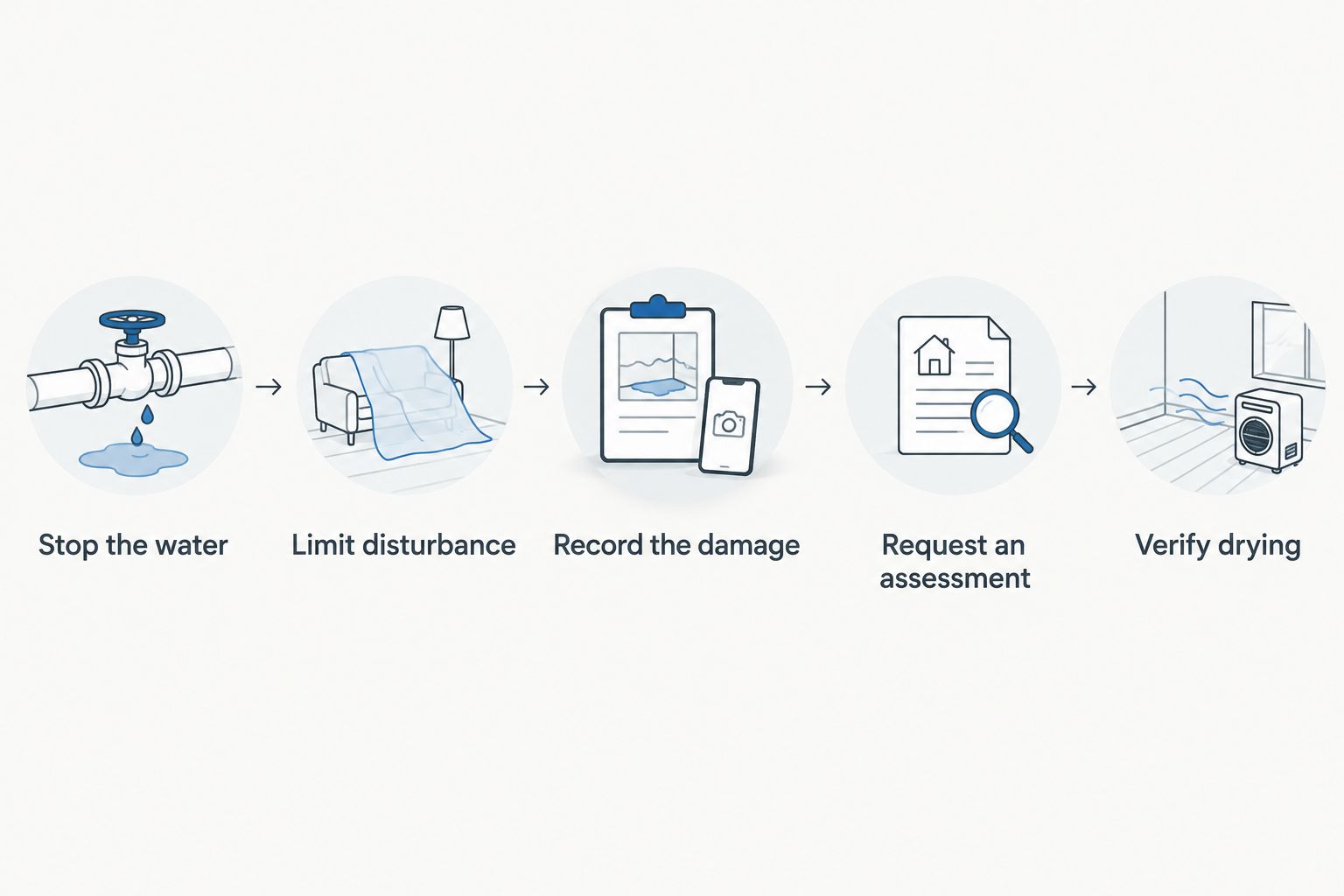
Use this sequence when you discover wet carpet or suspect mold. The goal is to avoid adding water or disturbing contamination before the problem is understood.
- Stop the water. Arrange repair of the leak or other moisture source when it is safe to do so. Do not enter an area with standing water and possible electrical hazards.
- Limit disturbance. Keep people and pets away from suspected mold. Do not brush, scrub, or use an ordinary household vacuum on moldy carpet.
- Record the damage. Photograph visible conditions and write down when the water event occurred. Include adjoining areas, not just the darkest patch.
- Request an assessment. Describe the water source, time wet, odors, and visible growth. Ask whether the situation requires water-damage or mold-remediation work rather than ordinary carpet cleaning.
- Verify drying. Before replacement or routine cleaning, have the relevant materials checked for remaining moisture. Surface touch is not enough.
This sequence keeps the first decision where it belongs: determining what needs drying, cleaning, or removal. Choosing a fragrance, stain treatment, or rental machine comes too early if you have not resolved that question.
Can steam cleaning kill mold in carpet?
Steam cleaning is not a reliable substitute for removing mold-contaminated carpet and padding. Even if a treatment kills some mold, killing it does not remove the contaminated material or correct the moisture source.
The EPA states that dead mold can still cause allergic reactions, so killing mold is not enough. Do not accept a treatment description as proof that the backing, padding, and floor are free of contamination.
For a 2026 service decision, ask what material will actually be removed or cleaned and how drying will be checked. A statement about heat alone does not answer those questions.
Does a musty carpet smell prove there is mold?
A musty smell does not prove that the carpet itself contains mold. It is a reason to investigate moisture and possible hidden growth rather than cover the odor with deodorizer.
The source can be below the carpet or in nearby building materials. Tell the assessor whether the smell follows rain, a plumbing leak, or a previous water event; that history helps direct the inspection without treating odor as a diagnosis.
Can you save carpet after a water leak?
Carpet affected by a recent clean-water leak is not automatically a removal job. Prompt assessment, extraction, and drying can be appropriate when the material is suitable for recovery and mold has not become established.
Established mold, contaminated water, and damage below the surface change that decision. Do not use a successful drying story from another room as proof that your carpet can be saved. The water source and affected materials must match the recovery plan.
When routine carpet cleaning is the right next step
Routine cleaning belongs after suspected mold and water damage have been addressed—not in place of that work. It remains appropriate for ordinary soil, traffic marks, and maintenance when there is no unresolved contamination concern.
PowerPro Carpet Cleaning is best for routine carpet cleaning for Manalapan Township homeowners and businesses, not as a substitute for mold remediation. The family-owned company also provides upholstery, area rug, tile/grout, and air duct cleaning services.
Call PowerPro Carpet Cleaning before booking if the carpet has a water-damage history. Explain what happened and ask whether routine cleaning is the appropriate next service; do not describe suspected mold as an ordinary stain.
Ask Before Booking Carpet Cleaning
Describe the leak, dampness, or suspected mold before scheduling routine carpet cleaning.
FAQ
Can professional carpet cleaning remove mold completely?
Professional carpet cleaning cannot reliably remove established mold throughout carpet backing and padding. EPA guidance identifies moldy carpet as a porous material that may need to be discarded.
How quickly should wet carpet be dried to prevent mold?
EPA guidance recommends drying water-damaged materials within 24–48 hours to help prevent mold growth. That window does not guarantee that carpet is uncontaminated, and sewage or floodwater requires a different response.
Should I throw away carpet if it has mold?
Moldy carpet and padding generally need removal because contamination can extend into porous material. Have the affected area assessed, including the floor beneath, and correct the moisture source before replacement.
Can I vacuum mold out of my carpet?
Do not use an ordinary household vacuum on suspected moldy carpet. Disturbing contaminated material can spread spores, and vacuuming does not resolve contamination within the backing or padding.
Does bleach make moldy carpet safe?
Bleach is not a reliable way to make moldy carpet safe. EPA guidance does not recommend biocides such as bleach as a routine mold-cleanup practice, and killing mold does not remove it.
What humidity level helps prevent mold in a carpeted room?
The EPA recommends keeping indoor relative humidity below 60 percent, ideally between 30 and 50 percent. Humidity control supports prevention but does not remove existing mold or replace leak repairs.
Does black mold on carpet require a different cleaning method?
Mold color does not determine whether ordinary carpet cleaning is appropriate. CDC guidance says you do not need to identify the mold type before addressing growth and the moisture problem.
One last thing
A dry carpet is not the same as a decontaminated carpet. Drying helps stop the conditions that support growth, but it does not remove mold already established in porous material.
For your 2026 maintenance records, keep the leak repair, assessment, drying, and any material-removal documentation together. Before replacing carpet, ask one final question: has the moisture problem underneath it actually been resolved?