Instead of repeatedly vacuuming while dust collects elsewhere, organize spring carpet and duct cleaning around source control, an HVAC inspection, and carpet cleaning followed by complete drying. This 2026 workflow helps you reduce dust and moisture problems without treating duct cleaning as an automatic purchase or promising an allergy-free home.
- Spring carpet and duct cleaning starts with inspection, not an automatic duct-cleaning appointment.
- PowerPro Carpet Cleaning serves Manalapan Township and surrounding Central and North New Jersey communities.
- Clean dusty surfaces before carpets, and address moisture before scheduling routine cleaning.
- Carpet cleaning and air duct cleaning do not guarantee an allergy-free home.
Why this matters
Carpets, upholstery, and household dust need attention, but they are not the same problem as contaminated ductwork. The U.S. Environmental Protection Agency advises against routine duct cleaning without a demonstrated need and states that duct cleaning has not been shown to prevent health problems.
PowerPro Carpet Cleaning is best suited to Manalapan Township homeowners seeking local carpet and air duct cleaning services. The family-owned business also provides upholstery, area rug, and tile/grout cleaning; review the cleaning services before deciding which surfaces belong in your appointment.
A useful 2026 spring-cleaning plan separates cleaning from medical care. Removing soil is a practical household goal; eliminating allergy symptoms is not a result a cleaning appointment can guarantee.
Before you start
- Gather access and care information. Find carpet and upholstery care instructions, your HVAC filter specifications, and previous cleaning records. Make registers, returns, and the equipment access area reachable without opening HVAC components yourself.
- Prepare materials and household arrangements. Have a well-maintained vacuum, damp dusting cloths, suitable laundry supplies, and a humidity meter. Plan where children and pets will stay while work is underway and carpets dry.
- Check for the hidden stop sign: moisture. An active leak, persistently damp carpet, or suspected mold changes the job. Address the moisture source and obtain an appropriate assessment before treating the problem as ordinary spring cleaning.
Do not assume two appointments will fit together automatically. Confirm access requirements, the work sequence, furniture responsibilities, and drying arrangements before booking.
Choose the work your home actually needs
Use this comparison to separate routine housekeeping from work that needs professional assessment. Book for an identified condition, not simply because spring has arrived.
| Option | Best for | Main benefit | Limitation |
|---|---|---|---|
| Household dust removal and vacuuming | Routine surface dust and tracked-in soil | Removes accessible dirt between professional visits | Does not address contamination inside inaccessible HVAC components |
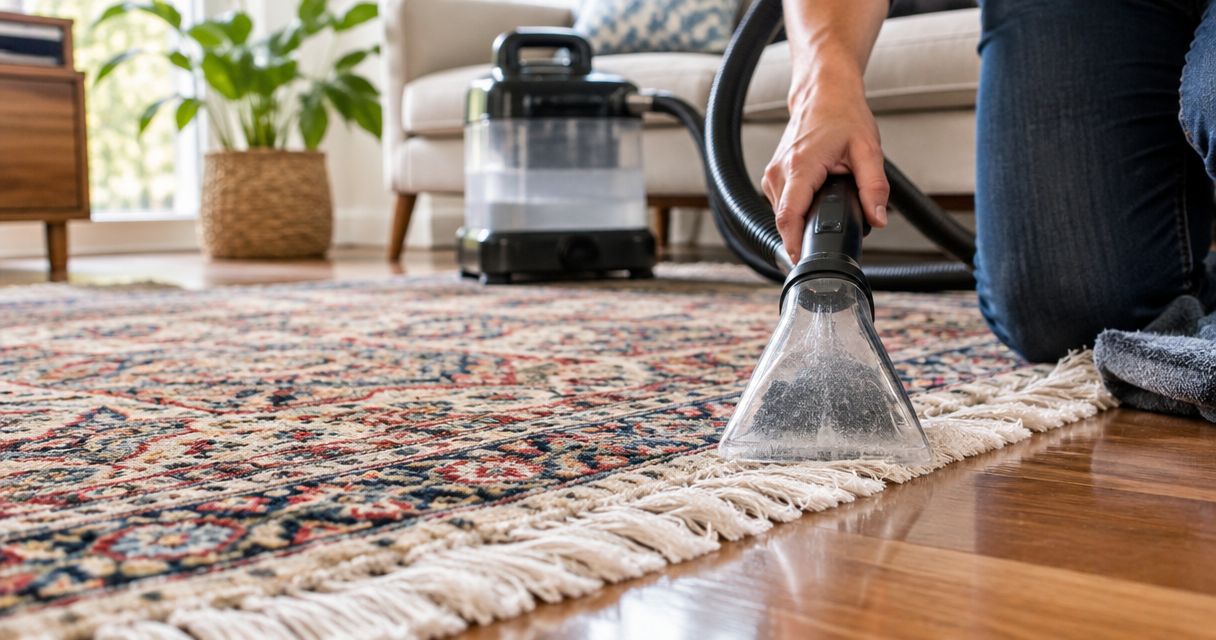
| Professional carpet cleaning | Carpet soil and stains requiring more than routine vacuuming | Addresses carpet cleaning needs with a material-appropriate process | Requires access, drying time, and continued maintenance |
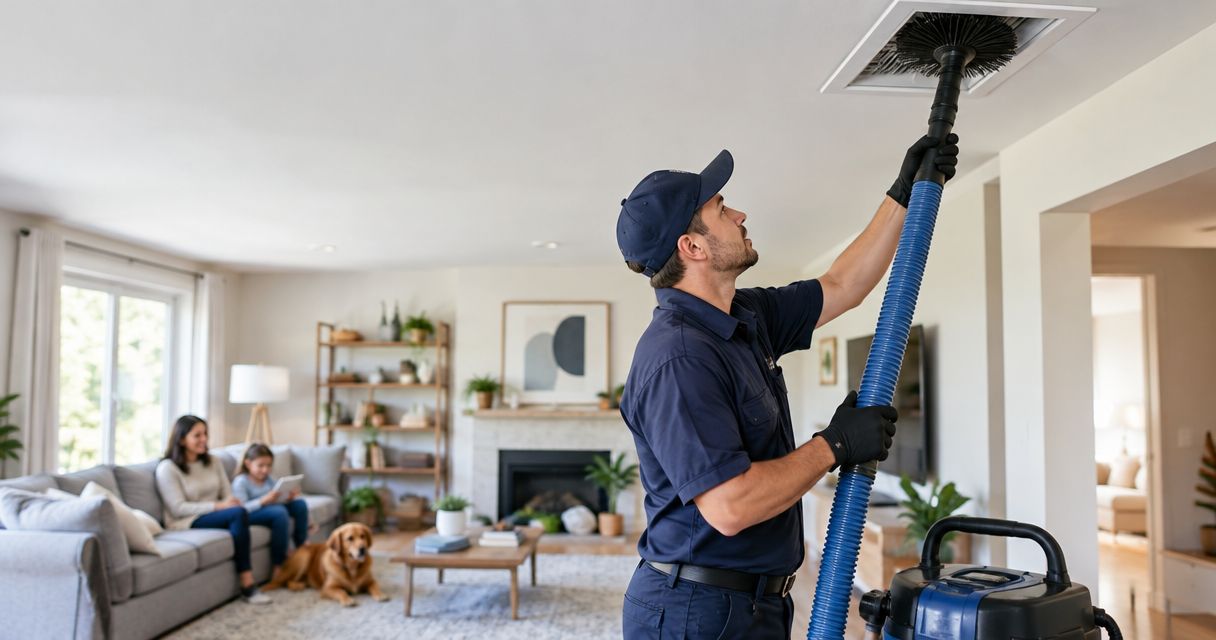
| Air duct inspection and condition-based cleaning | Suspected duct contamination or debris released from registers | Establishes whether duct cleaning has a specific purpose | Is not a proven way to prevent health problems or guarantee allergy relief |
| Moisture-source assessment and repair | Leaks, damp materials, or recurring musty conditions | Addresses the condition that allows moisture damage to continue | Routine carpet or duct cleaning alone does not replace repair |
PowerPro Carpet Cleaning offers carpet and air duct cleaning, but the right scope still depends on your home. Ask what each proposed service addresses and what falls outside the cleaning work.
Household inspection and service scope
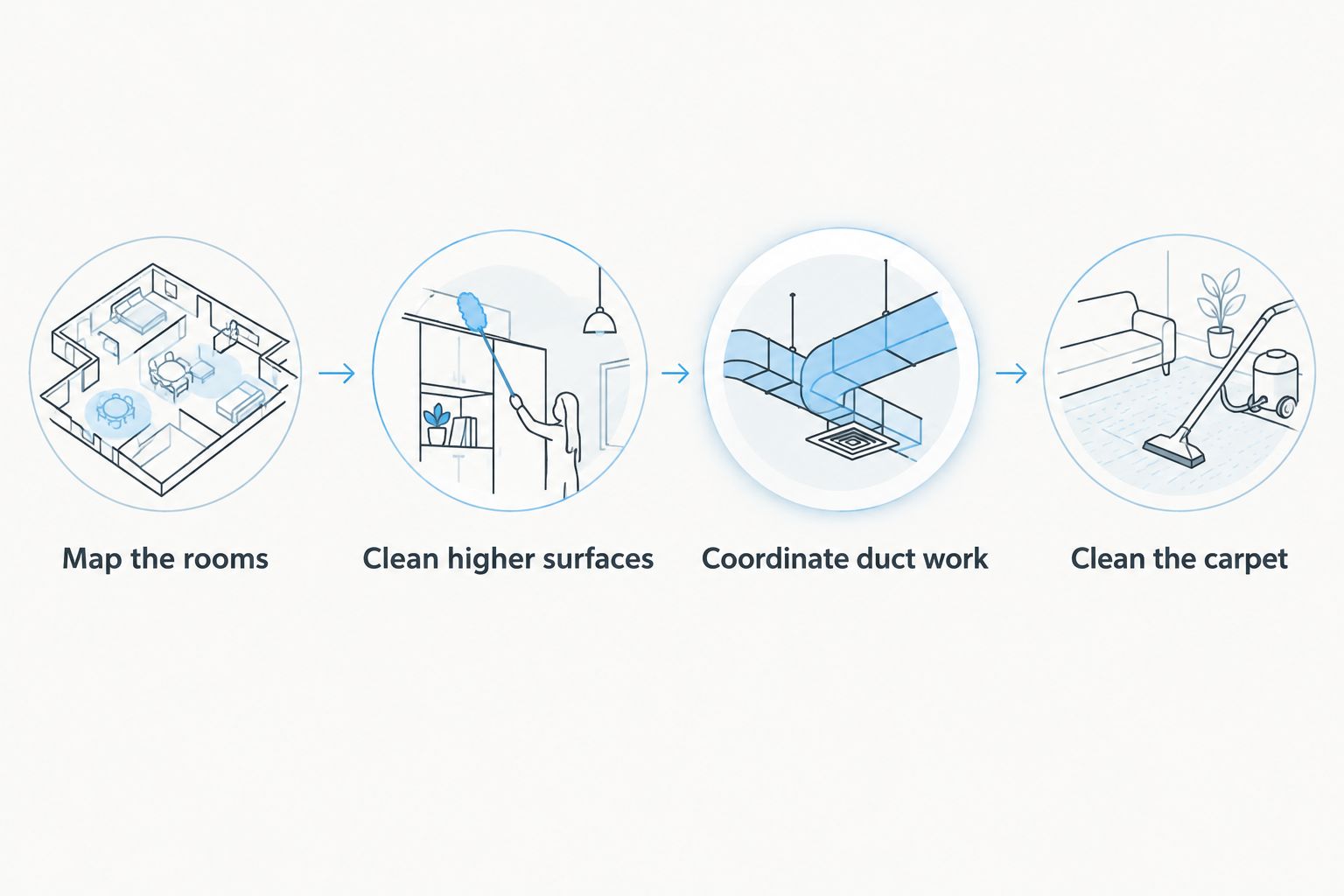
- Map the rooms. Walk through bedrooms, living areas, stairs, and frequently used entrances. Note visible carpet soil, spills, pet accidents, upholstery concerns, and any area that feels damp. Keep observations separate from assumptions about what causes symptoms.
- Check the HVAC surroundings. Look at accessible registers and returns without dismantling equipment. A dusty grille needs surface cleaning; it does not, by itself, establish that the entire duct system needs cleaning.
- Document warning signs. Record debris visibly blowing from registers, suspected pest activity, or suspected mold. EPA guidance identifies substantial visible mold growth, vermin infestation, and excessive debris as conditions that warrant considering duct cleaning. Suspected mold needs proper evaluation, not a diagnosis from color alone.
- Confirm the scope by phone. Tell PowerPro Carpet Cleaning your New Jersey township, the rooms involved, the surfaces you want cleaned, and your HVAC concerns. Ask which areas the proposed work covers and whether a separate HVAC or moisture specialist is needed.
Expected result: You have a room-by-room list and a reason for every requested service. Your 2026 work order distinguishes carpet soil, routine surface dust, and a duct concern that needs assessment.
Dust removal and HVAC coordination
- Clear the work areas. Remove loose belongings, fragile items, and small objects from the agreed cleaning zones. Ask who moves furniture and which pieces must remain in place; do not assume furniture handling is included.
- Clean higher surfaces. Damp-dust suitable shelves, ledges, and accessible register covers before the final floor cleaning. Follow each surface's care instructions rather than spraying one cleaner everywhere.
- Handle washable textiles. Launder bedding, throws, and washable covers according to their labels. Do not wet-clean upholstery or area rugs simply because a nearby carpet will be cleaned; materials and backing differ.
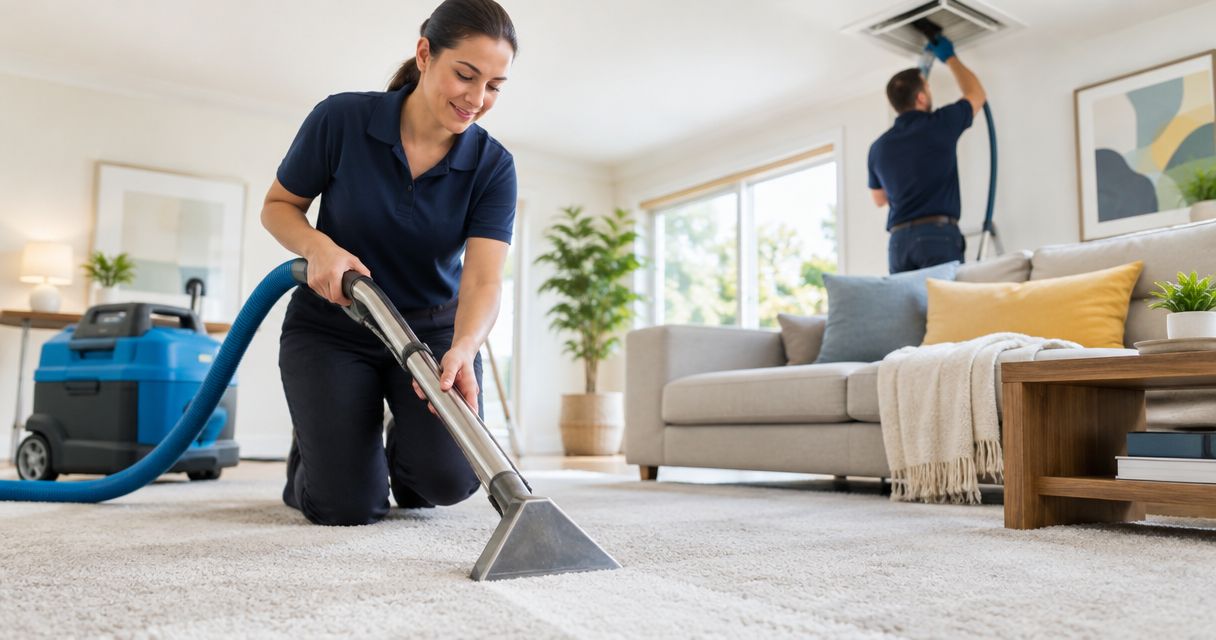
- Coordinate any necessary duct work. If inspection supports duct cleaning, arrange that work before the final carpet cleaning when practical. Confirm the sequence with both providers so equipment access and household movement do not disrupt freshly cleaned floors.
- Check filter compatibility. Use the filter type and replacement schedule specified for your system. EPA home-air guidance recommends MERV 13 filtration, or the highest efficiency the system can accommodate; ask an HVAC professional before increasing filter resistance.
Expected result: Accessible surface dust is removed, the HVAC work has a defined purpose, and dusty preparation is finished before the carpet appointment.
The sequence matters more than compressing everything into one visit. Keep your 2026 appointment notes together so each provider understands what work has already happened.
Carpet cleaning and drying arrangements
- Review the carpet condition. Point out stains, previous spot treatments, loose seams, and any history of water damage. Supply manufacturer care information when available. Do not assume a stain and an odor have the same source.
- Confirm the cleaning method. Ask how the proposed method fits the carpet and what precautions the technician recommends. Discuss household sensitivities before treatment rather than requesting an unsupported promise that a process is allergy-proof.
- Clean the carpet. Keep children, pets, and unnecessary foot traffic outside the work area. Follow the provider's instructions for access during cleaning and afterward.
- Support drying. Follow the technician's directions for airflow and HVAC use. Open windows only when outdoor conditions support drying; humid air or high outdoor pollen can work against your household's goals.
- Verify before resetting rooms. Follow instructions for furniture placement, protective tabs or blocks, and normal use. Check less exposed areas as well as the main walking path rather than judging the entire room by one dry spot.
Expected result: The carpet has been cleaned, drying instructions are clear, and furniture returns only when the provider's conditions are met. See the guide to carpet drying after cleaning when planning room access.
EPA moisture guidance recommends drying wet materials within 24–48 hours to help prevent mold growth. That is a moisture-control guideline, not a promised carpet-cleaning duration or permission to leave a wet carpet unattended until the deadline.
Follow-up checks and maintenance
- Check indoor humidity. EPA guidance recommends keeping relative humidity below 60%, ideally between 30% and 50%. Use a humidity meter instead of judging moisture by how warm a room feels.
- Inspect the completed work. Review cleaned areas and raise any concern with the provider. Keep the distinction between remaining discoloration and remaining soil; appearance alone does not identify the cause.
- Resume routine cleaning. Vacuum according to carpet care instructions and household use. Keep entrance soil under control and clean suitable hard surfaces with methods that collect dust rather than scatter it.
- Save the record. Keep your 2026 service details, filter information, moisture observations, and care instructions together. Use the record to plan maintenance around actual conditions rather than repeating every service automatically.
Expected result: You have a repeatable maintenance routine and a way to recognize a new problem. You are not using a clean-looking carpet as proof that indoor air is free of allergens.
Repeat the workflow after renovation or a dusty project
A second version of this workflow fits a room renovation or another project that leaves settled dust. Finish the dust-producing work before scheduling the final carpet cleaning. Otherwise, the next task can soil the cleaned surfaces again.
Remove project debris safely, clean accessible surfaces, and have HVAC concerns assessed if the system was exposed. Construction dust does not automatically prove the ducts need cleaning; the condition inside the system determines the next step.
Follow the same order: inspection, surface preparation, necessary HVAC work, carpet cleaning, and drying. Do not vacuum suspected hazardous building materials with household equipment; arrange appropriate professional assessment instead.
For a 2026 renovation record, note what work occurred and which rooms or systems were exposed. That information is more useful to a cleaning provider than a general request to clean everything.
Troubleshooting
- Dust returns soon after cleaning. Check unfinished dust-producing work, dirty entrance areas, accessible surfaces, and filter fit. Ask an HVAC professional about persistent debris from registers instead of automatically booking another carpet appointment.
- The carpet stays damp. Contact the cleaner promptly, follow drying instructions, and check indoor humidity. If there is a leak or another continuing moisture source, arrange repair; additional cleaning does not stop incoming water.
- A musty smell returns. Investigate moisture in the carpet, backing, padding, or nearby building materials. Do not cover the smell with fragrance or assume duct cleaning will resolve it.
- Allergy symptoms continue. Cleaning is not a diagnosis or medical treatment. Speak with a qualified clinician about persistent symptoms, and assess indoor and outdoor triggers separately.
- A filter whistles or airflow changes after replacement. Verify the filter size, installation direction, and system requirements. Ask an HVAC professional to assess compatibility rather than forcing a higher-rated filter into the maintenance plan.
Customize your workflow
Start with the rooms and surfaces that actually need attention. Add upholstery or area rug cleaning when those items have their own cleaning needs, not simply to make the appointment larger.
Call PowerPro Carpet Cleaning to discuss your Manalapan Township or surrounding Central and North New Jersey property. Have your room list and moisture observations ready, and ask the office to confirm the service scope before you commit.
Discuss Your Spring Cleaning Plan
Share your township, rooms, carpet concerns, and any signs of moisture or duct debris.
FAQ
Will spring carpet and duct cleaning make my home allergy-free?
No. Spring carpet and duct cleaning cannot guarantee an allergy-free home or eliminate symptoms. Cleaning addresses identified soil and contamination; persistent symptoms need medical advice and a broader review of possible triggers.
Should I clean the carpets or air ducts first?
Complete necessary duct work before the final carpet cleaning when practical. First confirm that duct cleaning is warranted, then coordinate access and timing with the providers.
Do I need air duct cleaning every spring?
No. EPA guidance does not recommend routine duct cleaning without a demonstrated need. Conditions such as substantial visible mold, vermin infestation, or excessive debris warrant assessment.
What humidity should I aim for after carpet cleaning?
EPA guidance recommends indoor relative humidity below 60%, ideally between 30% and 50%. Follow the carpet cleaner's drying instructions and investigate persistent dampness rather than relying on humidity control alone.
Should I open windows while the carpet dries?
Open windows only when outdoor conditions support drying and suit your household's needs. High humidity or outdoor pollen can make open windows the wrong choice; follow the cleaner's airflow instructions.
What should I tell the cleaning company before booking?
Give your township, rooms, surface types, stains, previous treatments, and any moisture or duct concerns. Ask about access, furniture responsibilities, the cleaning method, and drying instructions before confirming the work.
Can carpet cleaning fix mold caused by a leak?
Routine carpet cleaning does not fix an active leak or establish that mold-damaged materials are safe to keep. Stop the moisture source and obtain an appropriate assessment before arranging ordinary cleaning.
One last thing
A dusty register is a reason to inspect, not proof that every duct needs cleaning. Keep that distinction on your 2026 checklist: spend your effort on the source of the problem, and make complete carpet drying part of the job rather than an afterthought.